Iran war: Brent oil briefly hits $119 as talks stall
What you need to know
- The price of Brent oil briefly reaches $119 per barrel
- Trump hails UAE's OPEC exit
- Hegseth, Caine face Congressional hearing
- Pentagon says the cost of war so far $25 billion
Here is a roundup of the latest developments around the war in Iran and the wider Middle East on Wednesday, April 29, 2026.
Skip next section Trump hails UAE's OPEC exit as Brent oil briefly reaches $119 per barrel04/29/2026April 29, 2026Trump hails UAE's OPEC exit as Brent oil briefly reaches $119 per barrel
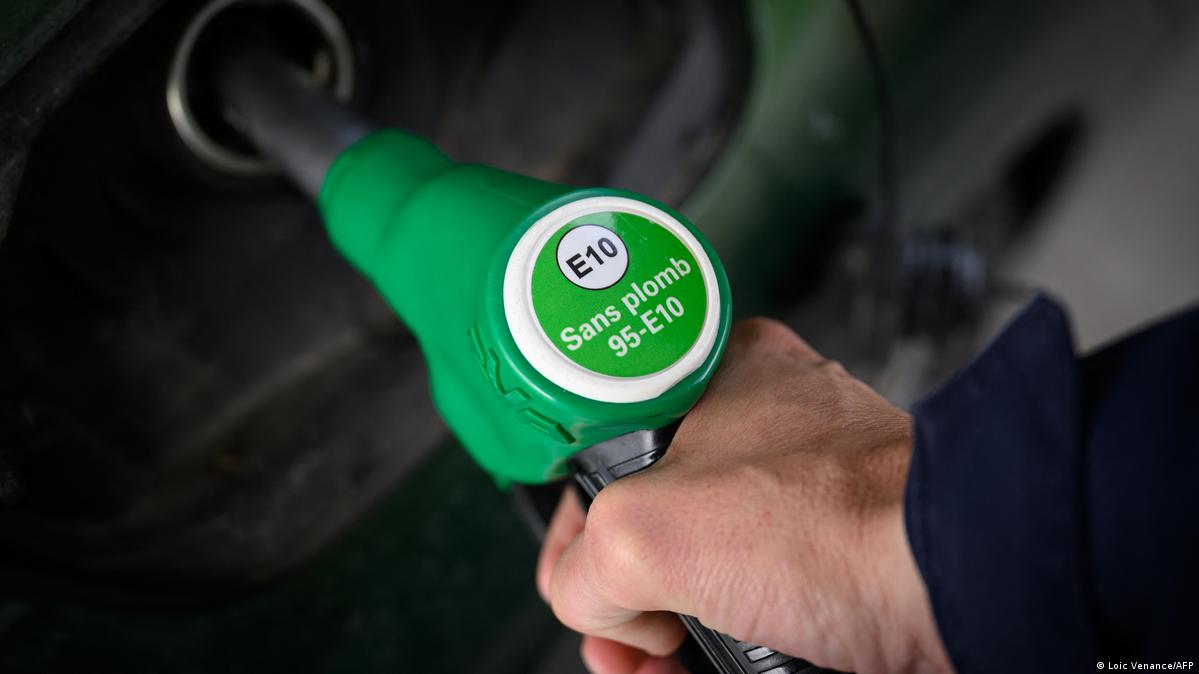
US President Donald Trump on Wednesday hailed the UAE's exit from the OPEC group, just as the price of a barrel of Brent crude briefly rose above $119 (roughly €101.73).
Trump said he believed the UAE's OPEC exit could help lower oil prices.
"I think it's great," Trump said when asked by reporters at the White House what he thought of the UAE's decision. "I think ultimately it's a good thing for getting the price of gas down, getting oil down, getting everything down."
The UAE announced its decision to quit OPEC and OPEC+ on Tuesday, dealing a blow to the oil producer cartels amid an unprecedented energy crisis. The move is seen as a sign of growing tensions among Gulf neighbors, particularly between giant oil producers the UAE and Saudi Arabia.
"They're having some problems in OPEC," Trump said.
Read DW's explainer on why the UAE move is a blow to Saudi Arabia.
https://p.dw.com/p/5D1yDSkip next section Trump hails 'very good conversation' with Putin04/29/2026April 29, 2026Trump hails 'very good conversation' with Putin
US President Donald Trump on Wednesday said he had a "very good conversation" with Russian President Vladimir Putin.
"We had a good talk, I've known him [for] a long time," said Trump, adding that the two heads of state "talked more about the war in Ukraine."
Trump said he suggested "a little bit of a ceasefire" in the war in Ukraine.
"And I think he might do that," he added, asking reporters whether Putin had announced a ceasefire.
Putin also offered to "help" end the US-Israeli war on Iran, Trump said, especially with the issue of Iran's enriched uranium, a key obstacle to a deal to end the war.
"I said I'd much rather have you be involved with ending the war with Ukraine," Trump said.
https://p.dw.com/p/5D1xJSkip next section Putin, Trump discuss Mideast conflict in phone call, Kremlin says04/29/2026April 29, 2026Putin, Trump discuss Mideast conflict in phone call, Kremlin says
Russian President Vladimir Putin spoke by phone with US counterpart Donald Trump, Putin's diplomatic advisor Yuri Ushakov told reporters Wednesday.
The two leaders focused primarily on the Middle East war, with Putin putting forward ideas on resolving the conflict over Iran's nuclear program, the Kremlin aide said.
"The presidents paid particular attention to the situation regarding Iran and in the Persian Gulf," Ushakov said. "Vladimir Putin considers Donald Trump's decision to extend the ceasefire with Iran to be the right one, as this should give negotiations a chance and, overall, help to stabilize the situation."
But Putin also "highlighted the inevitable and extremely damaging consequences not only for Iran and its neighbors, but also for the entire international community, should the US and Israel resort to military action once again," Ushakov said.
During the conversation, Putin also proposed a repeat of a temporary ceasefire in Ukraine to mark the anniversary of the end of World War II next month, the aide said.
How the Iran war is hurting Ukraine's chances at peace
To view this video please enable JavaScript, and consider upgrading to a web browser that supports HTML5 video
https://p.dw.com/p/5D1ubSkip next section Hegseth faces Congress for first time since Iran war began04/29/2026April 29, 2026Hegseth faces Congress for first time since Iran war began
US Defense Secretary Pete Hegseth on Wednesday faced questioning from lawmakers for the first time since the start of the US-Israeli war against Iran.
The hearing before the House Armed Services Committee was being held to discuss the Trump administration's 2027 military budget proposal, which would boost defense spending to a historic $1.5 trillion (€1.28 trillion).
Hegseth attended the hearing together with the chairman of the Joint Chiefs of Staff, General Dan Caine.
In a tense exchange with Democratic representatives, Hegseth rejected criticism of the Iran war.
"You call it a quagmire, handing propaganda to our enemies? Shame on you for that statement," Hegseth said before the committee, slamming Congressional Democrats' criticism as "reckless, feckless, and defeatist."
“The biggest challenge, the biggest adversary we face at this point are the reckless, feckless and defeatist words of congressional Democrats and some Republicans," Hegseth said.
https://p.dw.com/p/5D1cFSkip next section TotalEnergies boasts 50% rise in net profit due to war04/29/2026April 29, 2026TotalEnergies boasts 50% rise in net profit due to war
French oil giant TotalEnergies on Wednesday announced its net profit in the first quarter of this year jumped to $5.8 billion (roughly €4.9 billion), some 51% rise owed to higher oil prices due to the Iran war.
The company's oil and gas production in Brazil, Libya and Australia made up for losses incurred in the Gulf region, which amounts to some 15% of its total oil and gas business, the company said in a statement, which highlighted its "ability to capitalize on rising prices."
The statement drew wide criticism from climate groups.
https://p.dw.com/p/5D1kFSkip next section Iran war 'development in reverse,' UNDP head says04/29/2026April 29, 2026Iran war 'development in reverse,' UNDP head says
The US-Israeli war on Iran could push over 30 million people into poverty, the United Nations Development Program reiterated on Wednesday, with its head describing the war as "development in reverse."
Speaking to the French AFP news agency on the sidelines of a G7 development meeting in Paris, Alexander De Croo said his figure was citing a study after six weeks of the war.
The figure was first released by UNDP on April 13, suggesting that even if the conflict had ended at that point, 32 million people would be pushed into poverty in 160 countries.
"It took decades to build stable societies, to develop local economies, and it took only several weeks of war to destroy that," De Croo was quoted as saying.
The UN agency predicts the war will have a profound impact on sub-Saharan African countries as well as certain countries in Asia such as Bangladesh and Cambodia. Developing island nations will also be particularly hard hit.
High "energy costs, a lack of fertilizer, will have an enormous impact in the months to come" on people in these countries, said De Croo, a former prime minister of Belgium.
He also warned of "political instability and a drop in remittances from abroad because a lot of people working in the Gulf countries send money home."
Will the Iran war cause a global recession?
To view this video please enable JavaScript, and consider upgrading to a web browser that supports HTML5 video
https://p.dw.com/p/5D1hZSkip next section Iran war has cost the US $25B so far, says top Pentagon official04/29/2026April 29, 2026Iran war has cost the US $25B so far, says top Pentagon official
A top Pentagon official said that the Iran war has cost the US about $25 billion (roughly €21.37 billion) so far.
Jules Hurst III, the acting undersecretary of war for finances, revealed the figure during a hearing of the House Armed Services Committee on Wednesday.
The official said most of the expense has been on munitions. He added that the military has also spent money on running the operations and equipment replacement.
"We will formulate a supplemental [bill] through the White House that will come to Congress once we have a full assessment of the cost of the conflict," Hurst said.
https://p.dw.com/p/5D1d2Skip next section EU warns of €27B energy surge amid Middle East war04/29/2026April 29, 2026EU warns of €27B energy surge amid Middle East war
European Commission President Ursula von der Leyen has warned the EU's energy bill has surged due to the Middle East conflict.
She told lawmakers in Strasbourg the bloc's fossil fuel import costs had risen steeply without any increase in supply.
"In just 60 days of conflict, our bill for fossil fuel imports has increased by over €27 billion [$31.6 billion], without one single molecule of energy in addition," von der Leyen said.
"We must reduce our overdependency on imported fossil fuels, and we must boost our homegrown, affordable, clean energy supply from renewables to nuclear in full respect of technology neutrality," she added.
Iran war exposes global dependence on Middle East energy
To view this video please enable JavaScript, and consider upgrading to a web browser that supports HTML5 video
https://p.dw.com/p/5D1J0Skip next section Trump meets oil executives as energy pressure builds04/29/2026April 29, 2026Trump meets oil executives as energy pressure builds
US President Donald Trump has met top energy executives to discuss oil markets, production and shipping as prices remain volatile.
A White House official said Trump held talks Tuesday with leaders including Mike Wirth of Chevron, alongside senior aides such as Treasury Secretary Scott Bessent, White House Chief of Staff Susie Wiles, special envoy Steve Witkoff and Jared Kushner.
Executives discussed global oil markets shaken by the US-Israeli war with Iran. High fuel prices are seen as a political risk for Republicans ahead of November’s midterm elections.
https://p.dw.com/p/5D1GYSkip next section IAEA says Iran's uranium likely still at Isfahan, report04/29/2026April 29, 2026IAEA says Iran's uranium likely still at Isfahan, report
Most of Iran’s highly enriched uranium is likely still stored at the Isfahan nuclear complex, the UN nuclear watchdog is cited as saying.
International Atomic Energy Agency (IAEA) chief Rafael Grossi told the AP news agency that inspectors have not been able to verify the material since access ended during last year's war, but current assessments suggest it remains at the site.
The IAEA said satellite imagery shows the impact of recent US-Israeli strikes, while a large share of uranium was believed to be stored at Isfahan when fighting began and has likely stayed there.
Grossi said inspections must resume at key sites, including Natanz and Fordo, noting Iran is obligated under the Nuclear Nonproliferation Treaty to allow access.
The agency estimates Iran holds about 440.9 kilograms (972 pounds) of uranium enriched to 60%, a short, technical step from weapons-grade levels of 90%. It said roughly 200 kilograms is believed to be stored in tunnels at Isfahan.
Has Iran war harmed nuclear nonproliferation efforts?
To view this video please enable JavaScript, and consider upgrading to a web browser that supports HTML5 video
https://p.dw.com/p/5D1DjSkip next section Trump plans extended blockade on Iran, report says04/29/2026April 29, 2026Trump plans extended blockade on Iran, report says
US President Donald Trump has ordered aides to prepare for an extended blockade of Iran, according to a report.
The Wall Street Journal, citing US officials, said Trump decided in recent meetings to intensify pressure by restricting shipping to and from Iranian ports.
The report said he viewed other options, including renewed bombing or stepping away from the conflict, as carrying greater risks than maintaining the blockade to squeeze Iran's economy and oil exports.
https://p.dw.com/p/5D1BFSkip next section Iran warns of 'unprecedented' military response over US blockade04/29/2026April 29, 2026Iran warns of 'unprecedented' military response over US blockade
Iran has warned it could take "punishing" action if the US maintains its naval blockade around the Strait of Hormuz, according to state media.
State-linked outlet Press TV cited a senior security source as saying Tehran's armed forces could respond with "practical and unprecedented military action."
The source described the blockade as "maritime piracy" and said Iran's restraint so far had been aimed at giving diplomacy a chance.
The outlet said Iran's armed forces "believe that patience has limits and that a punishing response is necessary if Washington maintains its illegal naval blockade around the Strait of Hormuz."
US, Iran peace talks stall as Hormuz shipping backlog widens
To view this video please enable JavaScript, and consider upgrading to a web browser that supports HTML5 video
https://p.dw.com/p/5D168Skip next section Oil prices climb as Iran peace efforts stall04/29/2026April 29, 2026Oil prices climb as Iran peace efforts stall
Oil prices have risen for more than a week as stalled Iran peace talks deepen market uncertainty.
Brent crude climbed above pre-ceasefire levels while US benchmark West Texas Intermediate broke $100 (€85.50) Tuesday for the first time in two weeks, with both extending gains Wednesday.
Brent has held above $113 and WTI above $101 as traders react to US President Donald Trump canceling envoy talks in Pakistan, adding to a downbeat mood.
Markets showed limited reaction to the United Arab Emirates deciding to leave OPEC and OPEC+, a move it described as strategic.
https://p.dw.com/p/5D0vXSkip next section Iran's rial hits record low amid fragile ceasefire04/29/2026April 29, 2026Iran's rial hits record low amid fragile ceasefire
Iran's currency has fallen to a record low of 1.8 million rials to the dollar as a fragile ceasefire with the US and Israel holds.
The rial began sliding recently after weeks of relative stability early in the war that started February 28.
The drop is expected to fuel inflation in Iran, where many essential goods — from food and medicine to raw materials — depend on the dollar exchange rate.
Despite the ceasefire, a US blockade has continued to squeeze the economy by disrupting oil exports, a key source of revenue and foreign currency.
The latest slump follows an earlier shock that helped spark nationwide protests in January, when the rial weakened sharply and deepened public anger over rising prices.
Trump extends US-Iran ceasefire as talks remain on hold
To view this video please enable JavaScript, and consider upgrading to a web browser that supports HTML5 video
https://p.dw.com/p/5D0BGSkip next section Trump warns Iran to 'get smart soon' as talks stall04/29/2026April 29, 2026Trump warns Iran to 'get smart soon' as talks stall
US President Donald Trump has warned Iran to accept US terms for a peace deal as efforts to end hostilities remain stalled.
"Iran can't get their act together. They don't know how to sign a non-nuclear deal. They better get smart soon!" the US leader posted on his Truth Social platform, alongside an AI illustration of Trump holding an assault rifle, with the caption "No More Mr. Nice Guy!”
Iranian Defense Ministry spokesman Reza Talaei-Nik said a day earlier that Washington "must abandon its illegal and irrational demands."
US, Iran peace talks stall as Hormuz shipping backlog widens
To view this video please enable JavaScript, and consider upgrading to a web browser that supports HTML5 video
https://p.dw.com/p/5D0A0Show more postsСхожі новини

Росія вдарила по житлових будинках в Одесі: є постраждалі (відео)

США нададуть Україні 100 млн доларів на ремонт пошкодженої росіянами арки Чорнобильської АЕС
Начальника Ужгородського РТЦК переведуть у бойову частину після скандальної перевірки омбудсмена