Iran, US reportedly agree to deal, pending Trump approval
What you need to know
- US and Iranian negotiators have reportedly agreed on the terms of a ceasefire deal
- Israel has launched strikes on Beirut, Tyre and elsewhere in Lebanon
- US forces say they shot down four Iranian drones and struck a control center in the port city of Bandar Abbas in the Strait of Hormuz
- Iran says it targeted a US base in retaliation for American strikes
Here are the latest developments from across the Middle East on Thursday, May 28:
Tired of missing our real-time updates? Click here to add us as a Preferred Source on Google. Then tap the "Star" or "Preferred" to keep DW News at the top of your feed.
Skip next section Iran deal reportedly reached, waiting Trump approval 05/28/2026May 28, 2026Iran deal reportedly reached, waiting Trump approval
The US and Iranian negotiators have agreed to extend the current ceasefire for another 60 days, unnamed sources told the US outlet Axios as well as the Associated Press, Reuters and AFP.
However, the deal is still awaiting the approval of US President Donald Trump.
According to the reports, the deal would restart nuclear talks and allow free shipping through the Strait of Hormuz.
The White House did not immediately comment on the reports.
https://p.dw.com/p/5EUyJSkip next section IN DEPTH: Iran turns internet back on, but old restrictions remain 05/28/2026May 28, 2026IN DEPTH: Iran turns internet back on, but old restrictions remain
Shabnam von HeinCommunication with the outside world is still difficult in Iran even after an 88-day total blockade was lifted. The blackout has had significant economic and social consequences.
Read more about what the restoration of the internet means for regular Iranians in this report by DW's Shabnam von Hein.
https://p.dw.com/p/5ETpuSkip next section Iran slams Trump's 'bullying' of Oman05/28/2026May 28, 2026Iran slams Trump's 'bullying' of Oman
Iran's Foreign Ministry spokesperson Esmail Baghaei has called US President Donald Trump's threats against Oman "dangerous" and "bullying."
Speaking to reporters during a cabinet meeting on Wednesday, Trump said the US would help "watch over" the Strait of Hormuz, which lies between Iran and Oman, as well as parts of the United Arab Emirates (UAE). Iran has effectively closed the Strait since shortly after the outbreak of the war, which has jolted the global economy.
"But nobody's going to control it," Trump said. "Oman will behave like everybody else or we'll have to blow them up."
On Thursday, Baghaei slammed Trump's remarks, pointing out that Oman has "always played a constructive, effective and responsible role in regional peace and security."
Oman has acted as a mediator in multiple rounds of talks between the US and Iran, particularly over the latter's nuclear program.
Baqaei said Trump's threats towards Oman were "another dangerous sign of the normalization of lawlessness and bullying in international relations."
https://p.dw.com/p/5ETzmSkip next section Israel launches strikes on Beirut05/28/2026May 28, 2026Israel launches strikes on Beirut
The wave of Israeli airstrikes on Lebanon over the past day has spread to the capital, Beirut, where the Israeli military has said it "precisely struck" targets.
Lebanese sources say the strike hit a residential area in Beirut's southern suburbs, an area that is known as a Hezbollah stronghold.
Israel has not specified what it was targeting, but it has escalated its airstrikes against Hezbollah sites in recent days.
This is the first strike to hit the Lebanese capital since Israel killed a military official from Hezbollah's Radwan Forces in early May.
https://p.dw.com/p/5ETJvSkip next section IN DEPTH: Oil shortages threaten global energy security05/28/2026May 28, 2026IN DEPTH: Oil shortages threaten global energy security
Srinivas MazumdaruThe Iran war and the subsequent closure of the Strait of Hormuz — a key waterway through which about 20% of the global oil trade passed before the conflict — have triggered an oil supply shock on a scale unseen in decades.
The crunch has sent countries worldwide scrambling for alternatives to fill the lost supply.
Many governments, particularly in Asian countries that are heavily dependent on Middle Eastern energy, have also introduced measures to curb fuel demand.
Learn more about how the world's energy security is at risk due to the oil shortages caused by the Iran war in this report by DW's Srinivas Mazumdaru.
https://p.dw.com/p/5ETUOSkip next section US, Israel want to bring Iran 'to its knees', Supreme Leader says05/28/2026May 28, 2026US, Israel want to bring Iran 'to its knees', Supreme Leader says
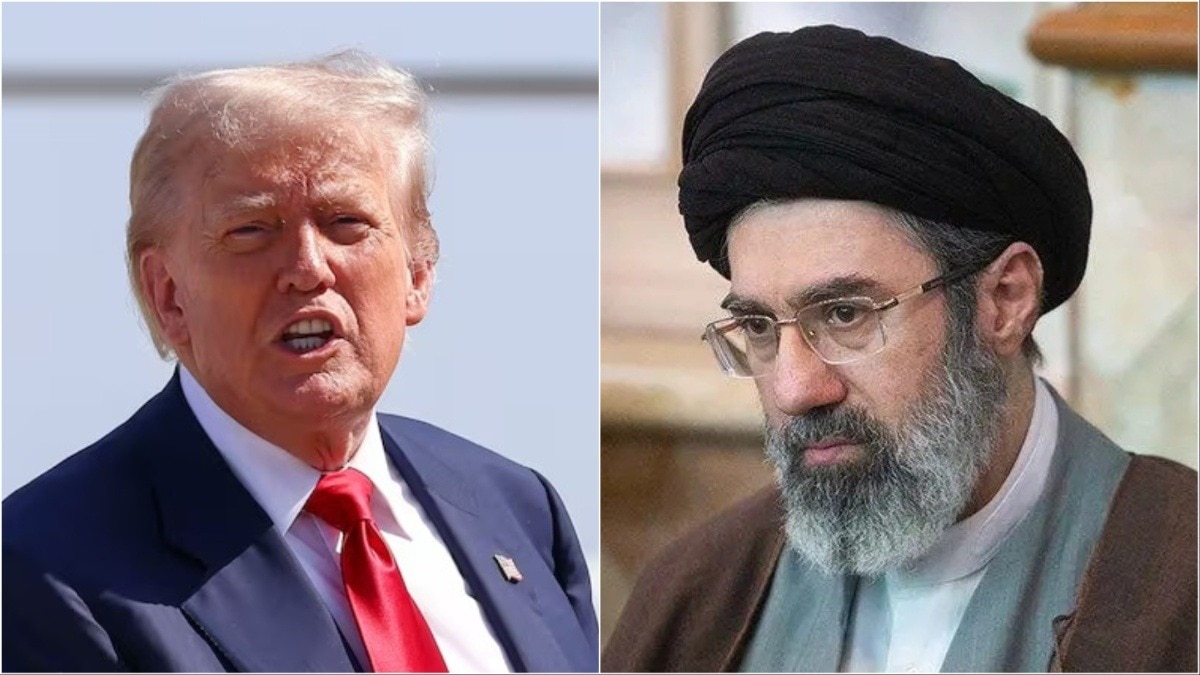
The United States and Israel want to destabilize Iranian society, Iran's Supreme Leader, Ayatollah Mojtaba Khamenei, has said.
In a written message broadcast on state media, Khamenei said: "The enemy's blind plan, after the imposed war, the economic pressure, and the political and propaganda siege, is to create divisions and disintegration in order to compensate for military defeats and bring the nation to its knees."
Khamenei has not appeared in public since before he took office in March after the assassination of his father and predecessor as supreme leader, Ali Khamenei, in US-Israeli strikes that triggered the current war.
US Defense Secretary Pete Hegseth said in March Mojtaba Khamenei was "wounded" and "likely disfigured" in those strikes.
https://p.dw.com/p/5ETI7Skip next section Israeli military: More than '135 Hezbollah targets' struck in past 24 hours05/28/2026May 28, 2026Israeli military: More than '135 Hezbollah targets' struck in past 24 hours
Israeli airstrikes have hit "more than 135" Hezbollah targets in southern and eastern Lebanon over the past 24 hours, Israel's military has said.
The strikes hit "approximately 10" launch sites used by Iran-backed Hezbollah to fire rockets at Israeli "soldiers and civilians" and a training camp area, a statement said.
The Israeli military also said its forces had struck "approximately 15 military infrastructure sites in Tyre" that it said were used by "Hezbollah terrorists to advance attacks."
The statement also said the Israeli Air Force had "eliminated" a Hezbollah cell while it was exiting a launch site used to fire missiles toward Israeli troops.
https://p.dw.com/p/5ET39Skip next section At least 19 killed as Israel continues strikes on southern Lebanon05/28/2026May 28, 2026At least 19 killed as Israel continues strikes on southern Lebanon
At least 19 people have been killed in Israeli strikes on southern Lebanon on Thursday, the country's health ministry said.
The ministry said five people had died when an Israeli bomb hit a building in Sidon, which also injured 21 people.
In a separate incident in Adloun, the ministry said the Israeli military had targeted a vehicle, killing six people, including two children and their mother and father.
Earlier on Thursday, Lebanese state media NNA said at least eight people had been killed and several others were injured after the Israeli military bombed the southern city of Tyre, Lebanon's fourth largest city.
Strikes intensify despite ceasefire
Israel's strikes on Lebanon, which have intensified this week, come on the eve of talks between Lebanese and Israeli officials in Washington on Friday.
Israel and the Iran-backed militant group Hezbollah have continued to trade fire despite a US-brokered ceasefire having been agreed in April.
Israel has been pounding eastern and southern Lebanon as part of its war against Hezbollah, which escalated in early March.
On Monday, Israeli Prime Minister Benjamin Netanyahu said Israel would "intensify our blows, increase our firepower, and we will crush" Hezbollah.
Lebanese authorities say over 3,200 people have been killed and nearly 10,000 injured in under two months. Over 1 million people in Lebanon have been displaced in that time.
The militant group, for its part, has been firing drones and missiles towards Israel and at Israeli troops in southern Lebanon.
One Israeli soldier was killed in one of those drone attacks on northern Israel, the Israeli military said Thursday.
The Israeli Prime Minister's Office says 24 Israeli troops have been killed in or near southern Lebanon as a result of Hezbollah drone attacks. Two civilians have been killed in northern Israel.
https://p.dw.com/p/5ES89Skip next section Iran says it fired warning shots at US oil tanker05/28/2026May 28, 2026Iran says it fired warning shots at US oil tanker
As we reported earlier, Iran said it fired warning shots at four unauthorized ships trying to sail through the Strait of Hormuz.
Iran has now said that one of those vessels was an American cargo vessel.
"According to an informed military source speaking to (Iranian state media) Tasnim, an American oil tanker attempted to pass through Hormuz after turning off its radar," the Iranian consulate in the Indian city of Mumbai said on X, adding that "Iran’s Navy fired warning shots and forced the vessel to retreat."
The consulate also said the US strikes near Bandar Abbas in southern Iran had landed in "a barren area" and caused no casualties or material damage.
https://p.dw.com/p/5ES5iSkip next section IN PICTURES: Israeli airstrikes pound south, east Lebanon05/28/2026May 28, 2026IN PICTURES: Israeli airstrikes pound south, east Lebanon
WATCH: Peace efforts continue as US carries out Iran strikes
Iran has accused the United States of breaching the ceasefire, but the government in Tehran has signaled that it remains open to talks.
The US says the strikes were "defensive", while Iran says they were a "gross violation" of the shaky truce that has been in place since early April.
Meanwhile, US President Donald Trump might be losing support from within his Republican party, where criticism of the war, along with gas and oil prices, is on the rise.
DW's Jared Reed speaks to international security expert Thomas Juneau and DW's Washington D.C. correspondent Ines Pohl to learn more about where the US-Iran peace talks stand, and what could come next.
Peace efforts continue as US carries out Iran strikes
To view this video please enable JavaScript, and consider upgrading to a web browser that supports HTML5 video
https://p.dw.com/p/5ERCcSkip next section What to know if you're just joining us05/28/2026May 28, 2026What to know if you're just joining us
Here's a recap of the main developments so far on Thursday, as the ceasefire between the US and Iran faces one of its toughest tests in weeks:
- For the second time in three days, the US strikes targets on Iran's southern coast
- Washington says the strikes, which shot down four Iranian drones and struck a control center in Bandar Abbas, were 'defensive'
- Oil prices surge again following the US attacks
- Iran says it fired warning shots at four ships trying to sail through the blockaded Strait of Hormuz
- The strategic waterway was the conduit for a fifth of the world's energy supplies before the war
- Iran says it fired retaliatory strikes against a US airbase
- While Iran's Revolutionary Guards haven't disclosed the base's location, US ally Kuwait said earlier on Thursday that it was responding to Iranian drone and missile fire
- The latest escalation comes after weeks of stalled talks, and only days after Donald Trump repeatedly claimed that a deal with Iran was close to being agreed
Iran says US base targeted in retaliation for American strikes
Elizabeth Schumacher EditorIran's Revolutionary Guards said Thursday they targeted a US base in retaliation for American strikes near Bandar Abbas, according to state broadcaster IRIB.
"Following this morning's aggression by the invading US military against a location on the outskirts of Bandar Abbas Airport using aerial projectiles, the American air base that served as the source of the attack was targeted at 4:50 am (0120 GMT)," the Guards said, according to IRIB.
The Revolutionary Guards did not disclose its location of the base that was attacked but Kuwait, a US ally, said earlier it was responding to missile and drone attacks early on Thursday.
https://p.dw.com/p/5EQrPSkip next section Israel says military struck 'Hezbollah infrastructure' in southern Lebanon05/28/2026May 28, 2026Israel says military struck 'Hezbollah infrastructure' in southern Lebanon
The Israeli military said Thursday that it had begun attacking Hezbollah infrastructure around the southern Lebanese city of Tyre after issuing calls for residents to leave the area.
"The IDF [Israel Defense Forces] has begun striking Hezbollah infrastructure in the area of Tyre," the military posted on Telegram.
Ahead of the strikes, the IDF urged civilians near targeted buildings to move north of the Zahrani River, saying remaining in the area "places you at risk."
Lebanon's state-run National News Agency reported that Israeli strikes hit Tyre and nearby areas Thursday morning, damaging a building and sparking a fire.
Israel escalates operations against Hezbollah in Lebanon
To view this video please enable JavaScript, and consider upgrading to a web browser that supports HTML5 video
https://p.dw.com/p/5EQrASkip next section Iran fires warning shots at ships attempting to cross Strait of Hormuz05/28/2026May 28, 2026Iran fires warning shots at ships attempting to cross Strait of Hormuz
Iranian forces fired warning shots at four ships attempting to cross the Strait of Hormuz without authorization, Iran's IRIB news agency reported on Thursday.
"They were warned, but after they ignored the warning, warning shots were fired at them, forcing them to return," IRIB said in a post on Telegram.
The shots were fired at about 12:35 a.m. local time (2105 GMT Wednesday). No further details on the ships were provided.
https://p.dw.com/p/5EQqFShow more postsСхожі новини
Taiwan suspects Nvidia chips smuggled to China via Japan
US, Iran agree peace deal framework, awaiting Trump's approval
Daily briefing: The known protein universe just got a lot bigger
