Iran: Daily life shadowed by war, scarcity and fear
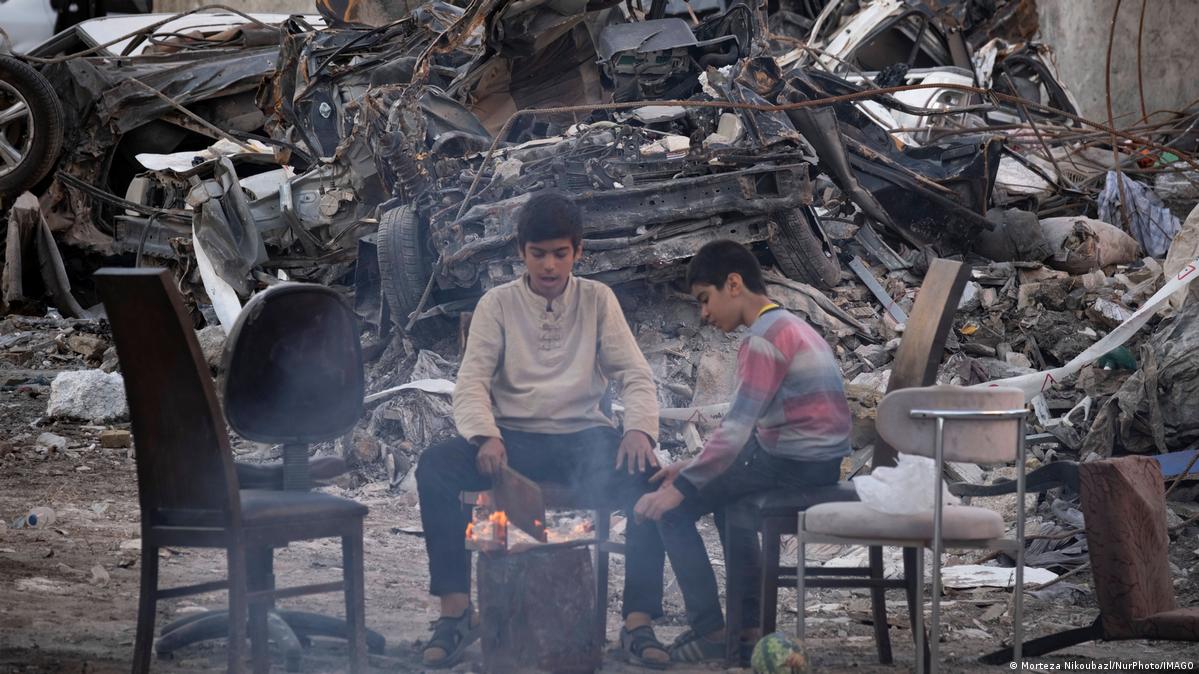
In response to Iran closing off the Strait of Hormuz amid the war with the US and Israel, the US Navy has been blocking Iranian ports since mid-April. Washington hopes to restrict Iran's exports — particularly oil — and to put additional pressure on the leadership in Tehran.
"The United States could maintain such a blockade militarily for months, in some scenarios even for more than a year," international security expert Shahin Modarres from Rome's Tor Vergata University told DW.
This is bad news for Iran. In an online post, Iran's chief negotiator and parliamentary speaker, Mohammad Bagher Qalibaf, said it was against the fragile truce currently in place between the warring sides. He also said the reopening of the Hormuz Strait would not be possible as long as such "serious violations" continued. Iran's Revolutionary Guard says it is already seizing ships over martime intrusions.
Trump extends US-Iran ceasefire as talks remain on hold
To view this video please enable JavaScript, and consider upgrading to a web browser that supports HTML5 video
US President Donald Trump, however, seems determined to keep the blockade in place until reaching a more permanent deal with Tehran.
Pressure growing both inside and outside Iran
Security expert Modarres views the blockade as an instrument for the gradual, controlled weakening of the Iranian regime. He draws parallels with the final years of the eight-year Iran-Iraq war (1980–1988), when Tehran was under constant military and economic pressure and ultimately agreed to a ceasefire.
The Hormuz disruption, Modarres points out, puts both Iran and the global economy under strain, and is therefore not a sustainable solution.
"The only losers in such a scenario are the population — regardless of whether the war continues or ends without structural changes," he told DW.
Dozens of Iran's ships reportedly dodged the US blockade
The US blockade is primarily intended to prevent Iranian oil exports. However, it is not fully effective, according to a recent report by industry publication Lloyd's List. On Monday, the news outlet reported that 26 vessels — including at least eleven oil and gas tankers carrying Iranian cargo — had crossed the blockade line since April 13. The Pentagon denied the report one day later.
But Iran's energy trade is only one element of the equation.
"In addition to exports, imports of basic foodstuffs and production inputs will be more severely affected" by the US blockade, Berlin-based economic journalist Ashkan Nizamabadi told DW.
'Everyone is now living from one day to the next'
According to Nizamabadi, Iran imports around one million tons of rice every year, mainly from India and Pakistan. If the sea blockade continues, Tehran will likely have to rely on alternative land routes or increased cooperation with Turkey.
"This logistical shift is significantly more expensive than sea transport. That will push up prices, and ultimately the consumers will bear the costs," Nizamabadi said.
In Iran, supplies of some imported goods are already limited as sellers fear shortages.
"Everyone is now living from one day to the next," said a journalist from Tehran who wishes to remain anonymous. Daily life, he added, is marked by collective exhaustion.
"In supermarkets and bakeries, people buy only as much food as they need for a single meal, as if they don't know what the next day will bring," he told DW.
Fear of unemployment looms amid war devastation
For many Iranians, the burdens of war and the prolonged economic crisis are now compounded by the fear of losing their jobs. After oil and industrial facilities were destroyed, tens of thousands of day laborers were laid off. The production standstill in the steel and petrochemical industries also threatens to trigger a chain reaction, forcing numerous dependent companies to cease operations. Many services came to a halt during the war and have yet to recover, even during the ceasefire.
Why Iran fuel crisis hits different in Europe than the US
To view this video please enable JavaScript, and consider upgrading to a web browser that supports HTML5 video
Samaneh, who worked as a sales assistant in a cosmetics store in Tehran, describes the situation as follows: "Everything came to a standstill during the strikes last winter. Then came the protests, then the war. Now we have a ceasefire, but nothing has improved."
Many families are now living off their savings and do not know how long they can endure the situation. Sources from Iran report that numerous young people have returned to their parents' homes. Others are moving out of large cities such as Tehran.
For years, Iran's economy has been hollowed out by mismanagement, corruption and international sanctions. In 2025, the average inflation rate in Iran was estimated at nearly 51% percent. For 2026, economists forecast an even bigger jump to nearly 69% percent.
Poverty keeps climbing in Iran
Iran's economy is currently in recession, said Amir Alizadeh, head of international business at the Ulm Chamber of Industry and Commerce.
"The International Monetary Fund is forecasting negative economic growth of around 6% percent for Iran this year," Alizadeh told DW.
The forecast by the UN Development Programme foresees an even deeper recession, and also projects the poverty rate climbing from 36% to about 41% this year.
The Iranian regime has repeatedly managed to navigate popular unrest and remain in power. In this war, just like in any previous crisis, the Iranian people are the ones paying the price.
Edited by: Darko Janjevic
AdvertisementСхожі новини

Тут теж діють правила: коли можна отримати штраф за паркування у дворі багатоповерхівки
Для українських школярів та вчителів запустили безкоштовні курси з ШІ
ВАКС відмовився скасувати арешт будинку доньки Ярослава Дубневича в Братиславі