Inside Chornobyl: 40 years after disaster, nuclear site still at risk in Russia’s war
In February 2025, a cheap Russian drone tore through Chornobyl’s confinement shelter. Workers warn the site of the world’s worst nuclear accident is not safe yet
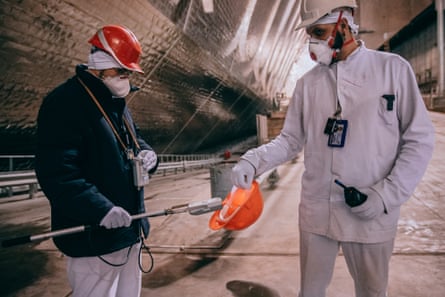
The dosimeter clipped to your chest ticks faster the moment you step off the designated path inside the Chornobyl nuclear power plant. Step back, and it slows again – an invisible line between clean ground and contamination.
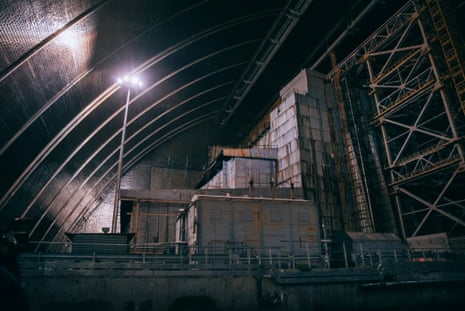
Above rises the “new safe confinement” (NSC) – the largest, movable steel structure ever built, taller than the Statue of Liberty, wider than the Colosseum, its arch curving overhead like an aircraft hangar built for giant planes.
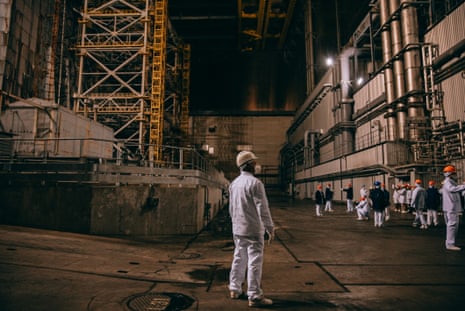
Completed in 2019 at a cost of $2.5bn (£1.85bn) and funded by 45 countries, the NSC was built to shield the world from what lies beneath it. It sits at the heart of a vast exclusion zone, a radioactive landscape the size of Cyprus, largely abandoned by humanity. Stray dogs roam the plant in packs – workers advise against petting them.
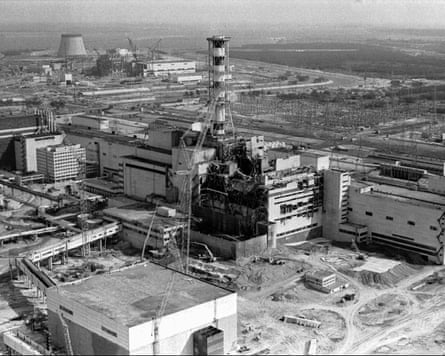
Inside is “the sarcophagus” – a grey concrete tomb erected in just 206 days to cover the ruins of reactor No 4, which exploded on 26 April 1986 in the worst nuclear accident to date.
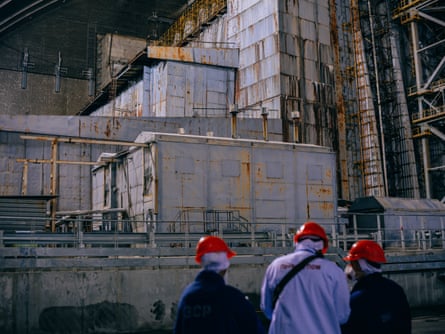
Up close, the sarcophagus looks almost makeshift – massive slabs stacked like giant building blocks, rust streaking the joins. Inside, 180 tonnes of nuclear fuel and four to five tonnes of radioactive dust remain trapped.
The NSC was constructed to buy time: to allow the unstable sarcophagus to be dismantled safely over decades, while shielding against the consequences in case it collapses.

What its funders did not anticipate was a war – Chornobyl was occupied in the first weeks of Russia’s 2022 invasion of Ukraine – much less a drone strike on the facility three years later.
In the north-west corner of the roof, a temporary patch marks where a cheap $20,000 Russian drone tore through the structure on 14 February 2025, punching a hole in the arch and compromising the very function the arch was built for.
“If the sarcophagus collapses, over a hundred tonnes of nuclear fuel would be released into the air,” said the plant’s director general, Serhii Tarakanov.
A full repair is required within four years, Ukrainian officials and western experts say, or the NSC’s 100-year lifespan can no longer be guaranteed. It is estimated to cost up to €500m (£432m) – money that Ukraine’s cash-strapped government has not yet found.
Meanwhile, war continues in Ukraine, and Russia has repeatedly launched drones and missiles along flight paths near the Chornobyl nuclear plant, raising the risk of another disaster.
On the 40th anniversary of the Chornobyl disaster, one of the world’s most vulnerable sites remains under threat.
The drone strike
Oleksandr Skomarokhov was woken by a security guard in the early hours of 14 February 2025. The grey-moustached deputy chief engineer, with thick-rimmed glasses and almost four decades’ experience at the plant, quickly realised the situation was bad. “We witnessed shelling before, but I knew they would only wake me if something critical had happened,” he recalled.
A Russian Geran-2 drone had struck the north-west face of the arch at about 85 metres above the ground – roughly the height of an eight-storey building.
The blast, which Ukraine said was intentional, punched a 15 sq metre hole through the NSC’s outer and inner walls and was powerful enough to register on the structure’s earthquake monitoring system.
“Then, the real problems started after the fire broke out,” Skomarokhov said.
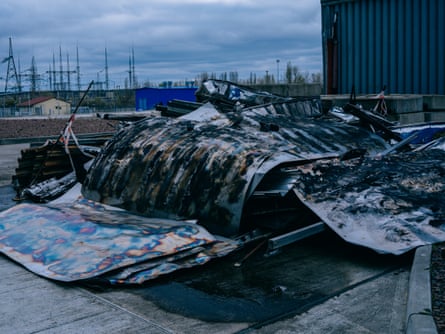
Firefighters arrived within minutes, but a rubber sealing membrane within the roof had caught alight and kept smouldering deep inside the structure, out of reach. For three weeks, teams cut 332 holes into the outer wall to reach the hotspots with water hoses.
When the fires were finally out, officials at Chornobyl said the strike had destroyed two key systems. The confinement function – the NSC’s ability to contain any radioactive release from the sarcophagus – had been compromised. So too had the humidity control system, which keeps the steel structure from corroding, and puts the arch itself at risk of failing.
“The Russian drone strike destroyed the main functions of the new safe confinement,” said Eric Schmieman, an engineer who led the conceptual design of the arch in the late 1990s, in a damage assessment commissioned by Greenpeace Ukraine.
Should the sarcophagus collapse – whether from a strike, structural failure or age (built for 20 years, now standing for 40) – experts say it would release another cloud of radioactive particles into the air with no safeguard to contain it.
“The collapse of the sarcophagus would primarily be an enormous hazard for those working at the Chornobyl plant and set back dealing with the disaster for many more years,” said Shaun Burnie, a senior nuclear specialist with Greenpeace.
Beyond the financial costs and the war, there is the question of how the repairs of the confinement shelter are done at all. High radiation levels directly above the damaged section mean workers can legally spend no more than about 20 hours a year in that zone before hitting their annual dose limit.
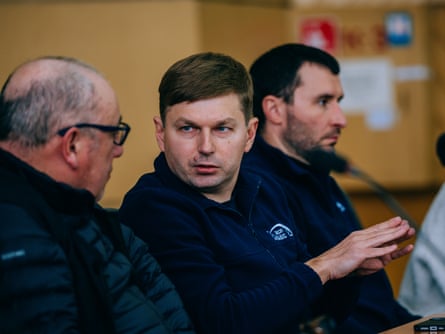
“Workers will be able to perform their assignment there for a few hours, if not just a few minutes at a time,” said Tarakanov, adding that the work would require about 100 qualified construction workers operating in short rotations at height on a curved, contaminated surface.
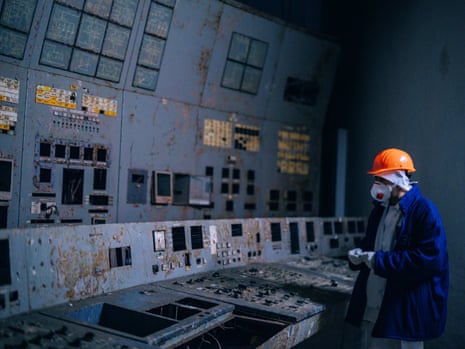
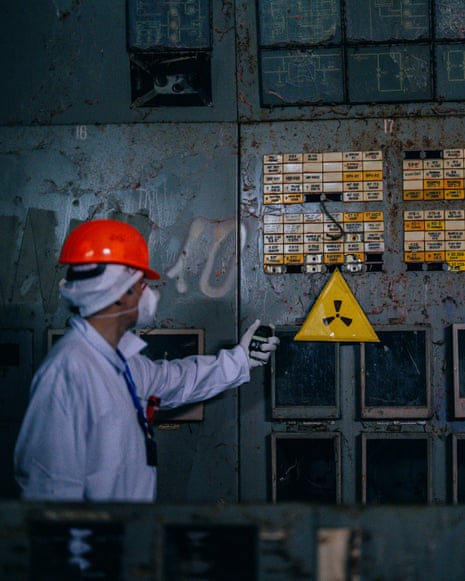
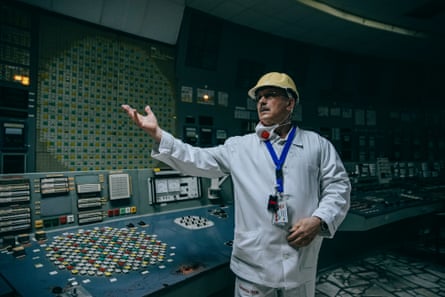
There is something hard to fully absorb about all of this, reflected Skomarokhov, who came to work in Chornobyl in 1987, a year after the disaster. “I knew what happened here and wanted to make sure it would never be repeated,” he said, speaking in what remains of control room No 4 – where, at 1.23am on 26 April 1986, operators pressed the AZ-5 emergency button in a last attempt to shut down the reactor.
Instead, a fatal combination of design flaws and the unstable core triggered an explosion.
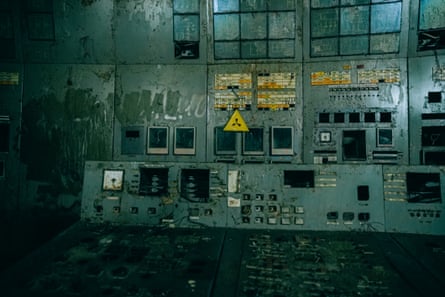
In the room, Soviet control panels, dials and switches are frozen in place, the paint peeling in long strips. But you can still make out where the button once was, a dark hole marking its place.
Twenty-eight people died of acute radiation sickness in the weeks that followed. About 116,000 were evacuated. Radioactive particles drifted north-west across Europe. The disaster was first detected not in the Soviet Union but in Sweden, a few days later, when a worker at a nuclear plant set off radiation alarms on his way into work.
In his book on Chornobyl, the Ukrainian historian Serhii Plokhy argues that the disaster helped forge a modern Ukrainian national consciousness by exposing the failures of the Soviet system. For many people, he writes, it was a moment of rupture: a sudden clarity about the nature of the system under which they were living.
Russia’s full-scale invasion in 2022 was another moment of national unity, and again Chornobyl was caught up in it. Russian forces crossed the border on 24 February 2022 and moved directly on the plant, using the route through Belarus that passes within kilometres of the exclusion zone.
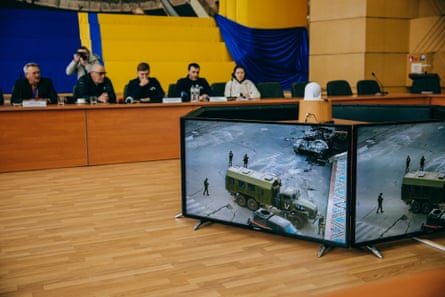
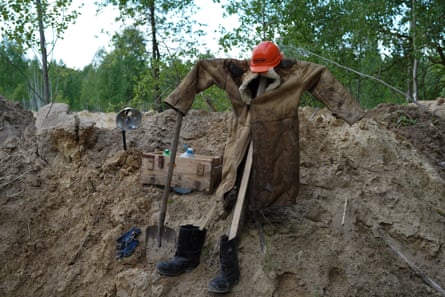
The site became an active military zone within hours. Russian soldiers dug defensive trenches very close to the “red forest” – the stretch of land immediately west of the plant that received some of the heaviest contamination in 1986 and remains among the most radioactive areas in the exclusion zone.
Staff who arrived for scheduled shifts before the Russian attack were held and forced to work continuous rotations for nearly a month.
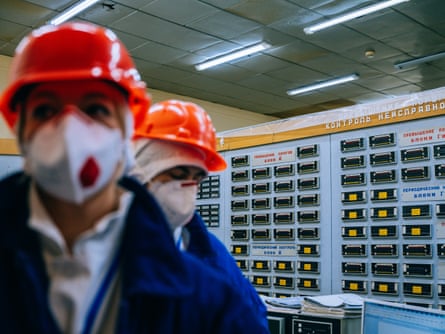
“I have seen a lot in my life, but I couldn’t imagine that war would come here,” said Natalia, who has worked at Chornobyl since 1980, making her one of the longest-serving staff members.
Natalia, who asked for her last name to be withheld, later moved to Slavutych, the last Soviet city built in 1987 to house plant workers when Pripyat – the original company town 4km from the reactor – was abandoned overnight.
During the town’s occupation, she and her colleagues were cut off from the rest of the country without internet or supply lines. “Local farmers had to smuggle in milk,” she said.
When Russian forces withdrew from Chornobyl after 35 days, they left behind looted offices – computers, microwaves, fridges taken from the rooms where staff had worked for decades.
Posters around the site still bear the names of six Chornobyl workers taken during the occupation, who are believed to be still in Russia.
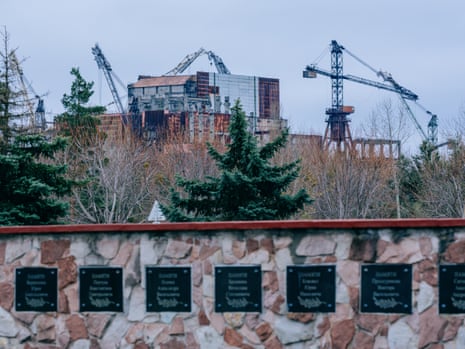
On entry to the 1,000 sq mile exclusion zone, the first thing you notice is the military – checkpoints, soldiers, the occasional armoured vehicle. Drive deeper and the forest takes over, pine trees pressing in on either side, small villages appearing through the treeline. The homes are abandoned and small signs on some of the doors record how many people used to live there.
Where humans can no longer live, other species have moved in. Stocky Przewalski’s horses graze and wolves and lynx hunt in forests that have grown back over former farmland. In the cooling pond beside the reactor, catfish have grown to extraordinary sizes.
But the exclusion zone’s isolation offers no protection from the war.
The plant has experienced four total blackouts since October 2024 caused by Russian strikes on the electricity grid, each requiring emergency diesel generators to keep the spent fuel cooling systems running.
Additional air defences and soldiers have been brought in, said Vadim Slipukha, the deputy director general for security at the site, though the threat has not gone away, he said. Even an unintentional strike from a drone knocked off course by electronic warfare could trigger a collapse of the sarcophagus.
“We are begging the international community to understand,” said Tarakanov. “There is a real risk of a new incident. It could happen any night, any day.”
Схожі новини
Mali: Explosions, gunfire rock main military camp near capital
Повторні удари по Дніпру: рашисти вдалися до "сирійського сценарію" обстрілів, - Філатов

У РФ засудили 63-річну жінку до 13 років за нібито "співпрацю з Україною", - правозахисники