Inside a chilling new exhibit so disturbing you need to sign a waiver to enter
Attendees of a new immersive exhibit in New York City of the most infamous murder scenes in history must sign a waiver before they enter to acknowledge the risk of “emotional distress”.
A severed head propped in a refrigerator. Bodies wrapped in plastic, hanging from the ceiling. A bathtub sloshing with blood.
The Mind of a Serial Killer: The Experience — which opened April 17 in Greenwich Village — depicts the aftermath of crimes by Jeffrey Dahmer, Ted Bundy, and others that still haunt the public imagination.
Why do visitors, who must be 18 or older due to the graphic content, want to delve into the minds of serial killers and wander their crime scenes? The popularity of exhibits like this – and the explosion of true crime podcasts and documentaries – points to something deeper, experts say.
“The first comparison that came to mind was roadkill,” Stephanie Johnson, a clinical psychologist who has experience treating acute psychiatric disorders, trauma, and PTSD, told The Independent. “You know you do not want to look, but you look anyway.”
Experts often trace the fascination in true crime to a mix of fear, control and understanding — a desire to make sense of the incomprehensible, to study danger from a safe distance, to ask whether monsters are born or made.
“Humans have always been interested not only in the light side, but also in the dark side — what psychology might call the shadow side,” she continued. “A lot of the fascination comes from trying to understand why someone would do something horrific and how it could happen.”
Playing the role of investigator
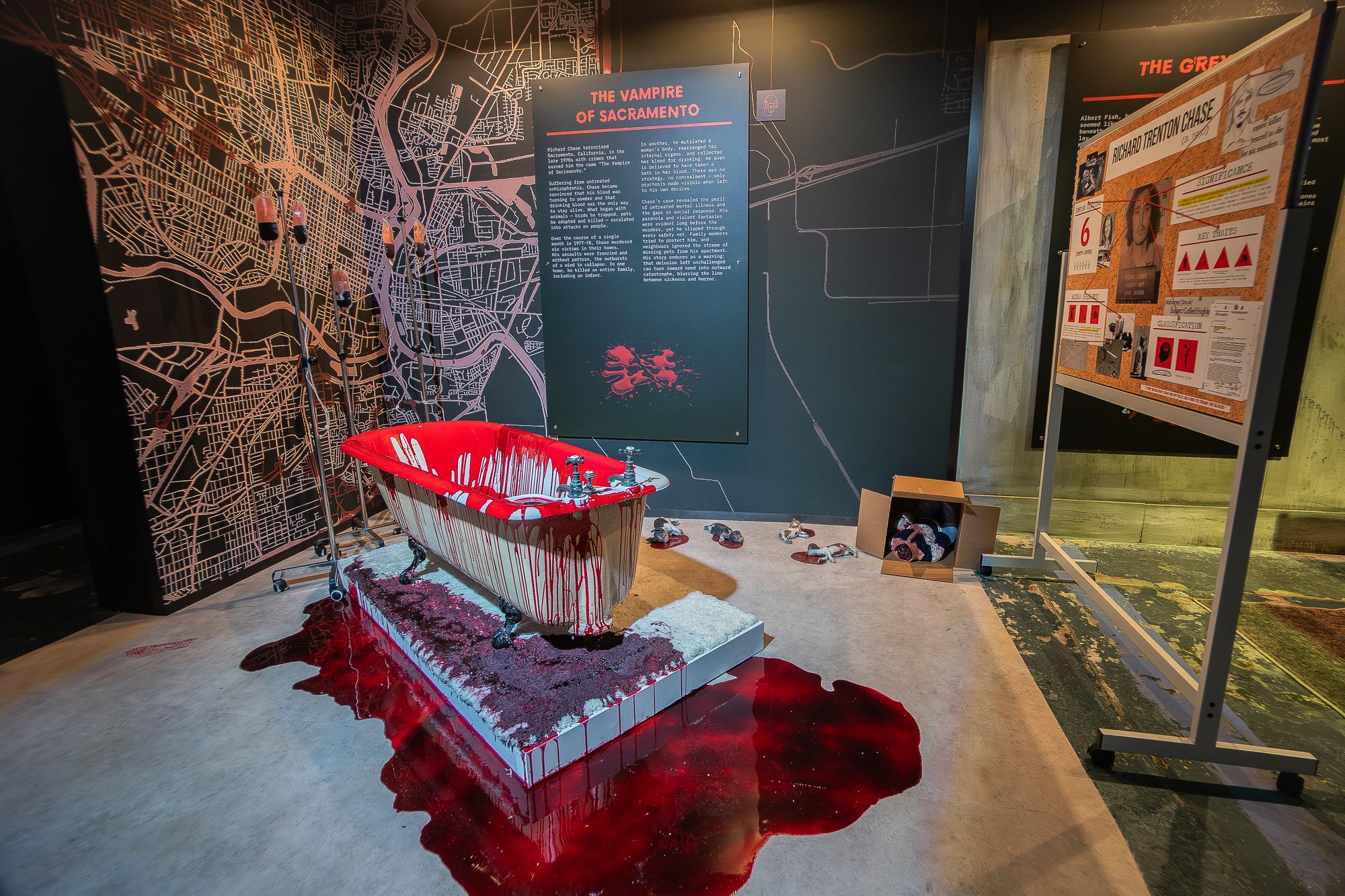
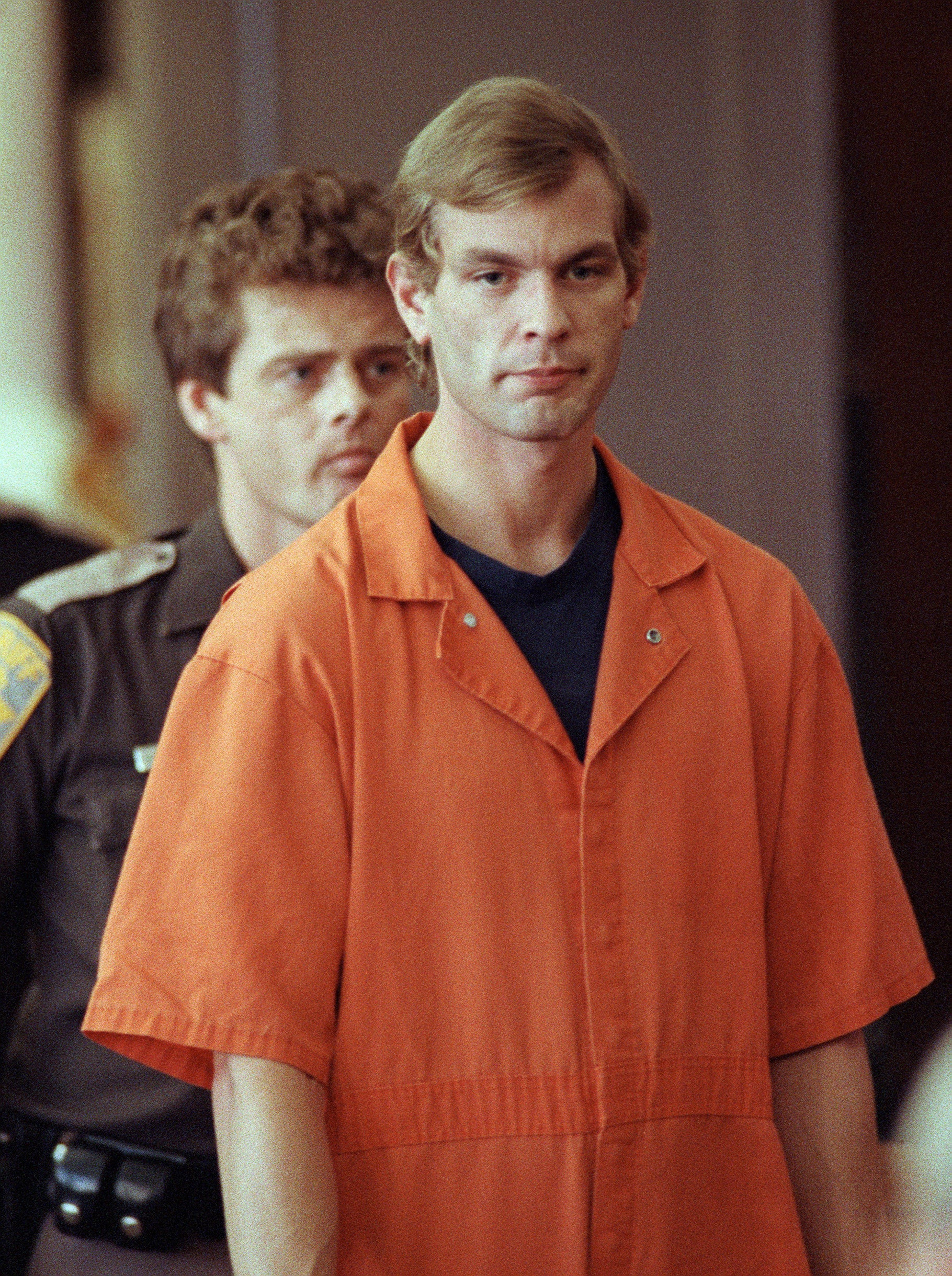
Just beyond the entrance of the New York exhibit looms a massive floor-to-ceiling wall of black and white mugshots.
Among them, a strikingly familiar face: Rex Heuermann, who recently admitted to being the Gilgo Beach serial killer. Only days before the expo’s opening, he pleaded guilty to the murders of eight women.
 open image in gallery
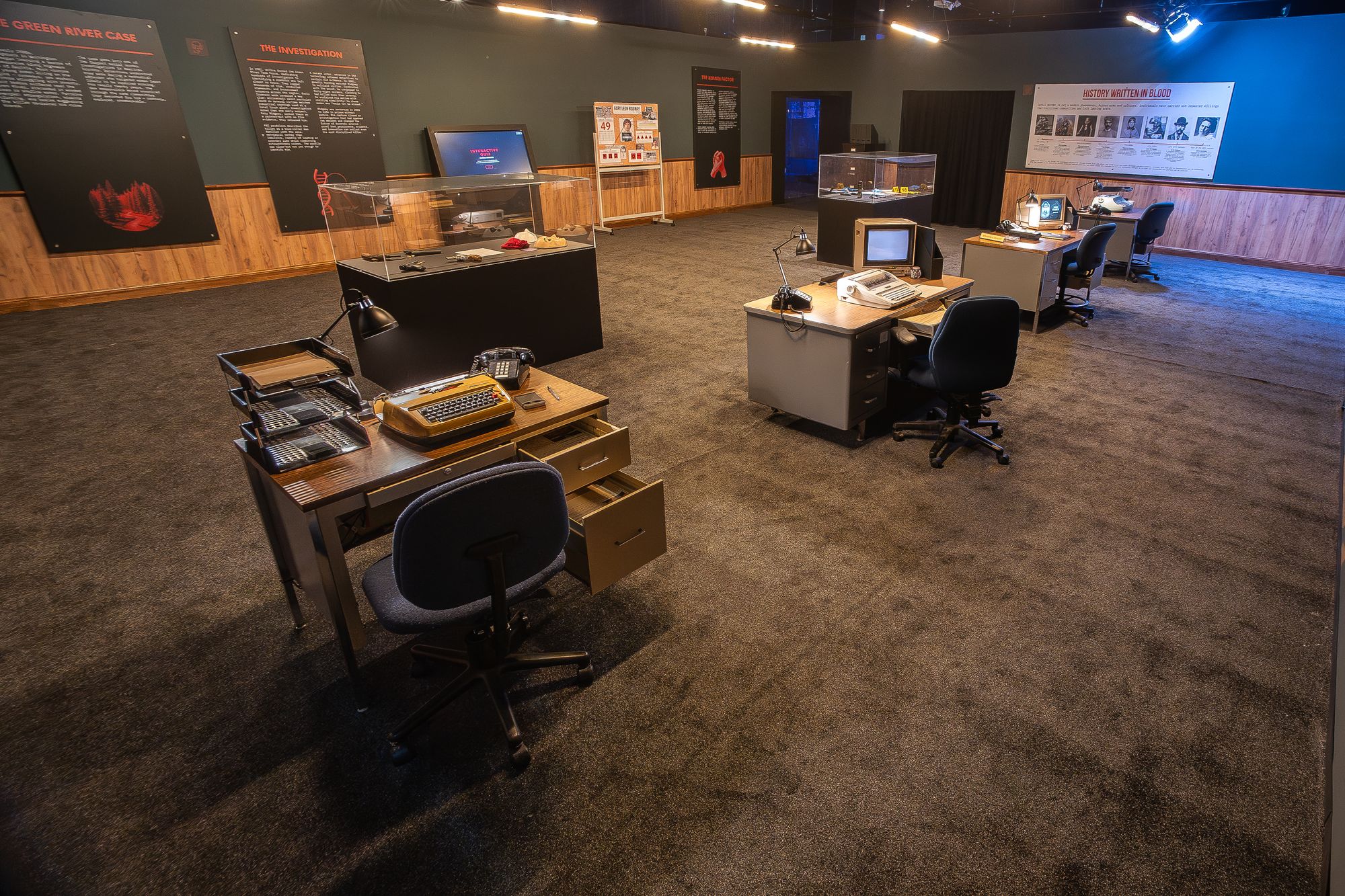
Downstairs, the experience begins in a brightly-lit mock investigation room, where visitors tap away on vintage typewriters, snap their own mugshots and attempt to solve crimes through criminal profiling and behavioral analysis techniques.
Speaking about the popularity of true crime, former FBI Agent Andrew Bringuel told The Independent that “analyzing these cases allows us to rationalize how we would avoid being a victim. It offers comfort that we would avoid being a victim.”
But it also goes beyond that. There is, Bringuel explained, a “rollercoaster effect to watching a murder mystery that can provide an adrenaline rush or dopamine when coming up with an answer or finding a piece of the puzzle.”
Now, a judge serving the Town of Willet in New York, Bringuel said he thinks that many amateur detectives are interested in high profile cases — such as the ongoing disappearance of Savannah Guthrie’s mother Nancy Guthrie, and the 2022 murders of four University of Idaho students — “because they want moral clarity and order.”
“Analyzing these cases allows them to reinforce their world view of law and order,” he said. “When a bad guy is found and prosecuted it provides clarity of right vs wrong.”
Inside the mind of a killer
Back at the exhibit, staff pull back another heavy black curtain to the next room.
On the other side: a replica of Ted Bundy’s 1968 yellow Volkswagen Beetle is idling in the dark, smoke curling into the air. The headlights are aimed at a patch of soil in the corner of the room, with dozens of white cards sticking out of the ground. Each is inscribed with a victim’s name.
 open image in gallery
 open image in gallery
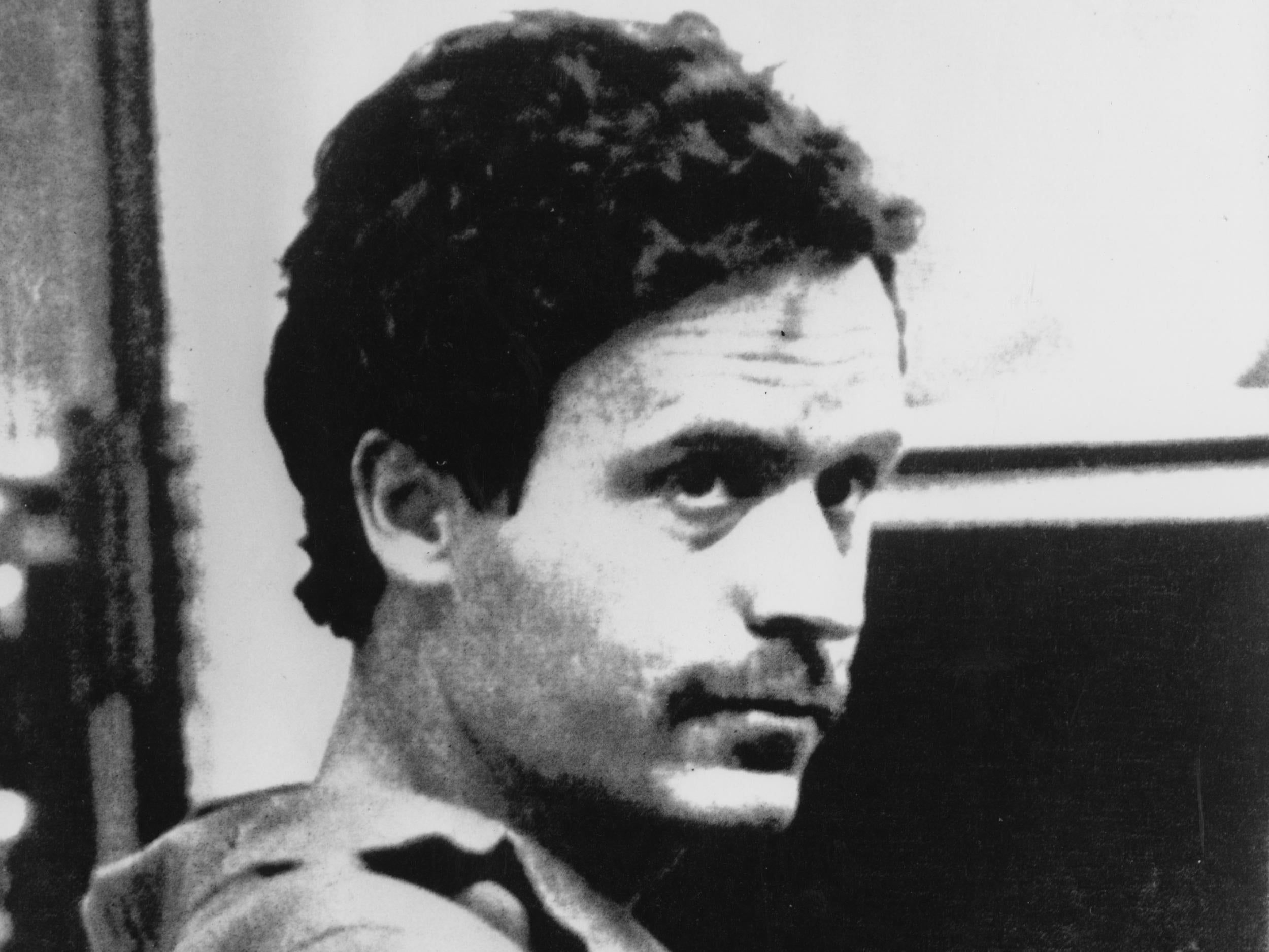
Bundy, one of the most prolific serial killers in United States history, used the infamous vehicle to abduct young women across Washington, Oregon, Utah, and Colorado in the 1970s, transport their bodies and store weapons.
He confessed to 30 murders before his 1989 execution, but investigators believe the true number is significantly higher, with some estimates suggesting up to 130 victims.
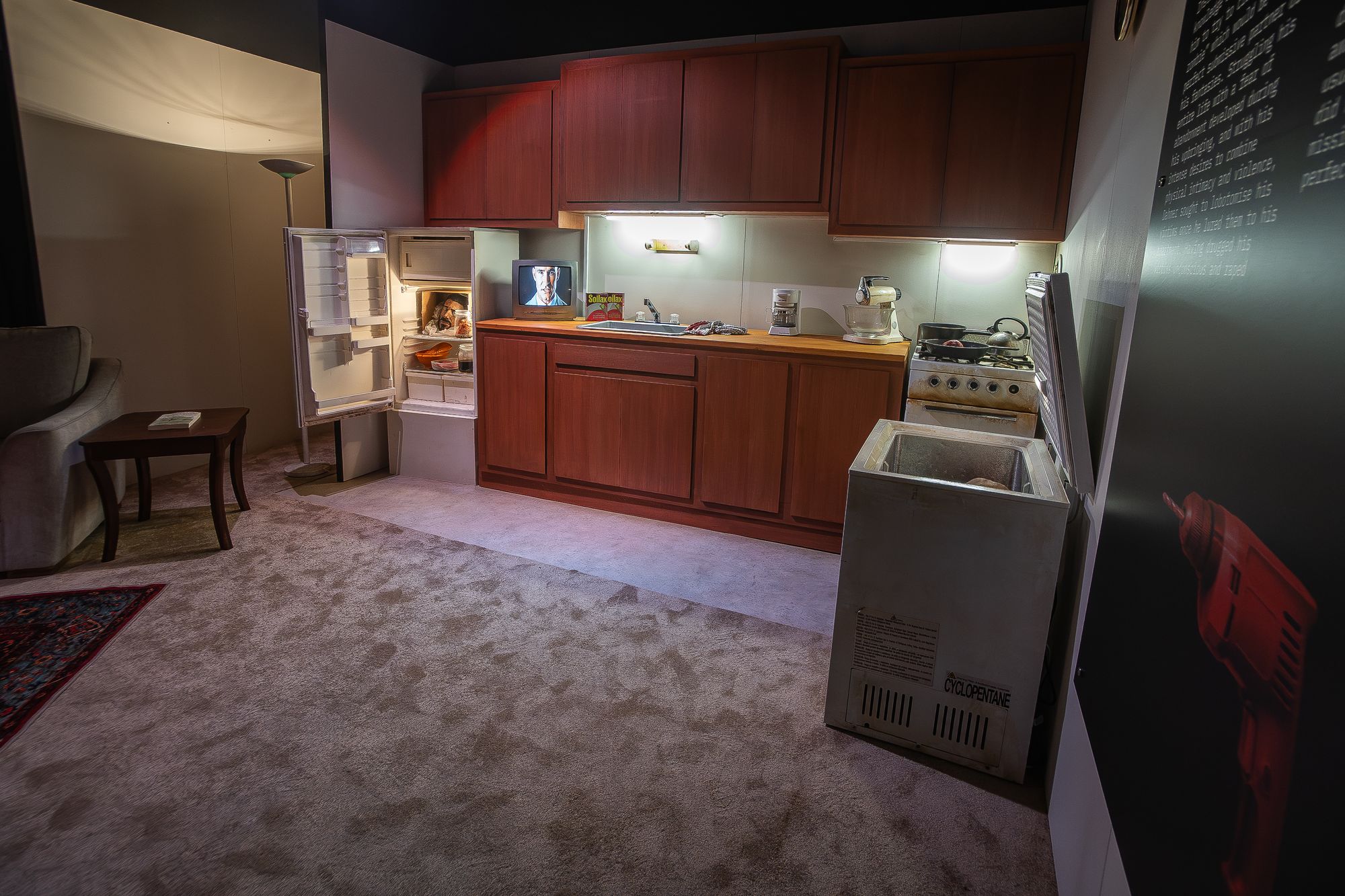
One of the most shocking scenes at the exhibit was the reconstruction of Jeffrey Dahmer’s kitchen.
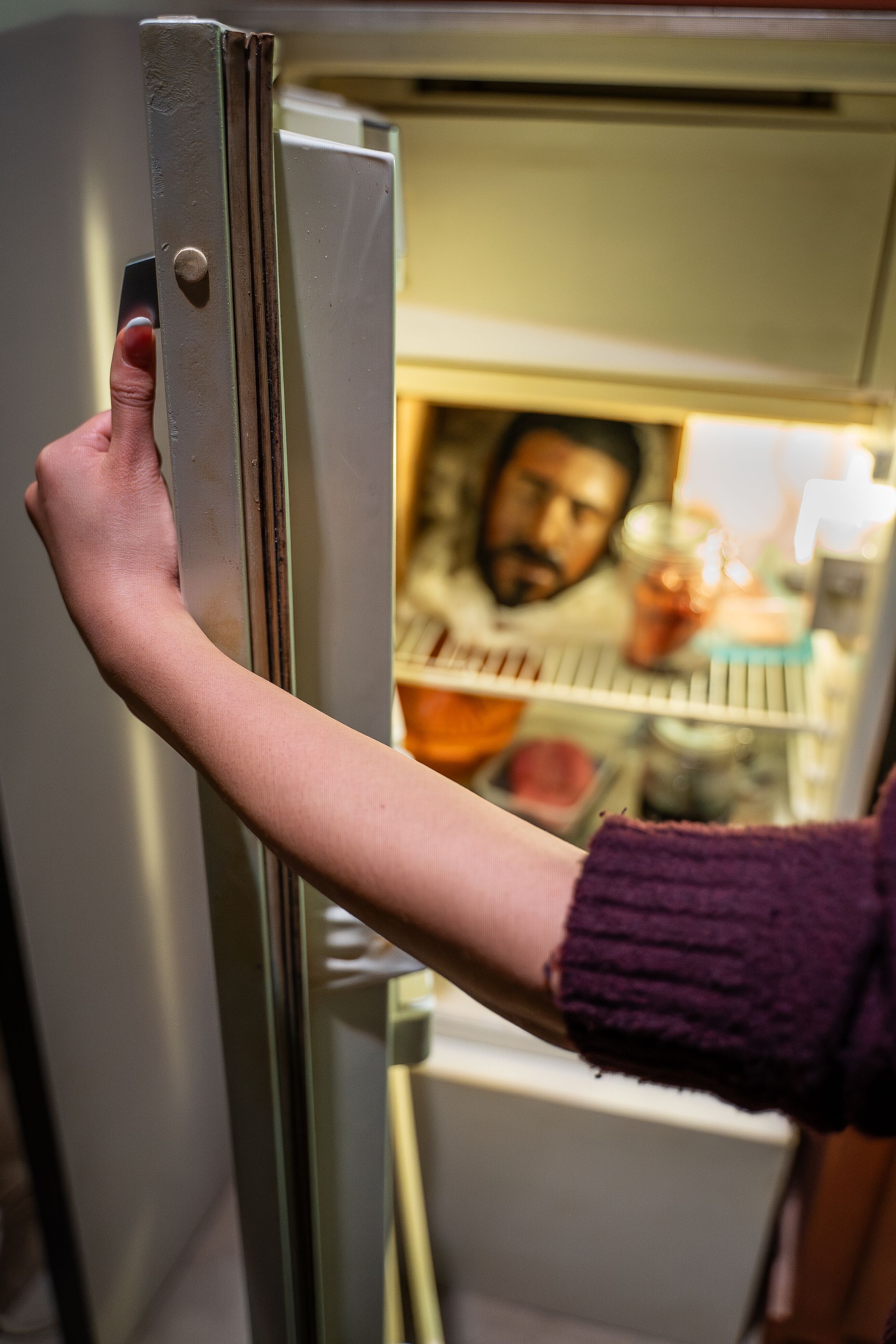
Visitors audibly gasped as an open refrigerator revealed a severed head, and other body parts on plates. On the stove, a bloody heart was “sautéing” in a skillet. Another decapitated head was stuffed in the freezer.
Dahmer, also known as the Milwaukee Cannibal, killed at least 17 men and boys between 1978 and 1991. He would lure his victims to his home with promises of money or sex. After strangling them to death, he would dismember their bodies, often keeping body parts as souvenirs.
He was sentenced to 16 consecutive life terms for the crimes but was killed in prison in 1994.
 open image in gallery
 open image in gallery
 open image in gallery
Figuring out whodunit
Nicole and Margaux, friends who live in New York City who enjoy watching true crime, wandered the exhibit together.
“I love true crime — it’s just really interesting, the mystery behind it,” Margaux told The Independent. “I also loved Mindhunter just because of how it gets into the mind of a killer. I’m definitely interested in the psychology of it all.”
Nicole added that she’d always enjoyed figuring out the whodunit and why in a true crime show.
“It's so crazy to think that any one person can do what these people have comfortably done and to understand the mind of someone who has done that. Are they born this way, did they grow up this way, are there certain factors in their life that made them be this way?”
 open image in gallery
 open image in gallery
Figuring out those questions is a focus of the exhibit.
“This isn’t about glorifying the killers – it’s about the psychology, the warning signs,” celebrity host LaKendra Tookes told the media prior to opening night of the expo.
She added that when it comes to serial killers, there’s a question people can’t let go of – how does someone become capable of this?”
“What often gets lost is the reality behind it, and that’s what we bring back into focus,” she said.
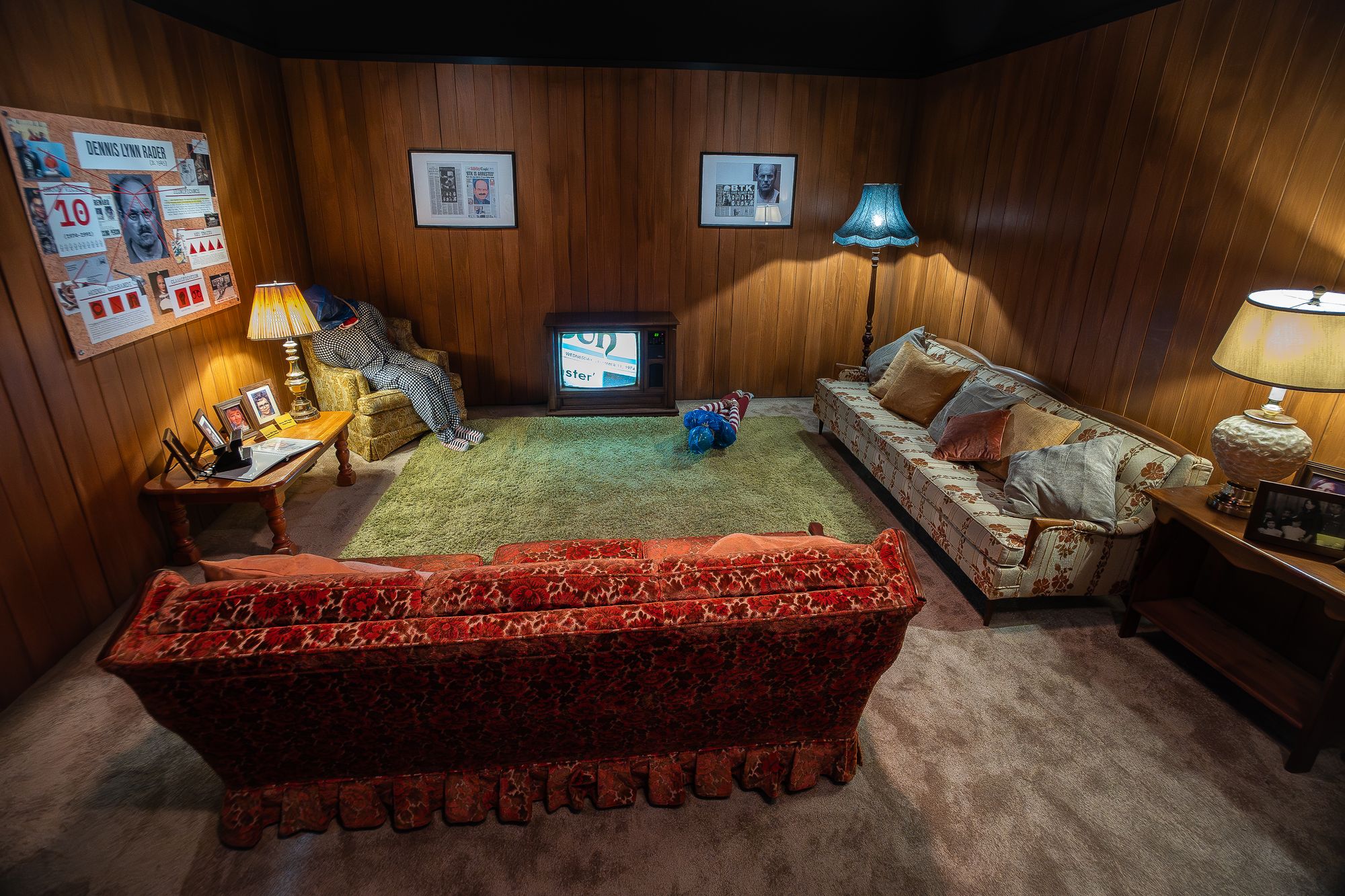
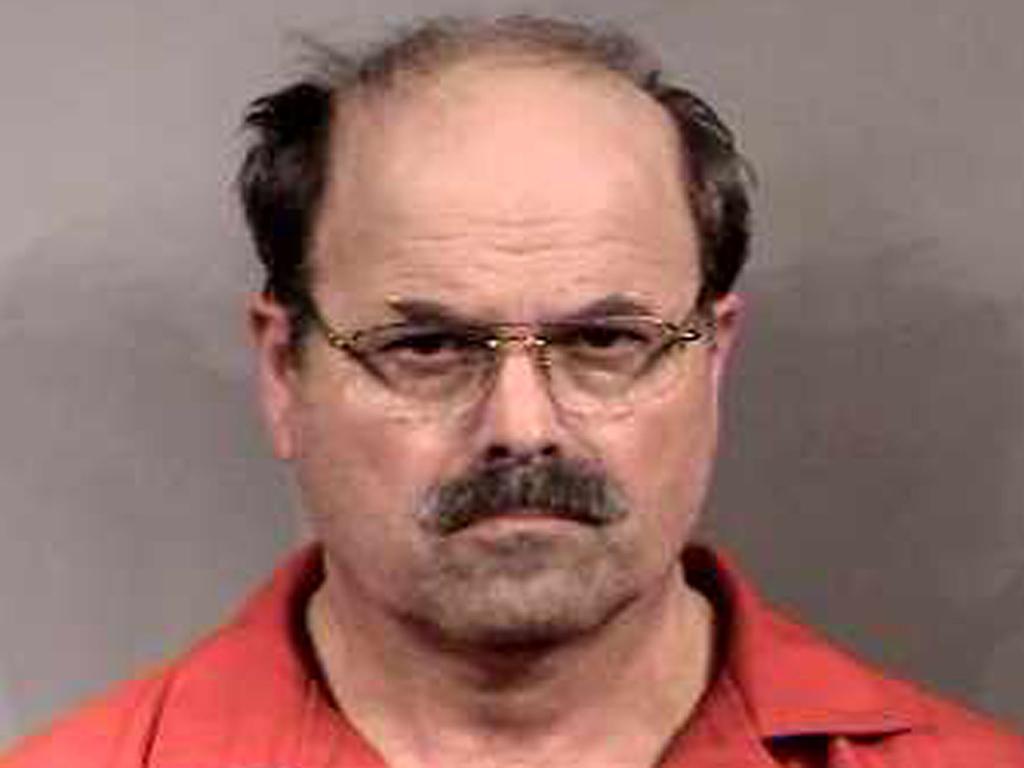
Nicole and Margaux recognized the next killer immediately upon approaching a recreation of Dennis Rader’s home, where he bound and murdered his first known victims.
Rader, the BTK serial killer whose self-given nickname stands for “Bind, Torture, Kill,” played a cat and mouse game with investigators and reporters for decades before he was caught and convicted for 10 murders.
An eerie silence hung in the room as the friends walked into the 1970s-style living room with shag carpet and walls covered in wood paneling. Bodies wrapped in black plastic and bound with rope hung from the ceiling and were posed on the recliner.
The scene was meant to represent the home of the Otero family, the first known victims of BTK as he terrorized Wichita, Kansas between 1974 and 1991.
Charlie Otero was only 15 years old when he came home in January 1974 to find his entire family killed and strung up like meat. Rader wouldn’t be arrested until 2005, three decades later.
 open image in gallery
Why are we so obsessed with serial killers?
“Sigmund Freud first described how we all come into this world with inborn drives towards violence. If we are raised in a loving home, the drive for violence matures into ambition,” forensic psychiatrist Carole Lieberman told The Independent. “But, if we are raised in a dysfunctional home, such as where there is abuse, our propensity towards violence flourishes.”
Lieberman, who has been a forensic psychiatrist and expert witness for over 20 years in criminal and civil cases, fears that viewing this kind of content in exhibitions could encourage the very violence it depicts.
”In fact, if studies are done in the cities where the expos are located, they would find an increase in violence during and after the expo takes place,” Lieberman said. “Being enmeshed in the serial killer ‘experience’ will undoubtedly influence people to ‘try it at home.’”
 open image in gallery
Organizers have defended the expo, stating that it examines the cultural fascination with true crime while shedding light on the victims’ stories and the pursuit of justice.
“We’ve seen immersive experiences reshape how audiences connect with history, science, art, and pop culture,” said John Zaller, Creative Director at Exhibition Hub.
“With this opening in New York City, we’re delving into one of today’s most popular phenomenons: true crime, which is a theme deeply rooted in human nature and storytelling throughout history. This new exhibition is a must-see for anyone interested in discovering the psychology of serial killers and the investigations that uncovered their crimes.”
 open image in gallery
A final moment to reflect
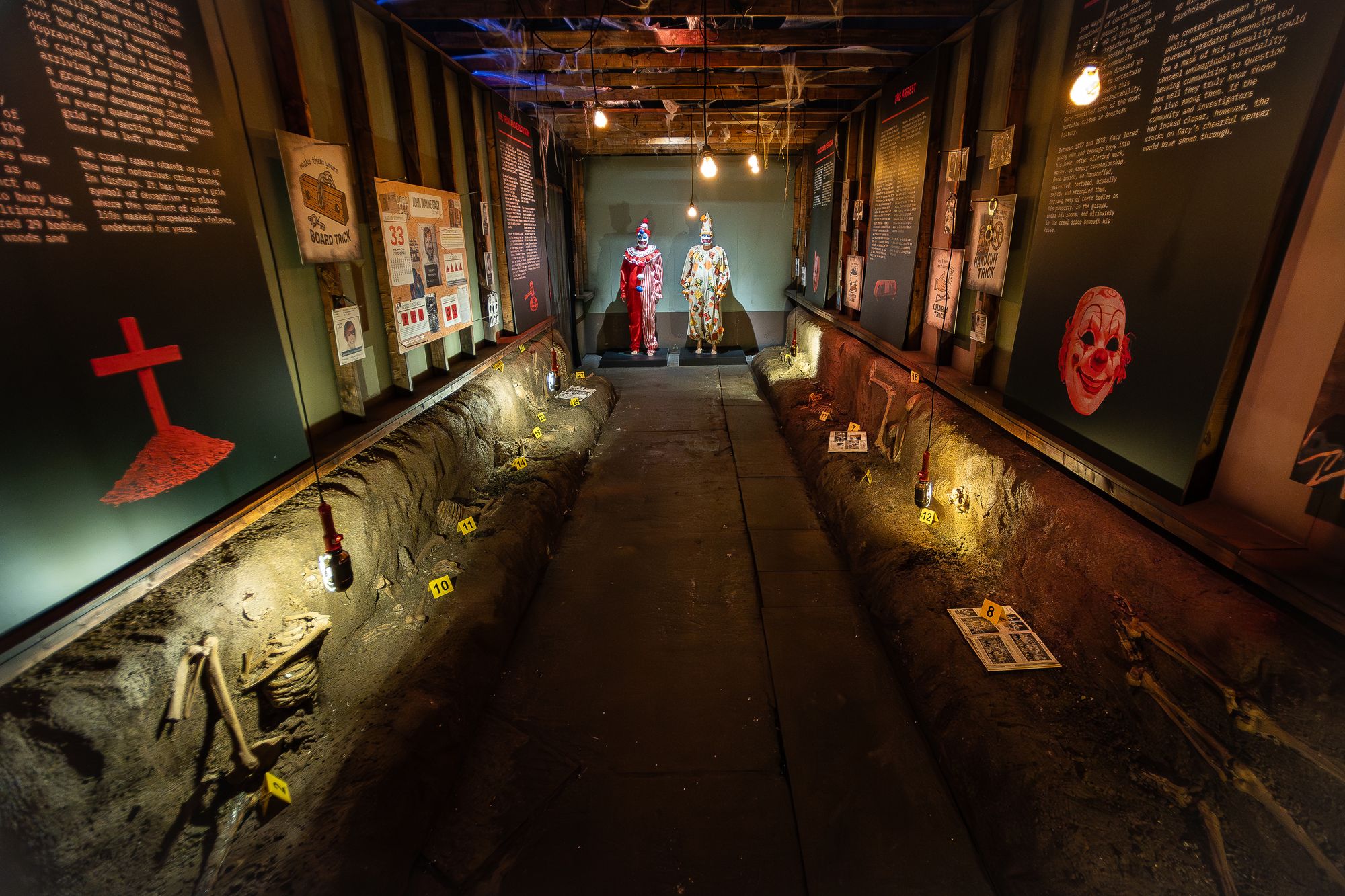
After touring 20 murder scenes, the exhibit ends not with shock, but with silence.
Matt, who did not give his last name, said his girlfriend dragged him along, left with a different perspective.
“It’s mind boggling how someone can look so normal, but this is what’s going on inside their head,” Matt told The Independent on the way out. “That this is what they’re capable of.”
A mirrored room lined with candles invites visitors to decompress – and honor the victims.
The Mind of a Serial Killer: The Experience is now open at 526 Sixth Ave. through June. Tickets start at $27.90. Entry is restricted to visitors 18 and older.
Схожі новини

No Green Card if you are a critic of Israel: New immigration rule on disqualifying factors
DC shooter Cole Tomas Allen wanted to 'fix the world,' reveals sister

Jeff Bezos and Lauren Sanchez donate $34 million to develop plastic-free fabrics for sustainable fashion