Indigenous Australians win record payout after billionaire mined their land without consent
A federal court has ordered mining giant Fortescue to pay a record A$150m (£79.9m) to the Yindjibarndi people of western Australia after finding the company mined their land without the consent of its traditional owners, concluding a legal battle lasting nearly two decades.
Justice Stephen Burley ruled on Tuesday that Fortescue was liable for A$150m in cultural loss and A$100,000 (£53,000) in economic loss.
The ruling is the largest payout ever awarded under Australia's native title laws – the legal framework that recognises the rights of Indigenous Australians over lands their ancestors have occupied for thousands of years – and is nearly three times the previous biggest court-mandated award of its kind.
Fortescue, the iron ore company founded by billionaire Andrew Forrest, began mining at its Solomon Hub in western Australia's remote Pilbara region in 2013, with permission from the state government and a local Aboriginal representative group, but without the consent of the Yindjibarndi Ngurra Aboriginal Corporation, the body recognised by the courts as holding exclusive native title rights over the area.
The mine, located about 1,500km north of Perth, has generated an estimated A$80bn (£42.6bn) in revenue since operations began and is expected to continue until the mid-2040s. More than 135sqkm of land has been fenced off from entry, including by the Yindjibarndi people themselves.
"Mining operations continue 24 hours a day, seven days a week, generating tremendous revenue for both FMG and the state," Mr Burley said in his judgment.
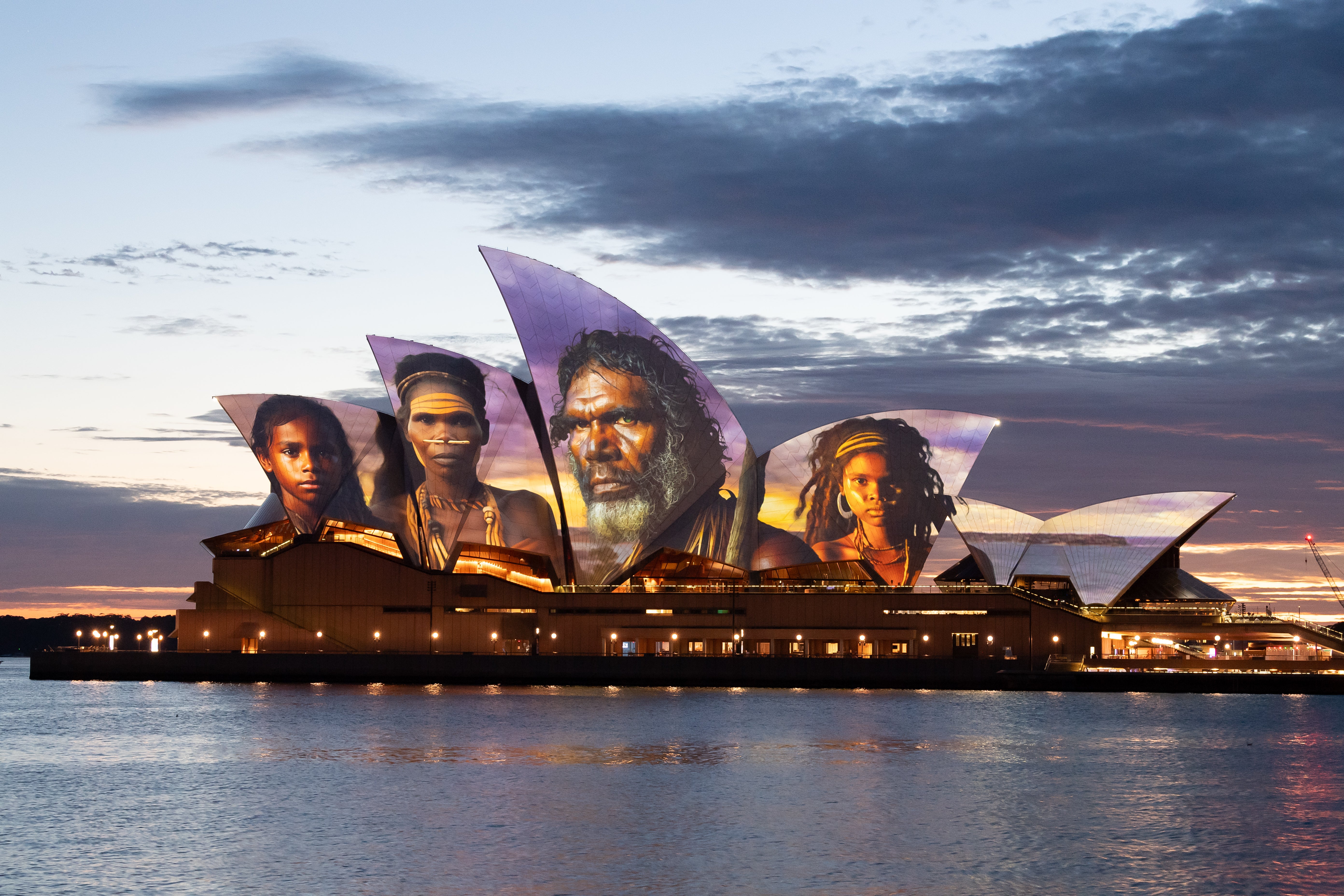
Mr Burley described the Yindjibarndi people's connection to their land as "deep and visceral", finding it affected all aspects of their lives. He characterised the cultural loss award as covering "loss or diminution of traditional attachment to the land or connection to country and for loss of rights to gain spiritual sustenance from the land".
The court heard that 240 heritage sites had been relocated and 140 cultural sites completely destroyed by mining operations.
Yindjibarndi witness Middleton Cheedy told the court: "The mine has taken everything – ngurra (home) is gone, the spirits are gone, the water is gone, the caves are gone, and our ancestors' remains have been put through the crushers on the mine site."
Despite the historic nature of the ruling, community members expressed deep disappointment at the figure. The Yindjibarndi Ngurra Aboriginal Corporation had sought A$1.8bn (£960mn), arguing it would represent one per cent of the production value of the mines while compensating for the destruction of around 250 cultural sites.
Fortescue had sought to cap the compensation at A$8m (£4.3m), while the western Australian government argued a figure of between A$5m and A$10m (£2.7m to £5.3m) would be appropriate.
Elder Wendy Hubert described the payout as "peanuts" compared with Fortescue's earnings, according to the ABC.
"They dig our ground up for nothing, give us nothing in return," Yindjibarndi woman Judith Coppin told reporters outside court. "They take tonnes and tonnes of things from our land and what do we get? Nothing."
Michael Woodley, head of the Yindjibarndi Nation Aboriginal Corporation and chief applicant in the case, said the community's fight was far from over.
"We don't get this far and stop – we're fighters, we've been fighting all our life," he said. Dozens of community members travelled from the Pilbara to Perth to witness the ruling, with more than a thousand others watching a court livestream.
Fortescue spokesperson said: "Dr Andrew Forrest and Fortescue care deeply about all First Nations people, including the Yindjibarndi community.
"Fortescue accepts that the Yindjibarndi people are entitled to compensation. The company has agreed to and pays financial compensation under all of its other seven native title agreements.”
The National Native Title Council, which advocates for Indigenous land rights across Australia, said the ruling was "the tip of the iceberg" in relation to unpaid native title claims.
"Like any other landholder, native title holders are entitled to compensation when their property rights are infringed," said chief executive Jamie Lowe. "Yet First Nations communities face expensive legal battles to access the compensation owed to them."
The Yindjibarndi people first filed their native title claim in 2003 and were awarded exclusive rights over a 2,700sqkm area of the Pilbara in 2017. The compensation case followed Fortescue's failed appeal of that ruling.
Join our commenting forum
Join thought-provoking conversations, follow other Independent readers and see their replies
CommentsСхожі новини
Mexico City’s underground secret world: Ancient temples, ritual skulls and a lost civilisation still hidden beneath modern streets

The $1.8 billion pivot: How Michael Bloomberg’s historic gift rewrote the rules of college access
Archaeologists found a hidden 1800s whisky distillery deep in the Scottish Highlands