India's drug lifeline to Africa disrupted by Iran war
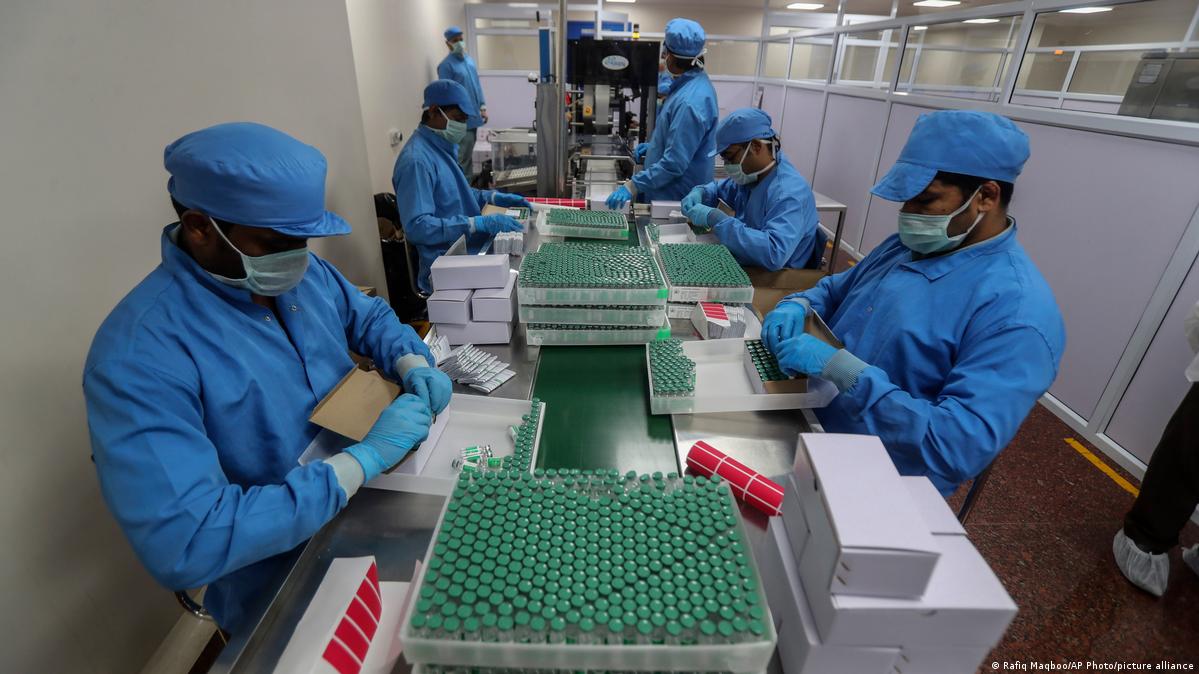
India has often been called the "pharmacy of the Global South," and for African countries, public health and Indian pharmaceuticals are deeply entwined.
Africa carries nearly a quarter of the global disease burden, with a disproportionate share of HIV, tuberculosis and malaria cases, according to data from data from public health agencies like the World Health Organization (WHO).
According to data from the United Nations Economic Commission for Africa and Nigeria's pharmaceutical regulatory agency, NAFDAC, India supplies roughly 40% of Africa's imported medicines, making it the continent's largest pharmaceutical trade partner.
From Nigeria to Kenya and South Africa, Indian generic drugs form the backbone of public healthcare systems.
Across the continent, they provide low-cost antibiotics, HIV antiretrovirals, malaria and tuberculosis drugs, insulin, blood pressure medicines and common painkillers used daily by millions.
A fragile logistics corridor
This system has worked because Indian medicines have been affordable, reliable and have moved through one of the world's most efficient logistics corridors.
Drugs manufactured in Indian hubs such as Hyderabad, Ahmedabad and Mumbai routinely passed through Gulf cargo centers in Dubai, Doha and Abu Dhabi before reaching African ports and airports.
Pharmaceutical ingredients sourced from China and Europe also move through the same network.
The drugs pass through Gulf hubs for state-of-the-art logistics needed for temperature- and climate-sensitive drugs like certain vaccines. Logistics hubs in the Gulf also have more capacity to organize large shipments originating in India and heading to African markets.
The system depends on predictable shipping schedules, relatively cheap freight and stable Gulf transit routes.
But with the Iran war choking off the Strait of Hormuz, commercial shipping from the Gulf has been disrupted, while war-risk premiums have risen, freight costs have climbed and airlines have rerouted or reduced cargo capacity through Gulf airspace.
How have US strikes impacted an Iran peace deal?
To view this video please enable JavaScript, and consider upgrading to a web browser that supports HTML5 video
Rising oil prices are simultaneously increasing manufacturing and transportation costs for pharmaceutical companies.
Unlike Europe or the US, most African countries do not maintain large medicine stockpiles. European states often mandate several months of reserves for essential drugs, while major US distributors can hold up to six months of inventory.
Many African systems, by contrast, rely on tightly timed procurement cycles and limited buffer stocks. That means delays quickly become shortages.
Supply of basic medicines disrupted
Remi Adeseun, a veteran pharmaceutical executive whose firm works with global medicine supply chains, told DW the crisis is exposing a deeper structural vulnerability than merely a temporary freight disruption.
"Africa remains heavily reliant on Indian generics and Asian pharmaceutical supply chains, even where medicines are assembled locally, because Active Pharmaceutical Ingredients (APIs), excipients and packaging materials are still largely imported from India and China," Adeseun added.
According to Adeseun, the current conflict is pushing up costs across nearly every layer of the pharmaceutical chain from APIs, petroleum-based packaging, freight and shipping insurance to diesel, financing and longer transit times.
He said one paracetamol input reportedly nearly doubled in price, while some raw materials have climbed by 40% to 50%.
Adeseun added that manufacturers have only been able to pass on a fraction of those increases because African markets are already financially stretched.
The medicines most vulnerable to disruption are the basic building blocks of primary healthcare like antibiotics, diabetes- and hypertension drugs, routine injectable medicines and common painkillers.
In many African clinics, these are the medicines patients expect to find every day.
Cold-chain medicines pose an even greater challenge. Vaccines, insulin and other temperature-sensitive drugs move largely through air cargo networks, making them especially vulnerable to aviation disruptions in the Gulf.
Cargo specialists warn that lost air capacity cannot easily be replaced, creating backlogs that may take weeks to clear.
A brewing health crisis in Africa
The India-Africa Forum Summit, scheduled to begin in New Delhi tomorrow, was postponed because of the ongoing Ebola outbreak centered in the Democratic Republic of the Congo and Uganda.
The WHO's Africa office reported in late 2025 that more than half of African countries were facing shortages of essential health products, including vaccines and tuberculosis medicines.
Sudan has reportedly seen critical medicines stranded in Dubai ports, while Botswana recently declared a public health emergency linked to medicine and medical supply shortages.
Rush for new Ebola vaccine as outbreak grows in Africa
To view this video please enable JavaScript, and consider upgrading to a web browser that supports HTML5 video
For doctors, the consequences are immediate.
Rajeev Jayadevan, a medical professional and health communicator, said these interruptions in treatment can quickly become dangerous for patients with chronic or infectious diseases.
"Patients are sometimes forced to space out doses or interrupt treatment altogether," Jayadevan told DW.
He added that the broader risk lies in how quickly supply shocks translate into system-wide stress in already fragile health systems.
"In settings with limited buffers and inconsistent supply chains, even short disruptions can cascade into widespread treatment gaps across facilities," he said.
"For tuberculosis, interrupted treatment increases the risk of multi-drug-resistant TB, which is harder and more expensive to treat. For conditions like glaucoma, delays can lead to blindness."
Can Africa reduce its dependence?
The current medicine supply shock has revived debate about local pharmaceutical manufacturing in Africa.
Javin Bhinde, a pharmaceutical industry expert and director of the India-based consultancy SynCore, told DW that India has deep structural roots on the continent.
"For many decades, India has supplied Africa with affordable, critically needed medicines, especially antiretrovirals," said Bhinde.
He noted that several major Indian pharmaceutical companies, including Cipla, Sun Pharma and Dr. Reddy's Laboratories, have established subsidiaries and manufacturing facilities in Africa to strengthen local supply.
But Bhinde said the current conflict has exposed how vulnerable those supply chains remain.
"Shipments have been rerouted, logistics and insurance costs have increased, and critical input materials for the Indian pharma industry are under pressure," Bhinde said.
Pharmaceutical executive Adeseun said that Africa's medicine security challenge goes beyond simply manufacturing more drugs locally.
Weak procurement systems, delayed public purchasing, opaque distribution networks and poor supply-chain visibility often turn external shocks into a full-blown supply crisis.
"What looks like a medicine price increase is actually a supply-chain sovereignty test," said Adeseun.
"Local manufacturing is necessary, but it will not be sufficient unless it is connected to predictable procurement, supply-chain visibility and last-mile accountability."
Why many people around the world can't afford good health
To view this video please enable JavaScript, and consider upgrading to a web browser that supports HTML5 video
Edited by: Wesley Rahn
AdvertisementСхожі новини
India's drug lifeline to Africa disrupted by Iran war

Рідкісний паразит "з'їв" печінку та досяг серця: лікарі у Львові провели унікальну операцію