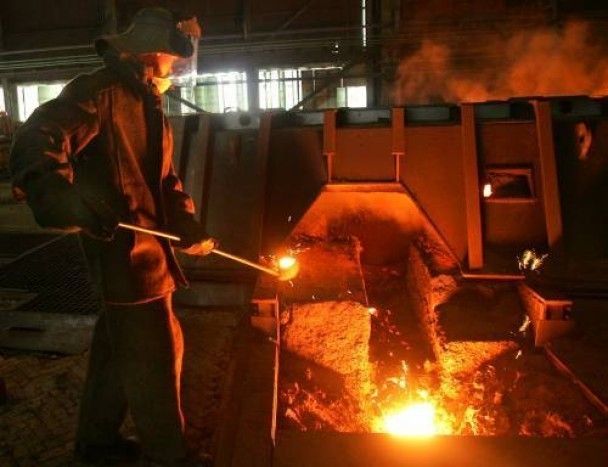
India news: CNG gas price hiked in Delhi NCR amid Iran war fallout

What you need to know
- CNG gas price hiked again amid the economic fallout from the Middle East conflict
- Indian Prime Minister Narendra Modi is set to arrive in Sweden, one of the five nations he is touring
- Modi has already visited the UAE and the Netherlands, and will also visit Norway and Italy
- Netherlands hands back Chola dynasty copper plates to India
- India's opposition demands education minister's resignation over cancelled pre-medical enterance exam
Here's a roundup of the biggest news stories from India on Saturday, May 16 and Sunday, May 17:
Skip next section CNG prices hiked in Delhi NCR for second time in two days05/17/2026May 17, 2026CNG prices hiked in Delhi NCR for second time in two days
The residents of Delhi and the adjoining National Capital Region (Delhi NCR) will have to pay a higher price for Compressed Natural Gas (CNG), widely used by public transport vehicles such as taxis and auto rickshaws.
The price of CNG rose by Rs 1 on Sunday, meaning consumers in Delhi will have to pay Rs 80.09 per kg (€0.72, $0.83) and those in regions of Noida and Ghaziabad will now pay Rs 88.70 per kg (€0.8, $0.92), most Indian news outlets reported.
Gas retail companies had already increased the price of CNG by Rs 2 on May 15, making Sunday's hike the second in just two days. India's state-run fuel retailers also increased theprice of petrol and diesel on May 15 — the first in four years.
"The fare for our vehicles has not increased, but CNG prices keep rising," one taxi driver told the PTI news agency.
"It is making a big difference for poor people like us. Our demand from the government is that CNG prices should be reduced, and our fares should be increased," he said.
The increasing fuel rates comes due to soaring global crude oil prices. While the government-run oil retailers initially absorbed the shock to keep the pressure off the masses, Prime Minister Narendra Modi and his government have now signalled deeper economic impact from the persisting conflict in the Middle East.
India's national capital and several states are already promoting austerity measures after Modi appealed for the public to not buy gold for a year and conserve fuelby using public transport and working from home.
That's because India is facing a significant shortage of US dollars which it uses to pay for its two biggest imports — oil and gold.
Experts have warned that these hikes in petrol diesel and gas prices may be just the beginning.
https://p.dw.com/p/5DrV3Skip next section Welcome back05/17/2026May 17, 2026Welcome back
Dmytro Hubenko EditorGood morning! and welcome back to weekend Indian news blog.
This is Mahima Kapoor from the New Delhi bureau, once again, geared up to give you the biggest news points of the day.
It's uncomfortably hot in the Indian capital as the stormy winds and rain have given way to the dry heat more traditional this time of the year.
While most people enjoy a lazy Sunday morning (not me, of course), the National Capital Region's residents, auto rickshaw and Uber drivers have woken up to another hike in price of gas. That's the second in just two days.
Meanwhile, PM Narendra Modi is scheduled to arrive in Sweden today. That's the third of a five-nation tour he is undertaking to shore up trade agreements, defense cooperation and improve energy security.
Sticks with us as we break things down for you.
https://p.dw.com/p/5DrLBSkip next section We are pausing our coveragePublished 05/16/2026Published May 16, 2026last updated 05/16/2026last updated May 16, 2026We are pausing our coverage
Thank you for following our India blog today!
We are pausing this weekend edition of the blog and will resume again tomorrow with more of what's making headlines in India. Be sure to come back!
https://p.dw.com/p/5DqADSkip next section IPL: Kolkata beat Gujarat on huge Finn Allen and Angkrish Raghuvanshi innings05/16/2026May 16, 2026IPL: Kolkata beat Gujarat on huge Finn Allen and Angkrish Raghuvanshi innings
In the India Premier League, the Kolkata Knight Riders (KKR) beat the Gujarat Titans on Saturday.
Three KKR batsmen hit impressive half centuries, led by New Zealand international Finn Allen's 93 runs off just 35 balls, and Indian 21-year-old Angkrish Raghuvanshi's 82 not out off 44 deliveries.
Australian Cameron Green was also on 52 not out alongside Raghuvanshi when the KKR set an imposing target of 247/2 for Gujarat to chase.
Three of the Titans also hit half centuries — 85 for Shubman Gill, 57 for Jos Buttler, and 53 not out for Sai Sudharsan — but it wasn't enough. Gujarat finished their 20 overs on 218/4, 29 runs short of the target.
It was Gujarat's first defeat in five games and a blow to the team's battle with Royal Challengers Bengaluru at the top of the IPL standings.
Kolkata, meanwhile, has found a richer vein of form after a slower start to the season. The KKR have now won four of their last five games, sitting in seventh place on 11 points and hunting down the midtable teams.
https://p.dw.com/p/5DqfnSkip next section Modi hails return of Tamil Chola Copper Plates from Netherlands05/16/2026May 16, 2026Modi hails return of Tamil Chola Copper Plates from Netherlands
Narendra Modi has met with the Prime Minister Rob Jetten and King Willem-Alexander during his visit to the Netherlands.
He signed a memorandum of understanding "between Tata and ASML for advancing the semiconductor manufacturing ecosystem in India" during his talks with Jetten.
Modi said Dutch company ASML would help with "the setting up and scaling of Tata Electronics’ upcoming semiconductor facility in Dholera, Gujarat," his home state.
But the prime minister dedicated the most time online to hailing the return of Tamil archaeological treasures from Leiden University, celebrating the news in both the English and Tamil languages.
In what he described as a "joyous moment for every Indian," Modi said that Chola Copper Plates dating to the 11th century would be repatriated to India.
The Chola Dynasty in what's now southern India led a flourishing empire between the 9th and 13th centuries.
"We in India are immensely proud of the Cholas, their culture and their maritime prowess," Modi said.
https://p.dw.com/p/5DqfBSkip next section India 'categorically rejects' latest ICC award over suspending Indus Waters Treaty05/16/2026May 16, 2026India 'categorically rejects' latest ICC award over suspending Indus Waters Treaty
India's Foreign Ministry on Saturday said it "categorically" rejected an award from the Court of Arbitration [CoA] of the International Criminal Court (ICC) granted to Pakistan amid the dispute over India suspending the Indus Waters Treaty.
The court on Friday published an additional award saying Pakistan was entitled to maximum pondage — a technical term for the storage capacity of a dam or reservoir — having deemed last August that India was in breach of international law when it unilaterally suspended the treaty.
Describing the court as "illegally constituted," a Foreign Ministry spokesman said India's position was unchanged and the "decision to hold the Indus Waters Treaty in abeyance remains in force."
"India categorically rejects the present so-called award, just as it has firmly rejected all prior pronouncements of the illegally constituted CoA," Randhir Jaiswal said. "India has never recognized the establishment of this so-called CoA. Any proceeding, award or decision issued by it is null and void."
The government suspended the 1960 treaty — which had stayed in effect for decades even amid perennially tense ties — in response to a terrorist attack in Indian-administered Kashmir that killled 26 people in April 2025, for which Delhi held Pakistan accountable.
https://p.dw.com/p/5Dqf1Skip next section WATCH: India's wedding economy driving a weight-loss drug boom05/16/2026May 16, 2026WATCH: India's wedding economy driving a weight-loss drug boom
Danish Pandit | Hanan ZaffarMounjaro and Ozempic are medicines developed to control blood sugar levels in adults with Type 2 diabetes. Now, they are being used as a fast-track weight-loss solution.
In India's massive wedding economy, appearance is often judged. Experts say such social pressures are one of the top reasons driving this trend.
Health care platform Pharmarack estimates that India's obesity drug market will reach 80 billion rupees ($837 million/€717 million) by 2030.
India's wedding economy driving a weight-loss drug boom
To view this video please enable JavaScript, and consider upgrading to a web browser that supports HTML5 video
https://p.dw.com/p/5Dpj7Skip next section Indian state offers child incentive to counter falling population05/16/2026May 16, 2026Indian state offers child incentive to counter falling population
The government of India's southern state of Andhra Pradesh will offer one-time cash payments to families for having more children, Indian media reported, in efforts to counter a decline in the state's population.
"I have made a new decision. We will provide Rs 30,000 immediately after the birth of a third child and Rs 40,000 for a fourth child. Isn’t this the right decision?” state Chief Minister Chandrababu Naidu said at a public meeting, according to news outlets Press Trust of India and Times of India.
That's roughly €270 or $312 for the birth of a third child and €359 or $416 for the birth of a fourth child. Saturday's announcement follows an earlier proposal to give families Rs 25,000 (€224, $260) on the birth of a second child. However, that proposal has been modified to benefit the third and fourth child instead.
India is the most populous country in the world and its 1.4 billion-strong population is still climbing, but the national fertility rate has dipped below the replacement rate. That means while the population is growing, it is doing so at an increasingly slower rate.
Last year, the Indian Association for the Study of Population said that the national population will peak between 1.8-1.9 billion by 2080 and then decline.
Choosing to be a child-free woman in India
To view this video please enable JavaScript, and consider upgrading to a web browser that supports HTML5 video
Naidu pointed out that as household incomes grew, people were choosing to have only one child or a second if the first was not a boy. He rejected the idea that children were a burden and emphasized the importance of having a higher fertility rate for a healthy economy.
India has a traditional preference for boys over girls. While social and government-led programs have worked to change this perception, many couples still birth multiple children in hopes of a boy due to prestige or economic reasons.
https://p.dw.com/p/5Dq47Skip next section IN DEPTH: Iran war Tests India's multi-alignment diplomacy05/16/2026May 16, 2026IN DEPTH: Iran war Tests India's multi-alignment diplomacy
Murali KrishnanIndia has long taken pride in doing what few major powers could manage. It has bought oil from Iran, built defense ties with Israel, strengthened relations with the US and expanded economic links with the Gulf monarchies, while insisting it would not be drawn into regional camps or formal alliances.
The Iran war, however, is pushing that formula to its limits. India's Prime Minister Narendra Modi seems to be feeling the pressure.
Read more about how the war in the Middle East is challenging India's flexible approach to diplomacy in this report by Murali Krishnan.
https://p.dw.com/p/5DpjISkip next section Modi hails Indian diaspora in speech in The Hague05/16/2026May 16, 2026Modi hails Indian diaspora in speech in The Hague
Prime Minister Narendra Modi addressed a crowd of Indians living in the Netherlands during a speech in The Hague on Saturday.
"Whenever I've had a conversation with the leadership of the Netherlands, they always praised the Indian diaspora... Every Indian is proud of your contribution to the society and economy of the Netherlands," he said.
Roughly 90,000 Indian nationals reside in the Netherlands and thousands of Indian students are enrolled at Dutch universities.
Modi also addressed the challenges stemming from the Iran war in his speech.
"The world is dealing with new challenges. First Covid-19, then war, and today's energy crisis. In such times, India and the Netherlands are making endeavours to establish a future-ready supply chain," he said.
https://p.dw.com/p/5DpuFSkip next section Opposition demands education minister's resignation over leaked pre-medical entrance test05/16/2026May 16, 2026Opposition demands education minister's resignation over leaked pre-medical entrance test
The National Students' Union of India — a youth wing of the Indian National Congress (INC), the country's largest opposition party — held a protest outside the National Testing Agency (NTA) in New Delhi on Saturday following the controversial cancellation of the all-India pre-medical entrance test.
The National Eligibility cum Entrance Test-Undergraduate (NEET-UG) 2026 examination was cancelled on May 12 after allegations that the question paper was leaked. The entrance test is under the NTA's purview.
The exam is conducted by pen and paper for over 2.2 million candidates in a single shift, across thousands of centers in India. That means printing thousands of question papers, transporting them and securing them at locations ahead of the exam.
As the massive physical exercise makes the question paper vulnerable, NEET-UG papers have been leaked several times before. Students who already sat for the exam on May 3 will now take the exam again in June.
The re-exam not only increases anxiety and uncertainty for students preparing for the highly competitive entrance test, but also impacts those from disadvantaged social groups and low-income households, who might struggle to pay for their journeys to reach their designated exam centers.
NSUI members blame education minister
Protestors carried locks and chains symbolising the shutdown of the NTA, news agency ANI reported. They also held placards and raised slogans against the NTA and Union Education Minister Fharmendra Pradhan.
"We demand a ban on NTA and strict action against the culprits who have ruined students' mental health and driven them to depression and suicide," one protester at the site said. Others demanded Pradhan's resignation.
Meanwhile, India's Central Bureau of Investigation on Friday said it had identified the culprit behind the paper leak — a chemistry lecturer associated with the examination process on behalf of the NTA.
The lecturer is said to have dictated questions and their correct answers to his coaching students before the exam.
The ruling Bharatiya Janata Party's spokesperson said "the exam mafia involved in playing with the future of children would not be spared at any cost," and termed the leak as an "unfortunate matter."
"The internal arrangements were strong, but the disruption was created by outside elements," he had told reporters.
Authorities have assured that next year's NEET-UG exam will be conducted online to prevent further leaks.
https://p.dw.com/p/5DppySkip next section West Bengal's Abhishek Banerjee faces police probe over Amit Shah remarks05/16/2026May 16, 2026West Bengal's Abhishek Banerjee faces police probe over Amit Shah remarks
Police in Kolkata have opened criminal proceedings against West Bengal's losing party leader Abhishek Banerjee for allegedly making inflammatory remarks against India's Home Minister Amit Shah ahead of the recent elections.
Banerjee is the nephew of former West Bengal Chief Minister Mamata Banerjee, who faced a staggering defeat by Shah's Bharatiya Janata Party (BJP) on May 4.
Abhishek Banerjee is also the losing Trinamool Congress' (TMC) general secretary.
The high-stakes election saw allegations of vote theft, pre- and post-poll violence, and significant tensions in the state where the BJP had never held power before.
While the details of the First Information Report (FIR) are not yet known, India's state-run Radio News said the complaint refers to remarks that were widely circulated on social media, including the MP’s official Facebook page.
After TMC lost the elections, several BJP supporters have been seen shouting insults at Abishek Banerjee outside his house in Kolkata. DW has also witnessed people shouting "chor" — Hindi for "thief" — as they passed his residence.
Experts say BJP’s West Bengal win was more a rejection of the TMC than direct support for the BJP. People in the state have long complained about rampant corruption and lack of growth, leading to TMC's removal from power after a 15-year rule.
https://p.dw.com/p/5DphOSkip next section Farmers clash with police during march over crop prices05/16/2026May 16, 2026Farmers clash with police during march over crop prices
Indian police deployed water cannons and fired tear gas at farmers on Friday as hundreds of them tried to break barricades and march towards the governor's residence in the Northern state of Punjab.
The farmers were marching to submit their demands to Punjab Governor and Chandigarh Administrator Gulab Chand Kataria, according to several reports in Indian media. Farmers in India hold significant political sway and are a key vote bank.
The protest and march came after the government released its annual list of minimum support price (MSP) for certain crops. Before the march, several groups of farmers had burned copies of the government's MSP notice.
Iran war triggers fertilizer crisis for India's farmers
To view this video please enable JavaScript, and consider upgrading to a web browser that supports HTML5 video
MSP is the price at which the government promises to procure certain crops from farmers, acting as a safety net against market crashes. It is announced every year by the government based on recommendations, making it more of a policy rather than a legal guarantee.
Indian farmers, especially those from the northern states of Punjab Haryana, and Uttar Pradesh, have long demanded a legal guarantee of MSP for their crops.
In 2021, thousands of protesting farmers forced Prime Minister Narendra Modi's government to repeal farm laws, which they believed would leave them vulnerable to larger corporations and deplete their negotiating power.
A legal MSP guarantee was also a key demand at the time, which has not been fulfilled.
Since then, farmers in smaller numbers have continued to protest at certain borders, and similar marches and clashes erupt every year when the government releases the official MSP for the upcoming crops.
More on the clashes
Authorities had granted permission for only 32 representatives from the farmers' union to submit their demands to Kataria.
However, farmers were adamant about marching in large numbers, with some reportedly clashing with the police.
Authorities briefly detained some farmers who were later released, and claimed a few police officials sustained injuries during the scuffle.
How climate change forces Indian farmers to stay single
To view this video please enable JavaScript, and consider upgrading to a web browser that supports HTML5 video
https://p.dw.com/p/5DpggSkip next section PM Modi set to talk semiconductors, free trade during Netherlands trip05/16/2026May 16, 2026PM Modi set to talk semiconductors, free trade during Netherlands trip
Indian Prime Minister Narendra Modi has arrived in the Netherlands for a two-day visit to deepen bilateral ties in trade, investment, defense, and semiconductors.
"This visit to the Netherlands is taking place at a time when the free trade agreement between India and the EU has given a significant boost to trade and investment relations," Modi said on X, posting pictures of him being welcomed in Amsterdam on Friday evening.
"It offers the opportunity to strengthen ties in areas such as semiconductors, water, clean energy, and more," he said.
India has ramped up efforts to alter its global position as a buyer of technology to producing critical tech in collaboration with Western partners. The approach is part of New Delhi's decision to diversifybeyond China-centric supply chains after the disruptions seen during the COVID-19 pandemic and the recent global conflicts.
India first launched domestic chipmaking in 2021 under the "Make in India" initiative and has since expanded on the strategy by approving several projects.
Modi has previously spoken about his ambitions of "making India a leader in the global semiconductor value chain."
Apart from chips, the Netherlands is also India's largest export destination in Europe.
Modi's Europe tour comes as New Delhi pushes to finalize a free trade agreement with the European Union.
EU-India trade agreement: consequences for the economy
To view this video please enable JavaScript, and consider upgrading to a web browser that supports HTML5 video
In response to a reporter's question about the pending FTA agreement, a foreign ministry spokesperson said, "That is a priority. We are working with the European Union to have it agreed to at the earliest. So we will be, please keep tuned in for an immediate outcome coming up.
Modi's two days in the Netherlands
The Indian premier was greeted by the Indian diaspora in Amsterdam, where he was welcomed with several traditional dance forms, including one from Modi's home state - Garba.
Over the two days, Modi is expected to hold bilateral talks with the Prime Minister of the Netherlands, meet King Willem-Alexander and Queen Maxima, and meet the business leaders of the Netherlands.
Modi's time in the Netherlands follows his trip to the UAE. After this, he will also visit Sweden, Norway and Italy.
https://p.dw.com/p/5DpekSkip next section Welcome to our coverage05/16/2026May 16, 2026Welcome to our coverage
Mahima Kapoor | Karl Sexton EditorGood morning and welcome to DW's India news blog.
This is Mahima Kapoor from the New Delhi bureau, and I will be your guide through the day’s biggest headlines from India.
Prime Minister Narendra Modi has arrived in Netherlands, beginning the European leg of his five-nation tour. India has ramped up its diplomatic efforts and in the last month, in an effort to limit the fallout from the Iran war.
Modi's tour of Europe, which comes after a visit to the UAE on Friday, also gives Modi a chance to finalize bilateral trade and strategic agreements with European nations amid a larger EU trade agreement, as India looks to move away from its dependence on China.
At home, Indian farmers once again faced tear gas and water cannons as some of them marched towards the residence of the governor of the Northern state of Punjab. Farmers from the northern state of Punjab and Haryana have long been unhappy about official minimum support prices and what they call, Modi's 'anti-farmer' character.
Meanwhile, India's weather agency has said that monsoons, aka the rainy season, which is critical for India's agricultural sector, will arrive earlier than expected, hitting the southern state of Kerala as soon as May 26.
Stick with us as we break everything down for you.
https://p.dw.com/p/5DpbgShow more postsСхожі новини
В Україні обсяг гривневих кредитів серед населення за рік зріс на 28%, – НБУ
India news: CNG gas price hiked in Delhi NCR amid Iran war fallout
Кулеба: Понад половина підприємств на прифронтових територіях не працюють, втрачено до 100 000 робочих місць