Inaugural Sustainability Summit Convenes A Day Before ASEAN Meeting Begins In The Philippines
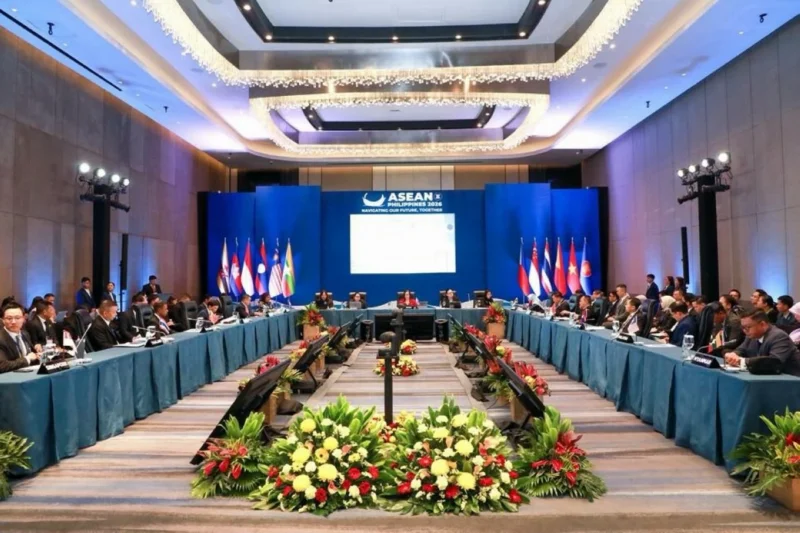 ASEAN ministers meet a day before the actual convention starts. (Photo from ASEAN)
May 7, 20263 hours
Raymond Tribdino
0 Comments
Support CleanTechnica's work through a Substack subscription or on Stripe.
ASEAN ministers meet a day before the actual convention starts. (Photo from ASEAN)
May 7, 20263 hours
Raymond Tribdino
0 Comments
Support CleanTechnica's work through a Substack subscription or on Stripe.
A day before the 48th ASEAN Leaders’ Summit dominates headlines with its focus on energy and food security in the face of the Middle East crisis, a parallel gathering is quietly reshaping the region’s economic future.
The inaugural ASEAN-EU Sustainability Summit convened today in Cebu, marking a decisive shift toward private-sector-led solutions for Southeast Asia’s green transition.
CleanTechnica is at Tambuli Seaside Resort and Spa in Mactan, where the summit brought together approximately 200 senior leaders from government, industry, and civil society. Unlike traditional diplomatic forums heavy on policy declarations, this event was distinctively funded entirely by the private sector, signaling a new era where businesses are not just participants but primary architects of the region’s resilience.
Against the backdrop of a national energy emergency declared by the Philippines in late March, the agenda was laser-focused on actionable strategies. Discussions centered on four pillars: energy transition and green finance, circular economy development, sustainable trade and supply chains, and climate-resilient agriculture. The summit presented valuable opportunities for the EU and international partners to support ASEAN’s sustainability agenda while deepening Philippines-EU cooperation as negotiations for a bilateral free trade agreement progress.
The morning session opened with welcoming remarks from Paulo Duarte, president of the European Chamber of Commerce of the Philippines, followed by an address from Cebu Governor Pamela Baricuatro. Assistant Secretary Kristian Ablan of the Philippine Department of Trade and Industry delivered the opening keynote, followed by a video message from Patrick Child, deputy director-general for environment at the European Commission.
The first flagship panel, “Making circularity work: Scaling extended producer responsibility in ASEAN,” examined how ASEAN can move from circular economy policy intent to effective market-ready implementation. Rob Kaplan, CEO and founder of Circulate Capital, presented on unlocking investment in circular supply chains. The panel featured Jonas Leones, undersecretary for policy, planning and international affairs at the Department of Environment and Natural Resources; Dr. René van Berkel, co-convenor of the ASEAN Circular Economy Business Alliance; and Antonio del Rosario, president of Coca-Cola Philippines. Chris Humphrey, executive director of the EU-ASEAN Business Council, moderated the discussion.
Jose Ma. Concepcion III, chairman of the ASEAN Business Advisory Council, delivered a keynote speech emphasizing the role of entrepreneurship in regional prosperity. European Commissioner Jozef Síkela provided remarks via video on international partnerships.
A fireside chat on ASEAN-EU cooperation for climate resilience featured Robert E.A. Borje, vice chairperson and executive director of the Climate Change Commission, and Massimo Santoro, ambassador of the European Union to the Philippines. The discussion highlighted how partnerships can create jobs, support incomes, and enhance long-term stability by linking climate action with economic resilience and trade. Prof. Victor Andres Manhit, founder and CEO of Stratbase, moderated the conversation.
Jennifer Motles, chief sustainability officer at Philip Morris International, presented on business resilience and supply chain management, emphasizing how the private sector has the technology, capital, and agility to solve crises that governments struggle to manage.
The second flagship panel, “Sustainable trade and business resilience: Strengthening supply chain integrity in ASEAN,” examined how embedding sustainability considerations into supply chain integrity frameworks can contribute to more resilient and responsible trade systems. Agaton Uvero, deputy commissioner of the Bureau of Customs, joined Rodney van Dooren, director of illicit trade prevention at Philip Morris International; Marisa Razeek, SCOPE Trade regional team lead at the International Trade Centre; and George Barcelon, member of the ASEAN Business Advisory Council and chairman emeritus of the Philippine Chamber of Commerce and Industry. Attorney Karen Jimeno, chief legal counsel at SofCap Partners PE and host of Bilyonaryo News Channel, moderated the panel.
The afternoon featured lunch and networking in an exhibition pavilion showcasing green innovations and sustainable technologies from EU and ASEAN stakeholders. Finance Secretary Frederick D. Go delivered a ministerial keynote on building a resilient and sustainable economy amid troubled times. Leonardo A.A. Teguh Sambodo, deputy minister for food affairs, natural resources, and environment at Indonesia’s Ministry of National Development Planning, presented on the same topic.
A ministerial panel brought together senior government stakeholders from across ASEAN to explore foundational elements of building a green, sustainable, and resilient economy. Dr. Neil Adrian S. Cabiles, assistant secretary at the Office of the Chief Economist at the Department of Finance, and Sambodo participated in the discussion moderated by Paulo Duarte.
The World Organization for Animal Health presented on the critical role of animal health in food security. Surbhi Jain, senior manager of government affairs at Boehringer Ingelheim, discussed the connection between healthy animals and sustainable ASEAN development.
The third flagship panel, “Food security, animal health, and climate resilience: A sustainability imperative for ASEAN,” examined how strengthening agricultural sustainability and animal health can support climate resilience. Roger Navarro, undersecretary for operations and agri-fisheries mechanization and for rural credit at the Department of Agriculture, participated alongside Dato Sri Norazman Ayob, deputy secretary general of Malaysia’s Ministry of Agriculture and Food Security, joining virtually; Dr. Kanjana Kwanmuang, deputy secretary general of Thailand’s Office of Agricultural Economics; Dr. Serge Morand, research director at the French National Centre for Scientific Research; Lionel Dabaddie, FAO representative in the Philippines; and Cynderella Galimpin, head of animal health at Boehringer Ingelheim. Imelda Bacudo, co-chair of the Global Alliance for Climate Smart Agriculture, moderated the discussion.
A final industry panel on ESG commitments and credible reporting brought together capital market regulators, industry practitioners, and the professional community to discuss implementation challenges and how standards can strengthen sustainability reporting across ASEAN. Javey Paul Francisco, commissioner of the Securities and Exchange Commission, participated alongside Benjamin Villacorte, EY sustainability partner and chairman of the Philippines Sustainability Reporting Committee; Jessica Cheam, founder and CEO of Eco-Business; and Michael Tan, council member of the ASEAN Business Advisory Council. George Thomson, head of public affairs for Asia-Pacific at ACCA, moderated.
ASEAN Secretary-General Dr. Kao Kim Hourn and EU Ambassador to ASEAN Sujiro Seam delivered closing messages via video. Chris Humphrey provided final remarks before the summit concluded with networking and exhibition viewing.
The event reflected a broader shift in how ASEAN and the EU are addressing sustainability. Rather than waiting for government budgets or international aid, the private sector has stepped forward as the primary funder and driver of solutions. The summit demonstrated that circular economy approaches, supply chain integrity, animal health systems, and credible ESG reporting are not optional add-ons but essential components of economic resilience in a region facing unprecedented volatility.
As the main ASEAN Leaders’ Summit convenes tomorrow to tackle immediate energy and food security concerns, the groundwork laid in Cebu today signals that Southeast Asia’s future depends on integrating sustainability into every economic decision. The message is clear: green growth is not a luxury but a necessity for survival.
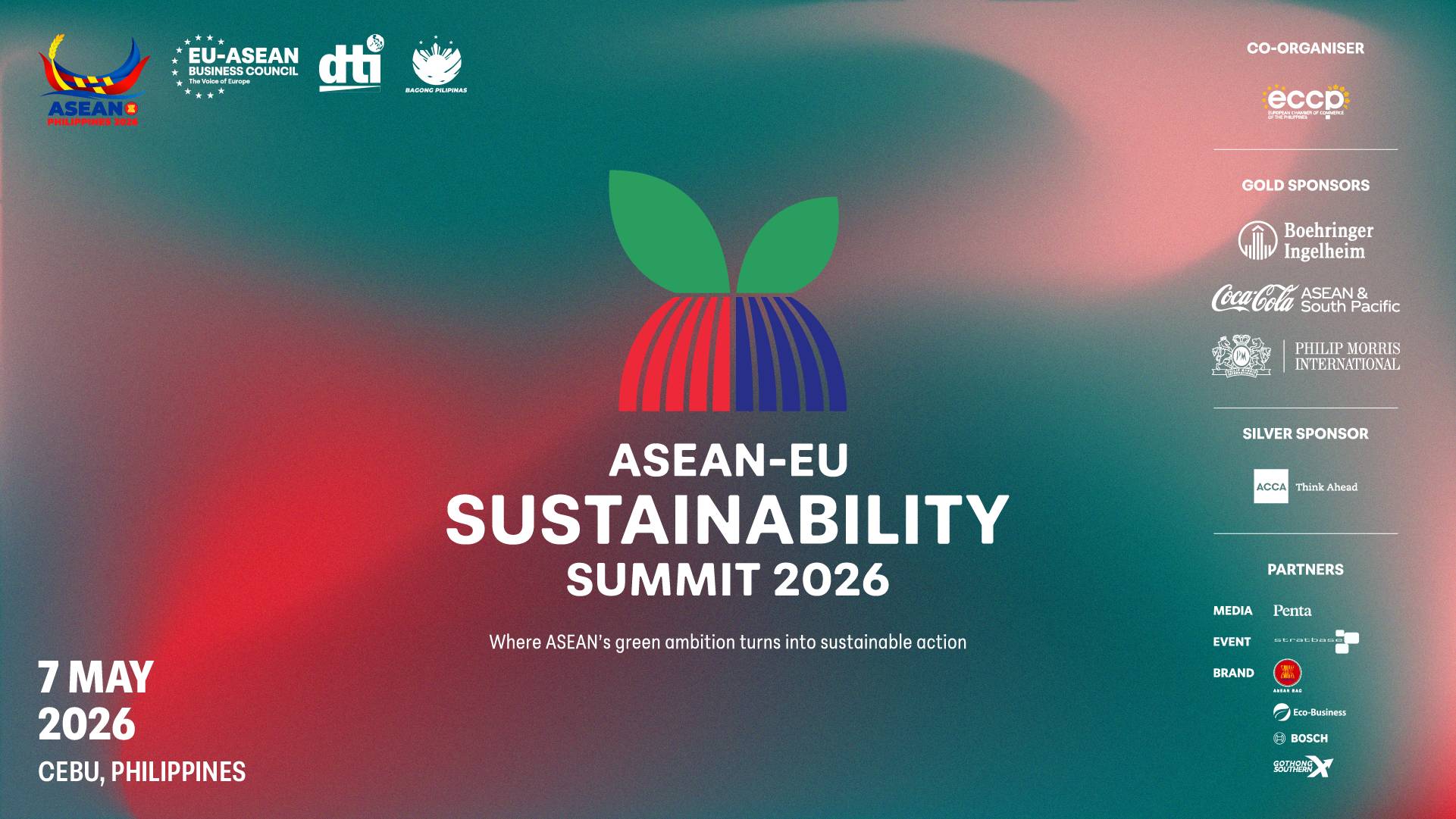
The summit was jointly organized by the EU-ASEAN Business Council and the European Chamber of Commerce of the Philippines, with endorsement from the Philippines’ Department of Trade and Industry. Major corporate partners including Boehringer Ingelheim, Coca-Cola ASEAN and South Pacific, Philip Morris International, and ACCA Global provided full funding for the event.
CleanTechnica's Comment Policy
Share this story!
Схожі новини

Quote of the day by Plato: “We can easily forgive a child who is afraid of the dark; the real tragedy of life is when men are afraid of the light.”

Переживаете из-за того, что о вас думают другие? Возможно, не зря

Церемония посвящения. В Южной Корее робот-монах впервые принял участие в буддийском обряде
