If Communities Adopt More EVs, Cleaner Grids Will Follow
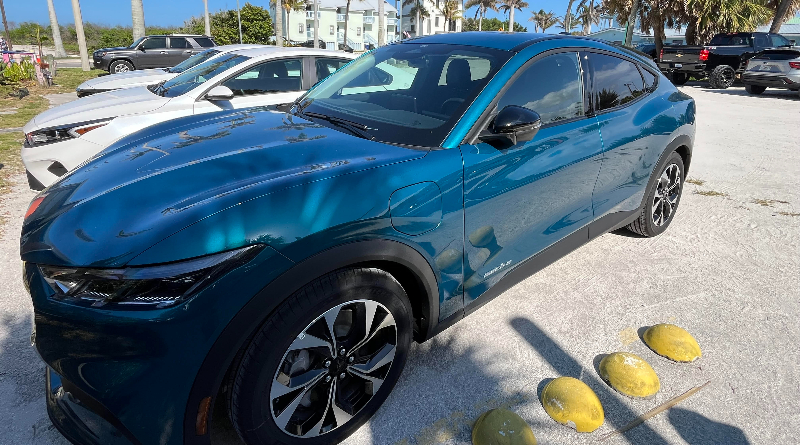 Photo of Ford Mustang Mach E by Carolyn Fortuna/ CleanTechnica
May 18, 20262 hours
Carolyn Fortuna
0 Comments
Support CleanTechnica's work through a Substack subscription or on Stripe.
Photo of Ford Mustang Mach E by Carolyn Fortuna/ CleanTechnica
May 18, 20262 hours
Carolyn Fortuna
0 Comments
Support CleanTechnica's work through a Substack subscription or on Stripe.
Electric vehicles (EVs), which have zero emissions, lead to lower air pollution. It is known. Then again, for EVs to meet their full green potential, a clean electric grid must power them. When electrical grids across regions are decarbonized, deeper and faster overall emission reductions are the result. What is newly understood, moreover, is, if larger mass adoptions of EVs takes place, low carbon electricity production for all should follow.
In other words, more EV adoption — in-and-of itself — can make the electric grid cleaner.
A Pathway from EV Charging to Grid Investment
Are you curious how plug-in EV adoption in the US will shape the national electricity grid’s infrastructure, operations, and emissions?
Green energy grows more in scenarios with greater EV adoption. More and more researchers are convinced that adding whole fleets of EVs on roads will create a greener electric grid, as induced changes in infrastructure investment affect overall generation mix and power system emissions.
Think of it as a continuum: EV drivers increase electricity demand. Electricity demand boosts investments in renewable energy. Therefore, enhancing EV adoption rates triggers investment in more power generating capacity, especially wind, solar, and natural gas as well as battery storage.
To determine the effects of different EV adoption trajectory scenarios, researchers estimated power system infrastructure investment, generation mix, and greenhouse emissions over time. They weighed the resulting net difference in greenhouse emissions from an increase in EV adoption to changes in power system emissions to those of displaced gasoline vehicles. By comparing across scenarios, they found that increasing EV adoption induces investment and affects the power generation mix.
The results? The greater the level of EV adoption, the lower emissions related to charging each vehicle will be.
Much of the world is already moving ahead exponentially with EV adoption, so the road to a cleaner grid is on the horizon. About 15% of new cars produced in 2024 were plug-in EVs, the researchers note, and, as EVs come down in cost and increase in range, they could account for half of new car purchases by 2030 — even without government subsidies.
So, if the emission intensity of electricity continues to decrease, as it has over the past decade, emissions reductions from battery EV adoption could be significantly higher than previously estimated. By 2032, “the increases in grid emissions per additional EV are an order of magnitude lower than displaced gasoline vehicle combustion emissions,” the researchers write.
These conclusions and more are reported out in the Proceedings of the National Academy of Sciences.
Transportation Doesn’t Have to Sit at the Top of Emissions Charts
Transportation is the largest source of GHG emissions in the US. Most of the sector’s emissions come from road transport, which derives over 90% of its energy from petroleum. Light-duty vehicles, including cars and small trucks, account for about 57% of transportation emissions.
Transportation can decarbonize through a number of pathways, include switching to lower carbon fuels, improving vehicle efficiency, and improving system-wide efficiency through the use of autonomous vehicles and vehicle sharing. Importantly, one of most efficacious methods for the transportation sector to decarbonize is for greater adoption of EVs — EV charging on the power grid is the largest factor in determining the net emissions implications of electrification.
Studies have found that battery electric vehicles reduce GHG emissions by about 25%–40%, with an average US or European electricity mix compared to gasoline internal combustion engine vehicles (ICEVs) of similar size and class. If ICEVs that are to be replaced by BEVs are selected randomly across the country (reflecting fleet-average emission reductions), an estimated 21% of the fleet needs to consist of BEVs to achieve a 10% reduction in GHG emissions.
EVs sales numbers have been increasing steadily over the past decade, to the point where EVs in 2024 held a market share among new vehicles of over 20% globally and over 40% in several individual countries. This EV adoption rate enhance confidence in EVs even as the Trump Administration’s US Big Beautiful Bill Act of 2025 largely undermined former President Biden’s climate policy achievements through the IRA.
EV adoption can induce renewable energy infrastructure investments that shift power generation mix and emissions and produce lower consequential emissions estimates of EV adoption than was previously understood. The grid sensitivity scenarios the researchers considered impacted not only the generation mix across EV adoption scenarios but also the regional technologies with the largest capacity expansion.
High EV adoption is likely to lead to more solar in the Southeast and Southwest, wind in the Central US, and natural gas in the mid-Atlantic region of the country. Under a 95% decarbonization by 2050 scenario, there is more generation after 2045 to meet the same EV load due to increased renewables with curtailment. The aggressive decarbonization grid scenarios still have regions with increased generation of natural gas from EVs but build out more carbon capture and sequestration with the natural gas.
Persuading Consumers to Make the Leap to Battery Electric Transportation
Clean grids can lower the full life cycle emissions of EVs.
The famous Field of Dreams line goes, “If you build it, they will come.” Optimistic? Yeah. A bit foolhardly? Maybe. Possible? Sure. But the EV marketplace must give potential customers specific and powerful reasons why they should buy into a product or service, called a unique value proposition. Those reasons then need to be disseminated in a compelling way so that buying an EV becomes visible and enticing. Messaging must be clear, prominent, and accessible.
At its core, an inquiry into persuasion tries to answer a series of questions.
- How do emotions and logic work together to influence decision-making?
- What makes certain messages more persuasive than others?
- How do brands, leaders, and social movements utilize persuasion techniques to shape public opinion?
- What ethical boundaries exist in the use of persuasion, especially in the age of AI and social media?
Although the future is electric, one-to-one contact can help promote the personal transportation transition. Consumers process information, form attitudes, and express identity through consumption. Their personality traits, self-concept alignment, and motivations are all tied up with personal quests to seek meaning, not merely utility, in their purchasing choices. Deciding to switch to an EV is not much different than any other major consumer buying decision.
Some organizations already are moving forward with the “they will come” EV persuasion mindset by offering mentoring opportunities. Here are a few of many examples.
- By partnering with artists and storytellers, Generation 180 works to change the climate narrative from gloom and doom to “We Got This!” and give people meaningful ways to take action toward a cleaner, healthier, and more equitable energy future.
- The Seattle environmental group, Coltura, believes in putting a premium on programs to help the most gasoline-burdened drivers switch to EVs. They explain how those drivers can save more money and avoid more pollution — while also optimizing the impact of public and private investments in cleaner transportation.
- National Drive Electric Week is a nationwide event to increase awareness and highlight benefits of electric vehicles across US cities. Three non-governmental organizations (Plug-In America, the Sierra Club, and the Electric Auto Association) serve as the national team to support the various events across the country. In addition, many local organizations and individuals work together at the grassroots level to bring the full range of events to local communities. This event continues to increase in scale each year.
Resources
“Decarbonizing US transportation.” Center for Climate and Energy Solutions.
“Determinants of electric vehicle emissions savings and costs across locations and individuals.” Marco Miotti and Jessika E Trancik. Environmental Research Letters. May 12, 2026.
“Driving the grid forward: How electric vehicle adoption shapes power system infrastructure and emissions.” Hanig L., et al. Proceedings of the National Academy of Sciences. 2025.
“Electric vehicles don’t just cut tailpipe emissions, they drive infrastructure change.” Sarah DeWeerdt. Anthropocene. September 23, 2025.
“Persuasion theory.” YE Rachmad. United Nations Economic and Social Council. 2025.
Sign up for CleanTechnica's Weekly Substack for Zach and Scott's in-depth analyses and high level summaries, sign up for our daily newsletter, and follow us on Google News! Advertisement Have a tip for CleanTechnica? Want to advertise? Want to suggest a guest for our CleanTech Talk podcast? Contact us here. Sign up for our daily newsletter for 15 new cleantech stories a day. Or sign up for our weekly one on top stories of the week if daily is too frequent. CleanTechnica uses affiliate links. See our policy here.CleanTechnica's Comment Policy
Share this story!
Схожі новини

«Задули» газом авто з дитиною: на Черкащині ТЦК потрапив у скандал через зупинку ветерана з ампутацією — соцмережі

TrumpRx adds over 600 generic drugs; Mark Cuban joins White House rollout
