‘I want to hit 100’: Derek Jacobi on Aids, ageing and failing to boil an egg

The giant of stage and screen is 87 and still hates looking in the mirror. At home with his husband, he talks about weeping, sleeping with Daniel Craig, terrifying directors and the joys of white wine and a nap
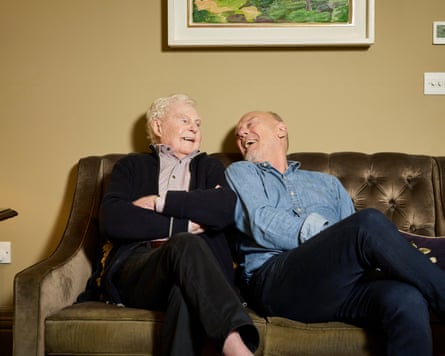
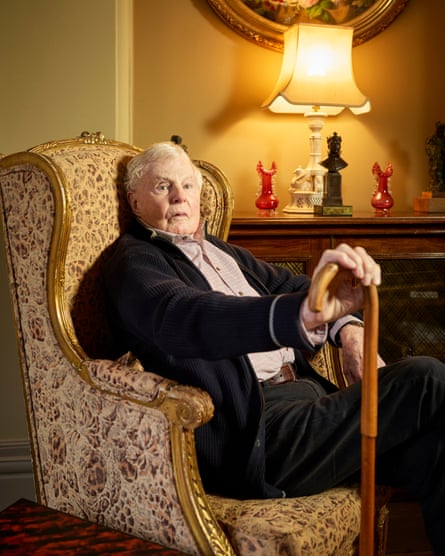
Derek Jacobi is chatting to the photographer in the living room. His voice is unmistakeable – rich, buttered, every sentence beautifully parsed and phrased. I’m in the kitchen with his husband, Richard Clifford, who is making coffee. He tells me they have been together 47 years. “We met when I was 22 and he was 39.”
“I’m a child snatcher,” guffaws Jacobi from the lounge.
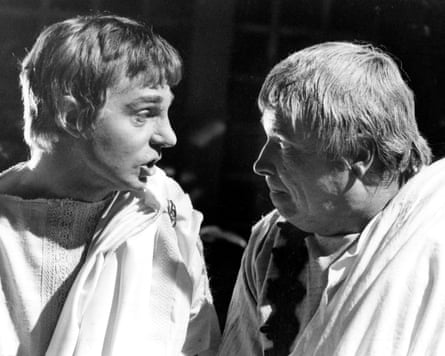
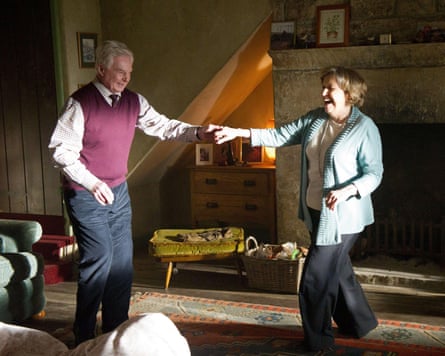
While Clifford is an actor and director who has enjoyed some success, Jacobi is a giant of stage and screen, famous for his Hamlets and Lears. Perhaps he is still best known for I, Claudius, the brilliant 1970s TV series in which he played the stammering, disabled Roman emperor with astonishing empathy and sensuality. It was all in the voice. Jacobi could seduce the world with his, as he did with a sublime Cyrano de Bergerac for the Royal Shakespeare Company in the 1980s. Then there are the TV joys of more recent years. In the comedy Vicious, he and Ian McKellen play a savagely barbed but devoted couple, while in the hugely popular Last Tango in Halifax, he enjoys a more tender romance with Anne Reid.
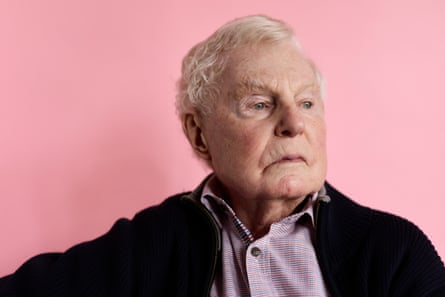
Clifford brings in the coffee. He’s talking about Trump, Iran and how the world is going to pot. I ask Jacobi if he shares his concerns. “I’m too old and ugly to worry.” Look, I say, this is not the first time I’ve heard you talk about being ugly, you don’t really think that do you?
“Ooh yeassssss,” he says fiercely. “Oh, as a kid, yes. A ginger-haired, freckled-faced …” “Acne-ridden,” Clifford adds for good measure.
“Acne-ridden, east London kid,” Jacobi continues, grateful for the reminder. “Yes, absolutely. I can’t look in the mirror.” He says he won’t watch himself on screen. Is that because of the acting or how he looks? “It’s both. If I were honest, I’d have liked to have been a movie star. I think I can act. But I didn’t have the looks to go with my acting. If I had had the looks as well as my acting ability I think my world would have turned out differently. But I didn’t. And I never wanted to look at myself because I didn’t like what I saw.” Who did he want to look like? “Ooh, Rock Hudson.”
Clifford hoots with laughter.
“When I was growing up he was the film star,” Jacobi says.
But that may just be a case of wishing for what you haven’t got, I say. He has often said that film work is unchallenging compared with the stage. “Yes, absolutely,” he says when I remind him. I think you would have been bored senseless as a movie star, I say. “Probably, but I would have been rich. And, for an East End kid, that matters.”
Could we take a photo of both of you together, I ask. “No,” snaps Jacobi. “Me, me, me, me, me,” he says like a greedy child.
“Me, Myself and I should have been the title of your biography,” Clifford says laconically.
“Wasn’t it?” Jacobi rat-a-tat-tats with practised ease.
Their house is magnificent – Edward Beale swirling impasto peonies on the wall, toy chimps belonging to Daisy the Irish terrier on the settee, trompe l’oeil wallpaper disguising a toilet, a summer house in the garden that serves as a cinema and a beautifully carved table that opens up into a couple of boxes. If homes can have a sense of humour, this has got a great one. Clifford unfastens the boxes. One for him, and one for Jacobi. It sums up their different characters, he says. “One says: ‘The art in my life, Richard Clifford’. The other says: ‘My life in art, Derek Jacobi.’”
Well, I say, maybe it’s time to focus on Clifford rather than his more celebrated husband. After all, he’s directed Jacobi in plays, has worked with the Old Vic, designed their home, is their social secretary and pretty much runs Jacobi’s life.
“Bye, Del,” Clifford says, waving him off. His voice is even richer than Jacobi’s – crystalline, booming, 101% thesp. They make for a fabulous couple – funny, garrulous, warm, generous, with a hint of claws.
Has he always been Del to you? “Oh, yes. Maggie Smith always called him Del. Or Del Boy. This was before Only Fools and Horses. I only call him Derek when I’m cross.”
“Del is an east London thing,” says London’s unlikeliest cockney. Jacobi grew up in Leytonstone, the only child of Alfred, who ran a tobacconists-cum-sweet shop, and Daisy, who worked in haberdashery. He was a bright boy, exiled to bed for 18 months when he contracted rheumatic fever at nine. That’s when working-class Derek turned posh. They moved the bedroom to the living room, and he spent all day long listening to radio and watching TV. He returned to school with a new accent and ambition. He wanted to be an actor. Jacobi went on to study history at the University of Cambridge, where he spent much of his time performing the classics.
By his mid-20s, he was working for the newly created National Theatre at the Old Vic, directed by Laurence Olivier, whom he adored. What was he like? “Oh, God. God. He loved the young actors and he nurtured us. Wonderful. Wonderful.” What did he learn most from Olivier? “Humility.”
That’s surprising, I say. It’s not a quality associated with him.
“Not particularly, no,” Clifford says.
“Well, certainly with the young members of the company. There was nothing starry about him at all. He would say, ‘Call me Larry.’” He pauses. “No way could we call him Larry.” He yelps in horror at the idea. “He was Sir Laurence.”
So should I call you Sir Derek? “No!” Another horrified yelp. “Sir Del Boy. Good heavens, no.” I tell him Ben Kingsley insisted I called him Sir Ben. “Oh God.”
“I called him Sir Ken Bingsley once,” Clifford chimes in. On purpose? “Yes. It’s shaming. Shaming. You shouldn’t behave like that.”
Has Jacobi worked with Kingsley? “No. No, I don’t think I have. If I have, I’ve mercifully forgotten.” That silver tongue can be razor-sharp.
Has he always got on with people he’s worked with? “Mercifully, I have forgotten the bad times. Genuinely. I must have had them, but too infrequently for them to be in the front of my memory.”
“You’ve had difficult directors,” Clifford says, gently nudging him. “John Dexter.” In his autobiography, The Honourable Beast, Dexter wrote of his ‘fury for perfection’.
“John Dexter was hateful,” Jacobi says. “His method was to bludgeon a performance out of an actor. He directed me in lots of things at the National. I was terrified of Dexter. I don’t think he would have got away with it today.”
Was he the only one who terrified performances out of you? “Bill [William] Gaskill, who was also at the National, was slightly cleverer, but just as nasty.”
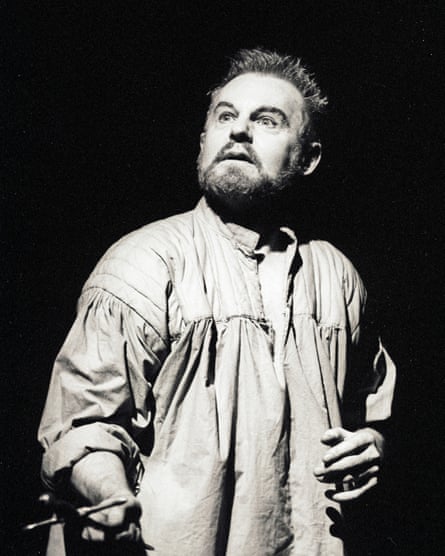
Jacobi also tried his hand at directing. But, as he’s quick to admit, he wasn’t a natural. “The best part was showing them what I thought they should do, and getting up and doing it. So, no. I suppose I’m not a director.” He directed Kenneth Branagh in Hamlet. “Every time I gave Ken a note I demonstrated it.” Was he good at taking notes from you? “Yes, he was very generous with me. He said: ‘Tell me what you want and I’ll try to do it.’ But I think Ken might have gone away and stuck pins in effigies of me.”
“Del hasn’t directed since then,” Clifford says, grinning.
Jacobi’s memoir is called As Luck Would Have It, and he repeatedly tells me how lucky he has been in life – his job, his success, Clifford, his parents. “My life has been full of fortunate incidents. I had the most glorious parents who gave me everything they could.” He starts to weep. “And now I’m going to burst out crying,” he says apologetically.
Does he cry a lot? “Actors’ gift,” he says with a smile. Humans cry a lot too, I say. “Actors are humans,” he shoots back.
“I know. Miaowwww,” Clifford says.
At the age of 21, Jacobi told his mother he was gay. It was an unusual and brave move at the time. His mother said she knew, and insisted it was a stage he was going through.
Clifford had a small part in Russell T Davies’s devastating Aids drama It’s A Sin, set in the 1980s. I ask them what life was like in that decade. “We lost so many friends. It was terrifying,” Clifford says. “When young people die it’s so shocking. And you think of your own mortality.”
“It was a terrible plague time we lived through,” Jacobi says. “It was like we were being punished for some reason.”
Clifford: “Well, only that we were told it was a gay thing, but of course it wasn’t.”
Jacobi: “Gay plague, yes.”
Was he frightened that he might get infected? “No. I don’t know why, but I wasn’t,” Jacobi says. “I think that’s because we didn’t play around. That was safe,” Clifford says.
Jacobi, who had a near-photographic memory, announced in 2022 he was retiring from live theatre because he was struggling to remember lines. But he’s not entirely quit the stage. He and Clifford now do a two-man show in which Clifford quizzes him about his life, and fills in the gaps when they appear. As for TV and movies, he’s still very much available for work.
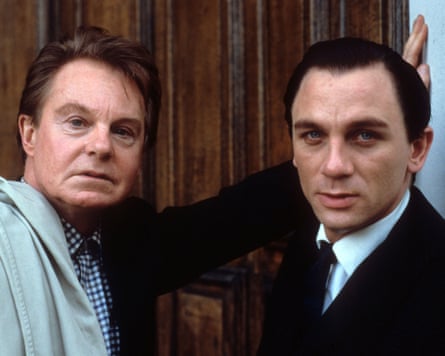
One of his best roles was as artist Francis Bacon in the 1998 John Maybury biopic Love is the Devil. Jacobi’s Bacon is masochistic (his lover George Dyer, played by Daniel Craig, whips him and stubs cigarettes out on him), cruel, permanently pissed, supremely sardonic and cursed with self-loathing.
At the time of filming, Jacobi was pushing 60 and Craig was 30. Jacobi tells me that he and Reid, who was also cast as an older lover of a character played by Craig in the 2003 film The Mother, compete about how many times they have slept with the actor who went on to be James Bond. “Annie says, I went to bed with Daniel Craig. And I say, I went to bed with him twice.”
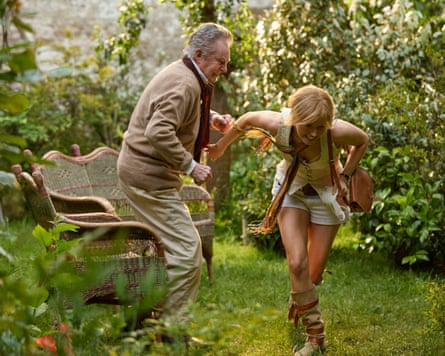
In his latest film, Moss and Freud, Jacobi plays Bacon’s contemporary Lucian Freud, a man just as solipsistic. The movie is about the unlikely friendship between Kate Moss and the painter, who can transform from tender to tempestuous in seconds.
Who did he feel closer to, Freud or Bacon? “I probably admire Lucian Freud more. But I knew I’d feel more comfortable with and get on better with Frankie Bacon.” I’m surprised, not least because he has described him as a monster. He smiles. “Yes, but in my head he wasn’t. It probably says a lot about me, but I felt more comfortable with him.”
Jacobi and Freud strike me as two men who have similar attitudes to their work. While Jacobi has called acting “a compulsion, an obsession, a vocation”, Freud described himself as “completely selfish” and said: “The man is nothing; the work is everything.”
Does Jacobi think he has been selfish in prioritising his work to the extent he has? “Perhaps when I was younger, but no longer.” He says acting has been his way of dealing with the world. “Dedicating your life to imagination and pretence is an escape, I suppose. Choosing to create a world that is actually in your head in which you feel well and safe and well and able. It’s safety.”
Does he think his absorption in his work has been at the expense of life? “They’re the same thing for me. I don’t weigh one against the other. I’m often conscious of the onus I put on him” – he looks at Clifford affectionately – “with all the things that require sustenance of a daily existence. Richard provides it.”
Can Jacobi cook? “Oh, no. I can’t boil an egg. Genuinely can’t.”
Clifford laughs. “It’s true. I had leukaemia and was going through chemotherapy, and one day I came downstairs. I said, ‘Oh, I’d love a boiled egg.’ And Derek said, ‘D’you put it in boiling water or cold water?’, which is a sensible question actually, ‘and how long d’you put it in for?’” How did it come out? “Hard-boiled,” Clifford says.
Jacobi says Clifford has always been the grownup in the relationship, despite him being 17 years younger. Clifford learned to be self-sufficient when he was sent to boarding school at the age of six. Jacobi never did. “In our relationship he has stayed the child,” Clifford says. “I’m social secretary and cook and bottle washer.”
Has that been difficult for Clifford? “Sometimes I think I’m underwater because I’m doing all that and acting and directing as well. But, look – when you’re busy, you’re busy. You just fit it in, don’t you?”
“He’s much better at life than me,” Jacobi says. Is that true? “Oh, yes, absolutely.” Clifford says. The thing is, Jacobi says, even though he’s not so good at life, he loves it and is determined to tot up a century. “I want to experience what it will be like to be 100. I want to find out what state I’m in.”
As for Clifford, he’s not wedded to longevity. “When we’ve been together 50 years and Del will be 90, we’re going to sell the house, have a big party and then drive off Beachy Head.”
But Jacobi’s determined to get to 100, I say. “Well, I won’t be around. I’ll get in the car and go off Beachy Head by myself,” Clifford says.
Jacobi counts up and looks a little alarmed. “I’m only two years off 90.”
“No, you’re not,” Clifford tells him. “You’re only 87.” He turns to me. “He always talks about when he was working with Clint Eastwood and asked him about how he copes with ageing, and Clint said, ‘I don’t let the old man in.’ So Derek has told this story for a long time about not letting the old man in. And now he has let the old man in. And I think, why?” How long has he let the old man in for? “For about the last two years.”
“Well, he’s hanging around,” Jacobi concedes. “And I am married to somebody who is considerably younger than me, so the old man hovers. That’s all. There’s no great problem.”
Does Clifford get upset that Jacobi has let the old man in? “I do, because I think it’s giving up, and I don’t think one should ever give up!”
Does Jacobi see himself as giving up? “No way. No. No. I just see the inevitability that there is a big disparity in our ages.”
“No, it’s not to do with age,” Clifford says. “I don’t want to fall out with you, but if you say, ‘I don’t let the old man in’, you don’t keep thinking about it. If you let the old man in, all you think about is being old.” “I don’t,” Jacobi says. “Only when you bring it up. I want a divorce. Hahahha.”
Clifford: “I keep the house. You can go and live in the cinema room. There’s no lavatory in there, though.” Jacobi: “You see that’s what’s saved us. The sense of ridicule. You’ve got to be able to take the piss out of each other.”
I’ve been here two hours. The interview was only supposed to last an hour, and they must have had more than their fill. I say it’s been great to meet them.
They look at each other. “We’ve exhausted you,’ Clifford says. “We’ve run the gamut from A to B, haven’t we?”
As I get up to leave, Jacobi struggles to his feet. ‘Ooh. Ooooh. Ooooooh.” He looks up at Clifford. “We used to be the same height. Look at us now.” I ask if he’s got osteoporosis. “No. I’ve got a bad right leg,” he says.
“But that’s not why you’re shrinking,” Clifford says. “It’s too much alcohol.”
Which of the two drinks more? Clifford points at Jacobi. “You should have seen him last night,” Clifford says. What’s your favourite tipple, I ask Jacobi. “White wine.” What type? “White.” He giggles. “I have two glasses of wine for lunch and then a little siesta. And I think I’m of an age that I’ve earned that.”
On my way out, I ask about forthcoming plans. Clifford mentions the two-man show. Does the audience ever ask about Clifford’s career? “No, because it’s a show about him,” he says. “Don’t put that in his head,” Jacobi bellows. “You’ve ruined the show now.”
Jacobi sneezes. One, two, three. “Achhhhoooo. Achooooooooo. Acheeeeeeh.” And now he can’t stop. “Acchoooooo. Hooo. God. A-tsschh. Ah-wuphh.”
“It’s because I’m talking,” Clifford says. “He does this. There’ll be 20 of them. He goes on and on and on, I can’t tell you. Oh. Shut. The. Fuck. Up.”
Now Jacobi’s crying with laughter. They wave me off at the front door, cackling like schoolboys.
Explore more on these topicsShareReuse this contentСхожі новини