Hungary inspires Israeli opposition bid to defeat Netanyahu
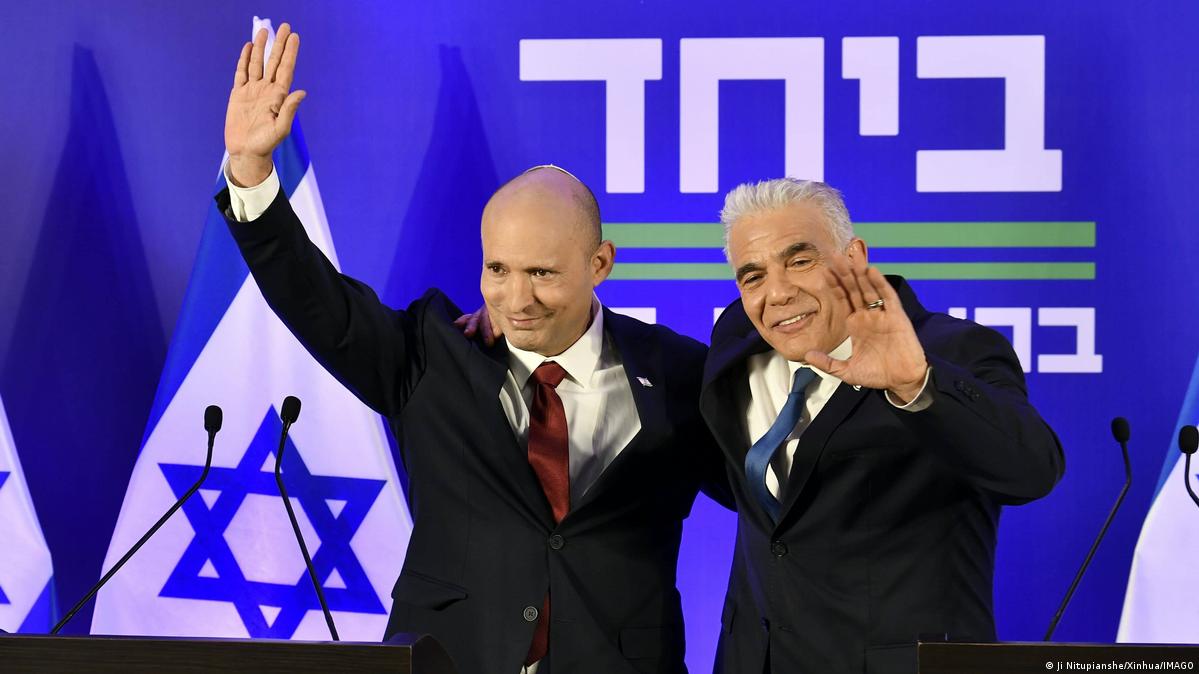
On April 26, Naftali Bennet, widely considered the main challenger to current Prime Minister Benjamin Netanyahu, said he would join forces with Yair Lapid of the centrist-liberal Yesh Atid party ahead of Israel's election in October this year.
The new party's name: BeYachad, Hebrew for "together."
Bennet, a representative of the Israeli right-wing Zionist religious public,had a short one year term as a prime minister in the years 2021-2022, and before entering politics was the head of Yesha Council, the umbrella organization of Jewish settlements' municipalities in the occupied West Bank.
Bennet hopes to secure right-wing, anti-Netanyahu support alongside Lapid, who represents secular Israelis. Analysts interpret this as being Bennet's attempt to portray himself as the legitimate leader of Israeli society's Zionist mainstream.
Israel is 'advancing the annexation of the West Bank'
To view this video please enable JavaScript, and consider upgrading to a web browser that supports HTML5 video
Lapid's dwindling support
Tal Schneider, a diplomatic and political correspondent for the Times of Israel, says Lapid's falling support and the Israeli opposition's desire not to lose any seats in Israel's next parliament factored into the union.
"It wasn't just important for Lapid, but for the whole bloc," Schneder told DW.
In Israel, the largest party traditionally receives the first opportunity to form a coalition. However, for a party head to become the country's prime minister, it's the total number of seats held by parties willing to enter a coalition that matters.
Schneider says another reason to create BeYachad is to build the country's largest party. But Schneider believes it is only likely if another opposition party joins BeYachad, such as the Yashar Party, led by former army general Gadi Eisenkot.
"Bennet and Lapid are my (political) partners," Eisenkot said recently in a press statement, adding that he has spoken to the pair since they joined forces. He said the bloc's only objective should be securing the maximum votes in an election Eisenkot called Israel's "most important ever."
Israeli opposition's first polls not encouraging
A poll from Israeli internet outlet Walla suggests the Bennet-Lapid union has benefited Eisenkot's Yashar (15 seats instead of 12), and Netanyahu's Likud (28 seats instead of 24).
BeYachad, the poll said, would receive 27 seats, whereas previous polls suggested the parties led by Lapid and Bennet would receive 31 seats if they ran separately.
The Walla poll also suggests the dynamic between current voting blocs would remain unchanged. While the opposition is expected to receive 59 seats, two short of the majority needed to form a coalition, Netanyahu's bloc would receive 51.
The 10 other seats are expected to go to Israel's two Arab-majority parties: The Joint List, made up of the communist Hadash party and the secular Arab party Ta'al (5), and Ra'am (United Arab List), a conservative Muslim party (5).
'No Arabs' policy in Israel's coalition?
In 2021, Ra'am made history by becoming the first ever Arab party to enter an Israeli coalition. Bennet and Lapid were the coalition's leaders, and the move came as a surprise because the coalition also included right-wing hardliner Avigdor Lieberman.
Since then, Israel's current far-right coalition has cited this coalition in its criticism of Bennet and Lapid. This is despite reports that Netanyahu's Likud party also held negotiations with Ra'am leader Mansour Abbas.
Bennet said the cooperation would not repeat itself should he become Israel's leader.
This is despite Abbas acknowledging in 2021 that Israel "was born a Jewish state and would remain that way" — an unprecedented stance for a party representing the Arab minority.
Schneider calls the criticism against cooperating with Abbas "racist," saying the current coalition equates the Ra'am party with terrorists.
"There is no known connection between Ra'am and terrorist groups," Schneider said, adding that she believes many opposition voters in Israel would welcome a renewed cooperation with Mansour Abbas' party.
Hungary a role model for Israel's opposition
It's no coincidence that Lapid and Bennet repeatedly referred to Viktor Orban's election defeat in Hungary in their recent press conference.
Schneider also sees similarities between the Orban and Netanyahu governments.
"We see the distress felt by many Israeli citizens who see how the media, the courts, civil freedoms and the freedom of demonstrating are all being eroded," she says, adding that, like Orban, Netanyahu has "strong control" over Israeli security authorities and parts of the media.
Palestinian conflict a non-issue?
Meanwhile, conflict with Palestinians, which for decades shaped the Israeli political divide, is barely being spoken about.
Schneider says this is partly due to the Hamas-led terror attacks of October 7, 2023.
"Most of the Israeli public does not see any potential for solving the conflict," she said, arguing that the Israeli right and left put their differences on the Palestinian issue aside in a bid to save Israel's democratic structures.
With Naftali Bennet already reiterating his refusal to allow a Palestinian state, Palestinians in the occupied territories have little hope to draw from a potential change of power in Israel.
Edited by: Cai Nebe
Israel marks 78 years of independence amid ongoing war
To view this video please enable JavaScript, and consider upgrading to a web browser that supports HTML5 video
AdvertisementСхожі новини

США виділять $100 мільйонів на ремонт укриття на ЧАЕС
У кожного екіпажу патрульних буде автоматична зброя - Фацевич
Росіяни тестують нові ділянки для наступу на Харківщині - Синєгубов