Hubble revisits stunning Trifid Nebula after 30 years, and spots a growing jet of energy — Space photo of the week
Get the world’s most fascinating discoveries delivered straight to your inbox.
By submitting your information you agree to the Terms & Conditions and Privacy Policy and are aged 16 or over.You are now subscribed
Your newsletter sign-up was successful
Want to add more newsletters?
Join the club
Get full access to premium articles, exclusive features and a growing list of member rewards.
Explore An account already exists for this email address, please log in. Subscribe to our newsletter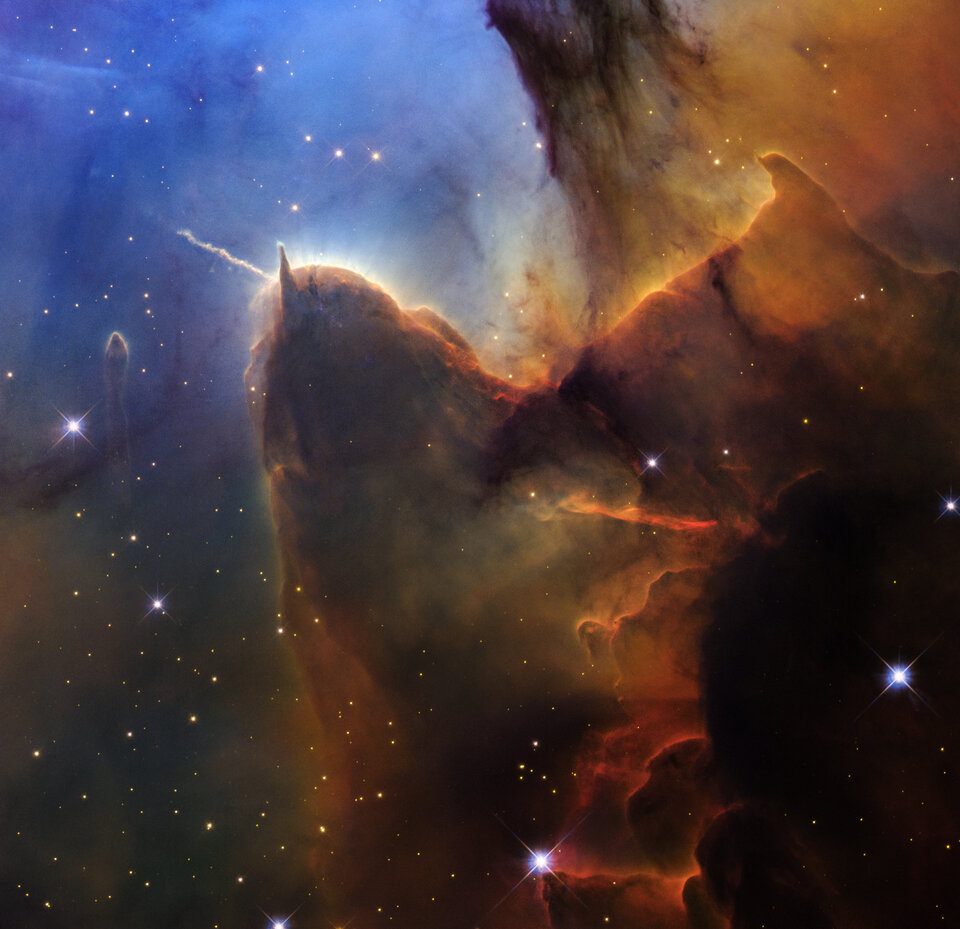
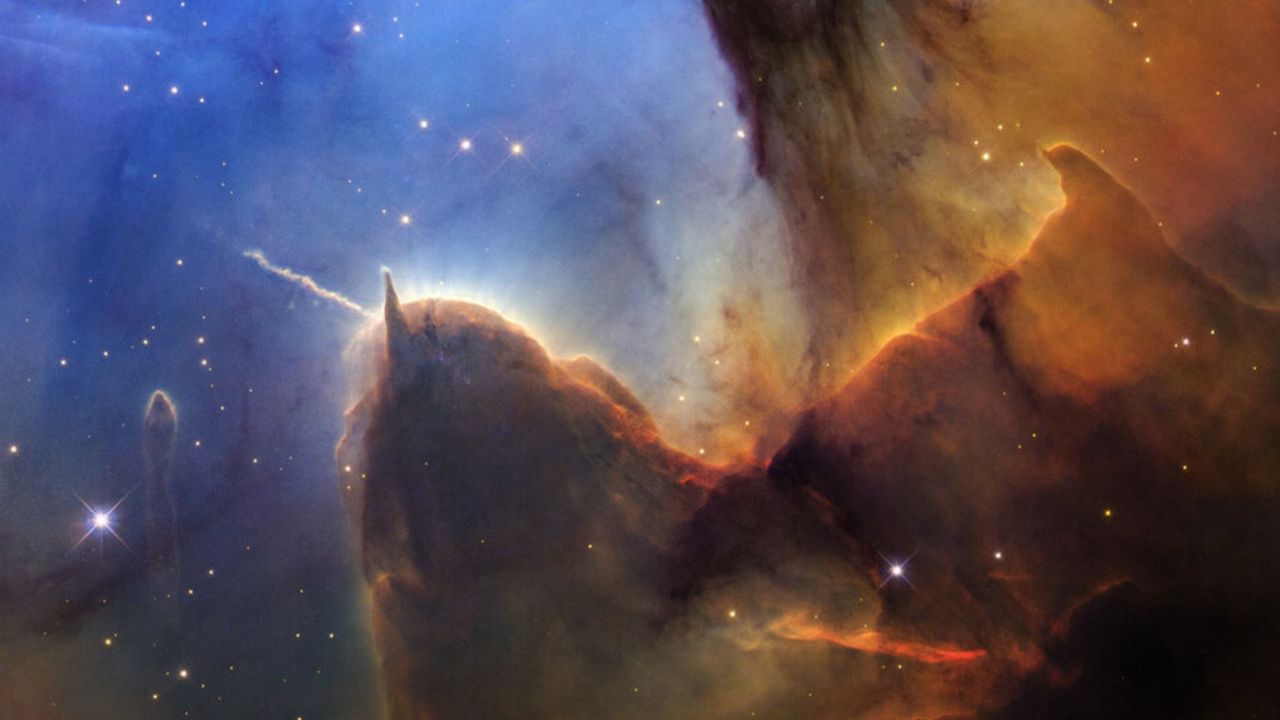
What it is: Trifid Nebula (Messier 20)
Where it is: 5,000 light-years from Earth in the constellation Sagittarius
When it was shared: April 20, 2026
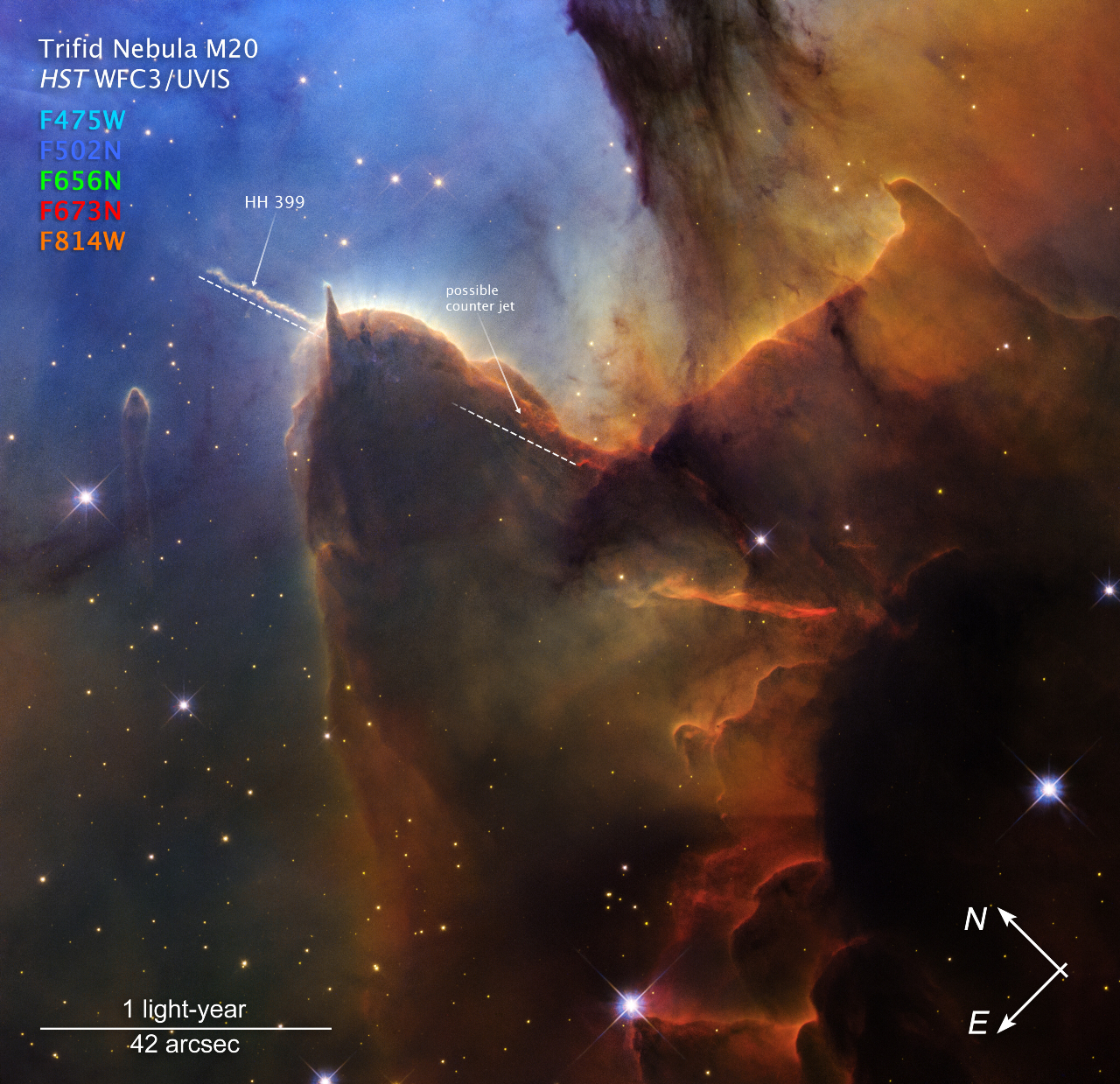
In the new image, the mesmerizing orange cloud linings show where powerful ultraviolet radiation from massive stars has stripped electrons from nearby gas, making it glow. Their stellar winds have cleared some surrounding dust, as shown in the bright-blue area where the dust is thinnest. The far-right corner — nearly pitch-black — is where the dust is densest.
The prominent brown-shaped structure in the center left of the image is the "head" of the cosmic sea lemon. Its "body" is a rust-colored cloud of gas. Between two "horns," yellow gas splashes outward like the glow of a volcano's lava, almost as if something were being destroyed there. And that is exactly what's happening; these are regions where the ultraviolet light is eroding gas and dust, according to the European Space Agency.
The main peak, seen left of the sea lemon's head, is accompanied by a jet of energetic gas. This region is part of the Herbig-Haro (HH) object called HH-399, and the jet is ejected by a baby star located within the sea lemon's head. (HH objects are bright regions of nebulosity created by the powerful jets of newborn stars.)
Comparing the new observations with the 1997 image, researchers actually watched the jet expand. This change will allow scientists to estimate the jet's speed, revealing how much energy the young star is injecting into its surroundings. There is also a thick streak of material in bright orange and blazing red that appears to expand to the right — potentially a jet shooting from another newly formed star.
Sign up for the Live Science daily newsletter nowThe bright-orange stars scattered across the scene have already won their battle against the nebula. They are fully formed, and their light and stellar winds have cleared the space around them. Over the next few million years, the remaining stars buried in the nebula will do the same. The gas and dust will slowly disappear, and only stars will remain.
With this image, Hubble not only celebrates 36 years of operations but also puts its improved capabilities on full display. The newly operational Vera C. Rubin Observatory, located in Chile's Atacama Desert, also captured the Trifid Nebula, looking like a giant cloud of cotton candy, in its first batch of images.
See more Space Photos of the Week
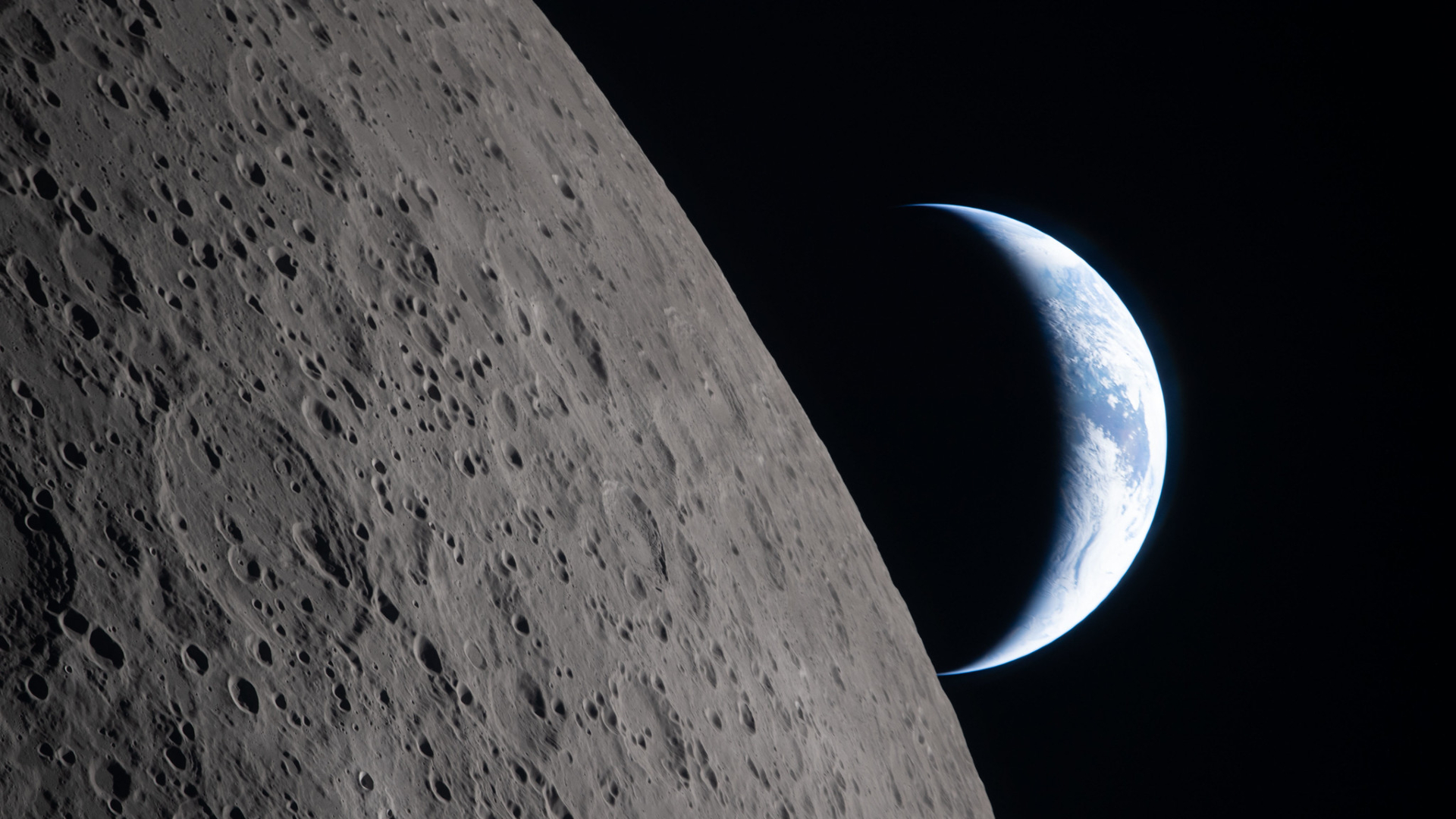 'Human minds should not go through this'
The Artemis II crew recalls the unreal moment when Earth disappeared
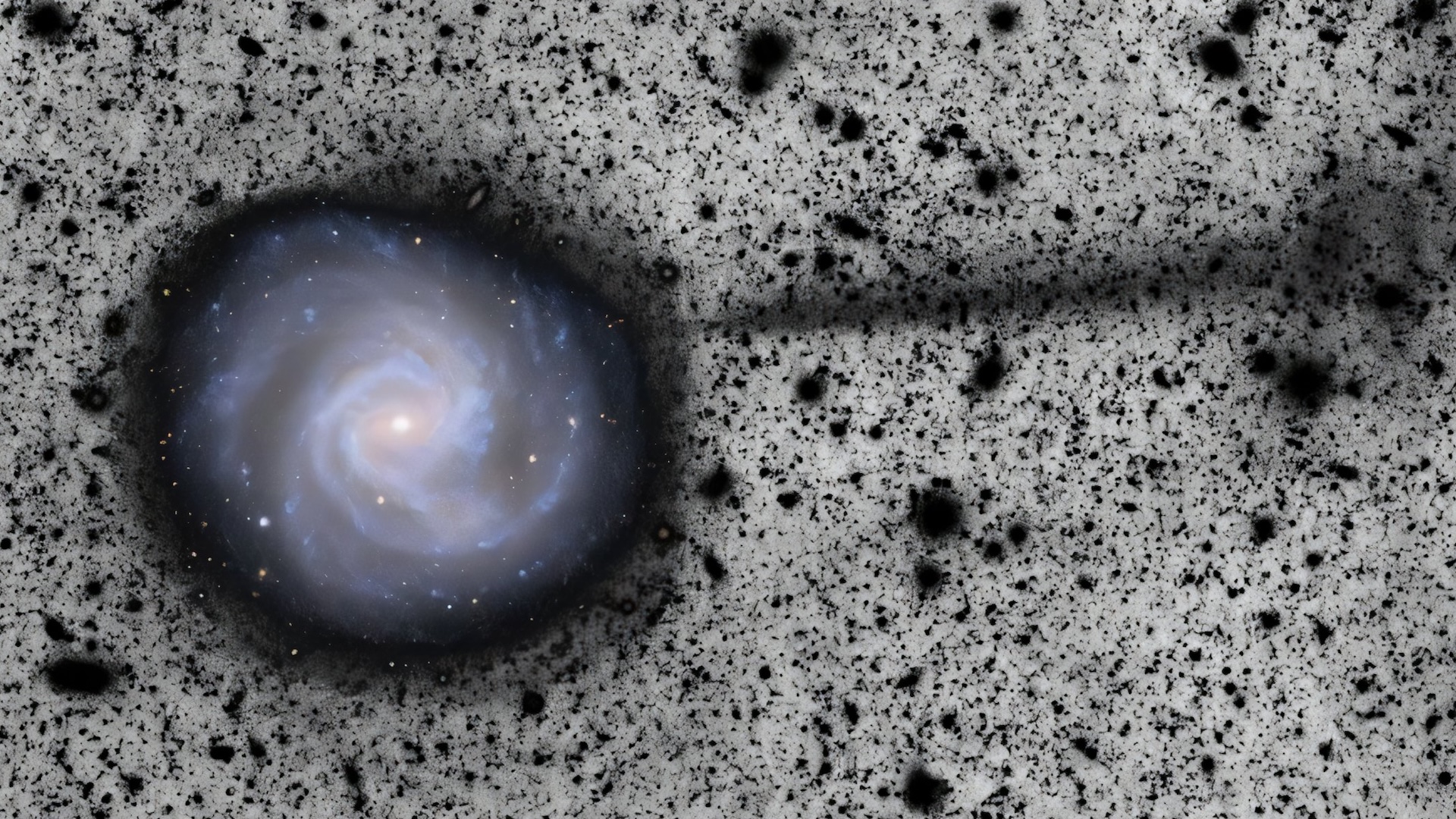 Hidden structure in 1st Vera Rubin image
First-light images from the Vera C. Rubin Observatory reveal a 163,000-light-year stream of stars emanating from a nearby galaxy.
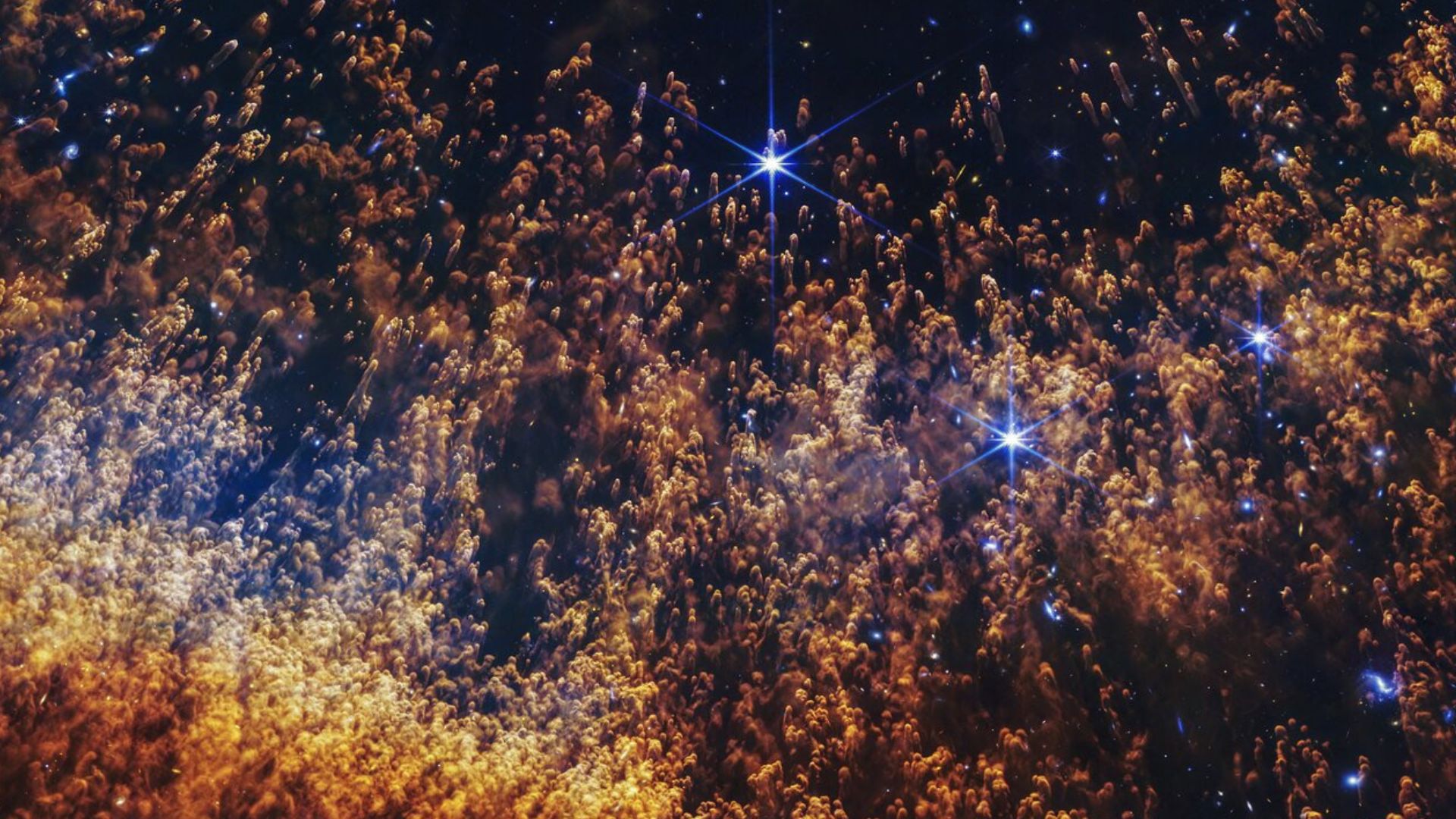 JWST peeps the 'Eye of God'
A spectacular James Webb telescope image reveals intricate structures inside the Helix Nebula.
TOPICS
Shreejaya Karantha is a science writer specializing in astronomy, covering topics such as the sun, planetary science, stellar evolution, black holes, and early universe cosmology. Based in India, she works as a writer and research specialist at The Secrets of the Universe, where she contributes to scripts for research-based and explainer videos. Shreejaya holds a bachelor's degree in science and a master's degree in physics with a specialization in astrophysics.
View MoreYou must confirm your public display name before commenting
Please logout and then login again, you will then be prompted to enter your display name.
Logout LATEST ARTICLES 1Why do cats and dogs shake their heads?
- 2The Trump administration wants to open precious East Coast forests to logging and mining
- 3'Eventually, it becomes you': Inventors of new 'living' knee replacement describe why this tech is desperately needed and how it works
- 4'The push towards renewables is unstoppable because it's in a country's self-interest': Climate scientist Andy Reisinger on Trump, Iran, and the future of Earth
- 5The AMOC moves closer to collapse, scientists create artificial neurons, the "Iliad" is found inside and Egyptian mummy, and researchers search for treatments for brain-eating amoebas
Схожі новини

Chernobyl Genetic Study: DNA scan finds no extra mutations in children; solid data might ease worries
Перекрити океан заради клімату: вчені запропонували несподіване рішення
SpaceX launching powerful Falcon Heavy rocket for 1st time in 18 months on April 27: Watch it live