The world deserves better than a monopoly that builds walls and hobbles development
3-MIN READ3-MIN ListenZhou XiaomingZhou Xiaoming is a senior fellow at the Centre for China and Globalisation in Beijing and a former deputy representative of China’s Permanent Mission to the United Nations Office in Geneva. Published: 5:30am, 5 May 2026In global discourse, a script has been handed to us: the United States and China are locked in a “tech race”. But this is really a misnomer. True competition requires a level playing field. When one runner trips the other to ensure victory, it’s not a competition; it’s cheating.So, when Washington deploys an arsenal of sanctions, export controls and diplomatic strong-arming to hamstring China’s technological ascent, it is not competing. It is an act of suppression.This reflects a deliberate strategy to preserve American supremacy in the technologies of the future. Take 6G for example. Washington’s intent is clear: by bundling development with “trusted” supply chains and alliance politics, it is working to build a new global regime centred on US-led standards and closed loops, rather than a universal, open-access model.Advertisement
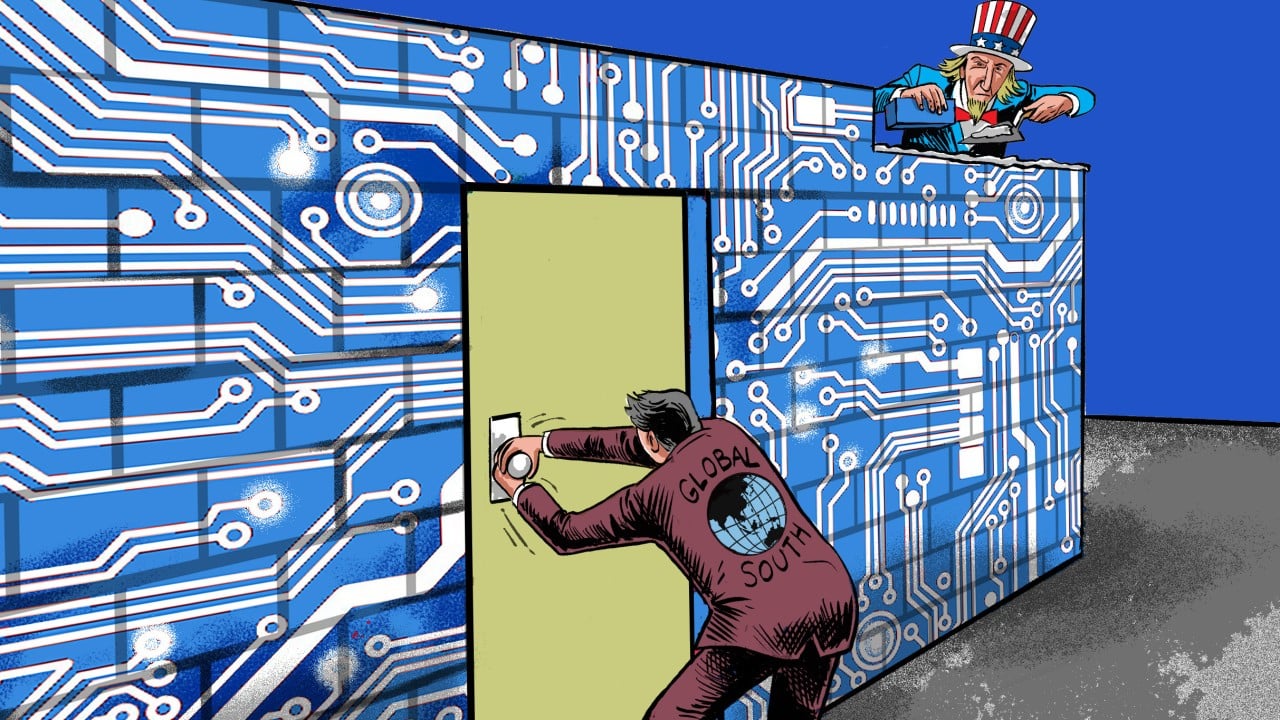
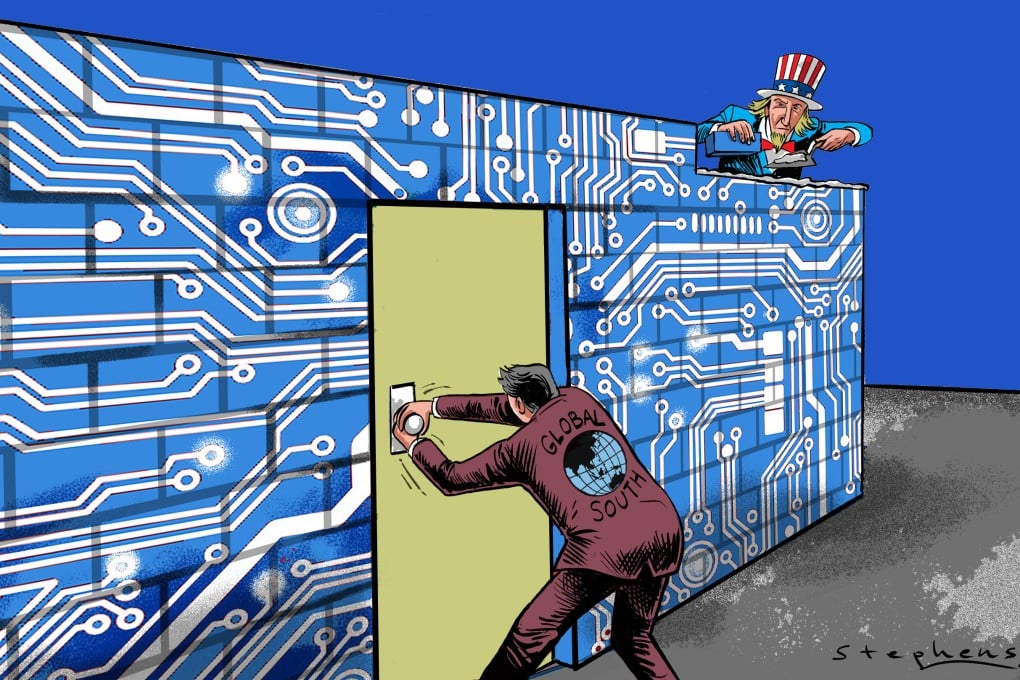
The US obsession with retaining its crown is not rooted in advancing humanity’s collective interests; it is about preserving a monopoly. The US has used patent barriers, export bans and price gouging to act as the gatekeeper of modernisation.
As a result, the spread of technology is channelled through a system of sluice gates. This systematic hindrance builds a high wall, shutting out the Global South and locking developing nations permanently at the bottom of the global value chain.
Activists protest at the World Trade Organization headquarters urging governments to demand waivers for Trade-Related Aspects of Intellectual Property Rights (TRIPS) amid the Covid-19 pandemic, in Geneva, Switzerland, on June 15, 2022. Photo: EPA-EFE
The impact on the Global South is a daily reality of exclusion. Nowhere is this more visible than in agriculture.