Understanding the Scottish Premiership Split: How the League's Unique Division Works
Understanding the Scottish Premiership Split: How the League's Unique Division Works
The Scottish Premiership enters its decisive phase this season with Hearts, Rangers, and Celtic locked in a three-way title battle, while five additional teams compete for European qualification and survival in the lower reaches of the table.
The league's distinctive split mechanism, implemented since the 2000-01 season, will determine champions and relegation candidates following the completion of 33 fixture rounds, with the final batch of first-phase matches scheduled for 11-12 April. At that point, all 12 clubs will have faced one another three times.
The Split Explained
Following the initial 33 rounds, the top six sides—currently Hearts, Rangers, Celtic, Motherwell, Hibernian, and newly-promoted Falkirk—will contest rounds 34 through 38 against each other exclusively. The bottom six teams, comprising Dundee United, Dundee, Aberdeen, St Mirren, Kilmarnock, and Livingston, will do likewise. Each club will play five additional matches against opponents in their respective halves, with title, European qualification, and relegation matters to be resolved.
Notably, Falkirk's position in the upper half is nearly assured, as seventh-placed Dundee United would require both a six-point advantage and an eight-goal swing over two remaining games to overtake them.
The Balancing Act Challenge
The SPFL faces a persistent complication when constructing the fixture list, as it cannot predict which teams will occupy which half at season's outset. Calculations instead rely on the previous campaign's standings to determine home-away allocations.
Teams that played 17 home matches before the split typically receive two additional home fixtures afterward, while those with 16 home games expect three. Hearts, Rangers, Motherwell, and Falkirk have each hosted 17 matches so far, whereas Celtic and Hibernian have managed 16.
The scheduling becomes increasingly complex when balancing derby fixtures and title-race considerations. Hearts will travel to both Easter Road and Celtic Park despite hosting both sides twice already. Rangers face away trips to Celtic and Hearts, having already hosted those opponents twice in league play. Falkirk will visit Tynecastle a third time after two previous journeys there.
Celtic welcome Falkirk to their stadium as a third meeting, mirroring Falkirk's experience at Celtic Park earlier in the season. These arrangements, while necessary for competitive balance, frequently generate supporter frustration.
An Imperfect Formula in Practice
The split's rigidity can produce unexpected table anomalies. Once the cut-off arrives after round 33, teams cannot transition between halves regardless of point differentials. During the 2023-24 season, the seventh-place team accumulated more points than the fifth-place club, while eighth surpassed sixth—an outcome that illustrated the system's mathematical peculiarities.
Lower-Half Complications
The bottom six face similar home-away discrepancies. Four teams—Dundee United, Dundee, Aberdeen, St Mirren, Kilmarnock, or Livingston—will have played either 16 home games and 17 away, or vice versa.
Dundee United's scheduling exemplifies these complications. Beyond the local derby against Dundee, United requires only one additional home fixture, yet four opponents—Aberdeen, Kilmarnock, Livingston, and St Mirren—have already visited Tannadice twice this season, forcing one club to make a third appearance there.
Kilmarnock similarly will host only two post-split matches despite Dundee already having visited Rugby Park twice, necessitating a third trip to Ayrshire for the Dens Park club.
The team finishing last in the bottom half faces automatic relegation, while the 11th-place club enters a two-legged playoff against a Championship competitor for their Premiership status.
Схожі новини
Germany: Freiburg loses Europa League final to Aston Villa
Germany: Freiburg loses Europa League final to Aston Villa
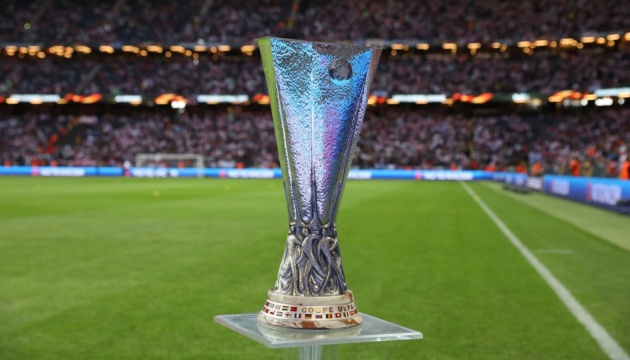
«Астон Вілла» виграла Лігу Європи УЄФА, здолавши у фіналі «Фрайбург»