How are French Open stars coping with Paris 'heat dome'?
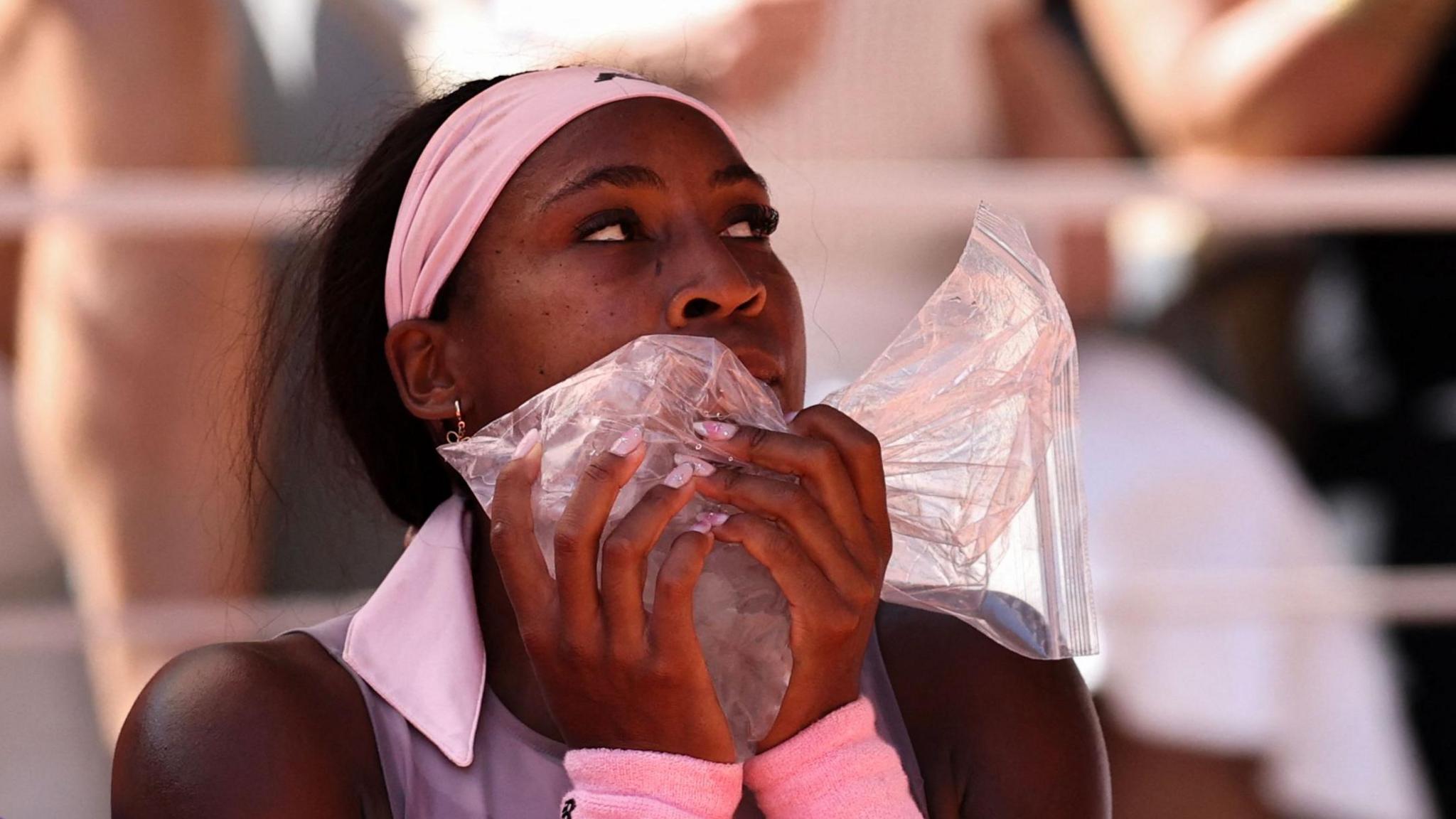 Image source, Getty Images
Like most players, Coco Gauff used bags of ice to cool down during her French Open first-round match
- Published1 hour ago
Tennis players are accustomed to competing in high temperatures - but not necessarily at the French Open.
Unseasonably hot weather in Paris has seen the clay-court Grand Slam begin in temperatures of about 34C.
With humidity relatively low, the scorching sun has not hampered too many players physically, with bags of ice and high-tech portable fans keeping them cool on court.
The biggest challenge so far has been the change in court conditions.
"When I first got here, it was 14 degrees - like, freezing. Now it's boiling hot, balls are flying and everything is much faster," world number one Aryna Sabalenka said.
Some players are thriving on the livelier surfaces - but others are cursing them.
Who benefits from firmer courts?
The heatwave is a result of a so-called "heat dome", external - the warm air from northern Africa trapped under a high-pressure system over western Europe.
The sun hardens up the clay and creates a faster surface that generally favours bigger servers, more aggressive returners and players who hit with top-spin.
When conditions are cold and potentially damp, the balls are heavier and slower. That means a player has more control of their shots and can build up through the points, relying on skill and craft.
Rafael Nadal, who became known as the 'King of Clay' after winning 14 men's Roland Garros singles titles, thrived in the hotter conditions.
While not a huge server, Nadal used the higher bounce to devastating effect as it allowed his top-spin returns to jump out of his opponent's strike zone.
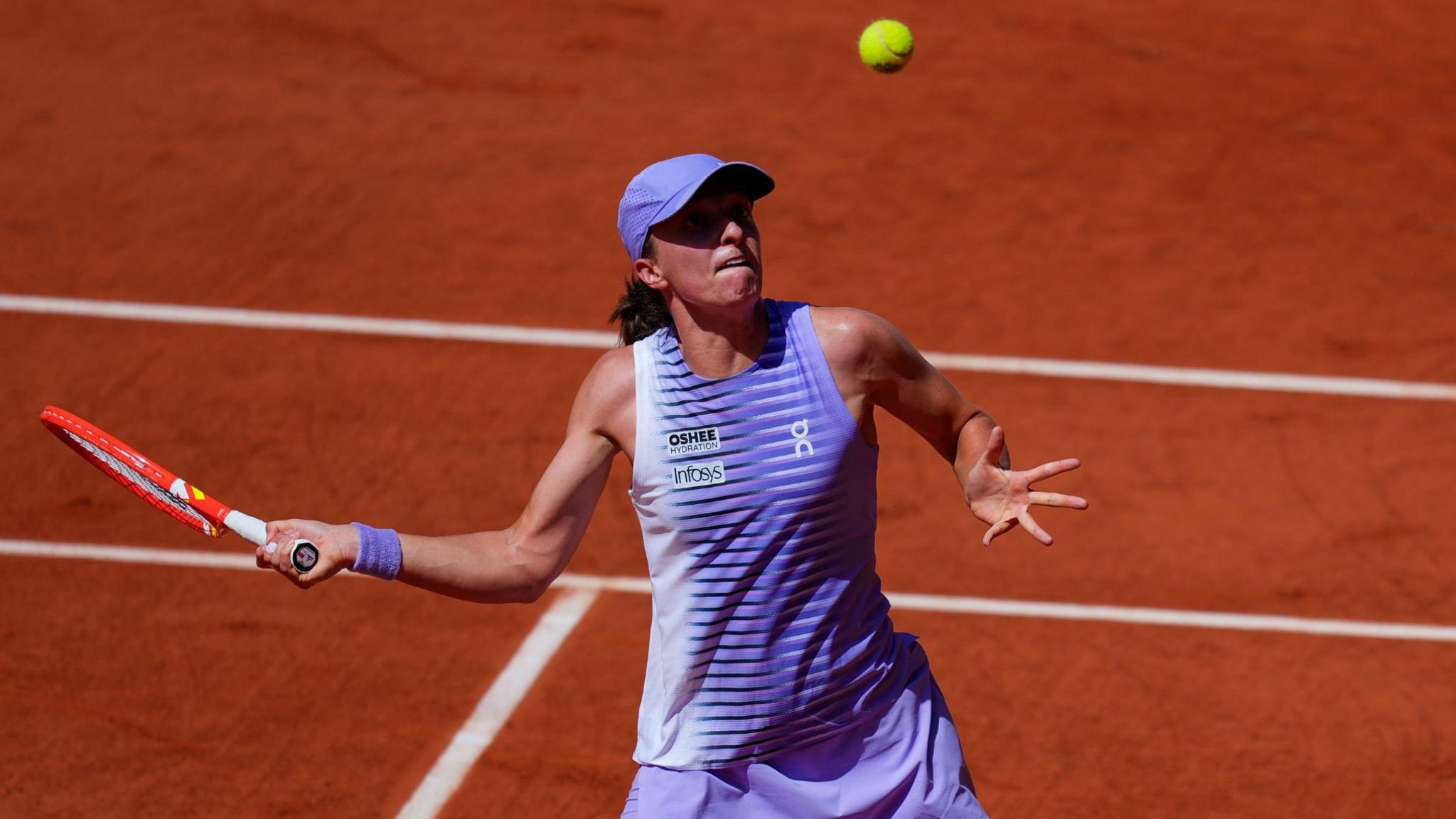 Image source, Getty Images
Iga Swiatek deals with a higher bouncing return in her 6-1 6-2 win over Emerson Jones
Four-time women's champion Iga Swiatek, who recently spent time with her idol on the practice court, benefits from a similar style.
"It's a bit easier to play higher and with spin. The ball is bouncing off the court faster, so that gives you more advantage," she said.
"But first you need to have control over the ball, because it is playing faster in the air and it's easier to put it out."
Greece's Stefanos Tsitsipas, runner-up at Roland Garros in 2021, believes the added bounce could help as he looks to revive his stalling career.
"The heat gives me a little bit of an extra edge," said former world number three Tsitsipas, who has fallen to 79th in the rankings.
"It allows me to have a more lively ball and I feel like my strengths are amplified in those sort of conditions."
Russian sixth seed Daniil Medvedev said he was not physically affected by the heat in his first-round exit against Australia's Adam Walton, but his game is not as well suited to the livelier conditions.
Former world number one Medvedev generally hits flatter with his groundstrokes, meaning the ball stays lower on the clay and allows his opponents to return more comfortably.
"I don't think the heat played any role except that it's just a bit different to play in the heat on clay, but again, that's just normal," said Medvedev.
"I know why I don't really play my best in Roland Garros, but if I say it, it's excuses. So I keep it to myself."
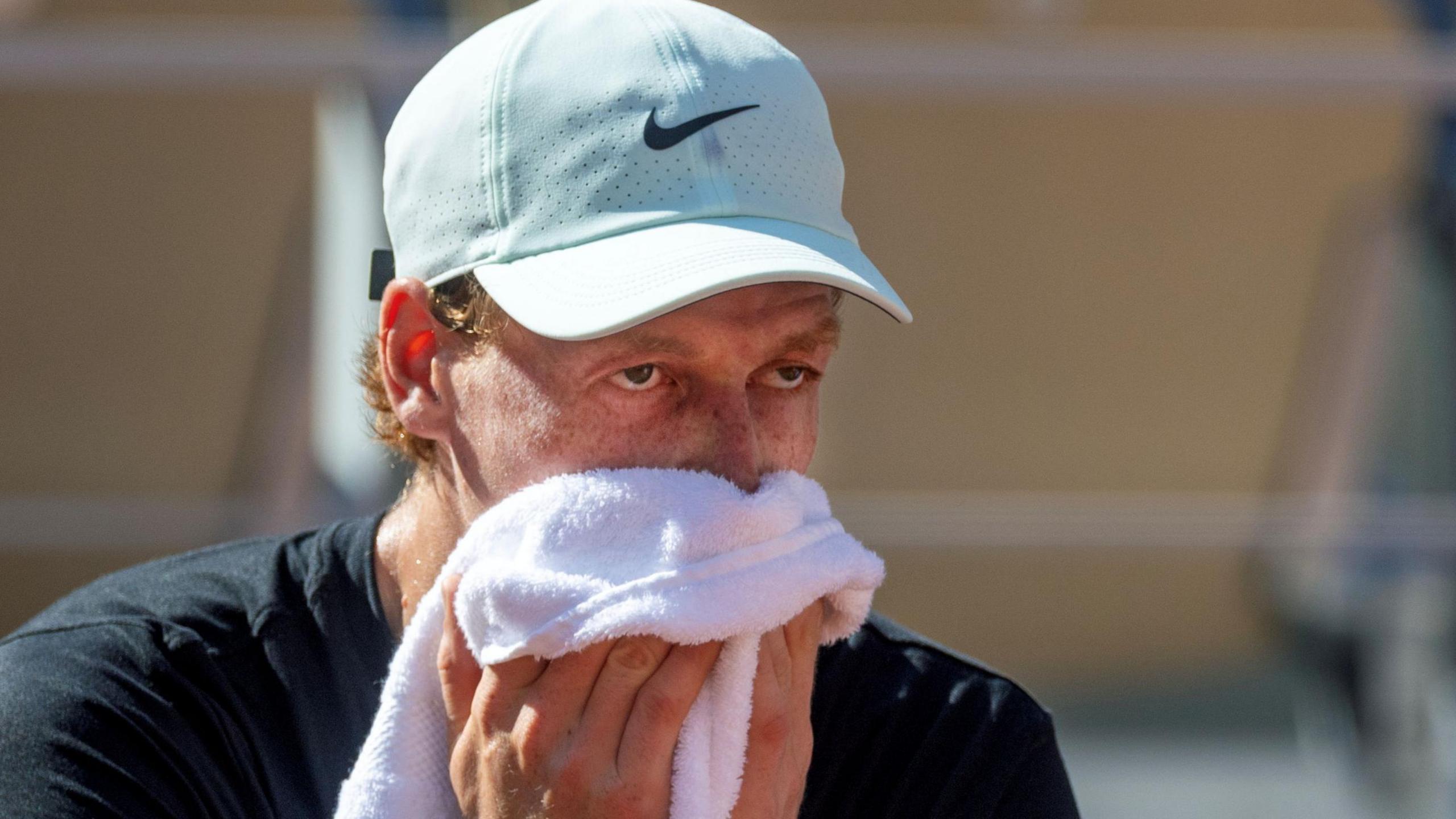 Image source, Getty Images
Jannik Sinner managed to land Tuesday's night-time session on Court Philippe Chatrier for his first-round match
The conditions could potentially be the biggest - or even only - obstacle to Jannik Sinner's bid for a career Grand Slam.
The Italian number one is the heaviest favourite since Nadal in his pomp after clay-court title wins in Monte Carlo, Madrid and Rome.
Sinner has previously encountered physical problems in the heat, and he cramped badly at this year's Australian Open in temperatures close to 40C.
It is no surprise to see Sinner playing his French Open first-round match in Tuesday's night session, where he will prefer the slightly cooler conditions.
As well as the physical benefit, it should allow Sinner to step in and take the ball early as he likes.
A one-horse French Open or will somebody stop Sinner?
- Published2 days ago
What are the heat rules at Roland Garros?
Despite the soaring temperatures in Paris, there have been very few players wilting in the heat.
Norway's Casper Ruud was the most notable example, fearing he had suffered heatstroke in a gruelling victory on Monday.
French Open organisers monitor the temperature through two wet bulb sensors - one on Court Philippe Chatrier and one on Court 14.
If the threshold is reached, a 10-minute break may be introduced after the second set of women's matches and the third set of men's matches.
If temperatures continue to rise, matches can be suspended until the heat drops.
No French Open match has ever been halted because of the heat.
With the Paris heatwave forecast to last until Saturday, a match would be suspended when the reading on the FFT's wet bulb thermometers - which assesses air temperature, humidity, sun exposure and wind to calculate the stress effect on the body - reaches 32.2C.
The weather has not been severe enough for the heat policy to be invoked this year, but almost all the players have been using cooling mechanisms during matches.
Australia's Daria Kasatkina said she found it "very, very tough" physically.
"You can suddenly just get out of the bench and feel that your focus dropped," she said.
"This is a battle which you have to also win."
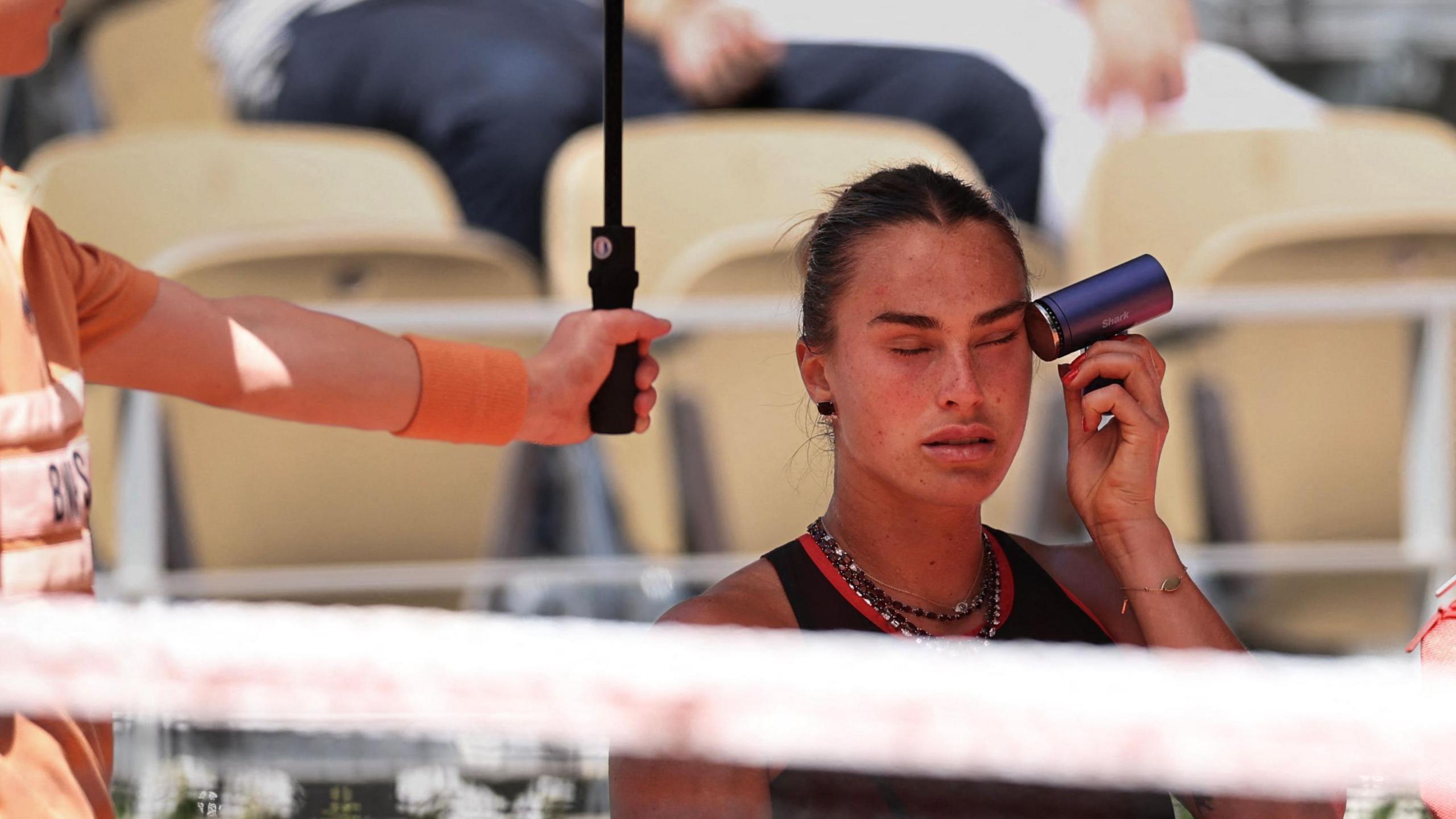 Image source, Getty Images
Aryna Sabalenka used a hi-tech gadget - which has a high-speed fan, misting fan and cooling plate - on court
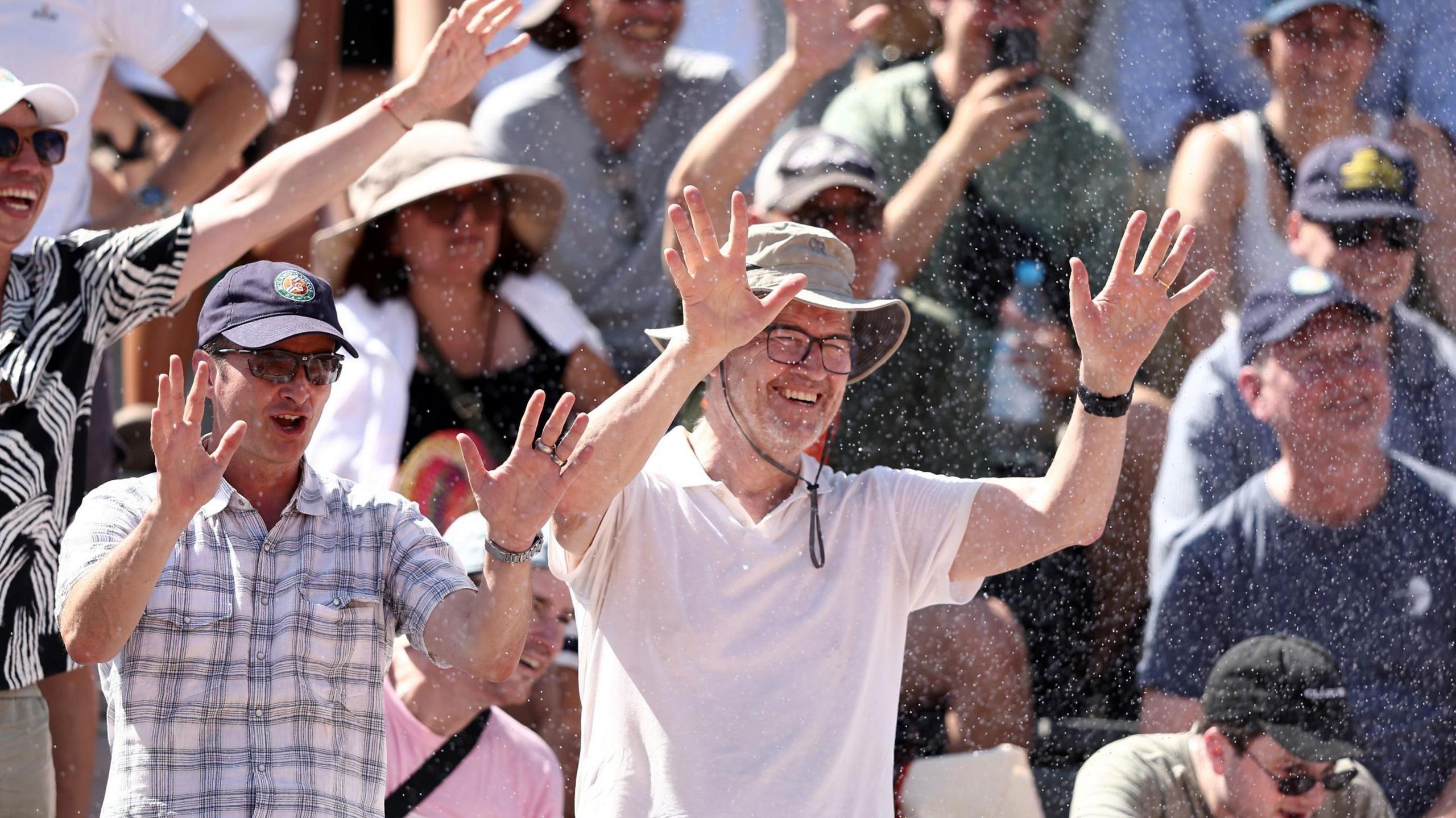 Image source, Getty Images
Fans have enjoyed being sprinkled by the water from the hoses which groundstaff use to soften the clay after each set
Related topics
Live scores, results and order of play
Get tennis news sent straight to your phone
- Published16 August 2025

Схожі новини

США та Вірменія підписали угоду про будівництво «Маршруту Трампа»
У Львові провели зустріч з майбутніми орендарями першого комунального ринку
Україна розслідує ймовірне стеження за Вікторією Рощиною в Росії та на ТОТ