HKIC at the helm of Hong Kong’s construction transformation through AI+ adoption

- Hong Kong is rolling out initiatives aligned with the national 15th Five-Year Plan’s “AI+” agenda across key sectors, with the construction industry embracing AI enabled design, safety monitoring, predictive maintenance and remote operations.
- The Hong Kong Institute of Construction (HKIC) is central to that shift, delivering hands on training and industry aligned programmes that not only equip the workforce across all levels with the practical tech skills required for smart, safe sites but also foster the right mindset.
Paid Post:HKIC4-MIN READ4-MIN Listen
[The content of this article has been produced by our advertising partner.]
Hong Kong’s construction sector stands at a decisive inflection point. A wave of public investment—anchored by the Northern Metropolis, major transport, healthcare and education projects and flagship initiatives such as Skytopia—has sustained demand even as skilled labour shortages and rising input costs squeeze schedules and margins. Those pressures are accelerating a structural shift toward sector specific digitalisation under the “AI+” agenda in the National 15th Five Year Plan, where integrated BIM and digital engineering, AI safety monitoring, predictive maintenance, robotic construction and remote operations are moving from pilots into mainstream deployment.
HKIC, established by the Construction Industry Council (CIC) in 2018 and embedded in the Vocational Professional Education and Training (VPET) system, has positioned itself at the centre of this technological renaissance. Rather than displacing practitioners, HKIC frames AI and robotics as collaborators that relieve workers of repetitive or hazardous tasks and free skilled professionals to concentrate on complex, artisanal work and rigorous quality control.
AdvertisementThe HKIC, formerly known as the Construction Industry Training Authority, has had more than 50 years of expertise in providing construction training in Hong Kong.
To make that shift tangible, HKIC has invested in hands on training and project management programmes that equip students with future-proofing skills to read data, operate AI agents and integrate digital workflows on site. “Just look at the Centre for Future Construction (CFC) at HKIC,” notes Chairman of CIC, Ir Prof. Thomas Ho. “Where most advanced technologies are in one integrated facility: a Digital Twin Hub, an AI Hub, a 4S Hub, an Immersive Hub and a Robotic Hub — all applied directly to an increasing number of projects by the Government and private companies.”
AdvertisementCurriculum built for smart sites
HKIC continually updates its curriculum to fuse cutting edge AI with practical training—turning classrooms into laboratories where sensors, simulators and algorithms meet live construction sites. New offerings include multiple robotics programmes, safety training of remote-operated tower crane, and designated robotics modules with tuition incentives, all designed to make smart, safe technology accessible to frontline workers and to raise employability across the sector.
“I am proud that HKIC’s programme turns Modular Integrated Construction (MiC) and multi trade integration into practical, exportable expertise, fully embracing the concept of Mi-Infinity: we run bespoke upskilling programmes for project managers, site supervisors and frontline workers so every role learns the exact skills industry needs,” Ho says. “Our curriculum weaves digital twins, BIM and 4S, and AI driven site management into hands on training, equipping graduates to manage assets across their whole lifecycle and lead smart sites from day one.”
Ho recalls speaking to a young HKIC student. “He’s so enthusiastic about the tech powered applications, even comparing them to video games. Now he’s mentoring a junior student.”
AI threads through every stage of learning—from foundational coursework to industry placements—while master level upskilling equips managers with strategic tools to lead digital transformation. By iterating programmes in step with policy and industry needs, HKIC helps the sector “speed up, increase efficiency, and scale up,” he says. The trend is for firms to fold cutting edge tech into core operations; remote control systems and automation also broaden the talent pool, making site work less gender specific and more inclusive. “For instance, remote controlled cranes and other technologies can be operated by women,” Ho adds.
The Hong Kong Government and the CIC have backed this shift with decisive funding and targeted training. A HK$1 billion top up to the Construction Innovation and Technology Fund, matched by the CIC’s HK$400 million, has created HK$1.4 billion to underwrite digital adoption and offsite methods.
AdvertisementAutonomy, accreditation and progression
Greater curricular autonomy has made HKIC nimble and industry facing: one and two year full time programmes are accredited at HKQF Levels 2–4, and Programme Area Accreditation (PAA) permits rapid programme design within Construction and Construction Management. “Granting us QF Levels 1–3 autonomy gives us the authority to design and run our own programmes. With this autonomy we can immediately incorporate the very latest technologies into our curriculum,” Ho notes.
Strong articulation links with local and overseas universities and institutes—credit exemptions to Hong Kong Metropolitan University (HKMU) and the University of the Built Environment, confirmed top up routes with RMIT University, and a cooperation framework with PolyU CPCE—create clear progression pathways from vocational diplomas to bachelor’s degrees. Recognition by professional bodies and regulators, including the Buildings Department and CIOB, means graduates leave not only job ready but professionally accredited: the Advanced Diploma in Civil Engineering Supervision, for example, satisfies minimum academic requirements for T2–T3 technical staff and meets TechCIOB criteria with Advanced Diploma graduates eligible once they have obtained the required period of relevant work experience.
AdvertisementBy aligning autonomy, academic rigour and international standards, HKIC accelerates curriculum renewal, raises graduate professionalism and ensures its workforce is both locally relevant and globally portable. “That pathway makes our sector far more attractive to young people: we provide a complete employment ladder across every discipline. Over the past two years sixteen Advanced Diploma graduates have progressed to degree studies at universities such as HKMU and RMIT University. The comprehensive professional training will help attract young talent because graduates will project an image of professionalism and pride,” Ho says. “By combining targeted training, public promotion and technological adoption, we transform construction into a respected, professional career that appeals to young people and supports lifelong progression.”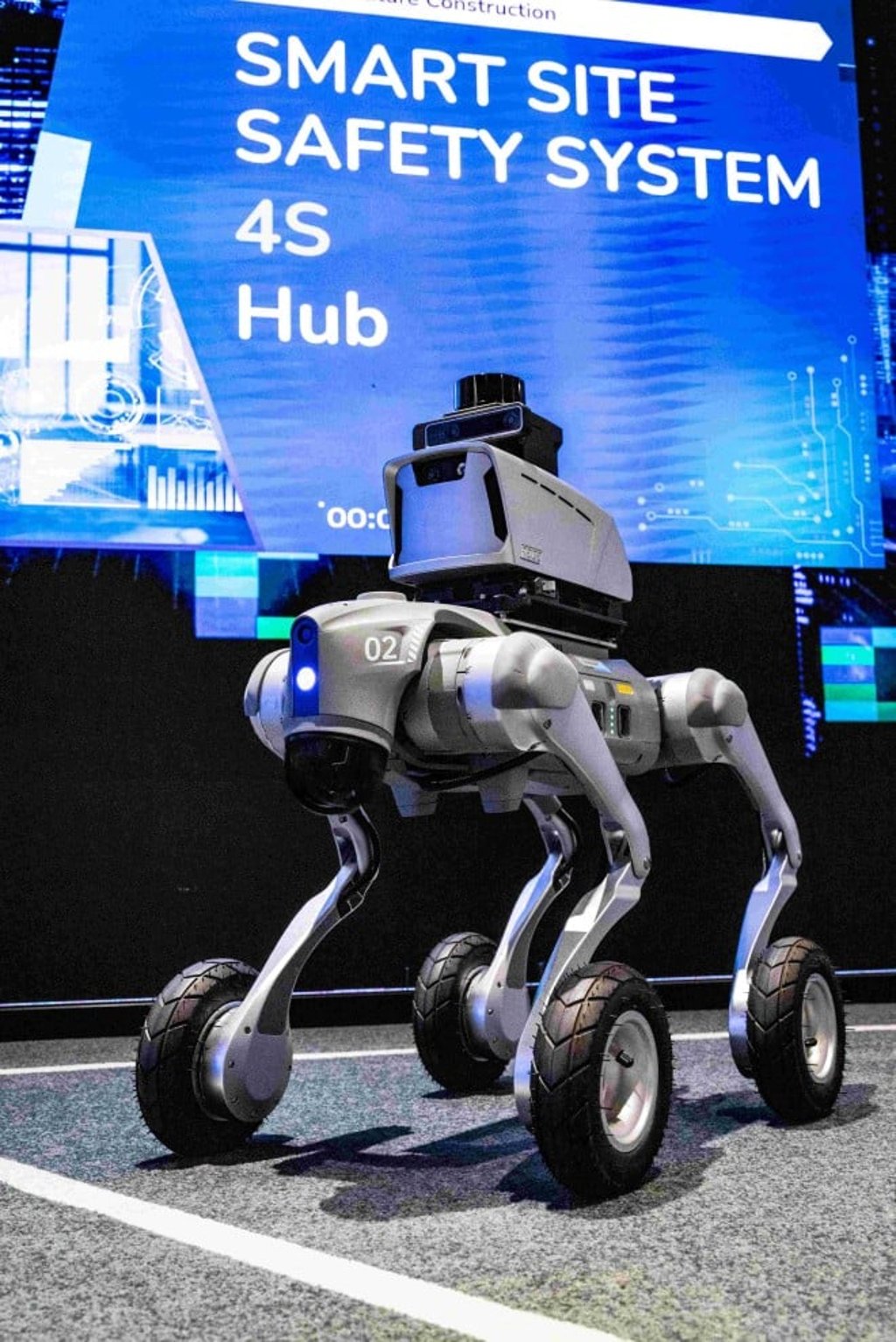
HKIC’s Open Day 2026 on May 29 and 30 is set to turn technology into immersive experience for the public: smart technology interactive exploration, STEAM creative workshops, job tasting experience workshops, drone treasure hunt challenge, programme consultation and demonstrations of robotics and other professional skills taught at HKIC. To allow young people and the public to gain firsthand insight into the professional skills and innovative development of the construction industry.
Beyond tools and systems, HKIC stresses mindset and craft. “The future counts on us to embed the artisan spirit into our operational practices at the construction site. HKIC aims to instil that work ethic and professional attitude; that is the outcome we want to demonstrate to the industry so everyone understands the level of our professionalism,” Ho says. “The future of artisan’s skillset will combine traditional expertise with robotics and AI, and our programmes are structured to reflect that integration.”
AdvertisementLearn More: https://www.hkic.edu.hk/enAdvertisementAdvertisementSelect VoiceSelect Speed0.8x0.9x1.0x1.1x1.2x1.5x1.75x00:0000:001.00xСхожі новини
Germany: Freiburg loses Europa League final to Aston Villa

Ролан Гаррос. Завацька вийшла у фінал кваліфікації французького Grand Slam

Киевское "Динамо" во Львове завоевало Кубок Украины по футболу