Here's why Amsterdam banned fossil fuel and meat advertising
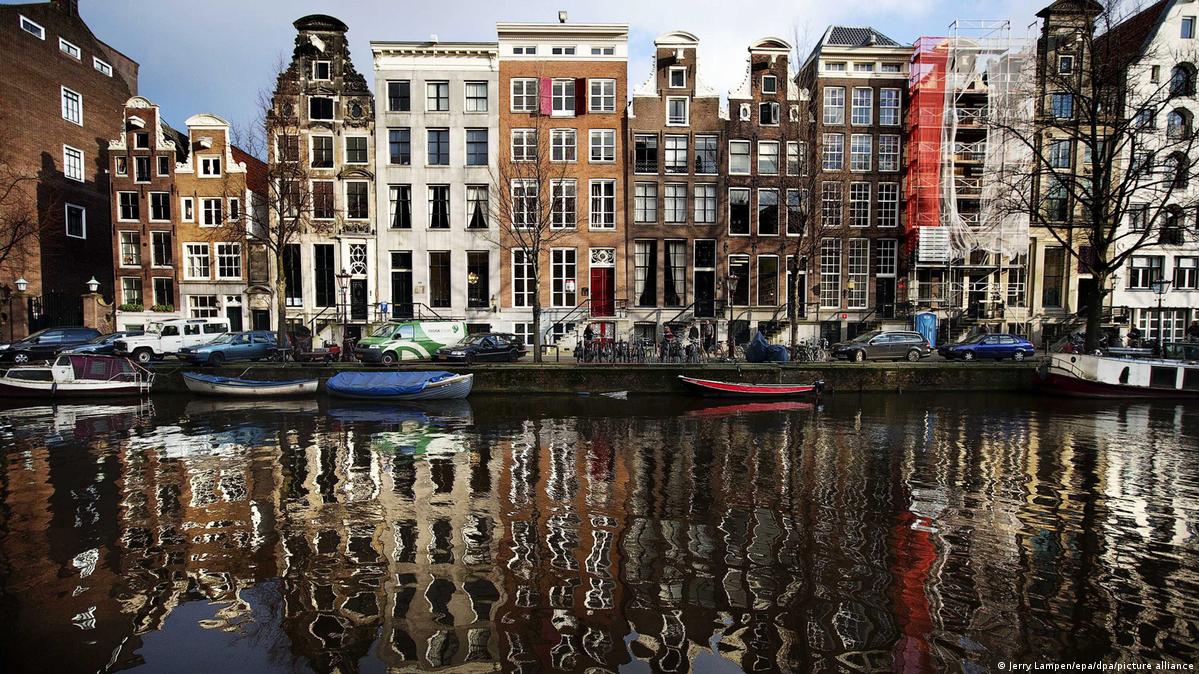
Each day, Reint Jan Renes commutes from Amsterdam's regal main station to his office, weaving through the city's tree-lined canals on foot. He often finds the walk frustrating.
"We have this very, very beautiful old city, and you really have to look past all those signs that try to sell you something," said Renes, a behavioral psychologist researching sustainability in cities.
It's not just that advertisements can be an eyesore in an otherwise picturesque place. For Renes, there's an inherent tension between Amsterdam's ambitious climate policy of becoming fully carbon neutral by 2050, and the ads for cars and burgers, among other products, that crowd city streets.
Burning fossil fuels is one of the key drivers of climate change, with transport, including cars, aviation and shipping, accounting for about a quarter of global emissions. Meat and dairy are responsible for the largest share of food-related greenhouse gas emissions.
"The moment you really take your own climate policy seriously, then you should at least restrict the availability of all those promotional materials, where the only thing they try to do is to promote and normalize these high-carbon lifestyles," Renes, who lectures at Amsterdam's University of Applied Sciences, told DW.
Amsterdam has done exactly that, becoming the first capital city in the world to ban ads for meat and fossil fuel products, including home gas-heating contracts, flying, cruises and combustion engine vehicles.
And it's not just Amsterdam. Stockholm will follow suit this summer and more than 50 other cities worldwide have similar bans, including Sydney, The Hague, and Florence. In 2022, France became the first country to restrict fossil fuel advertising nationwide; Spain could be next.
"What these pioneering cities do is make other cities reflect, 'Hey, you know what? How we organized our city is not necessarily how it has to be,'" said Jan Willem Bolderdijk, a professor of sustainability and marketing at the University of Amsterdam.
Why ban fossil fuel ads?
Ads for fossil fuel products are everywhere. Oil and gas majors spend billions of dollars sponsoring sports leagues, funding museums, and paying influencers to plug things like gas station rewards cards on TikTok, because advertising works when done well.
Researchers at environmental NGO Greenpeace Netherlands and the New Weather Institute estimatedthat car and airline ads in the EU in 2019 alone could be responsible for up to 122 million tons of greenhouse gas emissions — more than Belgium emits in a year.
The thinking behind a ban is that it removes the ability of companies to promote carbon-intensive products like SUVs and flights and could help change "attitudes towards fossil fuel consumption," said the Greenpeace report. That in turn would help cut emissions.
Berliners are future-proofing their city
To view this video please enable JavaScript, and consider upgrading to a web browser that supports HTML5 video
It's a page right out of the same public policy playbook used to curb smoking in the second half of the 20th century, once its health harms were clearly understood. A reviewof global bans on tobacco advertising found the policies were associated with 20% lower odds of current smoking and a 37% reduced risk in people taking up smoking for the first time.
Governments are applying the same logic to fossil fuel ads, because burning oil, coal and gas harms the climate and public health, with air pollution, for instance, linked to millions of premature deaths each year globally.
But it's not quite as simple as an ad-to-emissions calculation for governments.
"Would this advertisement ban lead to behavioral changes overnight? Well, the answer is no," Bolderdijk said. "It's taken decades for these types of consumption norms to emerge."
Proponents argue that bans on advertising start to chip away at those norms and influence other governments to follow suit.
It's a contention based on what the famous economist John Kenneth Galbraith described in the late 1950s as the 'dependence effect' — the idea that advertising creates artificial wants or desires that weren't already there for products and experiences we don't necessarily need, like the much bigger car.
"We've now adopted a relatively carbon-intensive lifestyle, and that lifestyle is partly normalized and created by advertisement, that over decades have made us feel as if we can only be happy if we fly or take cruise ships," Bolderijk added.
Why critics aren't convinced about the ban
Not everybody is happy with Amsterdam's decision.Businesses are decrying a loss of profits. JCDecaux, the world's largest outdoor advertising operator, tried to lobby against the Amsterdam ban, warning of the "far-reaching financial and legal consequences," according to investigative climate outlet DeSmog. Conservative Dutch lawmakers have also criticized the policy for restricting freedoms.
Dutch travel industry groups recently sued The Hague, arguing its 2024 ban violated free speech, conflicted with EU trade law, and exceeded the city's authority.
A Dutch court rejected those arguments and upheld the ban, ruling that commercial advertising falls outside constitutional free speech protections, that climate and health goals justify restrictions on trade, and that the commercial interests of advertisers simply don't outweigh the general health interests of citizens.
There are limitations to such policies. The Amsterdam ban, which went into effect on May 1, applies to all advertising on city-controlled infrastructure. That includes 1,350 bus shelter panels, 225 screens across metro stations and 470 freestanding, often backlit panels that pop up on sidewalks.
New tech and big ideas for the green energy transition
To view this video please enable JavaScript, and consider upgrading to a web browser that supports HTML5 video
What it doesn't restrict is private property; shop owners are still able to promote products in a "limited" way outside their own premises, according to a city council policy document. It also leaves digital spaces, where most advertising now appears, untouched.
Others have criticized the ban as purely "symbolic" politics. And banning advertising alone won't change things, say experts.
But the Intergovernmental Panel on Climate Change, the world's leading body of climate scientists, estimates that "demand-side changes," meaning consumer habits and lifestyle adjustments, could deliver a 40% to 70% reduction in global emissions by 2050. People just need the right policies, infrastructure and technology to facilitate those changes.
"It's really a package of interventions that together can change these carbon-intensive social norms," said Bolderdijk. "And these fossil ad bans are just one of the many measures that are necessary."
Edited by: Jennifer Collins
If you would like to hear more about fossil fuel ad bans and the psychology behind advertising, check out this episode of DW's Living Planet podcast.
AdvertisementСхожі новини

Россия атаковала Днепр: пожар на предприятии, три человека погибли, девять — пострадали

Больше чем машина. Сооснователь iRobot представил роботизированного домашнего любимца

В центре Киева прошла акция протеста против проекта нового Гражданского кодекса — фоторепортаж NV
