Has the Iran War Sealed the Fate of Power of Siberia 2?
 By Moscow Times Reporter
May 13, 2026
By Moscow Times Reporter
May 13, 2026

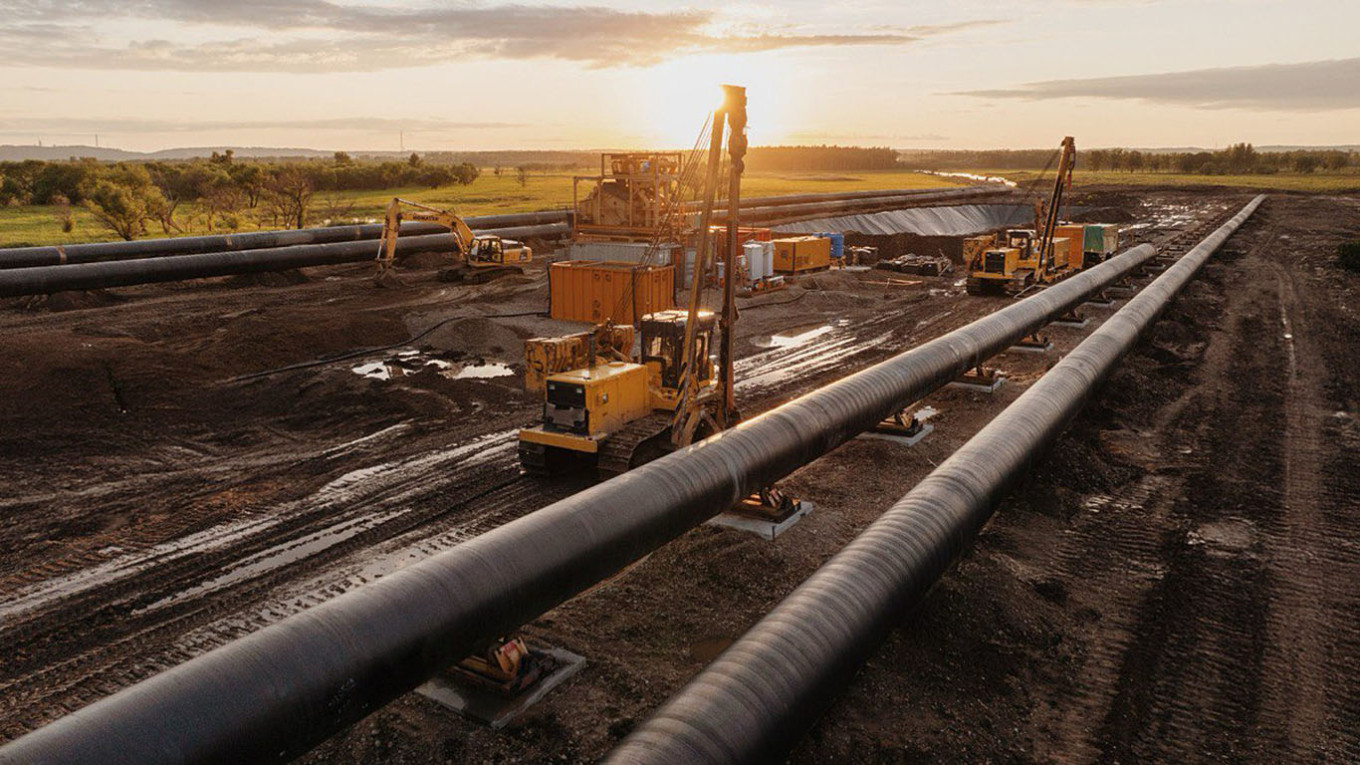
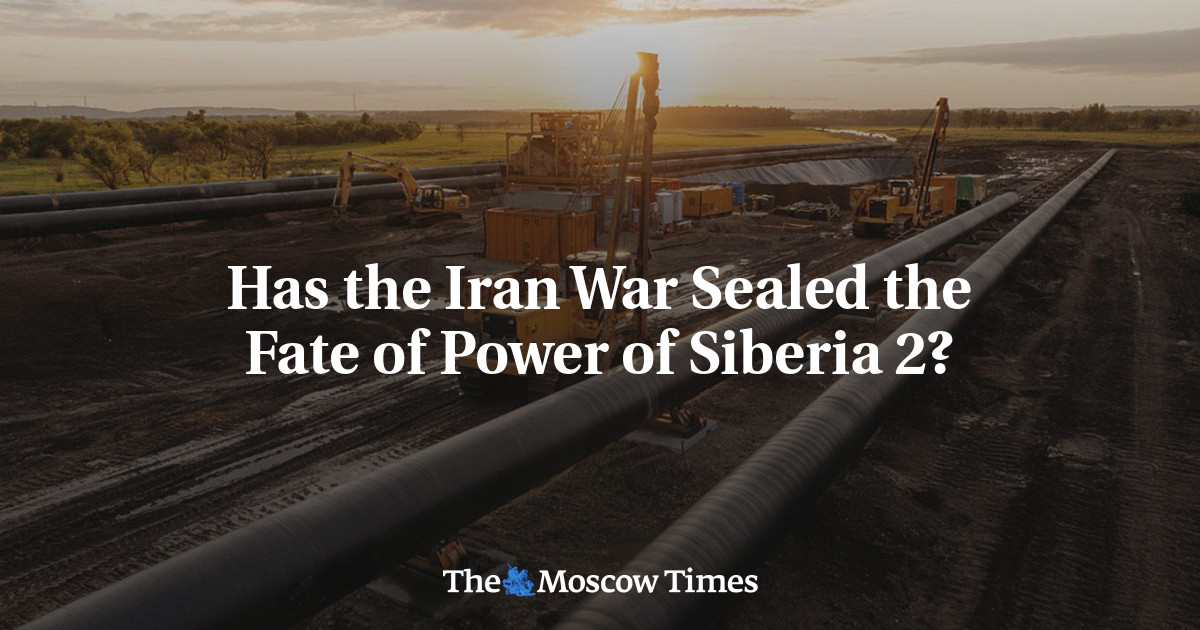
The highly vaunted Power of Siberia 2 gas pipeline remains stalled months after Gazprom signed what it called a “legally binding” memorandum with China to build it, even as the Iran war has renewed Russian hopes that concerns over energy security could push Beijing closer to a deal.
Moscow sees the project, which would transport gas from Russia’s Yamal Peninsula to China via Mongolia along a 2,600-kilometer (1,615-mile) route, as critical to replacing lost European gas sales after the invasion of Ukraine.
Russian officials have revived their public push for the pipeline after the outbreak of war in the Middle East, arguing that the Iran war’s disruptions to global energy supplies underscore the value of overland gas routes.
During a visit to Beijing in April, Russian Foreign Minister Sergei Lavrov acknowledged that discussions regarding the Power of Siberia 2 have been ongoing “for quite a while now,” but insisted the project offers advantages over “existing infrastructure” and would “harmoniously complement” it.
Referring to the U.S.-Israeli war on Iran, he said Russia and China have the “capabilities” to wean themselves from “such aggressive adventures that undermine the global economy and the energy sector.”
The comments marked Russia’s first major public sales pitch for Power of Siberia 2 this year, signaling hopes in Moscow that the Middle East crisis could swing fortunes in its favor.
This hasn’t stopped China from progressing with other energy ventures, however.
As Lavrov was in Beijing, Chinese Vice Premier Ding Xuexiang led a delegation to sign deals to expand gas cooperation with Turkmenistan, China's second-largest supplier of pipeline gas.
Still, Moscow has continued to promote the project as a strategically important alternative to vulnerable maritime energy routes, especially as the Iran war disrupts Middle Eastern LNG supplies, which accounted for about 30% of China’s LNG imports in 2025.
Russia already supplied nearly 40 billion cubic meters (bcm) of gas to China through the existing Power of Siberia pipeline in 2025 in addition to 9.8 million metric tons of LNG, equivalent to about 13.5 bcm of natural gas.
Power of Siberia 2 would add another 50 bcm of annual capacity and could double Russia’s share of China’s gas supply from around 10% to about 20% of total consumption.
That is important for Russia’s pipeline gas exports, as its exports to the EU plunged from 157 billion cubic meters (bcm) before the invasion of Ukraine to just 18 bcm last year, contributing to a 7% drop in Russia’s gas-related tax revenue and forcing the country to cut overall gas production by 3%.
The project also offers strategic and economic advantages for China.
Chinese gas consumption has risen by more than 5% over the past two years, reaching 456 bcm in 2025, with forecasts projecting demand to peak at around 610 bcm by 2040.
Russian gas is also cheaper than alternative imports by roughly $50 per 1,000 cubic meters compared with supplies from Turkmenistan and by even more relative to Middle Eastern LNG.
Analysts say pipeline deliveries from Russia also carry lower geopolitical risk than Middle Eastern supplies vulnerable to regional conflict, while LNG shipments from exporters such as Australia could become exposed to Western pressure if tensions between Beijing and Washington escalate.
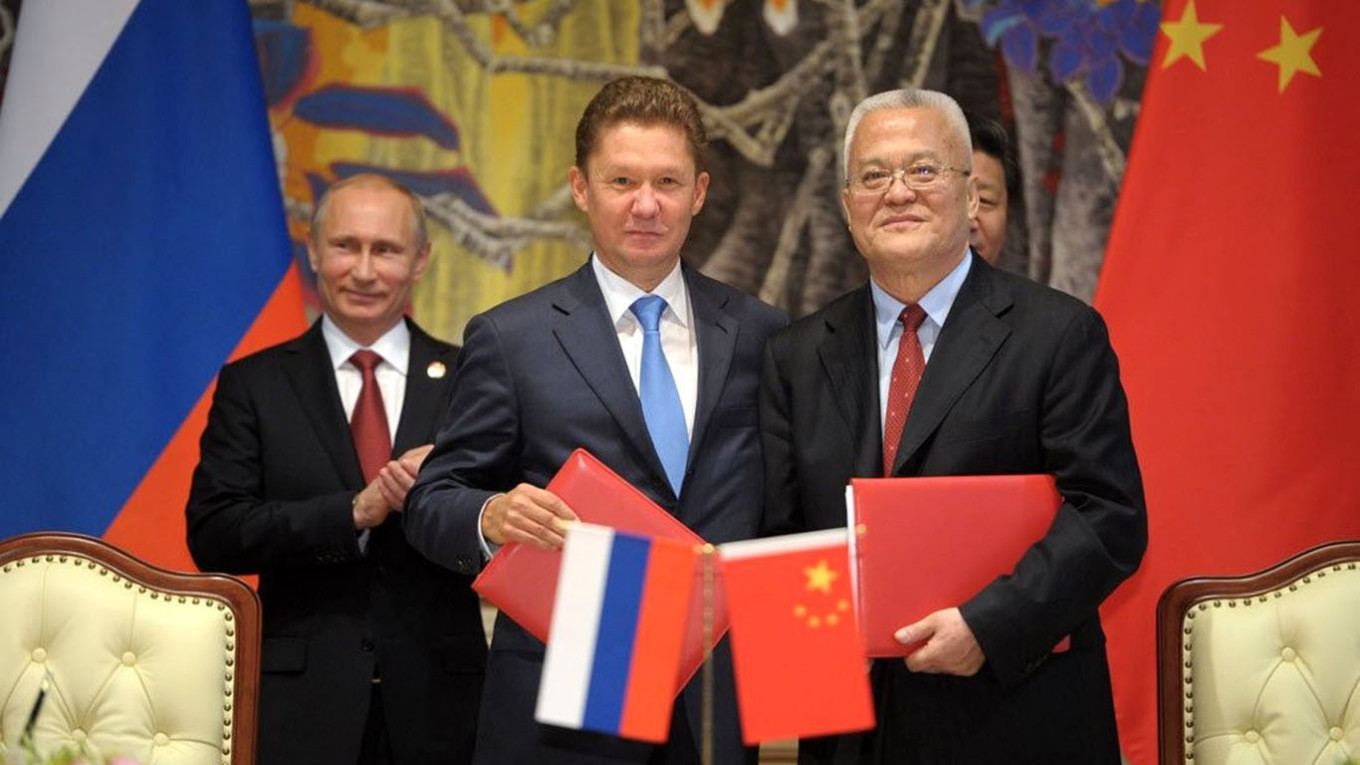
Of the two countries, Russia has been the noticeably stronger supporter of the project, as China represents its best opportunity to replace lost European gas sales.
While China’s 2026-2030 five-year plan, approved in March, said Beijing would “advance preparatory work” for the central route of the China-Russia gas pipeline — widely seen as a reference to Power of Siberia 2 — China has yet to give final approval.
Discussions are reportedly bogged down over pricing and the length of gas supply contracts. Beijing has reportedly called for gas prices aligned with Russia’s domestic rates, while Moscow wants terms similar to Power of Siberia 1.
Analysts say the Middle East conflict could improve the project’s political prospects but is unlikely to fundamentally alter the balance of power in negotiations.
Michal Meidan, head of China energy research at the Oxford Institute for Energy Studies, told The Moscow Times that while there is no firm commitment on Russia’s second gas pipeline yet, the current “international context and volatility” are making the project more likely.
"The disruption in [the Strait of] Hormuz highlights the contribution of pipelines to supply security as a buffer against maritime shocks,” Meidan said.
Still, she noted that Power of Siberia 2 is unlikely to begin operating before 2030, with key "technical details" unresolved and China still pursuing other land-based supply options, including Line D of the Central Asian gas corridor from Turkmenistan.
Laurent Ruseckas, executive director for global gas at S&P Global, said the global energy crisis could give negotiations a political boost and potentially accelerate the project.
“Traditionally, China has viewed its energy security through the prism of limiting pipeline supplies to no more than 25% of the market and has been reluctant to depend too heavily on Moscow,” Ruseckas told The Moscow Times.
“But in the context of the current crisis, having more pipeline supplies may appear more positive rather than negative,” he said, adding that it remained unclear whether the conflict would fundamentally shift Beijing’s strategic calculations.
S&P Global expects the pipeline to begin operating toward the end of 2031, Ruseckas said, with Gazprom and China National Petroleum Corporation likely to continue negotiating prices.
Russia sold gas to China last year at an average price of $249 per 1,000 cubic meters, below the price of its remaining gas exports to Europe and far below China’s LNG import prices, which averaged more than $400 per 1,000 cubic meters.
Despite the geopolitical arguments in favor of the pipeline, analysts say the Middle East crisis is unlikely to shift pricing leverage in Russia’s favor.
“Gazprom has no one else to negotiate with, so all the leverage is on the Chinese side,” Ruseckas said. “I think the price for Power of Siberia 2 is probably going to be lower than for Power of Siberia.”
Read more about: China , Business , GasSign up for our free weekly newsletter
Our weekly newsletter contains a hand-picked selection of news, features, analysis and more from The Moscow Times. You will receive it in your mailbox every Friday. Never miss the latest news from Russia. Preview Subscribe Subscribers agree to the Privacy Policy We sent a confirmation to your email. Please confirm your subscription.A Message from The Moscow Times:
Dear readers,
We are facing unprecedented challenges. Russia's Prosecutor General's Office has designated The Moscow Times as an "undesirable" organization, criminalizing our work and putting our staff at risk of prosecution. This follows our earlier unjust labeling as a "foreign agent."
These actions are direct attempts to silence independent journalism in Russia. The authorities claim our work "discredits the decisions of the Russian leadership." We see things differently: we strive to provide accurate, unbiased reporting on Russia.
We, the journalists of The Moscow Times, refuse to be silenced. But to continue our work, we need your help.
Your support, no matter how small, makes a world of difference. If you can, please support us monthly starting from just $2. It's quick to set up, and every contribution makes a significant impact.
By supporting The Moscow Times, you're defending open, independent journalism in the face of repression. Thank you for standing with us.
Once Monthly Annual Continue Not ready to support today?
 Remind me later. ×
Remind me next month
Схожі новини
Зеленський розповів про переговори з президентом Румунії

Зеленський запропонував Румунії співпрацю у форматі Drone Deal
РФ вдарила по житловому будинку у Козачій Лопані: постраждали дочка з матір'ю