Happy 100th birthday, David Attenborough! 13 surprising facts about the famous naturalist
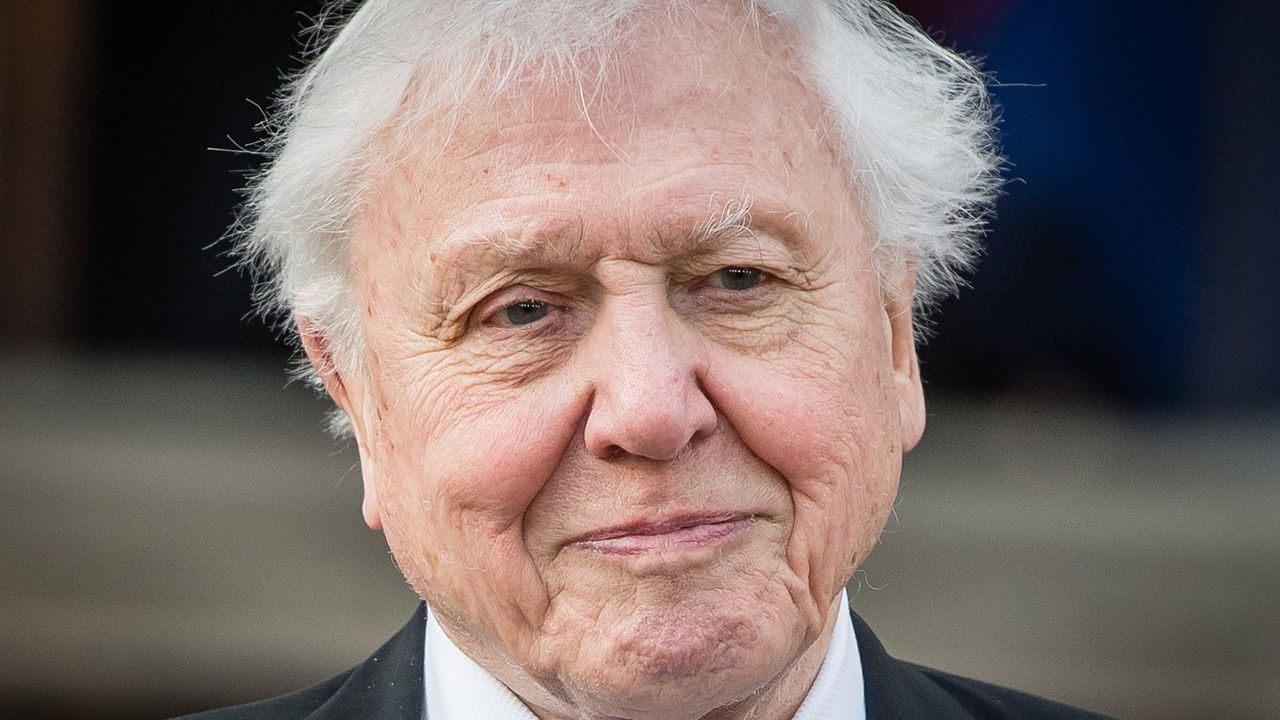
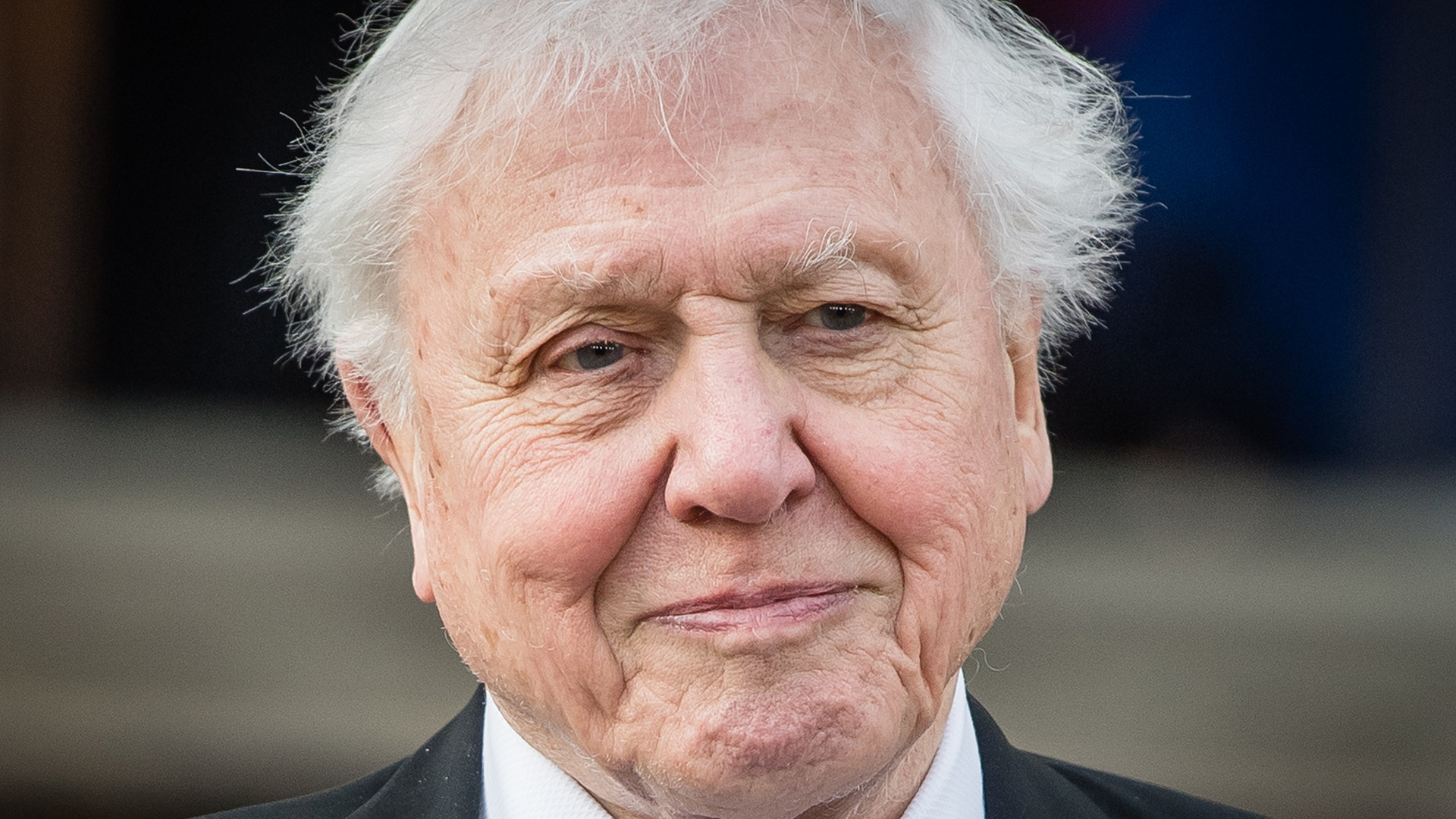
British broadcaster Sir David Attenborough has frolicked with gorillas, tracked ancient fish, introduced viewers to flying pterosaurs, and warned millions that the natural world is running out of time. For more than 70 years, his calm and unmistakable voice has guided audiences through some of Earth's most spectacular ecosystems, including the deep ocean, tropical rainforests and frozen poles.
On May 8, 2026, Attenborough turns 100. The milestone highlights an extraordinary life in communicating the science of planet Earth — a career that began at the BBC in the early 1950s, helped define modern wildlife filmmaking, and eventually made Attenborough one of the world's most recognizable advocates for conservation and climate action.
To mark Attenborough's 100th birthday, here are 13 surprising facts about the broadcaster who changed how we see life on Earth.
1. He's still making nature films as he turns 100.
Attenborough is still closely involved in natural history broadcasting. His 2025 feature-length documentary, "Ocean with David Attenborough," was timed around major international ocean events, including World Oceans Day (June 8) and the 2025 United Nations Ocean Conference, and focuses on marine ecosystems and the solutions that will safeguard them for future generations.
2. He helped shape British TV before becoming the face of wildlife documentaries.
Long before the popular "Planet Earth" and "The Blue Planet," Attenborough was a powerful figure behind the camera. In 1965, he was appointed controller (a type of editorial position) of BBC Two, then a young TV channel still defining its identity. Under his leadership, BBC Two became known for its ambitious cultural and educational programming, including series such as "Monty Python's Flying Circus," "Civilisation" and "The Ascent of Man." Attenborough stepped down from this role in 1972 to develop his own series, "Life on Earth."
3. He's the reason tennis balls are brightly colored.
During his time as BBC Two controller, Attenborough was in charge of introducing color on television, beating Germany to the first-ever color broadcasts in Europe. Shortly after the first Wimbledon color broadcast in 1967, Attenborough pushed for the tournament to change its balls from traditional white to bright yellow for easier visibility — a change that eventually stuck.
Sign up for the Live Science daily newsletter now4. His brother played John Hammond in "Jurassic Park."
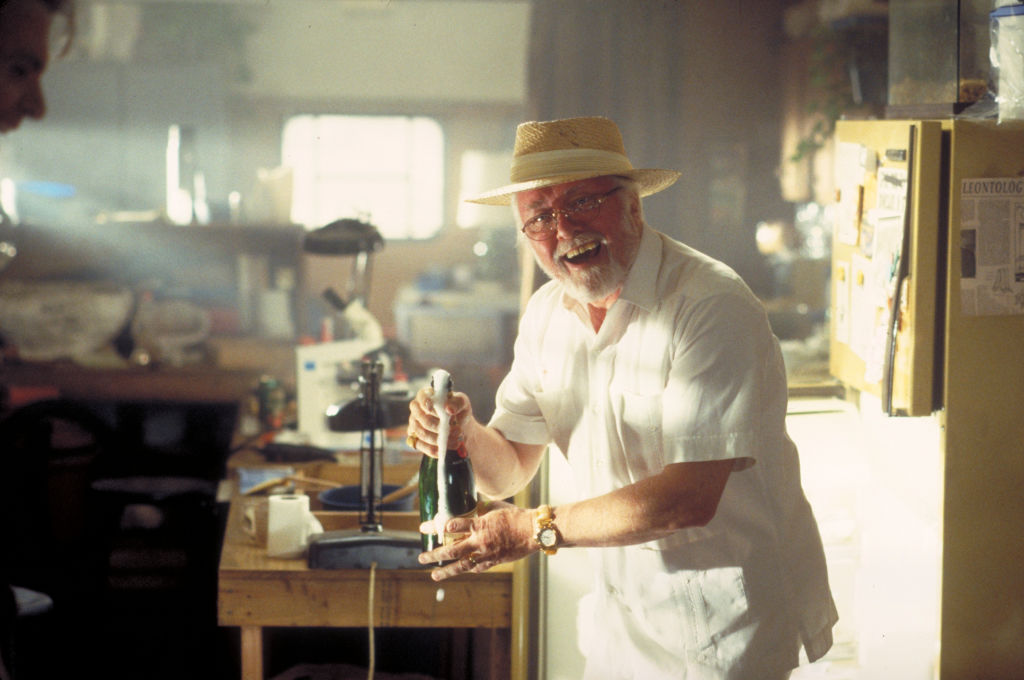
British actor Richard Attenborough as entrepreneur John Hammond in a scene from the 1993 film "Jurassic Park."
David Attenborough is not the only famous Attenborough. His older brother was Richard Attenborough, the Oscar-winning actor and director who is most famous for playing John Hammond, the eccentric billionaire behind the dinosaur theme park in Steven Spielberg's 1993 blockbuster "Jurassic Park." Richard Attenborough, who was also known for directing the award-winning 1982 film "Gandhi," was the oldest of the three Attenborough brothers; David was the middle child, and their younger brother, John, became a motor-industry executive. David is the only surviving sibling.
5. More than 50 organisms have been named after him.
Attenborough's name lives on not just in television but also in science. The exact number is difficult to calculate, but more than 50 organisms have been named in his honor, ranging from living frogs, plants, fish and insects to extinct marine reptiles. They include Nepenthes attenboroughii (a carnivorous pitcher plant), Pristimantis attenboroughi (rubber frog), Attenborosaurus (a genus of plesiosaurs, extinct prehistoric marine reptiles), Microleo attenboroughi (an extinct prehistoric marsupial lion) and many more.
6. He doesn't like rats.
Attenborough has remained unperturbed by encounters with mountain gorillas, venomous snakes and countless other dangerous wild animals, but rats are another matter. He has spoken openly about his dislike of them, tracing the aversion to one night in the Solomon Islands, when, during a thunderstorm, he discovered rats running across his bed and the floor of his hut. Even so, he has stressed that rats, like all animals, deserve respect.
7. He was rejected from the first BBC job he applied for.

David Attenborough smiling in 1965.
Attenborough's first attempt to join the BBC did not go well. In 1950, when he was 24 years old, he applied to become a radio talk show producer and was rejected. He later joined the broadcaster as a trainee producer in 1952, which marked the beginning of a BBC career that would define nature broadcasting for generations.
8. He never passed his driving test and still doesn't drive.
Despite a lifetime of filming in remote rainforests, deserts, islands and polar regions, Attenborough never passed his driving test. He has said he doesn't like driving — a surprising detail for someone whose career is so closely related to travel.
9. His parents took in two Jewish refugees during World War II.
During World War II, Attenborough's parents fostered Irene and Helga Bejach, two Jewish sisters who had fled Nazi Germany shortly before the war began in 1939. The girls lived with the Attenborough family in Leicester for seven years before moving to New York to join a relative. Decades later, Attenborough hosted a reunion for the sisters' descendants.
10. He tries to write back to fans.
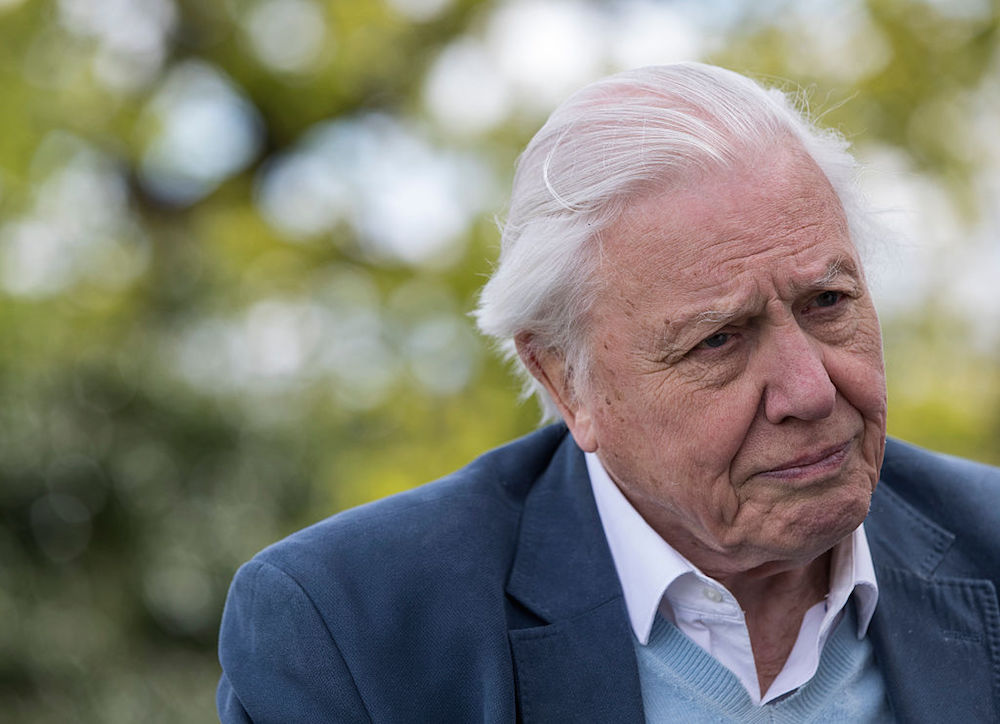
Sir David Attenborough mentioned he receives around 70 letters from fans a day.
Attenborough receives huge amounts of fan mail, but he tries to reply when he can. In a 2021 BBC Radio 1 interview, he said he receives as many as 70 letters a day and asked correspondents to include a self-addressed, stamped envelope if they wanted a response.
11. He served in the Royal Navy.
Before becoming a broadcaster, Attenborough completed national service in the Royal Navy. He was called up in 1947 and was posted to an aircraft carrier. After leaving the Navy, he worked in publishing, editing children's science textbooks. Though it was an early hint of the educational mission that would later define his TV career, he soon tired of the work.
12. His first BBC program was about a "living fossil."
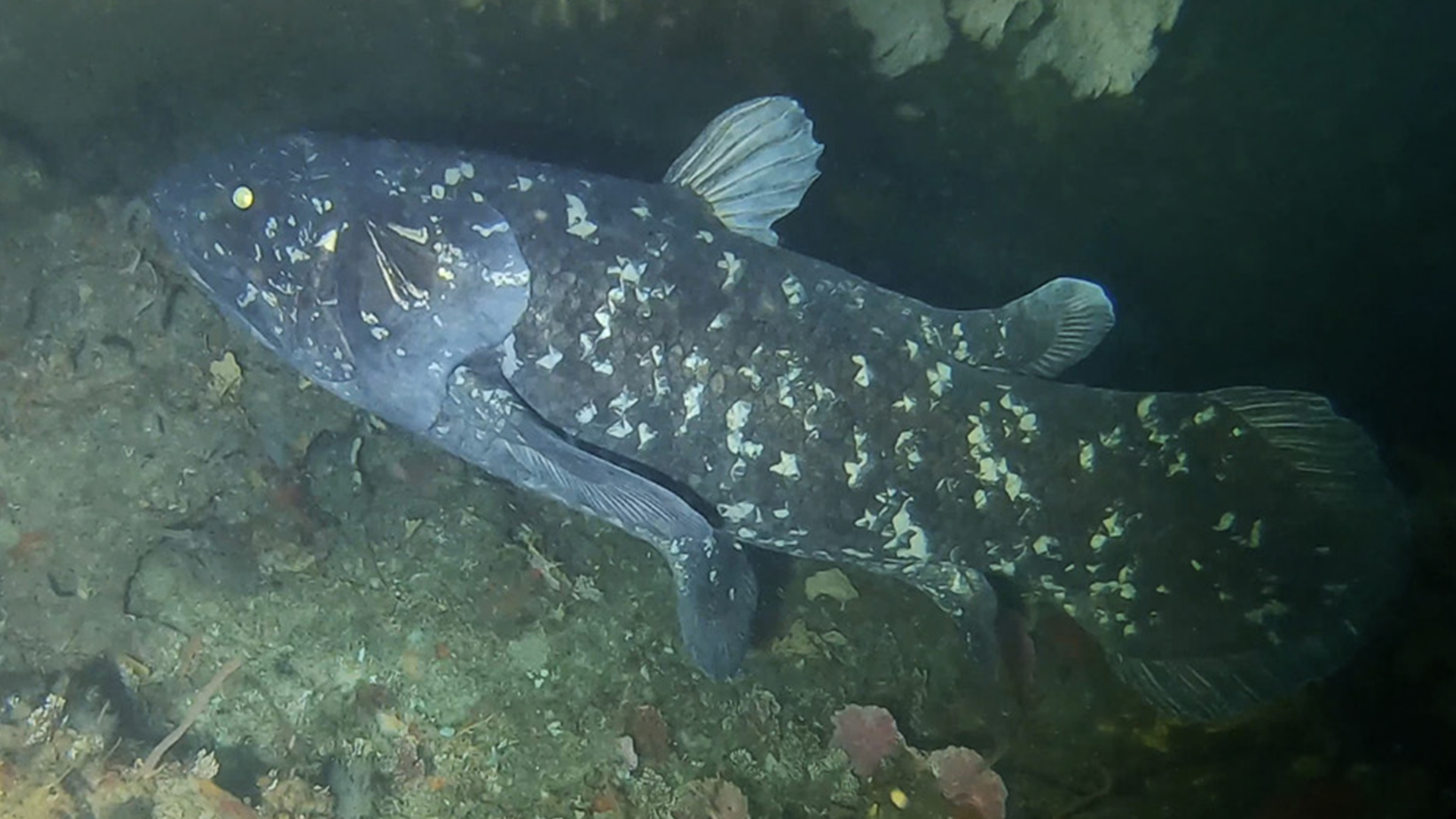
The coelacanth was once thought to be extinct.
Attenborough's first BBC program as a trainee producer was "Coelacanth," a broadcast in 1952. The program focused on the rediscovery of the coelacanth, a deep-sea fish once thought to be closely linked to the ancestors of land vertebrates. Scientists now know lungfish are the closest living relatives of tetrapods, the four-limbed vertebrates that include amphibians, reptiles, birds and mammals.
Related stories
- Humans are destroying our 'perfect planet,' Attenborough says
- David Attenborough warns that Earth has entered 'Age of Humans'
- Sir David Attenborough earns prestigious UN 'Champion of the Earth' award
The "Coelacanth" program told the story of a remarkable fish that scientists had known only from fossils and believed had vanished with the nonavian dinosaurs around 66 million years ago. That changed in 1938, when a trawler working in South Africa hauled up a strange, steel-blue fish with fleshy, limb-like fins. The rediscovery stunned scientists and made the coelacanth one of the most famous "living fossils" on Earth.
13. Baby mountain gorillas attempted to steal his shoes.
David Attenborough Plays with Cute Baby Gorillas | BBC Earth - YouTube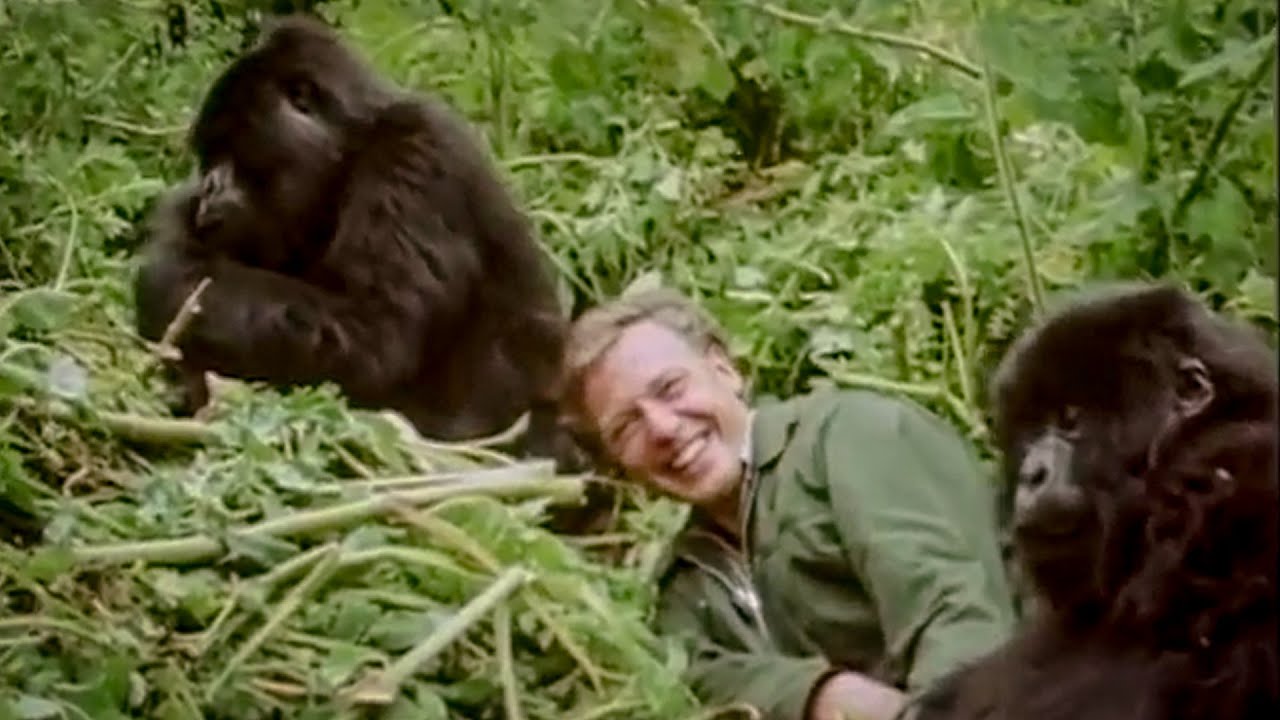 Watch On
One of Attenborough's most famous animal encounters happened in Rwanda while he was filming "Life on Earth" in 1979. As he sat among mountain gorillas, two young gorillas began tugging at his shoes. Attenborough later described the moment as "bliss." The scene remains one of the defining images of his career, unscripted and full of wonder.
How much do you know about our blue planet? Test your terran knowledge with our Earth quiz!
TOPICS
Kenna Hughes-Castleberry is the Content Manager at Live Science. Formerly, she was the Content Manager at Space.com and before that the Science Communicator at JILA, a physics research institute. Kenna is also a book author, with her upcoming book 'Octopus X' scheduled for release in spring of 2027. Her beats include physics, health, environmental science, technology, AI, animal intelligence, corvids, and cephalopods.
View MoreYou must confirm your public display name before commenting
Please logout and then login again, you will then be prompted to enter your display name.
LogoutСхожі новини