Gun-toting drunks, boy-eating sharks and bloodsucking babies: the violent, brilliant stories of Eric Walrond

Tropic Death – 10 blistering, astonishing stories about racist, exploitative outrages in Caribbean ‘paradises’ – won him a Guggenheim award. Why did this star of the Harlem Renaissance die such a sad and lonely death?
How does a writer disappear? This year marks six decades since the death of Eric Walrond, a Guyana-born writer who cut his literary teeth amid the Harlem Renaissance, kept company with the likes of Countee Cullen and WEB Du Bois, wrote a book once hailed as “the greatest short story work in the entire body of West Indian literature”, then dropped off the cultural map completely.
That work is Tropic Death, a truly trailblazing counter-pastoral portrait of the Caribbean locales of his youth. Four of the book’s 10 stories are set in the US-controlled Panama Canal Zone, where his father had worked: an economy of subjection structured by a rigid caste system that promoted white supremacy over its global mix of migrant and indentured labourers. This year is the centenary of Tropic Death’s publication.
Walrond was an “outsider twice removed”. The upheavals of his childhood – moving from Guyana to Barbados to Colón – established a lifelong migratory pattern of living. At 20, having acquired journalistic experience on the Panama Star and Herald, he migrated again to New York, where he found employment on Negro World, Marcus Garvey’s flagship title for his Universal Negro Improvement Association. However, Walrond came to dislike what he considered its emphasis on propaganda over art. He was reluctant to conform to any of the other ideological groups he encountered in Harlem, finding himself, as a West Indian, estranged from what he considered uniquely African-American arguments toward “ethnological oneness”.
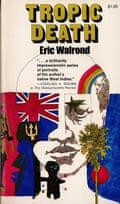
Walrond felt his artistic responsibility was to record the “emotional history” of the places and peoples he emerged from. This meant rejecting monolithic notions of racial identity, celebrating instead archipelagic and regional difference. Accordingly, Tropic Death’s characters – farmers, sex workers, sailors, single mothers – hail from across the Caribbean, and their dialogue is written phonetically, in different vernacular creole. This was a bold creative choice entirely unheralded in English-language Caribbean fiction at that time.
As its title suggests, Tropic Death tends toward the macabre and gothic. Its landscapes are vivid – tinged by supernatural forces, tarnished by industrial transformation, agitated by the lush carnage of natural decay and disaster. And his characters usually meet tragic fates. The scholar Robert Bone says that gothic literature “turns the idyll inside out”: it excavates the nightmare buried beneath the surface of the pastoral. The idyll that Walrond inverts is the racist fantasy of the “tropics” as a fertile paradise populated by lazy primitives: a cultural hallucination conjured by tourist literature that was commissioned by corporate interests to sanitise their exploitation of the region and its people.
Walrond’s stories disrupt this illusion by foregrounding the violence that sustains it. A labourer is arbitrarily shot by a drunken US marine lieutenant; a young boy, diving for pennies tossed by tourists aboard a German ocean liner, is gruesomely devoured by a shark. The book’s most fiercely ironic death, however, is reserved for Bellon, a British plantation owner who, on a stormy night in rural Barbados, discovers an abandoned baby on a track. Cursing the “depraved” locals for neglecting one of their own, he begrudgingly bundles up the child and takes shelter in a nearby cabin. The next morning, his corpse is discovered “utterly white and bloodless”. Bellon’s racism blinded him to an obvious reality: the baby he deigned to rescue was no human child, but a vampire bat.
Tropic Death netted Walrond a Guggenheim award and received numerous critical accolades, but not all his contemporaries welcomed its publication. Garvey included Walrond on a list of “literary prostitutes” whom he believed wrote for the approval of the white establishment. Jamaican-American writer Claude McKay thought him a “rotten imposter” whose “futuristic verbiage” was a shallow cover for negative, ventriloquised racial stereotypes. Meanwhile, Walrond’s white patron, Edna Worthley Underwood, discouraged his proposed next book – a history of the construction of the Panama Canal – suggesting that he “go back” to “his people” in the tropics.
Instead, Walrond crossed the Atlantic. First to Paris, then London, where he placed several stories in prominent periodicals, some of the earliest short fiction published by a Caribbean author in Britain. When war broke out, he evacuated to the Wiltshire town of Bradford-on-Avon, working in a rubber factory. This marked the beginning of a strange exile from literary life. Although Walrond penned some journalistic pieces while in Wiltshire – reporting on the colour bar and the arrival of the HMT Empire Windrush – he lived in anonymity, the only black man in an entirely white town. His creative output ceased.
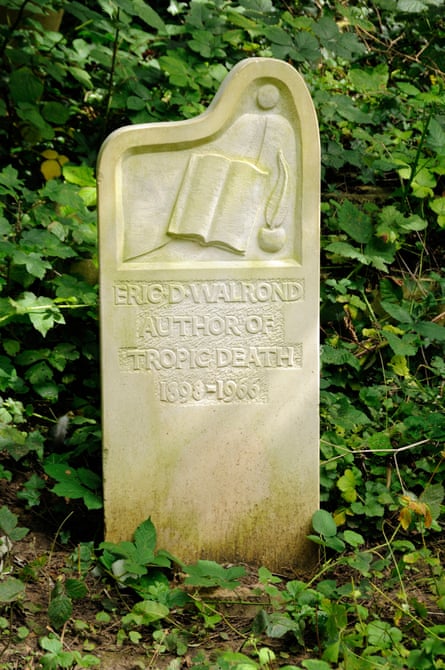
Walrond began thinking of himself as a failure. His inability to find “home” was intimately connected with his inability to create. “My quest for stability in a world in which nothing is stable,” he wrote, “has led me astray.” In 1952, calling himself a “depression casualty”, Walrond committed himself to Roundway Hospital, which treated mentally ill people, staying for five years. There, an unexpected atmosphere of “brotherliness” temporarily replenished his creative stores, and he began publishing fiction again, in the hospital’s monthly magazine. But after he left, moving back to London, efforts to rekindle his career were unsuccessful. His death from a heart attack at the age of 67 went almost entirely unremarked upon, and he was buried in an unmarked grave.
A small but significant body of academic literature has since recovered Walrond’s legacy. But his work and life story deserve a place in the wider public consciousness. Not only is Tropic Death an incandescent artistic achievement, but Walrond’s collected writings hold a weird mirror up to our own unstable world, offering an illuminating indictment of the obliterative consequences – for families, communities, and the landscape – of racial and extractive capitalism.
Explore more on these topicsShareReuse this contentСхожі новини
