'Guess I'll be waiting a minute to surf again': Artemis 2 moon astronaut Christina Koch shares her recovery journey
Breaking space news, the latest updates on rocket launches, skywatching events and more!
By submitting your information you agree to the Terms & Conditions and Privacy Policy and are aged 16 or over.You are now subscribed
Your newsletter sign-up was successful
Want to add more newsletters?
An account already exists for this email address, please log in. Subscribe to our newsletterA week after her historic moon mission ended, NASA astronaut Christina Koch struggled to walk in a straight line during a blindfold test.
After posting a video showing her wobbling and nearly tipping over — nearly enough, in fact, that attendants jumped in ready to help — Artemis 2's Koch joked about her recovery on Instagram: "Guess I'll be waiting a minute to surf again."
In microgravity, she added, the brain learns how to ignore signals our body automatically generates when moving around. Astronauts thus face similar issues when returning to Earth as do people with certain medical conditions, including concussions and vertigo, which is where physical therapy — and a bit of humor, as evidenced by Koch's smiles as she wobbled — is helpful.
A post shared by Christina Hammock Koch (@astro_christina)
A photo posted by on
NASA and its international partners have more than 25 years of experience doing long-duration missions on the International Space Station (ISS), while NASA and Russia's Roscosmos (with some other countries) also have different space station experiences dating to the early 1970s. All of this time has accumulated into lived experience that astronauts can share, and which scientists can write about — and have, in thousands of research papers.
Microgravity changes are affected somewhat by duration. Koch spent only 10 days in space on Artemis 2, from the April 1 launch to splashdown on April 10. That's far shy of her near-year on the ISS during her first mission, or the six months a station crew typically spends on board.
But scientists are nevertheless following her recovery, as well as that of the other Artemis 2 astronauts: NASA commander Reid Wiseman, NASA pilot Victor Glover and Canadian Space Agency mission specialist Jeremy Hansen. Koch, Glover and Hansen were the first woman, person of color and non-American to leave low Earth orbit, respectively.
There are lots of things weightlessness disturbs, even in the short run. Microgravity messes with your notion of "up" and "down," as well as your proprioceptive system that helps your body distinguish where your limbs are located. Over weeks and months, physical problems accumulate: calcium leaches from the bones, muscles lose mass, and some newer studies have examined subtle changes in genes.
Get the Space.com NewsletterThe ISS, however, also has countermeasures to help with this — various exercise machines for weightlifting and cardio, drugs to slow down various types of deterioration, and consultations with doctors to monitor changes. And these were used, in mini-form, on Artemis 2: a balanced diet, supplements and a small "flywheel" device for cardio and weightlifting were some of the help astronauts received. They also could call home for medical advice if needed.
Mental health for space living can also be tough. While leaving Earth is an immense privilege, being far away from friends and family for long stretches is difficult. Add to that the stresses of living in a small environment with other people and trying to accomplish a lot of tasks in a habitat that is isolated and dangerous.
The Artemis 2 astronauts also came under more scrutiny than the typical ISS crew, partly because they were the first people to visit the moon in nearly 54 years, and partly because they gladly consented to hours of livestreaming their activities per day (a non-typical practice on station missions, aside from the occasional spacewalk).
Koch, who knows about small-space living from long stays both in Antarctica and in space, wrote on April 18 that she, aware of the risks, was not scared of her mission in the days before leaving. But she said her "humble little life" was the thing that is most important to her. "A part of me started to miss it terribly for the small chance in the future that could come to be," she wrote.
With that mindset, she next shared on Instagram how grateful she was for a cup of coffee on the porch with her best friend.
That action, Koch added, "is a simple and universally small thing. But it is also everything."

Elizabeth Howell (she/her), Ph.D., was a staff writer in the spaceflight channel between 2022 and 2024 specializing in Canadian space news. She was contributing writer for Space.com for 10 years from 2012 to 2024. Elizabeth's reporting includes multiple exclusives with the White House, leading world coverage about a lost-and-found space tomato on the International Space Station, witnessing five human spaceflight launches on two continents, flying parabolic, working inside a spacesuit, and participating in a simulated Mars mission. Her latest book, "Why Am I Taller?" (ECW Press, 2022) is co-written with astronaut Dave Williams.
View MoreYou must confirm your public display name before commenting
Please logout and then login again, you will then be prompted to enter your display name.
Logout MORE FROM SPACE...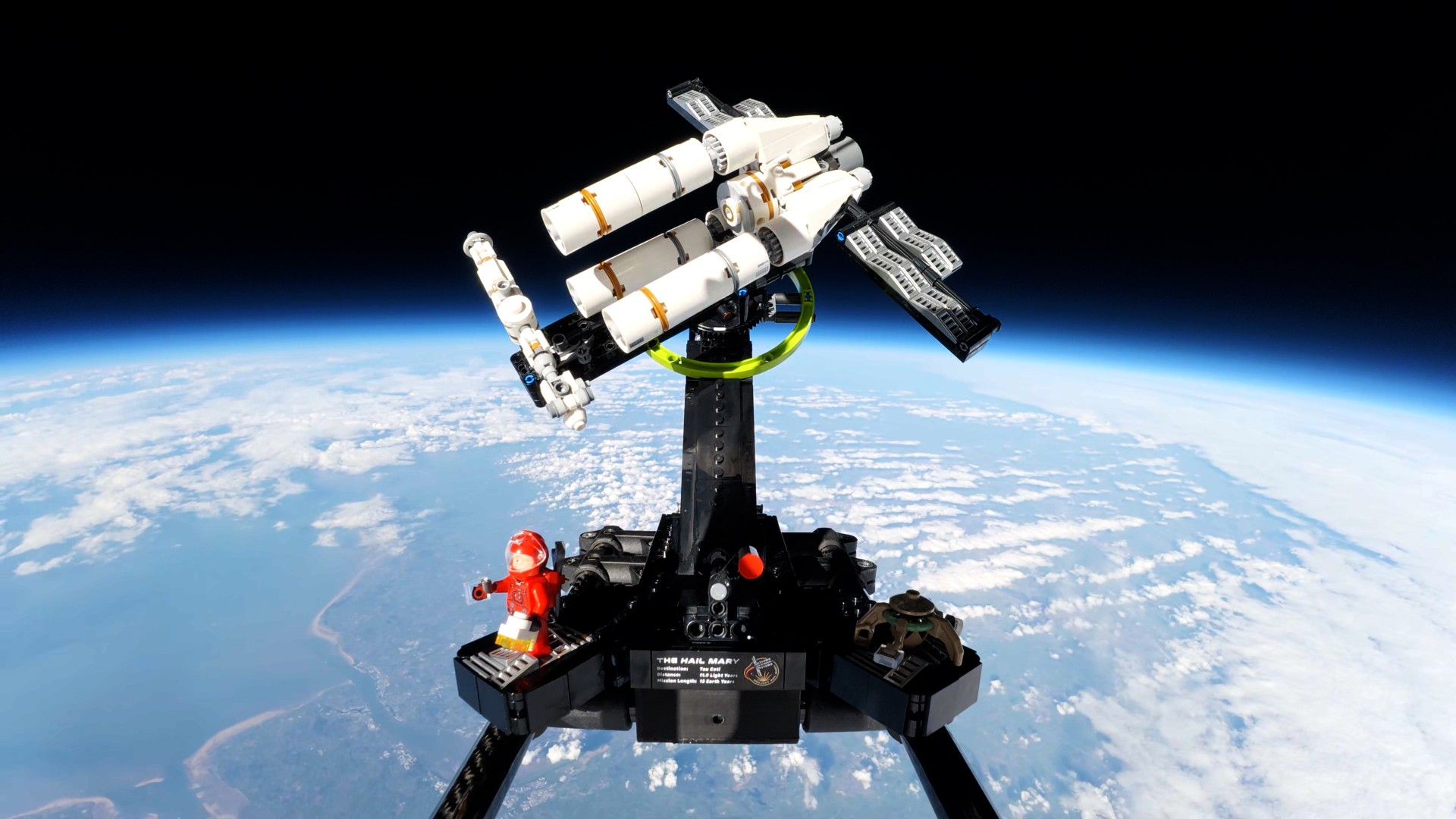 1A Lego 'Project Hail Mary' set just soared into the stratosphere, breaking the Guinness World Record for highest flight
- 2Ice melts in the springtime on Mars | Space photo of the day for April 24, 2026
- 3A bright star will disappear for up to an hour on April 25 — here's what's happening
- 4Hubble Telescope celebrates 36th anniversary with gorgeous new image of famous Trifid Nebula
- 5Sun unleashes 2 colossal X-flares within 7 hours of each other, knocking out radio signals on Earth
Схожі новини
Inside the evidence revolution — how decision-making became data driven
Cosmic-ray detection heralds era of mega-observatories for neutrinos
Fossil-Fuel Funded GOP Leaders Claim a Renowned Scientific Institution Has ‘Potential Conflicts of Interest’
