Giant new dinosaur identified from fossils in Thailand

 Reuters
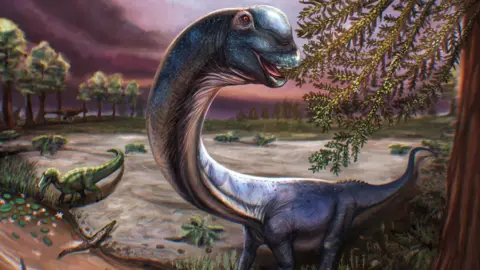
A new type of giant long-necked dinosaur, twice the size of a tyrannosaurus rex, has been identified up by scientists from remains dug up in Thailand.
The nagatitan, the largest-ever dinosaur found in South-East Asia, weighed 27 tonnes - as much as nine adult Asian elephants - and measured 27m (88ft) in length, longer than a diplodocus. Like that dinosaur, it belonged to the sauropod family of long-necked herbivores.
A team of researchers from the UK and Thailand identified the species from fossils found beside a pond in north-eastern Thailand a decade ago.
They say the discovery sheds light on how changes in ancient climatic conditions allowed gigantic dinosaurs to develop.
The dinosaur's full name is Nagatitan chaiyaphumensis, with "naga" referring to a serpent in South-East Asian folklore, "titan" referring to the gods in Greek mythology, and chaiyaphumensis meaning "from Chaiyaphum", the province where the fossils were discovered.
It lived between 100 and 120 million years ago - around 40 million years earlier than the tyrannosaurus rex - and is about twice the size of that creature.
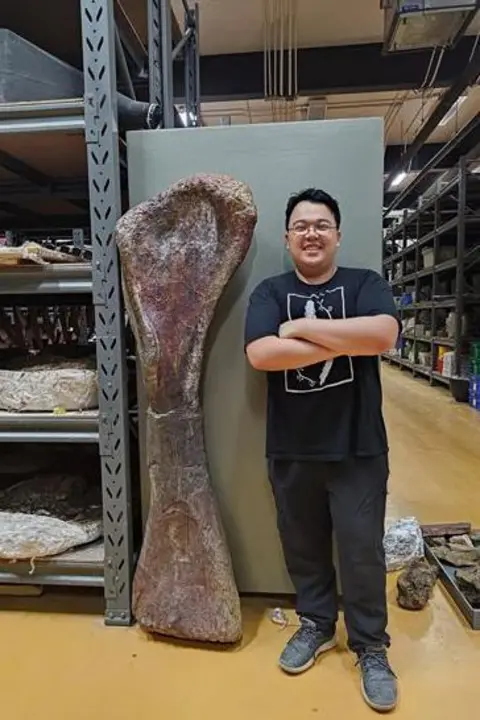
Thitiwoot Sethapanichsakul, a Thai doctoral student at University College London (UCL), was the lead author of the study which was published in the Scientific Reports journal.
He said the researchers referred to the nagatitan as "the last titan" of Thailand, because the fossils were found in the country's youngest dinosaur-bearing rock formation.
"Younger rocks laid down towards the end of the time of the dinosaurs are unlikely to contain dinosaur remains because the region by then had become a shallow sea. So this may be the last or most recent large sauropod we will find in South-East Asia," he said.
 Reuters
Sethapanichsakul, a self-confessed "dinosaur kid", said in a UCL press release that the study also "fulfils a childhood promise of naming a dinosaur".
The nagatitan is the 14th dinosaur to be named in Thailand. Palaeontologist Dr Sita Manitkoon, from Mahasarakham University, said that the country has a high diversity in dinosaur fossils and is "possibly the third most abundant in Asia in terms of dinosaur remains".
The nagatitan roamed Earth when the planet's atmospheric carbon dioxide levels were rising in line with high global temperatures.
The study's co-author, UCL's Prof Paul Upchurch, said the sauropod family of dinosaurs had become quite large at this time, telling National Geographic: "It seems a little odd that sauropods were able to cope with higher temperature conditions", as large bodies retain heat and are harder to cool down.
He told the Reuters news agency that it was "likely that the high temperatures had an impact on the plant fodder that was important to sauropods, which were very large-bodied herbivores".
Why are these beaches so rich in fossils?
New dinosaur species named after fossil analysis
'Punk rock' dinosaur with metre-long spikes discovered
New species of dinosaur discovered that 'rewrites' T.rex family tree
ThailandFossilsDinosaursСхожі новини

Indian-origin former CEO sentenced to 5 years in prison over $212 million fraud in New Jersey, asked to pay $125 million

Quote of the day by psychoanalyst Erik Erikson: “Hope is both the earliest and the most indispensable virtue inherent in the state of being alive. If life is to be sustained hope must remain, even where confidence is wounded, trust impaired.”
Засідання Радбезу ООН через ескалацію атак РФ проти України відбудеться 19 травня – постпред