Germany reaches out to Gulf states about Iran war
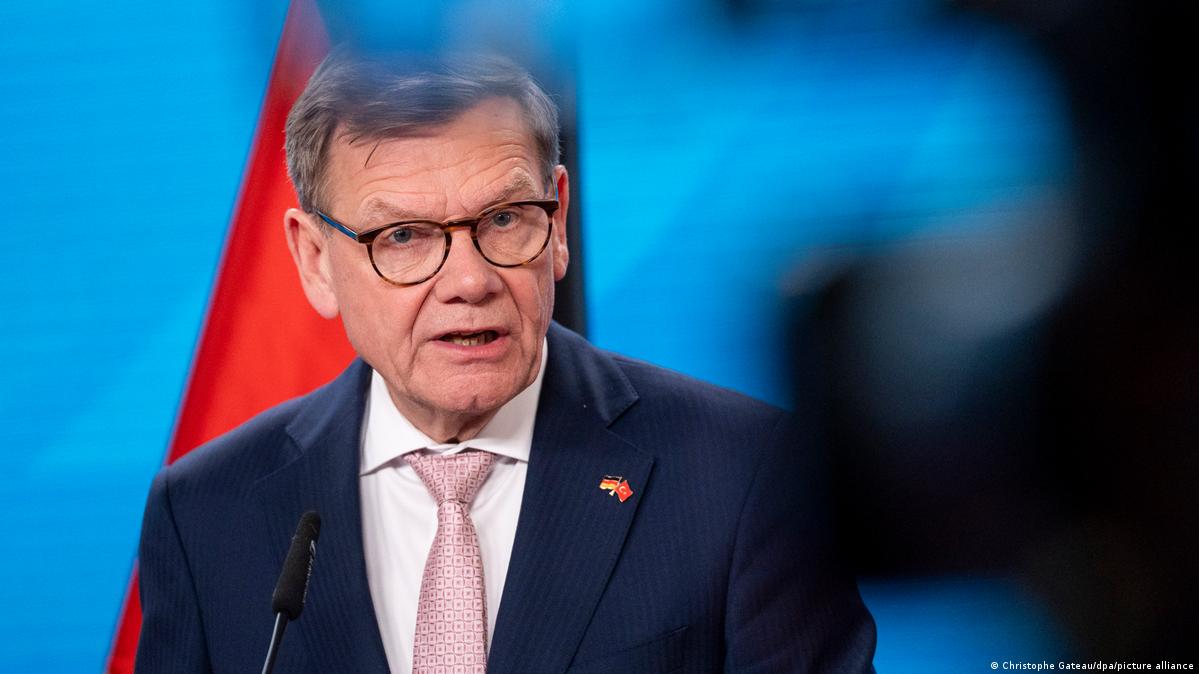
Are we living in an era where traditional diplomacy has little influence? Is the world moving toward a time when individual states increasingly use military force to assert their interests? If so, German Foreign Minister Johann Wadephul made a conscious effort this week to set a different tone. The German chief diplomat was unusually busy.
On Monday, the politician from the conservative Christian Democratic Union(CDU) met with his Turkish counterpart, Hakan Fidan. Afterward, Wadephul attended a conference at the German Foreign Office on energy security in Ukraine, which was also attended by representatives from the German Ministry for Economic Affairs. In more than four years of defending itself against Russia, Ukraine has learned to better protect its energy infrastructure against external attacks — something from which Germany could also learn. In addition, Wadephul received Sheikh Abdullah bin Zayed, the United Arab Emirates' foreign minister, and Hussein bin Abdallah, the Jordanian crown prince.
Could the war in Iran benefit Ukraine?
To view this video please enable JavaScript, and consider upgrading to a web browser that supports HTML5 video
Merz says he is 'disillusioned' by the course of the war
In Berlin at the end of April, after nearly two months of war between the US, Israel, and Iran, following a closed-door meeting of his party, Chancellor Friedrich Merz said he was "disillusioned" by the actions of the US and Israel against Iran. He said there had been no quick resolution, as had initially been expected by US President Donald Trump and Israeli Prime Minister Benjamin Netanyahu. "That is why we want to continue our European diplomatic efforts to find a solution. We are coordinating closely with the US side, but we also have our own European ideas on how the conflict can be resolved," Merz said.
What that means for now, at any rate, is that Germany is banking on diplomacy. The focus is now on talks with the Gulf states, which have often been targeted by Iran, and which are growing increasingly concerned about the deadlocked conflict and Russia's support for Iran.
Can Gulf nations close the gap between Iran and the US?
To view this video please enable JavaScript, and consider upgrading to a web browser that supports HTML5 video
Working with Gulf States to uphold the rules-based world order
Max Hofmann, head of DW's Berlin bureau, has been following Wadephul's efforts this week. "You can't lump all Gulf states together, but at its core, this is about finding dependable partners," he says. "The US is failing in its role as a partner and protector.
Through the war and its consequences, the US is jeopardizing the security and economic models of many countries in the region. Furthermore, the US strategy of acting as a mediator between Iran and the West has failed." According to Hofmann, this is why Germany is once again becoming an attractive partner for these countries — precisely because of its commitment to a rules-based order.
The Konrad Adenauer Foundation is a think tank directly tied to the Christian Democratic Union (CDU) party. For Philipp Dienstbier, Head of the Konrad Adenauer Foundation's Regional Program in the Jordanian capital, Amman, the pivot toward the Gulf states comes as no surprise. "Even before the war with Iran, a number of high-ranking government officials — including Chancellor Merz and Minister of Economic Affairs Katherina Reiche — visited the Gulf states to signal an interest in long-term, strategic cooperation. This demonstrates that the Gulf region was already at the top of Germany's agenda even prior to the war and its economic repercussions," Dienstbier told DW.
This week's meeting with Hassanal Bolkiah, the Sultan of the South Asian Emirate of Brunei, also fits into this strategy, especially since the country currently holds the presidency of the Association of Southeast Asian Nations(ASEAN). The group of eleven Southeast Asian nations has been particularly hard hit by Iran's blockade of the Strait of Hormuz. Lifting this blockade is also a key concern for Germany. "At some point, the strait will reopen again, and the Gulf states are also working on alternative transport options," says Hofmann. "And looking further into the future, this region could play a very important role in the production of green hydrogen for Germany."
Germany campaigns for a seat on the UN Security Council
The foreign minister's active role as host will also benefit Germany's bid for a non-permanent seat on the UN Security Council. The UN General Assembly will make its decision on June 3. In addition to Germany, Austria and Portugal are also applying for the European group — the outcome is still up in the air. Every conversation with UN representatives can therefore only be helpful.
This article was translated from German.
AdvertisementСхожі новини
Shubman Gill is IPL 2026's best captain: Ex-India star after GT crush CSK
China no longer fears US, believes world order tilting towards it: Political expert
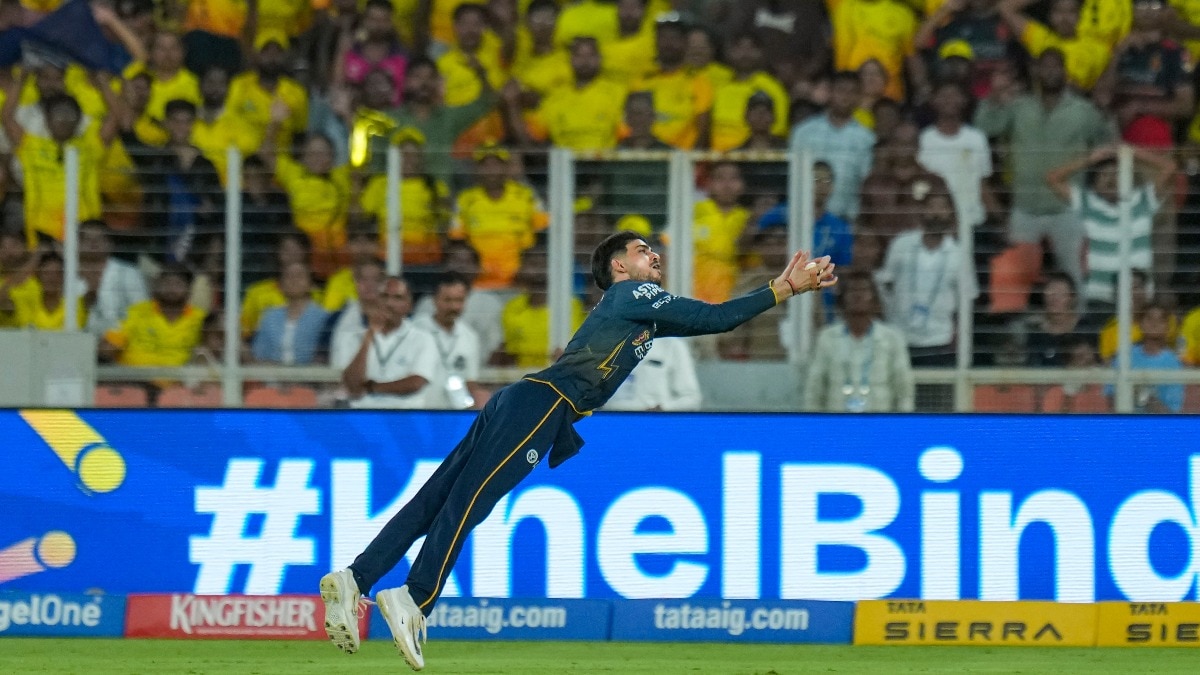
After roasting GT fielding, Gill leads by example with stunning CSK display