Germany news: Iran war not causing migration wave — Dobrindt
What you need to know
- Interior Minister Alexander Dobrindt says the Iran war has so far not triggered a wave of migration to Europe
- Antisemitism commissioner Felix Klein has called on festivals to make a stand against what he says is rising antisemitic rhetoric in the cultural sector
- Police are investigating an explosion in an underpass in the town of Völklingen that killed one man and wounded four others
Here is DW's roundup of the top headlines from Germany on April 18, 2026:
Skip next section German train stations to receive €4 billion a year for renovations up to 203004/18/2026April 18, 2026German train stations to receive €4 billion a year for renovations up to 2030
German train stations are to be modernized and renovated to the tune of €20 billion ($23.55 billion) over the next five years, with the money spent on improving appearance, safety and security.
"The train stations are particularly important to us," said the chief executive of national rail operator Deutsche Bahn (DB), Evelyn Palla.
"They are a visiting card, not just for us, but also for cities and municipalities," she said, adding: "We clearly have some catching up to do."
She said more than 1,000 stations across the country would be modernized this year at a cost of €4 billion.
Another 710 train stations across Germany will be completely made over by 2030, 130 of them this year, according to Palla.
She said an additional €50 million would be invested in improving safety and cleanliness.
The company says this will include equipping more stations with cameras and video surveillance in coordination with federal police.
Experts say the many problems with Germany's rail network, including dilipidated stations and frequent delays, are the result of decades of underinvestment in infrastructure, which the current coalition government pledged to reverse.
However, there have been reports that some of those pledges might not be fulfilled.
https://p.dw.com/p/5CQ39Skip next section Germany 'setting an example' for allies in defense — NATO chief Rutte04/18/2026April 18, 2026Germany 'setting an example' for allies in defense — NATO chief Rutte
NATO Secretary General Mark Rutte told German newspaper Die Welt that Berlin was helping lead the way in efforts for European allies to step up their military capacities.
But he also dismissed speculation Washington could leave the US-led alliance after Donald Trump lashed out at it for what the US president considered to be a lack of support in the war with Iran.
Click here for more on Rutte's comments on NATO, Trump and Europe.
https://p.dw.com/p/5CQ4eSkip next section Finance minister warns on kerosine, calls for faster shift from fossil fuels04/18/2026April 18, 2026Finance minister warns on kerosine, calls for faster shift from fossil fuels
German Finance Minister Lars Klingbeil has said authorities must take steps to counter an imminent shortage of kerosine — used for aviation fuel — amid the Iran war and called on the coalition goverment to accelerate the transition to renewables.
Klingbeil, who is also vice chancellor and the co-leader of junior governing coalition partner the Social Democrats (SPD), told the news magazine Spiegel: "We must take the warnings of a kerosine shortage very seriously."
"For me, it's clear: We shouldn't just address the price problem but must also keep security of supply in mind at all times."
"We are in a situation that is similarly challenging to the energy crisis following the Russian invasion of Ukraine," he said.
"We need to make the country more resilient, less dependent on fossil fuel imports," he added.
The International Energy Agency warned on Friday that European countries could face a kerosine shortage in the next six weeks, with imports from the Middle East severely hampered by the war and much oil infrastructure damaged in the conflict.
Kerosine prices have more than doubled since the start of the war on February 28.
https://p.dw.com/p/5CPwoSkip next section READ: Teen makes sensational historical find in Berlin04/18/2026April 18, 2026READ: Teen makes sensational historical find in Berlin
A 13-year-old boy has discovered a 2,300-year-old coin coming from ancient Troy in a field in the German capital.
The find, rare for Germany, helps to cast light on the links that existed between Ancient Greece and northern Europe.
You can read more about the excitement caused by the discovery here:Teen discovers first ancient Greek artifact found in Berlin
https://p.dw.com/p/5CPs4Skip next section Explosion kills one, wounds four in western German town04/18/2026April 18, 2026Explosion kills one, wounds four in western German town
German police say an explosion in a pedestrian underpass in Völklingen in the early hours of Saturday morning has killed one man and seriously wounded four others.
Two of the men were said to have suffered life-threatening injuries in the blast, which investigators said was caused by "human action."
They initially gave no more details.
Völklingen is a town of about 40,000 people situated a few kilometers (miles) west of Saarbrücken, the capital of the state of Saarland, which borders France.
https://p.dw.com/p/5CPjlSkip next section No increased migration amid Iran war — Interior Minister Dobrindt04/18/2026April 18, 2026No increased migration amid Iran war — Interior Minister Dobrindt
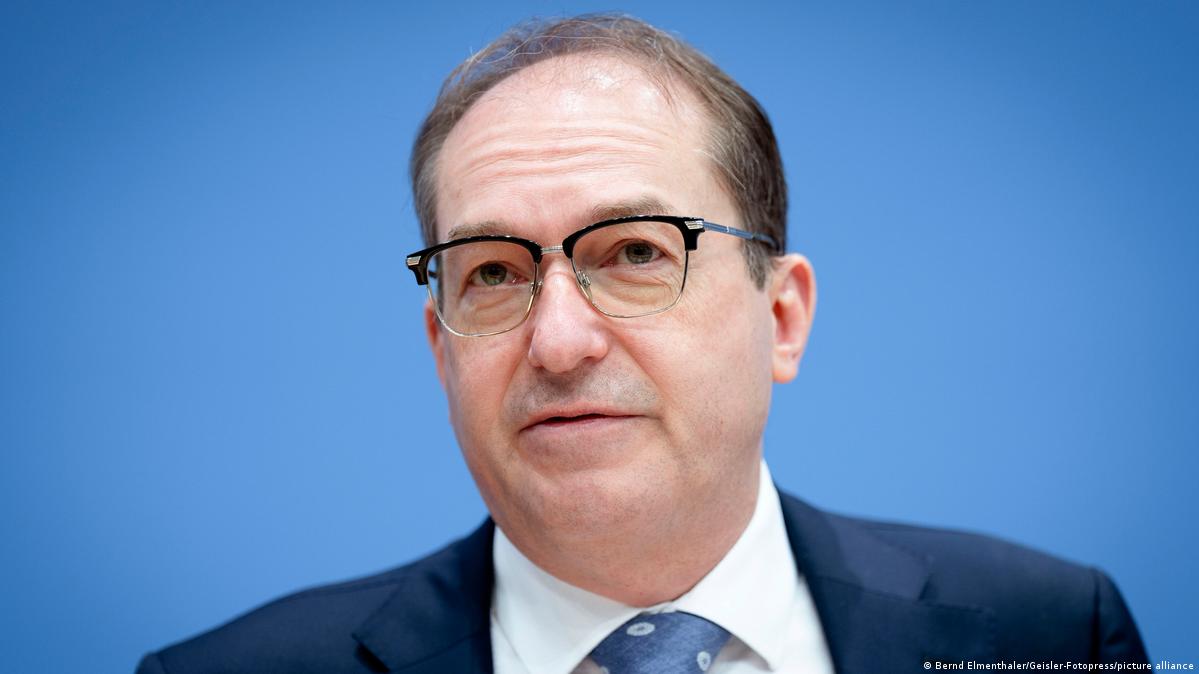
German Interior Minister Alexander Dobrindt has said the US-Israeli war on Iran has so far not led to more people seeking shelter in Europe but that European authorities are taking precautionary measures.
"We are not currently seeing increased migration pressure," Dobrindt told the Rheinische Post newspaper in an interview published on Saturday.
He said authorities were monitoring migration movements in countries such as Iran and Lebanon.
"At present, we are seeing high levels of internal migration in both countries, but we are not yet detecting pressure on the Turkish border. That would be the first indicator of a further migration movement towards Europe," Dobrindt said.
Over 4.25 million people were internally displaced in the two countries between the start of the war in February 28 and early April, according to a World Health Organization (WHO) report.
In his Saturday comments, Dobrindt said the coming weeks would show how the situation develops, especially in the Middle East, and what migration movements may follow.
He also left open the possibility of extending border controls beyond September.
Dobrindt ordered intensified checks and refusals of entry at all nine of Germany's external shortly after he took office in May last year, a move that is allowed only on a temporary basis under the EU's Schengen rules.
Those checks have twice been extended as Germany adopts an ever more hardline migration policy.
Will the Iran war cause a global recession?
To view this video please enable JavaScript, and consider upgrading to a web browser that supports HTML5 video
https://p.dw.com/p/5CPqhSkip next section Welcome to our coverage04/18/2026April 18, 2026Welcome to our coverage
Timothy Jones | Saim Dušan Inayatullah EditorGuten Morgen from the team in the DW newsroom in Bonn!
German Interior Minister Alexander Dobrindt has said the United States and Israel's war with Iran has so far not caused more people to come to Europe to escape the fighting.
Germany's antisemitism commissioner has called for organizers of cultural events to be on their guard against artists using performances to spread anti-Israel messages.
And an explosion in a town near Germany's border to France has claimed at least one life, with the cause still under investigation.
You can read about these and other stories from Europe's biggest economy in our roundup of German stories on Saturday, April 18.
https://p.dw.com/p/5CPnfShow more posts
Схожі новини
Austria: Police find rat poison in recalled baby food jar
Malaysia: Fire in impoverished village destroys 1,000 homes

Теракт в Киеве: насчет полицейских открыли уголовное дело за халатность
