Germany news: Healthcare staff protest plan for major cuts
What you need to know
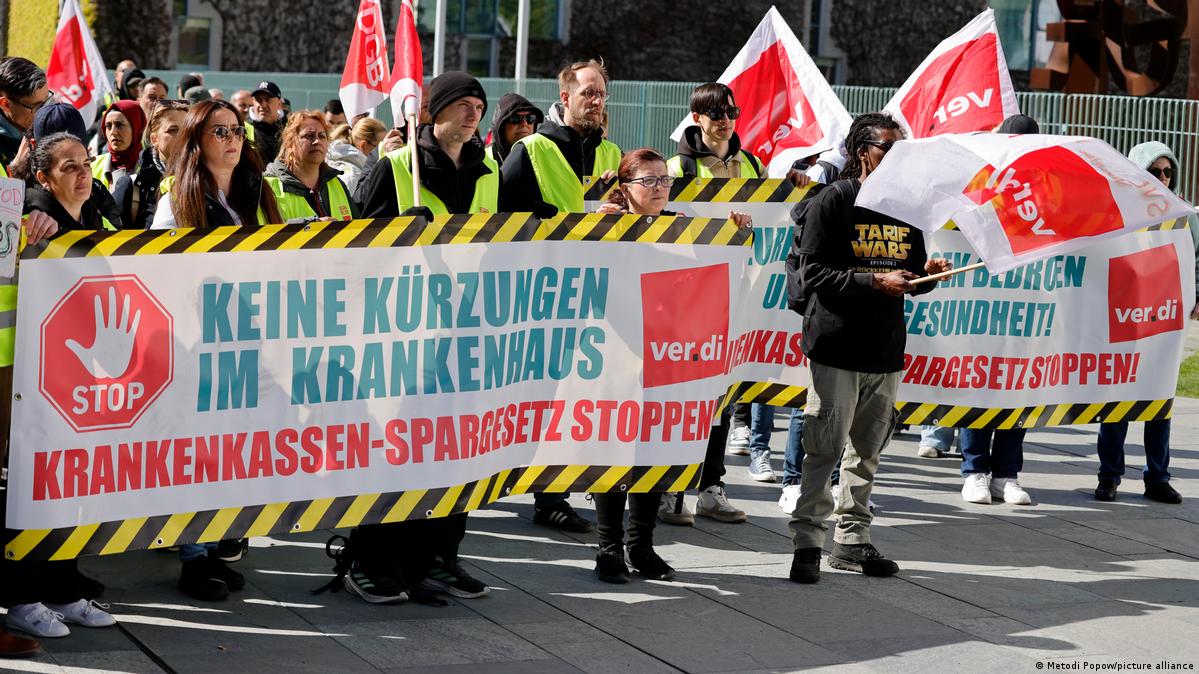
- German service union Verdi is organizing protests against a round of cuts announced by the German government
- The plan is aimed at reducing the burden on health insurance providers that could mean higher contributions
- Verdi says the plan will lead to poorer health care and diminished working conditions for staff
- In the German town of Moers, thousands were evacuated as a World War II bomb was destroyed
Here is a roundup of the top stories from and about Germany on Thursday, May 28.
Tired of missing our real-time updates? Click here to add us as a Preferred Source on Google. Then tap the "Star" or "Preferred" to keep DW News at the top of your feed.
Skip next section Germany eyes Canada LNG deal to diversify supply05/28/2026May 28, 2026Germany eyes Canada LNG deal to diversify supply
Germany's state-owned gas importer Securing Energy for Europe (SEFE) has moved to secure a long-term LNG deal with a Canadian supplier as it seeks to diversify energy imports.
SEFE signed a memorandum of understanding with Ksi Lisims LNG for the annual delivery of 1 million metric tons of liquefied natural gas starting in the early 2030s.
The agreement could run for up to 20 years and would mark SEFE's first long-term LNG partnership with a Canadian company.
Economy Minister Katherina Reiche said closer cooperation would help broaden supply routes and strengthen resilience against global risks.
Germany has relied heavily on LNG imports from the United States. The latest deal is part of efforts to diversify supply following the energy crisis triggered by Russia's invasion of Ukraine.
SEFE, formerly known as Gazprom Germania, was nationalized after the outbreak of the war.
https://p.dw.com/p/5ER8MSkip next section WWII bombs detonated after evacuation05/28/2026May 28, 2026WWII bombs detonated after evacuation
A World War II bomb has been detonated in the western town of Moers after thousands were evacuated overnight.
Officials said the 500-kilogram (1,100-pound) device was found during construction work and had to be destroyed because its fuse was too damaged to safely defuse.
The bomb was found on the former site of the Getränke Union gastronomy wholesaler.
A second, smaller bomb discovered at short notice was also detonated in the town, which lies just to the west of the city of Duisburg. Around 3,200 people were affected by evacuations within an 800-meter (half-mile) radius.
Those impacted included residents, a hospital with about 450 patients and a care home with around 200 people.
Many German cities were heavily bombed during World War II, and unexploded ordnance is still regularly found and disposed of.
https://p.dw.com/p/5ER55Skip next section Hospital staff protest planned health care cuts05/28/2026May 28, 2026Hospital staff protest planned health care cuts
Hospital staff in Germany are staging protests against planned spending cuts in the government's health care reform package.
The Verdi service-sector trade union said workers are angry about what it called a "cost-cutting drive" led by Health Minister Nina Warken.
Union board member Sylvia Bühler warned that the measures could undermine the quality of care and reverse progress on working conditions.
The government package aims to relieve statutory health insurers of €16.3 billion ($18.9 billion) by 2027 to avoid rising contributions for taxpayers. It includes spending caps for clinics, doctors and the pharmaceutical sector, as well as higher co-payments for medicines and limits on free coverage for spouses.
Hospitals alone are expected to contribute €4.6 billion in savings, with tighter limits on reimbursement increases and reduced coverage of wage hikes beyond a set threshold.
The proposals, now heading to the German Bundestag, also include caps on the so-called care budget, which funds nursing staff and has risen sharply in recent years.
Children, teens in Germany lack access to mental health care
To view this video please enable JavaScript, and consider upgrading to a web browser that supports HTML5 video
https://p.dw.com/p/5ER5ZSkip next section Welcome to our coverage05/28/2026May 28, 2026Welcome to our coverage
Richard Connor | Elizabeth Schumacher EditorGuten Tag from the DW newsroom in Bonn.
You join us as the trade union Verdi puts pressure on the government to prevent planned spending cuts at hospitals as part of an austerity package.
While the cuts are aimed at maintaining stable health insurance contributions, Verdi says it will harm patient care and staff conditions.
Stay with us for more on this and other news from Germany throughout the day.
https://p.dw.com/p/5ER4mShow more postsСхожі новини
Health ministry to give financial aid to organ transplant hospitals
Germany news: Healthcare staff protest plan for major cuts
WHO urges ceasefire in Congo to contain Ebola as cases surge