Germany news: Coalition at odds over pay rises for MPs
What you need to know
- The SPD, as well as the opposition Left Party, have spoken out against this year's planned pay rise for members of the Bundestag.
- Chancellor Merz is set to visit the Digitalization Ministry one year after his coalition created it.
Here is the latest news from around Germany on Thursday, May 7:
Skip next section AfD far ahead in Saxony-Anhalt polls05/07/2026May 7, 2026AfD far ahead in Saxony-Anhalt polls
Four months ahead of state elections in Saxony-Anhalt, pollings suggests that the far-right Alternative for Germany (AfD) could secure an absolute majority.
Not only would this be a first for a regional parliament, absolute majorities have become extremely rare in Germany, where seven or more major political parties often compete for votes.
According to a poll by Infratest Dimap, the AfD is currently at 41% support, vastly surpassing the conservative CDU at 26% and third-place Left Party at 12%.
The AfD's regional chapter in Saxony-Anhalt is classified as an extremist organization by Germany's domestic intelligence agency.
It remains unclear what would happen if the party does not secure an outright majority, as other parties have an understanding that there is a "firewall" against joining a coalition with the AfD. However, some municipal and regional CDU groups have shown signs that they may be ready to break the taboo.
Why Germany's anti-AfD firewall is crumbling
To view this video please enable JavaScript, and consider upgrading to a web browser that supports HTML5 video
https://p.dw.com/p/5DP3xSkip next section Disability law a 'slap in the face,' say critics05/07/2026May 7, 2026Disability law a 'slap in the face,' say critics
Another dispute between the ruling coalition came to the fore on Thursday when the Bundestag restarted its prolonged debate about the proposed revisions to the Disability Equality Act.
Federal Minister of Social Affairs Bärbel Bas of the center-left SPD said there had been "progress" during the day's debate but that she would have "liked to see more."
The opposition Green Party, however, said this was "not a law to be proud of in any way." MP Corinna Rüffers said it was a "slap in the face to be people with disabilities."
The Left Party agreed, with parliamentary co-leader Sören Pellmann calling it a "step backward" and argued it wasn't up to the standard of the UN Convention on the Rights of Persons with disabilities, as well as the equal protection guarantees of the Basic Law, Germany's constitution.
The conservative CDU has called the measures "disproportionate," including a clause that requires federal buildings to become wheelchair accessible by 2045.
Alongside their Bavarian sister party the CSU, the CDU has also rolled back requirements for private businesses to become more accessible. This includes phrasing that says businesses can argue it is an "unreasonable burden" to, for example, have restaurant tables further apart, build a wheelchair ramp or install an elevator.
Critics argue that this language is vague and will make the law difficult to enforce.
Disability rights advocates have long complained that German infrastructure is built for only the most able-bodied, and that access to employment and education is lacking. Germany has been heavily criticized for still using employment models for some disabled adults that can see them earning less than minimum wage in communal "workshops."
The country has also faced criticism for lack of inclusion in education, still employing "special schools" in some areas. This can be a particular problem in rural areas.
"How much longer do we want to wait?" asked SPD lawmaker Heike Heubach, a member of the Deaf community.
Germany: Equal rights for people with disabilities
To view this video please enable JavaScript, and consider upgrading to a web browser that supports HTML5 video
https://p.dw.com/p/5DOu7Skip next section German tourist wins payout over sun-lounger fight05/07/2026May 7, 2026German tourist wins payout over sun-lounger fight
Germans have long been stereotyped as waking up at dawn to reserve sun loungers with towels while on vacation in places like Spain, Italy, and Greece. However — travelers report that this has become a widespread problem that cuts across nationalities.
According to the German news agency dpa, a man who vacationing on the Greek island of Kos with his family in 2024 sued the travel agent he had used to book the over €7,000 ($8,200) all-inclusive trip.
He claimed that the provider had promised hassle-free access to pools and sunbathing, only for him to find that the hotel allowed a pre-booking system that had been maxxed out by other guests in advance.
This left him with no choice but to wake up at 6:00 to try and reserve spots or his family of three would not be able to use the pool that day.
A judge in Hanover awarded him €986 in compensation.
https://p.dw.com/p/5DOciSkip next section Ruling coalition at odds over salary increases05/07/2026May 7, 2026Ruling coalition at odds over salary increases
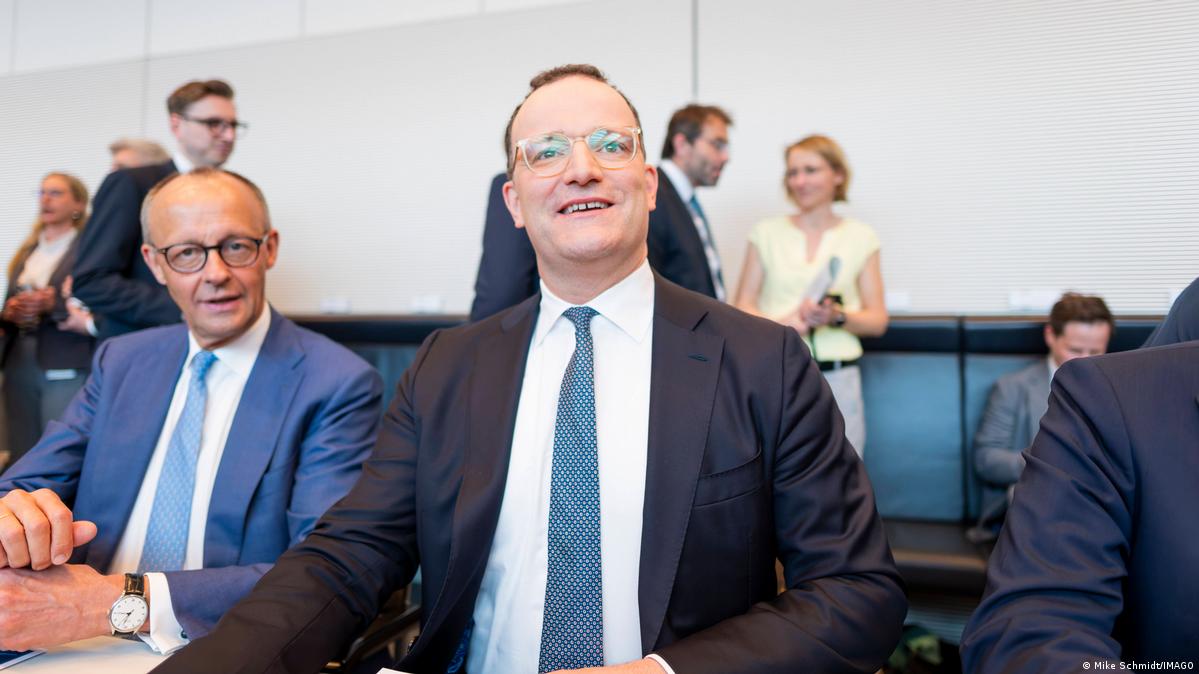
In July, members of Germany's lower house of parliament, the Bundestag, are due to get automatic pay rises that have long been in place for German public servants in order to keep up with inflation.
However, junior coalition partner the Social Democrats (SPD) as well as the opposition Left Party are calling for the increase to be scrapped in right of the economic situation.
According to official statistics, prices have exploded across Germany and inflation in April 2026 was a staggering 2.9%. Costs of basics like coffee and eggs have increased by at least 14% compared to 2020, and heating oil and other fuels by at least 20%. Some 58% of German households reported that they are currently in saving-mode.
However, senior coalition partners the Christian Democrats (CDU) have argued that the pay rises should go forward as planned.
Jens Spahn, the CDU's parliamentary leader, told public broadcaster ARD on Thursday that "in principle, we should stick with this mechanism," saying that the automatic system functions better than it did pre-2014, when lawmakers got to set their own raises at a certain amount of money.
At the same time, parliamentary co-chair of the Left Party Heidi Reichinnek said that lawmakers "earn enough" and should respect the situation of ordinary Germans.
Bundestag members will have their base salary before tax increase to €12,330 ($14,500) a month on July 1, up from €11,833 a month.
https://p.dw.com/p/5DOY5Skip next section Welcome to our coverage05/07/2026May 7, 2026Welcome to our coverage
Dmytro Hubenko EditorGood morning from our newsroom in Bonn on this 81st anniversary of Nazi Germany's initial surrender to the Allies in 1945.
Today we will cover a fresh dispute within Germany's ruling coalition, as well as Chancellor Friedrich Merz visiting the Digitalization Ministry one year after its creation.
Check back here for all the latest headlines, reports, and analyses from across Germany today.
https://p.dw.com/p/5DOQKShow more postsСхожі новини

'I hate to admit it...': Indian-origin Texas woman Meenu Batra says she is afraid she could be arrested again

ЕС и Германия не боятся угроз РФ об обстрелах Киева 9 мая