Germany: Major boost for civil defense
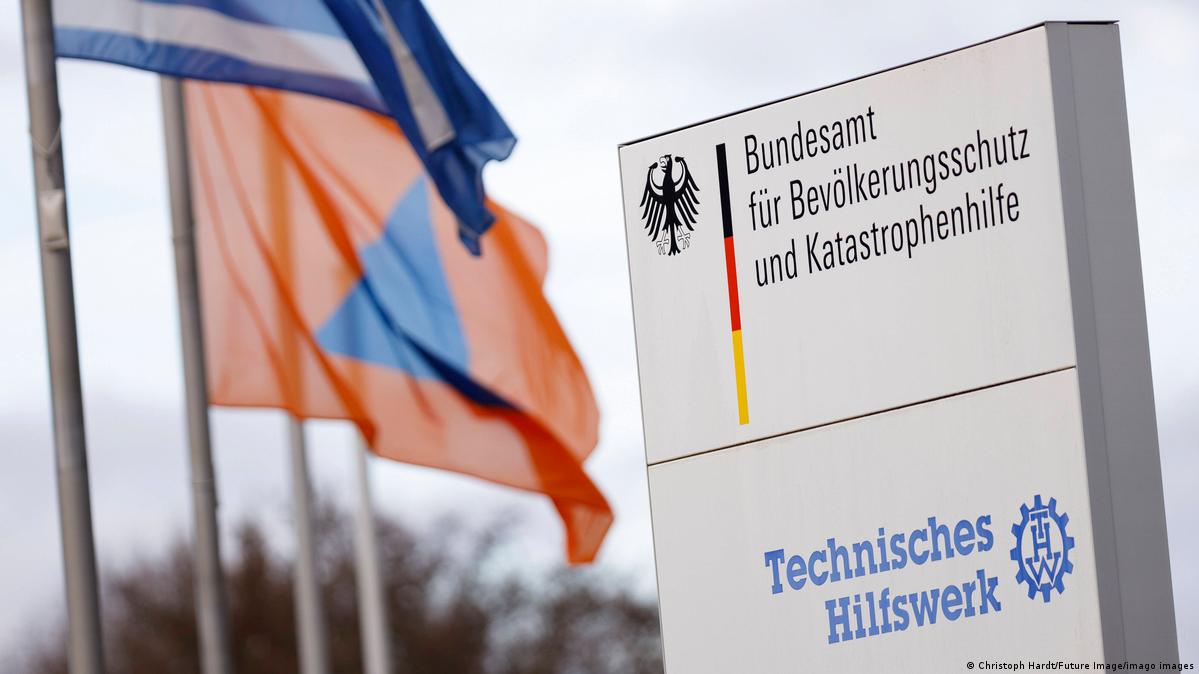
German Interior Minister Alexander Dobrindt is putting his words into action. In September last year, the Bavarian conservative politician announced that he wanted to boost Germany's civil defense and emergency management capabilities. Eight months later, the government is to decide on measures at its next cabinet meeting on Wednesday.
A package worth €10 billion ($11.6 billion) will be set aside for civil defense to be used up by 2029. "That includes, among other things, a thousand specialty vehicles which will be procured," Dobrindt's spokesperson announced. About a third of the money is earmarked for modernizing buildings belonging to the Federal Agency for Technical Relief (THW), as well as personnel and technology for the federal agency.
The THW currently has a budget of about €500 million and about 2200 people on staff. It also involves about 88,000 volunteer helpers. The speaker could not say whether other relief organizations such as the Red Cross would also receive a share of the government support.
Germany wants to invest billions to strengthen civil defense
To view this video please enable JavaScript, and consider upgrading to a web browser that supports HTML5 video
A wide range of threats
"Hybrid threats, also from Russia, are growing and accordingly something must be done here – and that is exactly what we are doing now," the spokesman said.
According to the statement, the existing Medical Task Force (MTF) will be expanded and more than 50 locations across Germany will be prepared to respond in the case of a sudden mass casualty event. The basic idea for this concept has existed since 2007 but has since been developed many times.
Following Russia's full invasion of Ukraine in February 2022 in violation of international law, what then-German Chancellor Olaf Scholz (SPD) proclaimed a turning point, civil defense has been high on the political agenda.
But Germany's lack of crisis preparation had already been exposed during the Ahr Valley flood catastrophe of July 2021, when 135 people were killed in the state of Rhineland-Palatinate and 47 in neighboring North Rhine-Westphalia. During that time, early warning systems failed and a lack of sirens was noted.
Where can people shelter from bombs?
The backlog of investment needs is massive because the required infrastructure is lacking throughout the country – among the population, too, there also often seems to be a lack of awareness of external and internal threats. Decades of peace seem to have led to a certain complacency. So where would people go if Germany were to become involved in a war and they needed protection from bombing attacks?
The German Association of Towns and Municipalities (DStGB) which represents about 14,000 local authorities, already urged action from the federal government in 2024. In its opinion, €10 billion of civil defense funding is needed simply to refurbish the country's approximately 600 available, but dilapidated, bunkers.
In any case, these bunkers are of limited use in a crisis or war situation because Germany's population is 84 million and there is only enough space in the shelters for 478,000 people. That equates to about 0.56% of the population. These figures come from Germany's Federal Office of Civil Protection and Disaster Assistance (BBK).
Germany's unusable bunkers reveals issues in emergency prep
To view this video please enable JavaScript, and consider upgrading to a web browser that supports HTML5 video
Multi-language guidebook
The federal authority's website also has comprehensive information about ways people can protect themselves. The guidebook Planning ahead for crises and disasters includes checklists of things needed to be well prepared in an emergency. The basic rule: "All households should be able to provide for themselves for 10 days if possible. This means ensuring water and food, medical supplies, and toiletries are in place for an emergency."
The brochure is available in German and the 8 other languages most widely spoken in the country: Arabic, English, French, Polish, Russian, Spanish, Turkish and Ukrainian.
Interior Minister Dobrindt has more ideas. In October, he advocated including the topic of war and crisis management in school lessons. "My suggestion is that, once every school year, an extended lesson with older pupils is held that covers various possible threat scenarios and how to prepare for them," he said. His call was supported by the German Teachers' Association (DL).
"The war has, one must be honest and just say it, long arrived in classrooms," DL President Stefan Düll told DW at the time. That is why young people are also considering whether they would defend Germany using weapons if necessary and volunteer to join the country's army, the Bundeswehr.
The interior minister wants to interlink civil defense, which comprises crisis response and disaster protection, more closely with military defense. A new staff unit will be created to achieve this, Dobrindt announced in Germany's mass-circulation tabloid Bild.
Germany’s warning system
To view this video please enable JavaScript, and consider upgrading to a web browser that supports HTML5 video
Left Party criticizes defense focus
The opposition socialist Left Party criticized the plans. Germany clearly needs efficient, reliable and practical civil protection, they said. "This must protect people effectively from heatwaves, cold snaps, floods, forest fires, storm events and other disaster situations," advocated the Left Party's spokesperson for civil defense and emergency management, Jan Köstering.
The lawmaker in the Bundestag, the lower house of parliament, thinks the Interior Ministry's plans are unbalanced: "The problem is that the focus is not resolutely on a modern civil protection system but is again strongly influenced by security and defense policy scenarios."
This article was translated from German.
AdvertisementСхожі новини

Після скандалу діджей із Закарпаття заявив про перенесення рекордного сету на Говерлі
Буде хрустка і смачна: як зберегти спаржу свіжою довше в холодильнику
Сирський анонсував підвищення мінімальних зарплат усім військовим до 30 тис. грн