Geomagnetic storm could spark northern lights as far south as New York and Idaho tonight
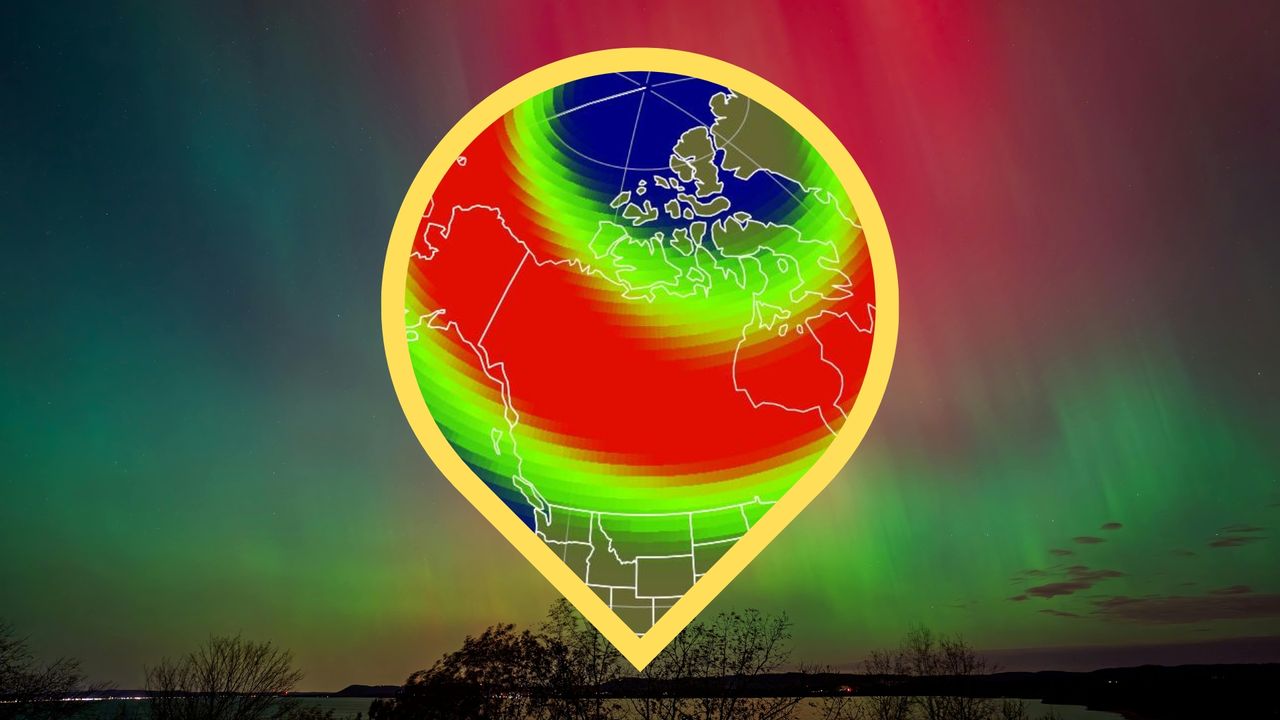
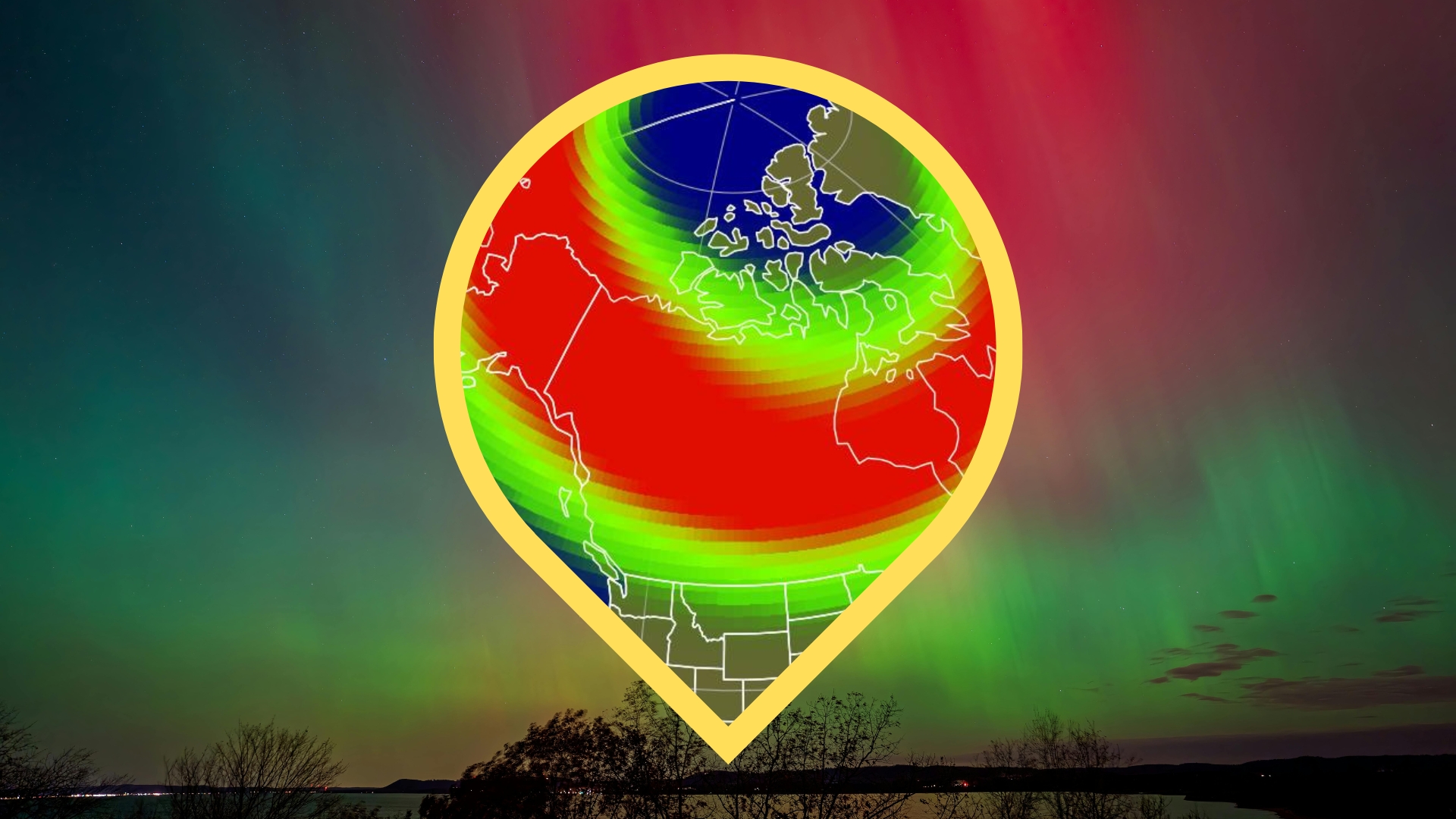
A fast stream of solar wind flowing from a colossal coronal hole in the sun's atmosphere could spark geomagnetic storms tonight (May 14 into May 15), potentially bringing the northern lights as far south as New York and Idaho.
The strongest geomagnetic activity is expected between 11 p.m. and 2 a.m. EDT tonight (0300-0600 GMT), which could trigger moderate (G2) geomagnetic storm conditions according to NOAA's Space Weather Prediction Center. Elevated geomagnetic activity could continue into May 16 as the fast stream of solar wind continues to buffet Earth's magnetic field.
But remember, auroras are fickle creatures. Their visibility depends on several factors, including cloud cover, darkness and how Earth's magnetic field responds to the incoming solar wind. Even during strong geomagnetic storms, sightings aren't guaranteed.
How can I see the northern lights from where I live?
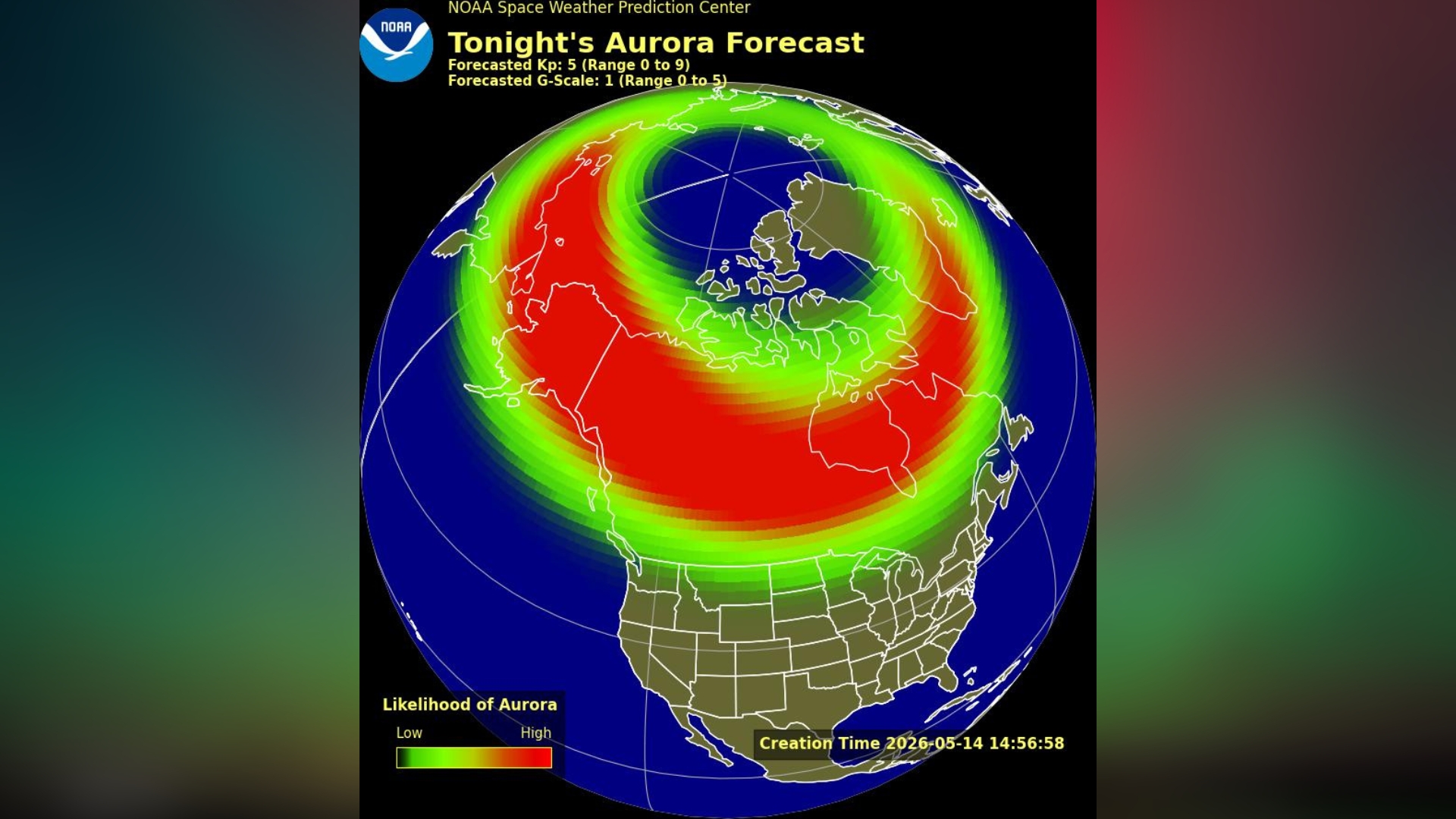
If you live in the northern U.S., head to a dark sky location as far from city lights as possible and look north as soon as the sky is dark. Smartphone cameras can help you capture faint auroras that may not be easily visible to the naked eye.
Northern Hemisphere aurora forecast courtesy of the U.K. Met Office
Stay tuned!
Keep up to date with the latest space weather news with our aurora forecast live blog. For real-time forecasts based on your location, consider using a space weather app. A great option is "My Aurora Forecast & Alerts" (available for iOS and Android). For a deeper dive into space weather conditions, "Space Weather Live" is another excellent choice (available for iOS and Android)
View MoreYou must confirm your public display name before commenting
Please logout and then login again, you will then be prompted to enter your display name.
Logout
Daisy Dobrijevic joined Space.com in February 2022, having previously worked as a staff writer for All About Space magazine. She completed an editorial internship with BBC Sky at Night Magazine and worked at the National Space Centre, communicating space science to the public.
Daisy holds a PhD in plant physiology and a Master's in Environmental Science. Based in Nottingham, U.K., she covers all things space, with a special focus on solar activity and space weather. She also has a keen interest in astrotourism and is always on the lookout for the next northern lights adventure.
She will be a guest speaker aboard HX's Solar Eclipse Expedition in August 2026 and will join Hurtigruten as an onboard astronomer for a northern lights sailing in January 2027.
Схожі новини
NIH staffing shortage could slash number of new grants issued this year
Author Correction: The AIM2 inflammasome exacerbates atherosclerosis in clonal haematopoiesis

Никто не верил в 1,08 Маха. Инженеры NASA впервые разогнали ротор марсианского вертолета до скорости звука