Ford Embraces The Combustion Engine For Formula One And The Future
 Credit: YouTube
May 18, 202652 minutes
Steve Hanley
0 Comments
Support CleanTechnica's work through a Substack subscription or on Stripe.
Credit: YouTube
May 18, 202652 minutes
Steve Hanley
0 Comments
Support CleanTechnica's work through a Substack subscription or on Stripe.
Not so long ago, Ford was fully onboard with the EV revolution. CEO Jim Farley sent a letter to every Ford dealer in North America telling them to get ready to sell electric vehicles or face limits on the number of cars they could order from the factory. The dealers screamed and a few sued, but Farley remained steadfast in his belief that the future of Ford was selling battery electric vehicles.
That was then; this is now. The current US administration is vehemently opposed to electric vehicles — as well as wind and solar energy, education, science, and civil rights. Jim Farley doesn’t need a weatherman to know which way the wind blows. Today, he has nothing to say about electric vehicles, other than that US manufacturers need government protection from those vicious Chinese companies who want to destroy the domestic auto industry by selling cars people can actually afford. Oh, the horror!
New Rules For 2026
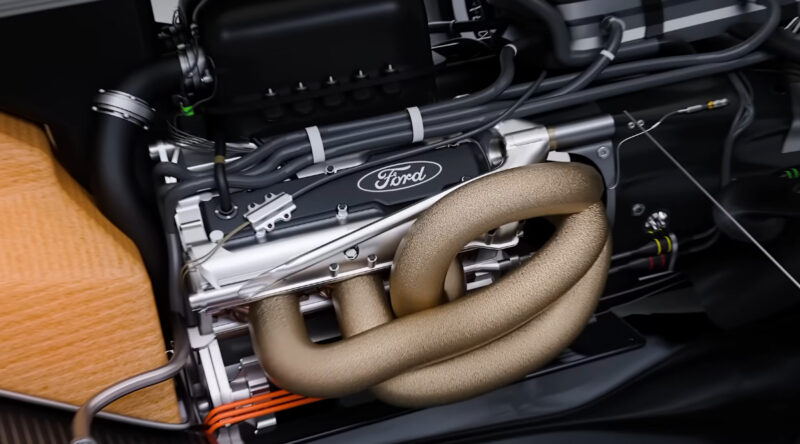
The new thinking is evident in many ways. Ford recently supplanted Honda as the engine supplier to Red Bull, the dominant Formula One team of this decade. At the beginning of this year, Formula 1 instituted new powertrain rules that make a turbocharged V-6 engine and an electric motor equal partners in moving the cars forward.
Formula 1 has been trying for over a decade to reduce its carbon footprint by using sustainable fuels instead of gasoline and by incorporating hybrid electric power. Think of it as a Prius on steroids. The motor was supplied with electricity recovered from the heat of the engine and from regenerative braking. The drivers and the fans were unimpressed.
Four-time world champion Sebastian Vettel complained that the cars sounded like vacuum cleaners (they did) and the fans lamented the loss of the visceral shriek of the V-10 engines that preceded them. For a sampling of what those mighty V-10s sounded like, you can hear them near the end of this video:
The Sound Is The Message
The sound of racing engines has always been central to motorsports. Sixty years ago, people flocked to Watkins Glen in New York to glory in the sound of those engines warming up just after sunrise as it echoed back from the surrounding hills. At Lime Rock, a Mazda race with a four-rotor Wankel engine was so loud it would make your ears bleed and people loved it!
When my wife and I went to Indianapolis for the Formula 1 race in 2002, the screaming V-10s made it impossible to carry on a conversation. When we went to Monza in 2016, we were able to chat with the folks next to us all during the race without raising our voices. Were the cars more eco-friendly? Yes, they were. But the racing was far less exciting for the fans without the bellow of the engines.
Verstappen Questions His Formula 1 Future
From the very first race this year in Melbourne, the drivers have complained bitterly about the new rules package, because in order to harvest enough electrical energy to complete a lap, they must back off the throttle at the end of the straights. The cars can no longer be driven flat out, which begs this question: if you can’t keep your foot flat to the floor, are you racing or taking part in a Mobil Fuel Economy Run?
Max Verstappen, the most dominant driver of the past several years, has suggested he might quit the sport because of the new rules. For many, Verstappen is the sport, having won the driver’s championship four times in a row and just missing out on a fifth title last year.
In response, Formula 1 has modified the powertrain package after just four races. From now on, the split will be 40 percent battery power and 60 percent engine power, but many movers and shakers in the sport are atill not satisfied. Now there is talk of abandoning the turbocharged V-6 engines and using good old fashioned V-8 engines instead.
For more than a decade, Ford Cosworth V-8 engines dominated Formula 1 racing. Ferrari and Maserati still preferred their iconic 12-cylinder engines and BRM once brought a 16-cylinder prototype to Watkins Glen, but the Ford V-8s, specially modified by the team of Mike Costin and Keith Duckworth, won the majority of races.
“Road Relevant” Technology
One of the reasons for the engine rules package this year was to encourage new engine suppliers to enter the sport. For years, it was rumored that Volkswagen wanted to become involved in Formula 1, but it needed the engines to be “relevant” to its road cars. That meant less focus on horsepower from gasoline and more emphasis on kilowatts from electricity.
In fact, Audi purchased the existing Sauber team at the end of last season and is using engines developed and built at its Neuburg an der Donau factory. Cadillac also now has a Formula 1 team — although, whether there are any actual Cadillac bits in the powertrain is unlikely. GM also was attracted by the prospect of racing that used “road car relevant” technology.
“Road relevancy” once meant applying race car technology to making production cars that left less carbon dioxide and other pollutants in their wake, but as automakers re-calibrate their production plans in the wake of the MAGA movement, Ford has decided it actually favors more pollution if it will help sell cars. According to Motorsport.com, Ford Performance director Mark Rushbrook says the company would “welcome a return to V-8 engines in Formula 1, because Ford’s revised road car strategy means combustion engines remain an important part of its portfolio.”
Rushbrook added, “What we’ve seen in the way that Ford approaches our vehicles, especially in recent years as the standards and requirements for passenger cars have become much more regional, is that we have full combustion engines, hybrids of different architectures, different balance of ICE versus electric, and full electric. We need to be prepared to offer those in different markets around the world, so we have a full library of that.”
Pulling Back On Climate Intentions
Translation: Formula 1 and Ford no longer see their decade-long push to incorporate cleaner powertrains into top-tier racing as a priority. They see the internal combustion engine as here to stay for a long, long time, so let’s stop spouting all this sustainability nonsense and start focusing on what people want — cars powered by internal combustion engines. Even Toto Wolfe, team principal of the Mercedes Formula 1 team, said Mercedes would be open to a return to V-8 engines, provided some electrification is part of the package.
Sharp-eyed readers will see this for what it is. Like the banks and investment companies that ran away from their climate pledges as soon as they were able, the automakers are taking their cue from Washington and abandoning their electric car intentions as fast as they can. The signs are subtle, but they are there if you know where to look. Many manufacturers are paying lip service to the idea of low- or zero-emissions cars but are ready to throw the environment under the bus at the first opportunity if it means more profits.
At this rate, our grandchildren and great grandchildren will still be driving cars with big thumping internal combustion engines at the end of this century. The chaos in the strait of Hormuz should be enough to convince anyone that it is long past time to decouple our economy from fossil fuels, yet those who reap profits from exploiting them think they can continue doing so a little while longer and keep the money machine rolling along in high gear. There are none so blind as those who will not see.
Sign up for CleanTechnica's Weekly Substack for Zach and Scott's in-depth analyses and high level summaries, sign up for our daily newsletter, and follow us on Google News! Advertisement Have a tip for CleanTechnica? Want to advertise? Want to suggest a guest for our CleanTech Talk podcast? Contact us here. Sign up for our daily newsletter for 15 new cleantech stories a day. Or sign up for our weekly one on top stories of the week if daily is too frequent. CleanTechnica uses affiliate links. See our policy here.CleanTechnica's Comment Policy
Share this story!
Схожі новини

«Задули» газом авто з дитиною: на Черкащині ТЦК потрапив у скандал через зупинку ветерана з ампутацією — соцмережі

Best players for the FC 26 Sterling Ascension Evolution
