First-of-its-kind map of the mouse nose reveals surprises about the sense of smell
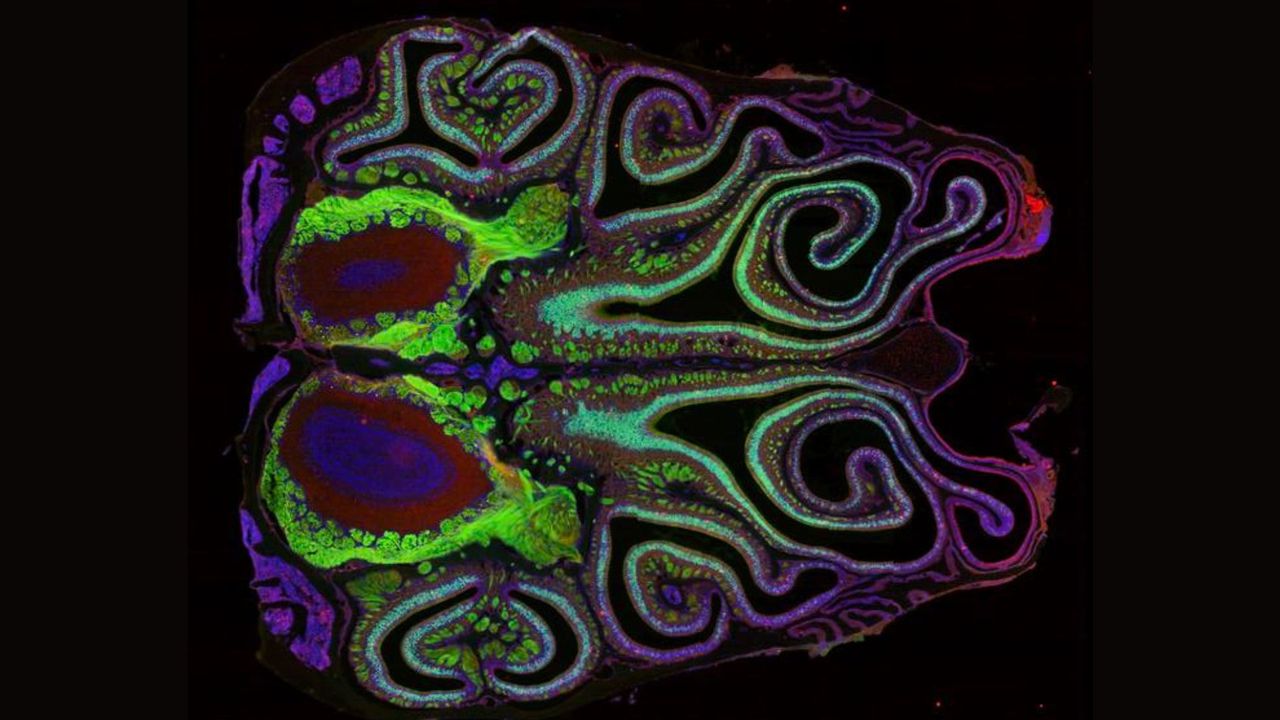
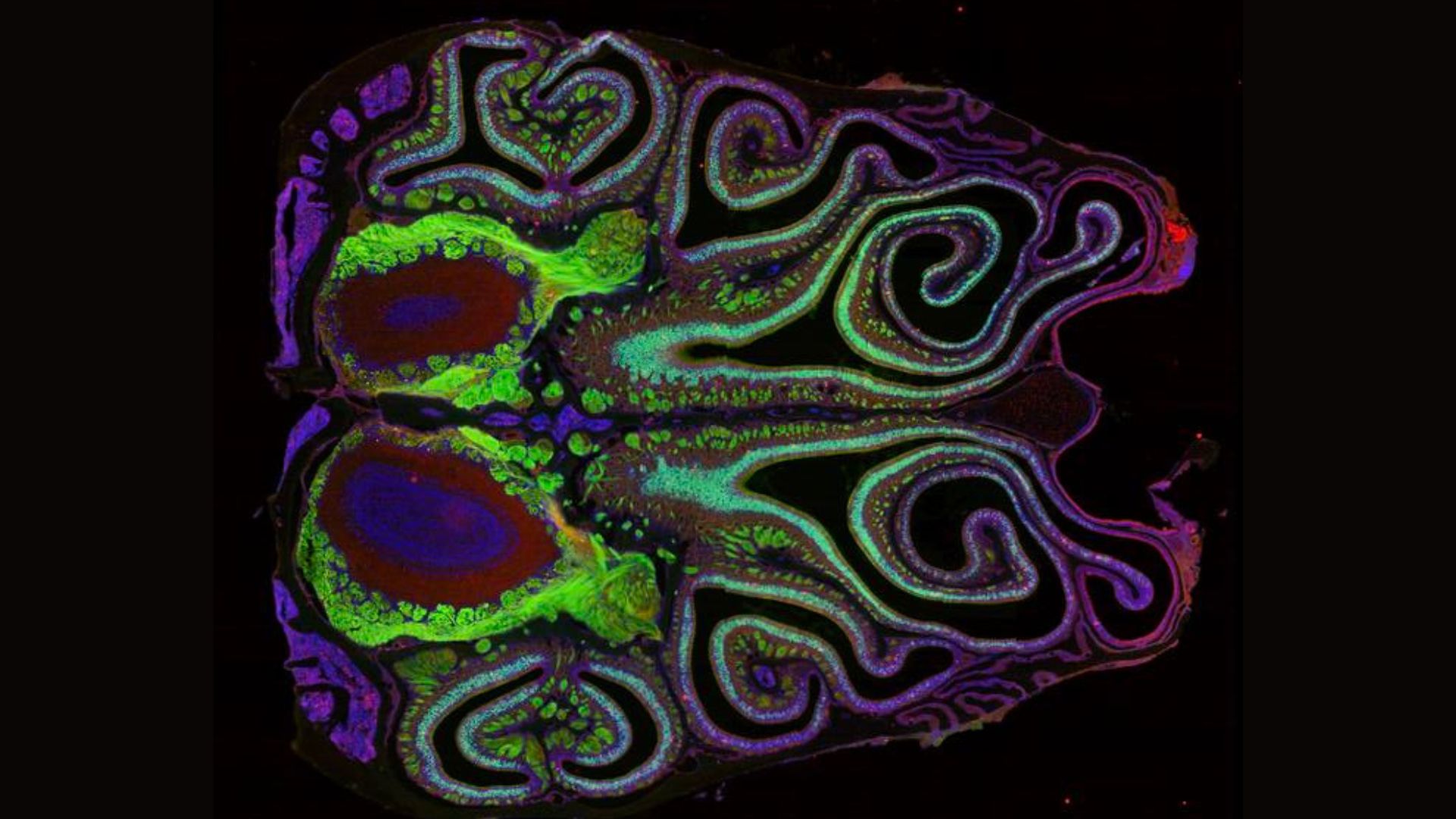
Scientists have created a comprehensive map of smell receptors in the mouse nose, revealing a few surprises about this fundamental sense.
Smell receptors, or olfactory receptors, were previously thought to be randomly distributed within the lining of the nasal cavity. But now, the first-of-its-kind map shows that they are highly organized, with different types separated into tight bands.
Smells are detected by olfactory sensory neurons in the nasal cavity. Each neuron expresses one of 1,172 different receptors encoded in mouse DNA, with each receptor detecting a different type of smell.
Other senses — such as touch, vision and hearing — are known to use sensory maps. For example, for hearing, different frequencies are encoded at different positions in the cochlea of the inner ear, and from there, that information is relayed to the brain. Smell was not thought to use such mapping, but in the past six or seven years, newer techniques have enabled scientists to examine around 5.5 million neurons in over 300 individual mice and better understand which genes are active in different nose cells.
One of these techniques is called single-cell sequencing, said senior study author Dr. Sandeep Datta, a neurobiologist at Harvard Medical School. It enabled the researchers to look at each mature olfactory sensory neuron "one at a time, to identify which receptor is being expressed," he explained. Then, a technique called spatial transcriptomics helped the researchers locate those receptors.
Using this data, the team created a "beautiful map" of the over 1,100 smell receptors in the mouse nose. The map showed "a thousand separate stripes of odor receptor expression that overlap with each other but are very organized," Datta said.
Sign up for the Live Science daily newsletter nowNeurons that express the same receptor in the nose target the same spot within the olfactory bulb, the brain's primary processing center for smell, the team found. "The map in the nose is precisely aligned with the map in the brain," Datta said.
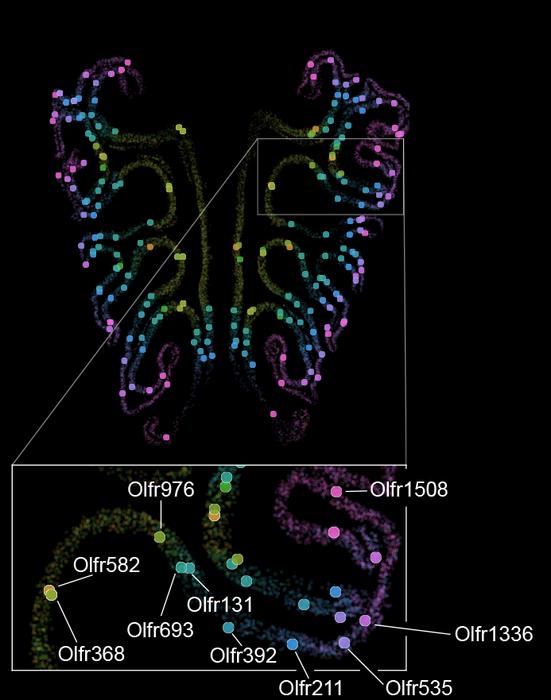
The degree of complexity within the lining of the nose is remarkable, he added. "Mice, for example, have around 20 million olfactory neurons that express more than a thousand types of smell receptors, compared with only three main types of visual receptors for color vision," he said.
Interestingly, the positions of the roughly 1,100 types of receptors were essentially the same across every lab mouse the researchers examined. The work also identified a molecule called retinoic acid (RA) that likely guides each neuron to express the correct receptor based on the location. Adding or removing RA resulted in the receptor map shifting up or down, suggesting the molecule may help control the position and influence of the neurons.
Related stories- Why can't we smell ourselves as well as we smell others?
- The brain may interpret smells from each nostril differently
- Chemicals that make babies smell sweet and teens smell 'goat-like' revealed
The researchers are now looking into why the stripes are arranged in that specific order. "[Another] question we're wondering about is, to what extent are human noses organized like this?" Datta said.
"The human olfactory system is, in many respects, similar to the mouse olfactory system [though we] have fewer odor receptors," he noted. "But we don't know much about whether these basic principles we're learning about in the mouse apply to humans." Understanding this could help develop treatments for loss of smell and its consequences, including an increased risk of depression.
See how much you know about the most complex organ in the human body with our brain quiz!

Payal Dhar (she/they) is a freelance journalist, writing on science, technology, and society. They cover AI, engineering, materials science, cybersecurity, space, games, online communities, and any shiny new technology that catches their eye. She has written for Science News, Scientific American, Nature, Washington Post, Guardian, Chemical & Engineering News, IEEE Spectrum, and others. They also write science-fiction and fantasty. You can follow her @payaldhar.bluesky.social or read her work at payaldhar.contently.com.
View MoreYou must confirm your public display name before commenting
Please logout and then login again, you will then be prompted to enter your display name.
Logout LATEST ARTICLES 11,900-year-old souvenir cup featuring Hadrian's Wall and Roman forts discovered in Spain
- 2New AI algorithms are 95% better at showing how the universe changes over time
- 3Preeclampsia could be treated with 'blood filtering' therapy, early study hints
- 4'Their greatest challenge since they stared down the asteroid': Paleontologist Steve Brusatte on why birds are facing their biggest existential threat since the dino-killing asteroid
- 5Drilling has begun at our sacred site Pe' Sla, setting a dangerous precedent for Indigenous lands across the country. It must be stopped.
Схожі новини
Яскраво-зелена і небезпечна: в Китаї виявили нову отруйну змію