Few Maui fire survivors will break even from $4 billion payout: ‘there’s just not enough’
The $4.03 billion settlement intended to compensate victims of the devastating Maui wildfires is poised for distribution, yet many survivors, like Leslie Clark, harbor little hope it will fully cover their profound losses.
Clark, 62, whose home near Front Street in Lahaina was destroyed in the August 2023 inferno, expressed a weary resignation, stating that worrying about factors beyond her control "is not good for your health. It’s not good for anything."
Her sentiment reflects a painful reality: few victims will be made whole, even those who, like Clark, had property insurance.
While settlement checks could begin flowing as early as June, according to Jake Lowenthal, a Maui lawyer representing plaintiffs, the precise amount each victim will receive remains uncertain.
A team of claims administrators is tasked with allocating funds across 10 complex categories, which include whether someone was injured or lost their home. The ultimate distribution of these funds, and how it will impact individual survivors, remains to be seen.
However, a substantial portion of the payout is already earmarked for others. Attorneys are seeking 25% of their clients' awards, a request that has met with skepticism from Maui Circuit Court Judge Peter Cahill. Additionally, insurance companies are set to claim 10% of settlements from insured homeowners.
 open image in gallery
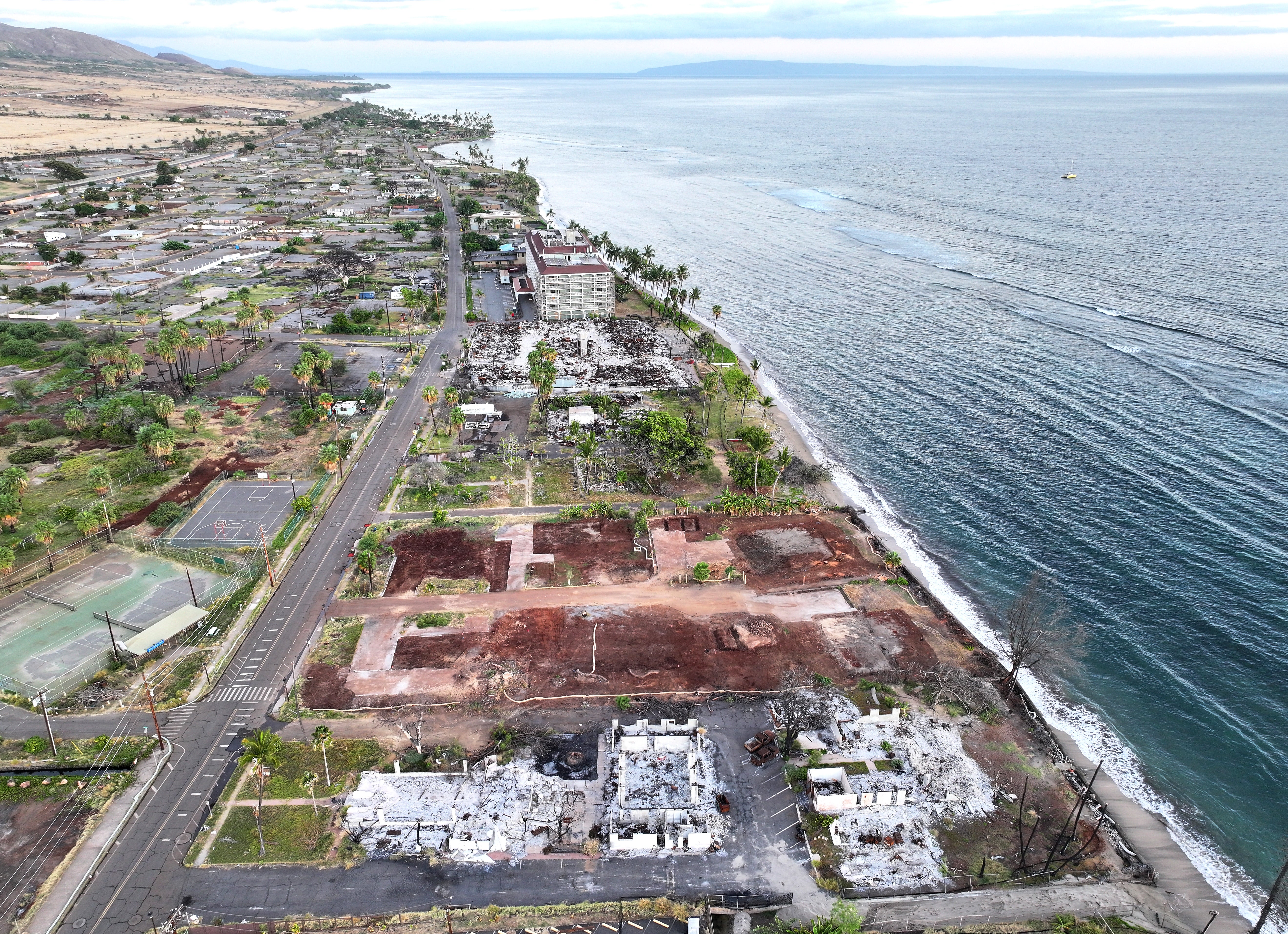
This complex financial landscape means that for some victims, up to a third of their settlement could be absorbed by legal fees and insurers.
A further concern looms: without congressional action to reinstate an expired federal income tax exemption for wildfire settlement money, the federal government could claim as much as 37% from survivors.
Sherry Peterson, a fellow with United Policyholders, an insurance consumer advocacy organization, contends there is simply insufficient money to adequately compensate victims, many of whom lacked comprehensive insurance.
With 21,750 plaintiffs filing a total of 94,816 unique claims across the 10 victim categories, Peterson observed that the most frequent claims involved individuals who were displaced or had to escape the burn zone. She concluded, "My personal opinion, having sat with many victims of this disaster, is that none of them are going to be made whole by this. No matter how you dice the carrot, there’s just not enough carrot for the soup."
Maui Circuit Court Judge Peter Cahill has taken a firm stance on legal fees, expressing concern over how to fairly compensate lawyers who undertook extensive investigative work, spent countless hours in mediation, and argued before the Hawaiʻi Supreme Court, without unduly enriching "free-riding lawyers who in some cases merely signed up clients after the settlement had already been reached."
 open image in gallery
Cahill favors establishing a "common benefit fund" into which all lawyers, including those who did less work, would contribute a portion of their fees. These funds would then be redistributed to the lawyers who performed the bulk of the work on the case, ensuring that "free-riders would no longer be riding for free."
This contrasts sharply with the plaintiffs’ lawyers' request for a blanket 25% fee across the board. During a March hearing, the plain-speaking judge, known for his humorous courtroom banter, grilled Lowenthal on the lawyers' bid for approximately $1 billion from the $4.03 billion settlement.
Cahill questioned whether victims were aware of this substantial request, suggesting, "It might be helpful to hear from your clients to see what their positions are on your attorneys’ fees, with the understanding that they have a voice in that, right?" He also highlighted the delay in payments, noting, "the settlement was done in record time … finalized on August 19th, 2024, and today’s March 27th, 2026, and no one’s seen a penny."
Property and medical insurers are also awaiting their share of the settlement funds. For medical insurers, the process is straightforward: they can file liens on claims paid to treat fire victims, with administrators deducting these amounts from settlement payouts and forwarding them to the insurer.
However, the situation for property insurers is unique to Maui. In other major wildfires, such as those that drove Pacific Gas and Electric Co. (PG&E) into bankruptcy in 2019, insurers typically paid policyholders and then sued the utility directly to recoup their costs.
Cathy Yanni, trustee for the PG&E Fire Victim Trust and a special master overseeing the Maui Individual Settlement Fund, noted that PG&E ultimately settled with insurers for $11 ]billion, just over half of the $20 billion insurers claimed to have paid out.
 open image in gallery
Wildfire victims in that case received $13.5 billion, split between cash and PG&E stock, with victims recovering more as the stock value increased.
In Maui, Hawaiian Electric Co. (HECO) avoided bankruptcy through settlement negotiations that excluded property insurers. The $4.03 billion settlement was cobbled together from various parties, including approximately $800 million from Hawaiʻi taxpayers, $1.99 billion from HECO and $807.5 million from Kamehameha Schools’ trust to benefit Native Hawaiian children
The remainder came from Maui County, telecommunications companies utilizing HECO utility poles, and entities affiliated with Maui landowner Peter Martin. The Hawaiʻi Supreme Court determined that property insurers could not sue HECO and other contributing parties. Instead, they were directed to file liens similar to medical insurers. This ultimately led to an agreement where property insurers would receive 10% of the claims paid to Maui policyholders from each settlement payment. I. The insurers had paid out $3.03 billion in claims related to the fire as of December, according to the latest data from the Hawaiʻi Insurance Commission. Of that, insurers say $2.16 billion has gone to fire victims participating in the settlement.
This arrangement has drawn sharp criticism from victims like Leslie Clark. Despite receiving $1.3 million from her insurer to rebuild her two-story home, which housed 15 extended family members, Clark described the insurers’ subsequent claim on her settlement money as "a disgrace" and "unbelievable."
Her experience underscores a widespread issue: Maui County estimates that of the 5,527 residential units destroyed, including 1,256 owner-occupied units and 4,271 rentals, 28% of owner-occupied homes were uninsured. This left owners to bear rebuilding costs themselves or rely on federal programs and charitable initiatives.
Furthermore, approximately 40% of insured homes were underinsured, with typical policies falling about $400,000 short for covering rebuilding costs. Peterson noted that many uninsured victims struggle to navigate recovery, especially those grappling with trauma or reluctance to accept charity.
Схожі новини

"She’s guilty of something": Candace Owens faces intense scrutiny following show cancellations and viral posts
Candace Owens and Cole Allen claims explode online as White House Correspondents Dinner questions raise deeper mystery