Fading Echo: Can independent gaming studios survive AI - and battle for a better future?

 Facebook
 Twitter
 Flipboard
 Send
Send
 Reddit
 Linkedin
 Messenger
 Telegram
 VK
VK
 Bluesky
 Threads
 Whatsapp
Euronews Culture speaks to Elise Marchouba, Senior Producer at independent game developer Emeteria, about the upcoming game Fading Echo, the stereotypes still clinging onto the gaming community, and the challenges facing the video game industry.
Reality is fracturing. The world is dying. We’re running out of time.
 ADVERTISEMENT
ADVERTISEMENT
ADVERTISEMENT
Three statements that could be perfectly legitimate reactions when faced with the onslaught of AI slop, a president’s attempt at a normal press conference, or yet another daily reminder that our laissez-faire attitude towards climate change will eventually spell our demise.
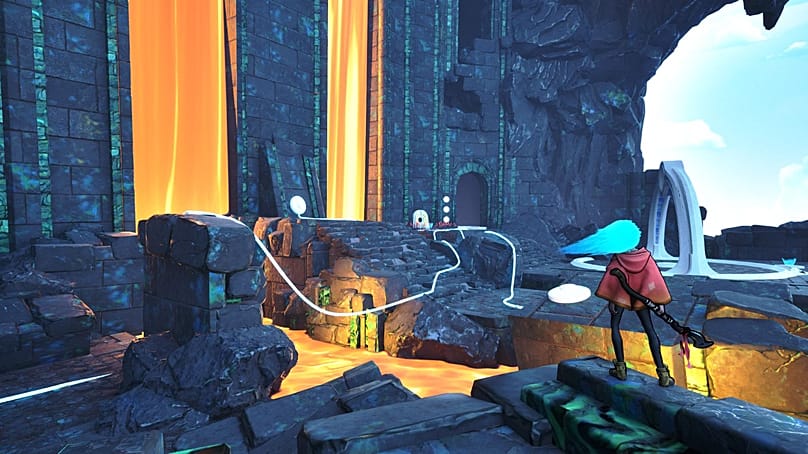
But in this case, it’s the set-up for Fading Echo, the debut video game by independent game developer Emeteria, a New Tales studio based in Lyon, France.
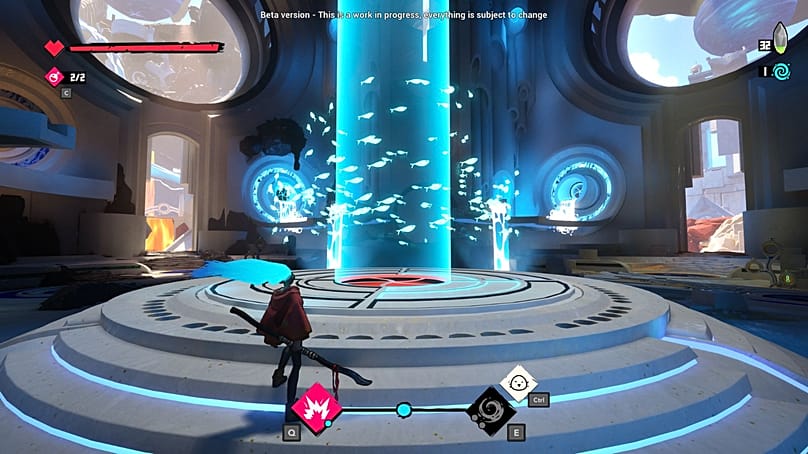
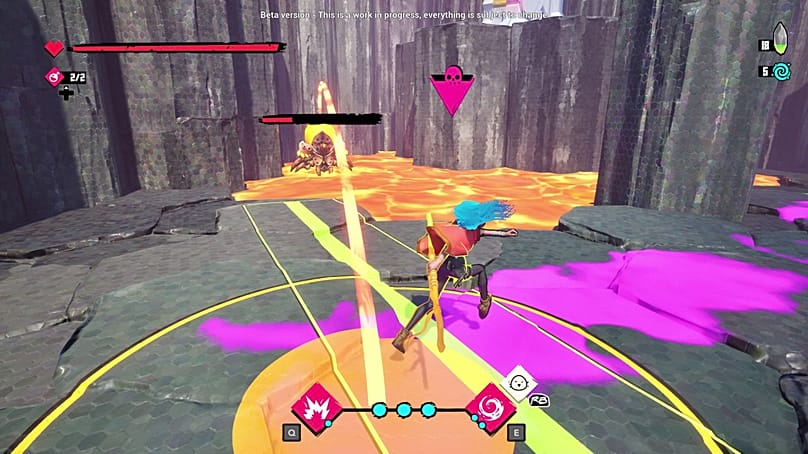
Set to be released later this year for PC, PlayStation 5, and Xbox Series X|S, the upcoming game and its comic-inspired art direction is already making some waves. Appropriately so, as players will embody a character who shifts between human and aquatic forms.
The aim of the game? To save what’s left of the world and fight for a better future.
Sounds relatable.
Euronews Culture sat down with Elise Marchouba, Senior Producer at Emeteria, to talk about Fading Echo, the stereotypes still clinging onto the gaming community, and the challenges facing the video game industry. Specifically independent publishers trying to make a name for themselves when AAA companies (major publishers which typically have higher development and marketing budgets) still get the lion’s share...
Euronews Culture: How would you describe your role as a Senior Producer?
Elise Marchouba: I would describe it a little bit more like a creative producer, which is hard to define, because in film and television people see producers as the people that come with the money. I wish I was the person that came with the money! I usually describe it as: If you were to make a car, you have to build the frame before you put the tires on, and you have to coat the steering wheel before you insert it into the car. I'm the person that has to figure out the right order to put things in a new car so that it runs.
How did Fading Echo come about?
The studio was founded when the studio of Blizzard, the creators of Overwatch, World of Warcraft, Diablo, shut down in France. The senior management decided to create their own studio. It actually started as a publisher, so we have a publishing branch in Paris, and they work with a bunch of different studios. We actually just announced that we're working with a studio in Madagascar. It's the first game in Madagascar to release on consoles. We have studios all around the world that we collaborate with, and the studio I work for is an embedded developer. Normally as a developer, you build a game and then look for a publisher to give you money and sell it. Whereas we work hand in hand.
The CCO of the studio created Fading Echo originally as a tabletop role-playing game. Dungeons of Dragons style. It’s been adapted into a video game, and we tried to keep a lot of the similar principles. We define it as an action role-playing game where you play as a character who's on an island that's being taken over by corruption. The world has sort of imploded, so all the realities have broken. You have to travel to these different realities, bring water back into your bastion, your home base, to power it up to get off this island. That's the core story.
Sounds dystopian, but also like there’s an environmental theme there...
Originally, the game was much more on the nose in terms of themes relating to environmentalism. It ended up moving away from that a little bit just because I think there is a careful game to play – no pun intended – of putting our opinions and our stances on things in games without being: “This is a game about environmentalism!”
Still, one of the elements in our game is literally called ‘Corruption’. And if you have a little bit of it, you're really powerful. If you have too much, you die. So even that was such a big discussion for us internally... We're being on the nose about it. How do we balance that? We don’t want to be too linear. You have to find a way to fuse in what we want to say and gameplay mechanics, because if we shove an idea down someone's throat and the gameplay isn't fun, we've completely failed. It's more about making the game fun and in the back of players’ minds there’s ‘Oh, I see what they did there’.
You can have games that are huge commercial successes and still have cultural impact in their own way.Elise Marchouba Senior Producer at Emeteria
More games seem to be focusing, if not prioritising richer narratives. Less A to B to C and more complex, layered storylines...
I think it's almost inevitable. We're seeing it across all art forms. We're living in a very complicated time. It's very difficult to come to work and not necessarily talk about what's going on in the world.
For example, our lead writer is based in America. She's been working on the game for three years now. She worked on the original bible for the game and then wrote pretty much every single line, and we would start our weekly video calls off with ‘How are you doing? Are you okay?’ We don't necessarily need to go into all the details, but we were pretty open with her about what was going on. And I think it's impossible to work with someone like that and not have some of those themes come through.
Our job is not to make a lecture about what we think about the world, but more to pose questions and have people start to think about these things a bit more.
With that in mind, would you say that video games have the potential to have a cultural impact on the same level as other art forms which can hold a mirror up to nature and current events?
I do. I think the challenge comes externally from financial pressure, as with a lot of places. You can have games that are huge commercial successes and still have cultural impact in their own way. Fortnite, for example, has become a social space as much as a game, that’s a form of cultural impact too.
The game that really stands out for me is Spec Ops: The Line. It's a Shooter, following an American military guy who is sent on a mission to post-environmental catastrophe Dubai. You’re the hero, there are all these terrorists, you have to shoot them down and keep going through this somewhat linear story. And at some point you start having glitches in your memory of what you actually saw... The whole concept of the game is about post-traumatic stress disorder, and how people in military are training their brains to think ‘No everyone's the enemy, I just have to shoot.’ There's no compassion.
I played that game and it changed everything for me. I thought: That’s what games can be. You can really change the way you see the world based on an experience like this.
I don't want work on Shooters. I don't think we need more of those. But if you are going to do it, do it in an interesting way that actually teaches a point. There are a lot of examples where game developers do that and do it well.
The games industry makes more money than the film industry every year, so it's making a lot of money. But the state of the industry is very dire and very scary.Elise Marchouba Senior Producer at Emeteria
In a saturated market, how do you make a game like Fading Echo stand out?
It's very difficult. At the moment in the industry, it feels like half the job is making a great game, and the other half is marketing it. We're doing a lot of things that aren't as common in the industry. Our game is single player, there are no online components. There's no crypto. There's no blockchain. There are no in-app purchases. On top of that, the thing that hurts and helps us is our main character is a woman. So very polarizing...
How does it hurt?
Proposing new lead characters is always a challenge as soon as you innovate, you challenge expectation which can trigger reactions in parts of the audience. We’ve seen that a bit online. But we also have a strong community that understands what we’re building and supports it.
The fact that some react negatively to representation and diversity does still speak to persistent negative stereotypes around the boys’ club that is gaming...
It is, but it’s messy and it takes time. The industry has evolved a lot over time, different audiences, different types of games, and now we’re seeing more voices come in, which naturally changes the kinds of stories being told. The tricky part is doing that in a way that feels real. Not performative, not forced. Just… honest. That’s something we talk about a lot internally.
Originally there was a much more even split between men and women in the games industry, but as technology developed, people started going, ‘Oh, what if we give them guns?’ - and that’s when you see the introduction of games like Doom. It’s when a lot of women left the industry because they didn’t want to make games like that.
So, that’s when we saw a huge exodus of women leaving the industry and not wanting to make those kinds of games. Now, we're seeing the numbers start to increase because there is a clear appeal to make many different types of games, for everyone. There's a studio in Sweden called Star Stable that make an online game about riding horses, and it's been going for almost 15 years now. We see a lot of shorter, narrative experiences for people who have less time.
Investment companies don't want to invest in just games anymore. People globally only want to invest in anything where they can hear the word ‘AI’.Elise Marchouba Senior Producer at Emeteria
Regarding the industry, aside from toxic comments which can be made online, it’s an oversaturated market, there are swelling development budgets, and reports of job cuts... Despite the fact that there are so many games coming out, it seems like the industry – like many others – are feeling the pain at the moment.
The games industry makes more money than the film industry every year, so it's making a lot of money. But the state of the industry is very dire and very scary. France is the third country I've lived in. I've always wanted to live in Europe, that was a very conscious choice. I had to move to get the kinds of jobs I wanted to avoid layoffs.
I think that there are two key components at the moment. One of them is COVID. During COVID, everyone stayed home and games sales soared. The industry had to react by hiring, hiring, hiring. On top of that, during COVID, you could hire anyone from everywhere, because everyone was remote anyway.
Now that we're out of that COVID spike, game sales are going back down. So now it’s ‘Oh shit, we have to get rid of all those people we hired because the sales are going down, which means their employment needs to go down’.
The more recent component is pretty obvious...
AI?
AI. The industry is still trying to figure out what that looks like, and I've seen so many examples in studios where people are laid off and then hired back six months / a year and a half later.
It’s the villain du jour, whether it's in music, cinema, journalism... Many feel that while it has its uses in certain fields, it does pose an existential threat if not used responsibly.
It is a threat, in the same way that anything can be weaponized and used in a negative way. Or it can be used to heal.
Investment companies don't want to invest in just games anymore. People globally only want to invest in anything where they can hear the word ‘AI’. So, people are rushing to implement AI because they want investment. It's cycled by that capitalistic element of needing to get more money for the company, and the only way to get money right now is to integrate AI.
The danger comes in as to how we do that, and I think that's really the part where studios either do a really good job or a really bad job. A really bad job is firing all concept artists and using Midjourney. In that case, they’re not going to get the quality they want. They’re not going to get what they need, and unless they’re building a proprietary system they’re using stolen work, so the legal department probably has something to say about that...
At my company, the motto for a while now has been ‘People won't be replaced by AI. People will be replaced by people using AI’. While that's a little tough to stomach, I do understand it. I don't want to be one of those people that stubbornly says ‘I'm not gonna do it because I don't like it’. I'm not going to oppose it because I don't understand it, but I'm not gonna love it because I'm being told to. I'm going to take a cautionary step back. I'm going to acknowledge that it's inevitable that this is going to be part of the future, but I will stand up for doing it ethically and correctly.
The way we're implementing it now is a lot more: What are those really boring things that we have to do every day that we hate doing? That’s where we start. We don't start with: How can we save money by replacing someone's job? It's how do we make everyone more efficient at their job so we can make more money and more productivity with the people that we have.
It's still a tough sell, and it's hard to figure out exactly what that looks like. I think artists and writers are probably the ones that are feeling the most threatened at the moment. I avoid the existential crisis because producers typically have a bit of a reputation of being boring and money crunchers. My goal is just to beat that by saying AI is not going to be as charming as me! So, I'm going to inject humour when I can. I'm going to inject fun when I can, because I don't think AI will ever replace personality. When I feel worried, I lean more on that than ‘Can AI make a better spreadsheet than me?’
Do you see a time in the near future when it's going to be the other way around? When whenever somebody sees AI, they're going to say ‘No, we believe the people who are going to be playing our games want to know that they are playing something created by humans, artists, with narratives born of experience, of trauma, of emotion’ – something artificial intelligence by its definition alone cannot meaningfully create?
It's going to come down to the maturity of a studio knowing how to implement it correctly.
Something we've been dealing with a lot at the moment is localization - translating the game in other languages. It’s one of the quickest ones to be ‘Well, let's just use AI for it!’ But our game has a lot of dark humour to it, and that's very hard to replicate if you're AI. Little things like if a mother calls her daughter “Oh, little buddy” in a way where it's like “Oh, I love you but you’re being a shithead right now”, AI doesn’t get that.
Studios that refuse to use AI in those processes are going to shut down. I think they're going to have to adapt. But I think studios only using AI will shut down and not get used. It's that sweet spot in the middle of running games, looking at the text through AI for the initial checks, and then having humans checking everything.
Even deeper than that, it's the ability for a studio to say ‘We will adapt to technology, we're open-minded, but we're intelligent about it. We don't just jump on trends. We see where the industry is heading, and we're going to leverage that for ways that benefit us, not just because someone told us to do it.’
It's moving in the right direction if you're looking in the right places.Elise Marchouba Senior Producer at Emeteria
Sorry to be a downer, but I can’t not mention the layoffs that have hit headlines in the industry. When even major companies like Epic Games (the developers of the wildly popular online video game Fortnite) lay off 1,000 workers amid increasing financial pressure and engagement struggles, what hope do smaller companies have?
I'm more scared for my friends than I am for myself because I purposefully left the world of AAA after seeing that you're not... I don’t want to say you’re not a person, but you can very quickly become a number. A number of how much money goes into you, and how much money goes out of you. Rather, how much they're paying you and how much you're making for them. I really felt that in big AAA companies, and that's why I left and worked for a smaller team.
We're roughly 16 people full time in-house. We get quareterly updates where the CFO tells us how much money we've spent every quarter. Every quarter, we get this update, so there are no surprises. In AAA, I remember being told: ‘Always keep an eye on the fruit basket, because when there's no fruit basket, that means layoffs are coming.’ That's the first thing they do to cut costs.
We also saw last year in France with the Ubisoft sexual abuse accusations that being a woman in the gaming industry is still tough. Do you see things moving in a positive direction?
It's moving in the right direction if you're looking in the right places. In larger companies, I believe in it less. I think the big AAA companies are struggling with it a lot more. Because the caliber of talent that's high enough in those companies that are discussing billion-dollar deals requires being in the industry for 20-30 years, and we just don't have a lot of that representation.
I’ve been in the industry for 12 years and there aren’t a lot of women around me who have been in the industry for that long. I think that in 10-15 years, we're going to see that more. But also in smaller companies, I'm able to be in a much higher management position than I would be in a bigger company.
In bigger companies, it's much more difficult. Whereas in smaller studios, it’s more a space of comfort. If a comment gets made in a meeting with 40 people, that's much harder for me to say that a comment was not appropriate. If it’s four people that I speak with every day, that's much easier.
It's the reason why I live in France now. I needed to find a company where I could say ‘In this studio, yes, I do think it's getting better’. I think that they're trying to uplift diverse people into higher management positions in a meaningful way. And I'm willing to take the time and be patient to see it being done the right way, as opposed to trying to quickly Band-Aid fix problems that are actually going to cause more pain.
There are a lot of studies coming out which show that gaming can be a positive thing. There was one earlier this year about how Tetris can potentially help when it comes to PTSD. There was another proving that gaming can help develop cognitive function, as well as operational and cultural skills... These must help with challenging stereotypes, right?
There are a lot of really good examples to show that video games can be bad. With any technology, it can be used for evil and it can be used for good.
I have a niece who’s 12, and I get asked a lot of questions about Roblox, for example. And yes, it is really dangerous to let kids talk online with strangers. That's not a good idea. But I think a misconception is that playing games isn't inherently an individual activity, the same way that you go to a museum, or you see a film... You want to talk to people about it. We just talk to people online about it. It's not just about playing the game. It's about playing the game and then talking to your friends.
To your point, there are lots of skills people can develop when playing games. Things like dexterity, narratives which can teach you difference of opinions and open to new perspectives. But in a time when it is very difficult to connect with people, having easier entry points is a great way to do it because you don't have to go to a meet-up group and meet random people and start there. You're starting online, it's anonymous, and you're just talking about a game. I think that the social side is really underplayed.
Something that's really special about the games industry is that a lot of us joke about how we were all weirdo nerds when we were kids and probably couldn't have friends. Now we’ve all found each other, and we can thrive. We don't have to worry about fitting into a group or a system. We found our system. We fit in here, and we make it our own. It's the community side of things that's the most underplayed and the most beneficial.
Finally, what would be the perfect reaction you could hear from someone who has played Fading Echo?
I've worked on only one game before where I genuinely believed that it was going to make a difference in the world in a positive way. I tried to predict that question and that answer on that game, and what I came to realize was that putting a specific emotional feeling doesn't work. I want someone to feel different than they did before. Whether it's sadness, happiness, intrigue... That's up to them. I just want them to finish it and say that it was worthwhile and that it meant something to them. Whatever that meaning is, I'll leave it up to players.
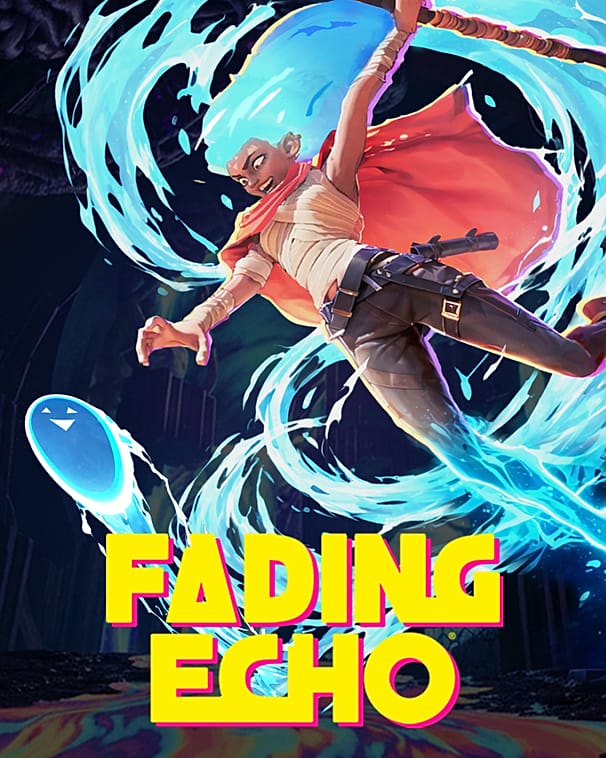
Fading Echo is released later this year. If you happen to be in Lyon this weekend, you can play the game at Speedons, or check out MisterMV play the game on his Twitch channel.
Go to accessibility shortcuts Share CommentsRead more

Listen to Lana Del Rey’s James Bond theme for new 007 video game
Схожі новини

Для League of Legends анонсували новий формат, який принесе великі зміни у 2026 році
Roskomnadzor Is Coming for Your Sims
The survival horror game Hollowbody launches for PS5 and Xbox Series X/S on June 5