Europe's biggest beach: endless sand on Germany's North Sea coast

 Facebook
 Twitter
 Flipboard
 Send
Send
 Reddit
 Linkedin
 Messenger
 Telegram
 VK
VK
 Bluesky
 Threads
 Whatsapp
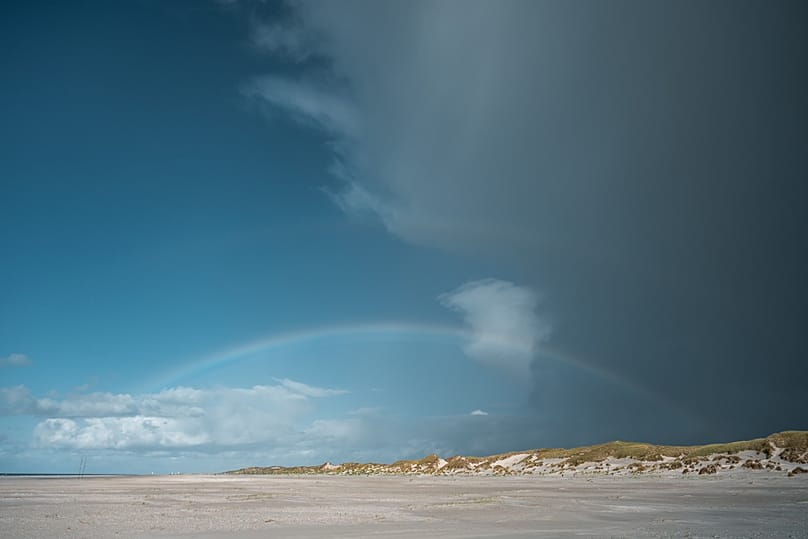
A sandbank the size of 1,400 football pitches: Kniepsand on the North Frisian island of Amrum looks like a slice of desert and shields the island, while its vast beach could give tourism further inland a boost.
If you were looking for a German stand-in for the US science-fiction film 'Dune', you could probably shoot it here: on the Kniepsand off the North Sea island of Amrum. For almost 15 kilometres a beach stretches out here – or rather, a vast sandbank that looks as if someone had simply picked up the Sahara and set it down on the North Sea coast.
 ADVERTISEMENT
ADVERTISEMENT
ADVERTISEMENT
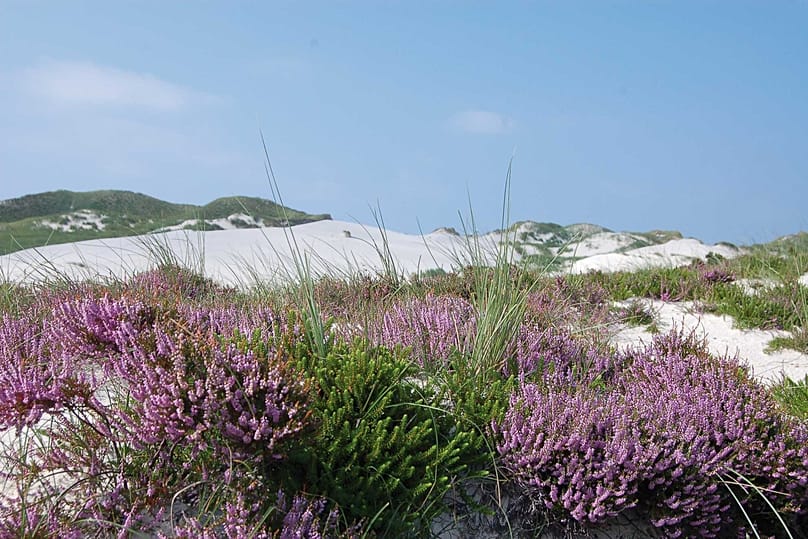
Strictly speaking, Kniepsand is not a classic beach. It is an extensive sandbank in the North Sea that nestles directly against the west coast of the Schleswig-Holstein island of Amrum. Geologically it does not belong to the island, but to the eye it is almost indistinguishable, as it merges almost seamlessly into the dune landscape.
A sandbank that has carved out its own path
Its name comes from Öömrang, the Frisian dialect spoken on Amrum: the word 'kniap' roughly means 'to pinch'. The sandbank was first mentioned in records in the 16th century. At that time it still lay at a right angle to Amrum.
For centuries tides and currents slowly pushed it towards the island. As late as the 1960s a narrow stretch of water still separated Kniepsand from Amrum. Today it is firmly attached to the dunes.
And it continues to shift: in the north and centre it is retreating due to sediment movements, while in the south new areas are being added – and the trend is upwards. Frank Timpe, head of Amrum Touristik, told Euronews that temporary localised sand losses can occur, for instance during storm surges, 'where appropriate coastal protection measures then have to be taken'. The Schleswig-Holstein state agency for coastal defence, national park and marine conservation regularly records these changes in 'morphological status reports'.
Ten square kilometres of pure open space
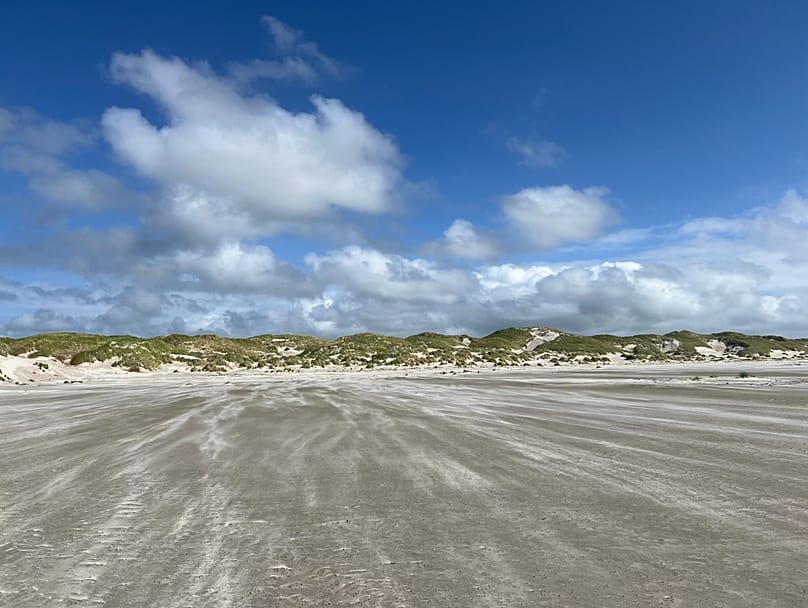
The dimensions speak for themselves: around ten square kilometres of beach, up to two kilometres wide at its broadest point. That is roughly the size of 1,400 football pitches. Anyone heading for the sea sometimes has to walk several hundred metres across fine sand.
Swimming is allowed in three lifeguard-supervised bathing areas, and designated zones provide space for a range of water activities. Beach volleyball, sailing, catamaran sailing – Kniepsand is a paradise for water sports enthusiasts. And anyone who simply wants to spread out a towel and enjoy the vast views will find more than enough room. There are also designated naturist areas and sections of beach for dogs.
The beach can only be reached on foot or by bicycle. Boardwalks lead through dunes, woodland and heathland to the coast, at some access points via a wooden staircase aptly named the 'Stairway to Heaven'. From its viewing platform you can take in the full extent of Kniepsand.
RelatedDunes provide vital protection for the island
In the past, Kniepsand had a very different significance. Shipwrecks and flotsam washed ashore were an important source of income for islanders. Some are said to have lit fires on the dunes during stormy nights to trick ships into heading for false harbour entrances – in places where in reality dangerous sandbanks lurked.
For Amrum, Kniepsand still performs a vital role today: in storm surges it acts as a natural buffer in front of the island. At the same time it supplies the sand that builds up the adjoining belt of dunes. Protecting the dunes on Amrum always means protecting the island – because the dunes form the natural sea wall that keeps the hinterland from being flooded.
Europe’s largest sandy beach – suddenly in the international media
'Europe’s biggest bathing beach' – that is the reputation that precedes Kniepsand. But Amrum itself does not officially lay claim to this title.
Frank Timpe confirms to Euronews that this claim is used 'rather sparingly and only rarely' in official communications. Instead of banking on superlatives, Amrum Touristik prefers to highlight the wide horizons and the associated sense of freedom.
Kniepsand nonetheless attracted international attention in 2022, when CNN Travel included it in its selection of 'Best Beaches'. For Amrum this was something of a sensation: amid world-famous beach destinations, the North Sea island suddenly appeared. The white sand dunes, Frisian villages and the island’s bird centre were singled out for particular praise.
The competition is fierce: Europe’s beach giants
There is no official winner when it comes to size, and the competition is formidable. The Dutch Wadden Sea island of Schiermonnikoog, for example, is regarded as home to Europe’s widest beach: 16 kilometres long and up to four kilometres wide, with a total area of 16 to 18 square kilometres – significantly more than Kniepsand’s roughly ten square kilometres. And that on an island which, with just under 1,000 inhabitants, is the smallest municipality in the Netherlands.
Further south, in Preveza in Greece, Monolithi beach also lays claim to the title: 22 kilometres long and up to 80 metres wide, it has even been named Europe’s largest beach by the European Best Destinations Organization (EBD), a network of the European Commission. On the Baltic Sea, meanwhile, the Curonian Spit stretches for almost 100 kilometres and is considered the longest sandy beach on the continent.
So anyone looking for Europe’s 'largest' bathing beach first has to decide which yardstick to use: length, width or area? The answer will vary depending on the metric. In any case, Kniepsand holds its own impressively in all of these comparisons – right here in Germany.
Domestic tourism is booming: travel without long-haul flights
The fact that Kniepsand is coming more into focus right now is no coincidence. At a time when geopolitical uncertainties are making many travellers think twice before booking a flight, domestic tourism in Germany is enjoying a noticeable upswing.
According to Germany’s Federal Statistical Office, accommodation providers in the country recorded a total of 86.7 million overnight stays in the first quarter of 2026. That is 2.5% more than in the same period of the previous year. The increase is almost entirely down to domestic guests: their overnight stays rose by 2.9% over the same period, while the number of foreign guests increased by only 0.8%. In March 2026 alone, domestic travellers booked 3.8% more overnight stays than in March a year earlier.
Places like Amrum could benefit from this. Anyone unwilling to give up a beach holiday but reluctant to fly may find an alternative here.
150,000 guests – and most of them come for the nature
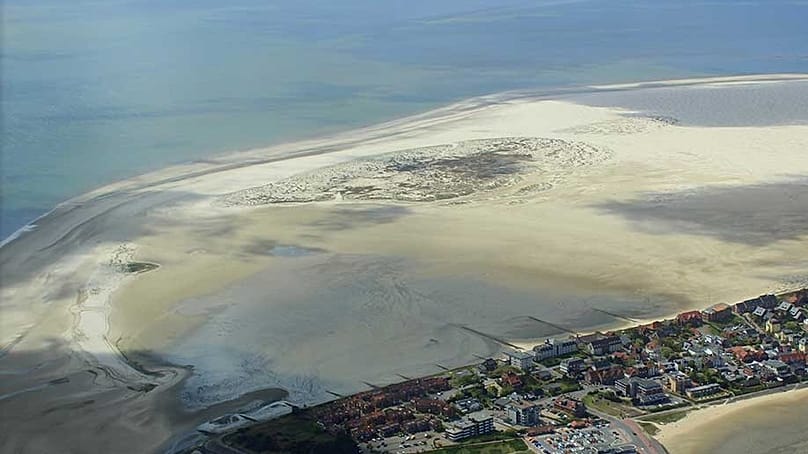
Amrum records around 150,000 overnight guests a year, plus day visitors. Frank Timpe told Euronews that around 70% of them cite the 'experience of nature' as their reason for travelling. Kniepsand is a central part of that island backdrop.
To prevent the influx of visitors from overwhelming the sensitive natural environment, Amrum Touristik relies on a clearly defined system of paths and signage: protected areas are respected but can still be experienced. There are environmental education programmes for children and adults, as well as a dedicated post for nature conservation coordination within the tourism organisation.
Go to accessibility shortcuts Share CommentsRead more
Heat, rain and Sahara dust hit Portugal
Схожі новини
"Український авангард": Нацбанк випустив незвичайну пам’ятну монету
В Україні прогнозують зростання виробництва біометану