Europe's 1st reusable spacecraft 'Space Rider' clears key hurdles on the road to launch
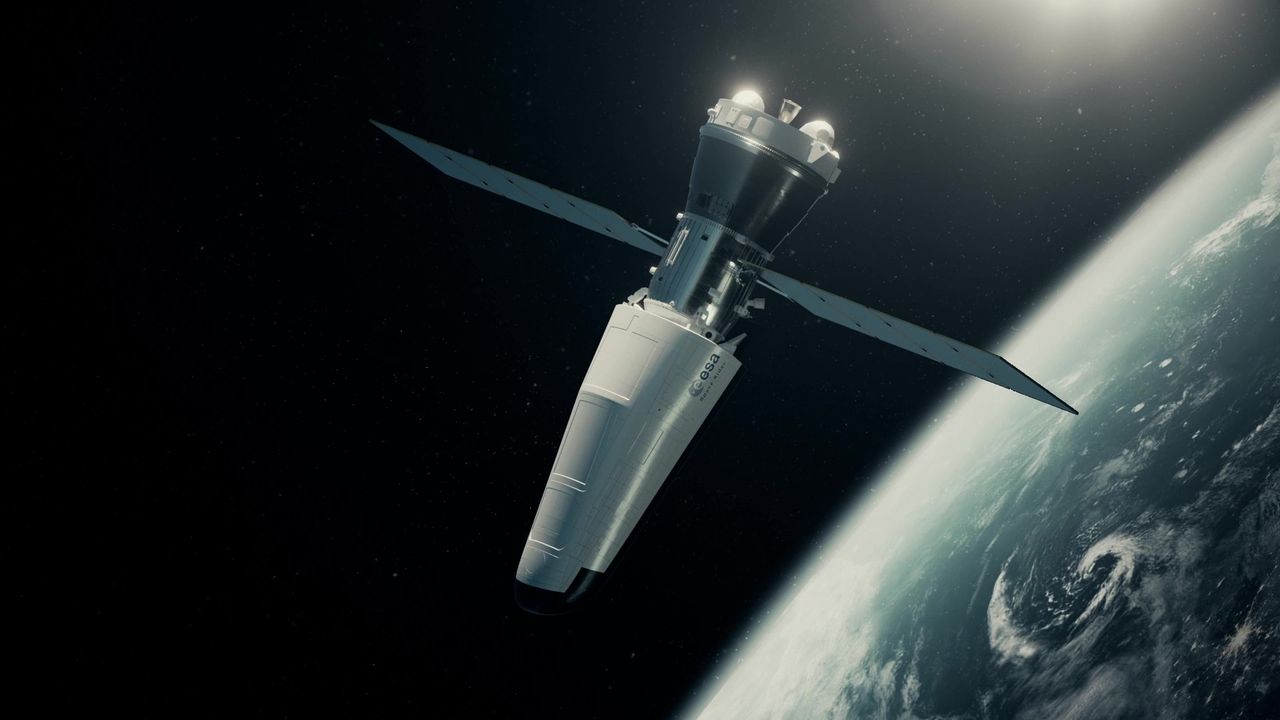
Before Europe's new spacecraft design can lift off on its first mission, the European Space Agency must first test the hardest parts of bringing it home.
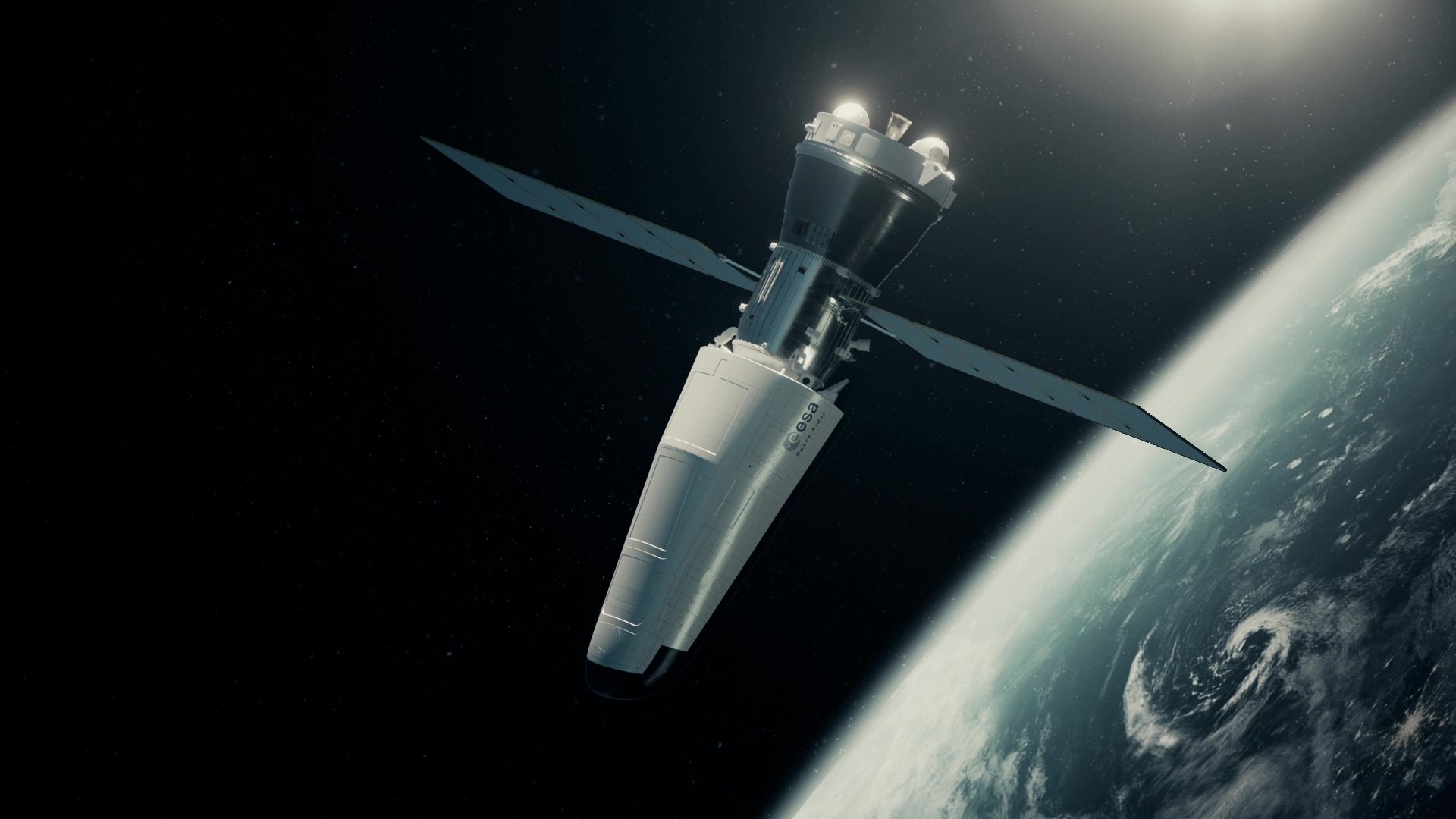
Space Rider is designed as an uncrewed laboratory that can stay in low Earth orbit for about two months before returning experiments and cargo to Earth. It can support microgravity research, technology demonstrations and on-orbit validation work, with the ability to return its contents for analysis back on the ground.
Instead of splashing down or drifting under parachutes, the vehicle uses a lifting-body design (without wings) and will land under a steerable parafoil for a runway-style touchdown — a flight system unlike any that has matured to operability on a spacecraft to date. It's a design meant to allow for more precise landing predictions and faster recovery.
The minivan-sized drop model includes the spacecraft's avionics system, which can autonomously control the parafoil once deployed. It carries onboard guidance, navigation and control software that will actively steer the descent during each drop, reacting to wind and changing conditions in real time.
ESA plans to conduct multiple helicopter drop tests over theSalto di Quirra range, on the Italian island of Sardinia, later this year, releasing the model from altitude and tracking its full descent profile. The campaign will not replicate orbital reentry, but it will target the final phase of flight — the portion most directly tied to recovery and reuse.
To reach that point on an actual mission, though, Space Rider must also survive atmospheric reentry, which is why ESA also recently completed plasma wind tunnel testing of the vehicle's thermal protection system, exposing materials to temperatures around 2,900 degrees Fahrenheit (1,600 degrees Celsius).
The spacecraft's unique lifting-body shape features 21 tiles on its underside and control flaps that are made of "ISiComp," a ceramic material developed by the Italian Aerospace Research Centre (CIRA) and Petroceramics.
To test the thermal system under flight conditions, CIRA used its own in-house plasma wind tunnel — the largest in the world — to bombard the components with a jet of gas blasted at 10 times the speed of sound.
Separate tests examined how the thermal protection system performs when its surface is damaged, simulating impacts from debris or micrometeoroids. To do this, engineers introduced defects into the material and then exposed it to reentry-like conditions inside the plasma tunnel to better understand how the system functions under off-nominal conditions.
The prototype "has been acing its tests so far," according to an ESA statement on April 29.
"It is wonderful to see Space Rider reentry module taking shape like this; the teams have been working years on this project," said Aldo Scaccia, ESA's Space Rider Space Segment manager, in the statement.
View MoreYou must confirm your public display name before commenting
Please logout and then login again, you will then be prompted to enter your display name.
Logout
Josh Dinner is Space.com's Spaceflight Staff Writer. He is a writer and photographer with a passion for science and space exploration, and has been working the space beat since 2016. Josh has covered the evolution of NASA's commercial spaceflight partnerships and crewed missions from the Space Coast, NASA science missions and more. He also enjoys building 1:144-scale model rockets and spacecraft. Find some of Josh's launch photography on Instagram, and follow him on X, where he mostly posts in haiku.
Схожі новини