Europe will not submit to an ‘insular and brutal world’, says Carney
Speaking at meeting of European Political Community, Canadian PM says gathering points to a better path forward
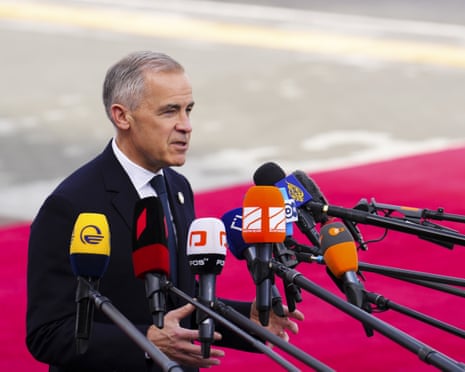
Europe will not submit to a more “brutal world”, and can instead be the base from which a new international order can be rebuilt, Mark Carney, the Canadian prime minister, has said.
Carney was speaking as the first non-European leader to attend a meeting of the European Political Community, which opened on Monday amid high tensions in the strait of Hormuz and renewed doubts about the US commitment to Nato.
“We don’t think that we’re destined to submit to a more transactional, insular and brutal world, and gatherings such as these point to a better way forward,” he said.
In a pointed suggestion that the era of American leadership was coming to an end, and explaining the symbolism of Canada’s attendance at a European political gathering, he said: “It is my strong personal view that the international order will be rebuilt, but it will be rebuilt out of Europe.
“We are demonstrating not just the strength of our values in defending a rules-based international order, but also the value of our strength,” he added. “The world is undergoing a rupture across several dimensions – integration is being used as a weapon by some and the rules are not constraining the hegemons.”
The EPC meeting, the eighth since the organisation’s inception, is taking place in Yerevan, Armenia, a venue chosen as a way of showing Europe’s determination to prevent the small Caucasus country from being dragged back into Russia’s orbit.
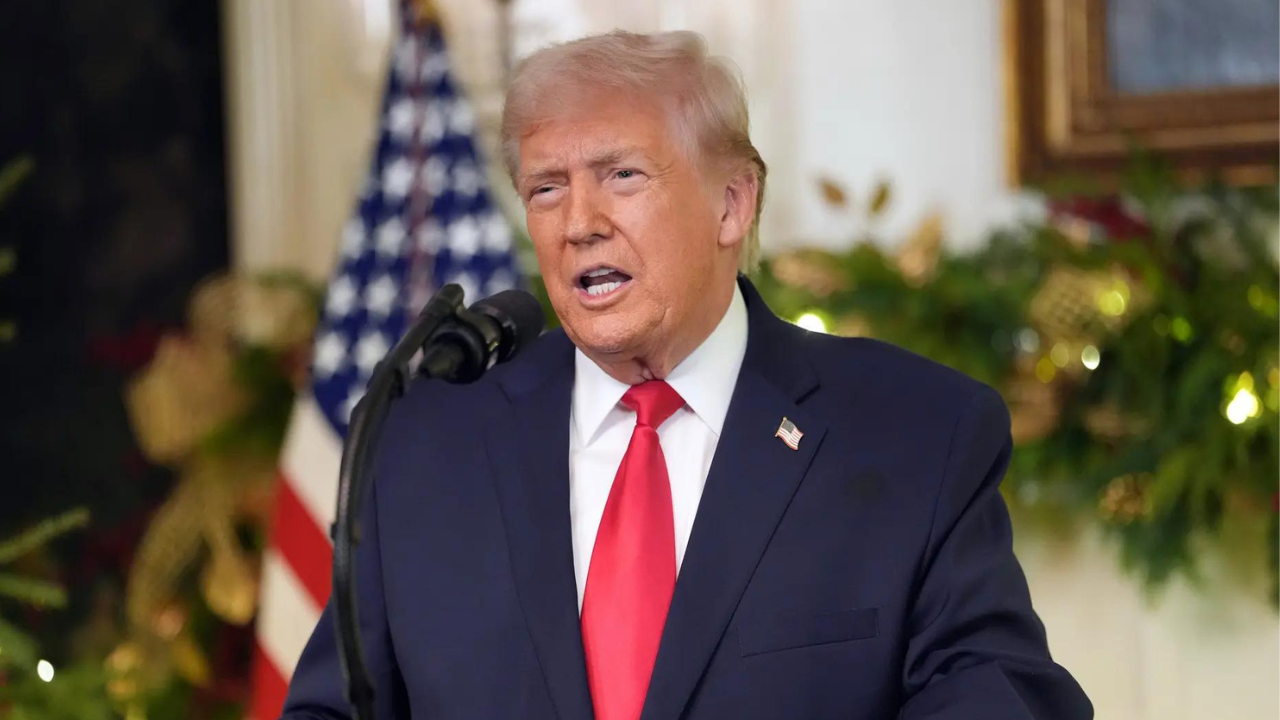
It is being held against a backdrop of fresh concern over the US’s commitment to Nato after Donald Trump’s surprise decision to announce the withdrawal of more than 5,000 troops from Germany, a move that has confirmed Europeans’ worst fears about the reliability of the transatlantic alliance.
Speaking in Yerevan, Keir Starmer, the British prime minister, said: “We cannot deny some of the alliances that we have come to rely on are not in the place where we would want them to be. There is more tension in the alliances than there should be.”
How leaders responded to tensions in the alliances was likely to “define what goes on for many years, arguably for a generation”, he added.
The French president, Emmanuel Macron, without mentioning the US, repeatedly highlighted the comparative reliability of Europe, saying it was this predictability that made Europe attractive in Asia, the Gulf, Latin America and Africa.
Europe still faced a big derisking task so that it was no longer dependent on others, including China, for critical minerals and a range. He said: “The big issue we have beyond the wars is a big derisking strategy. It needs more solidarity more investment and better organisation to derisk from the main geopolitical risks.”
The Ukrainian president, Volodymyr Zelenskyy, said Russia would face a crucial moment in the summer, which he termed “a moment to expand the war or move to diplomacy”.
He said if Russia did not chose to end the war it was all the more vital that sanctions packages were not lifted. He called for a workable diplomatic format in which Europeans must be at the table at any talks.
Discussing the planned troop withdrawal from Germany, the EU’s foreign policy chief, Kaja Kallas, said there had been talk about withdrawal of US troops for a long time from Europe but that “the timing of this announcement comes as a surprise. I think it shows that we have to really strengthen the European pillar in Nato.”
Asked whether she believed that Trump was trying to punish the German chancellor, Friedrich Merz, for saying the US had been humiliated by Iran in talks to end the war, Kallas said: “I don’t see into the head of President Trump, so he has to explain it himself.” Merz himself skipped the Yerevan summit.
Схожі новини
Cooler, Variable Week Ahead: Met Office says northerly winds will cut UK warmth; frosts and showers follow

'Can a neighbor hear a gunshot?': Chilling forensic details emerge in murders of two Bangladeshi students in US

Meto Komori and Yuhi Chito suspension shocks fans as VSPO! hides details behind contract violation claims