EU, Mexico sign expanded trade deal
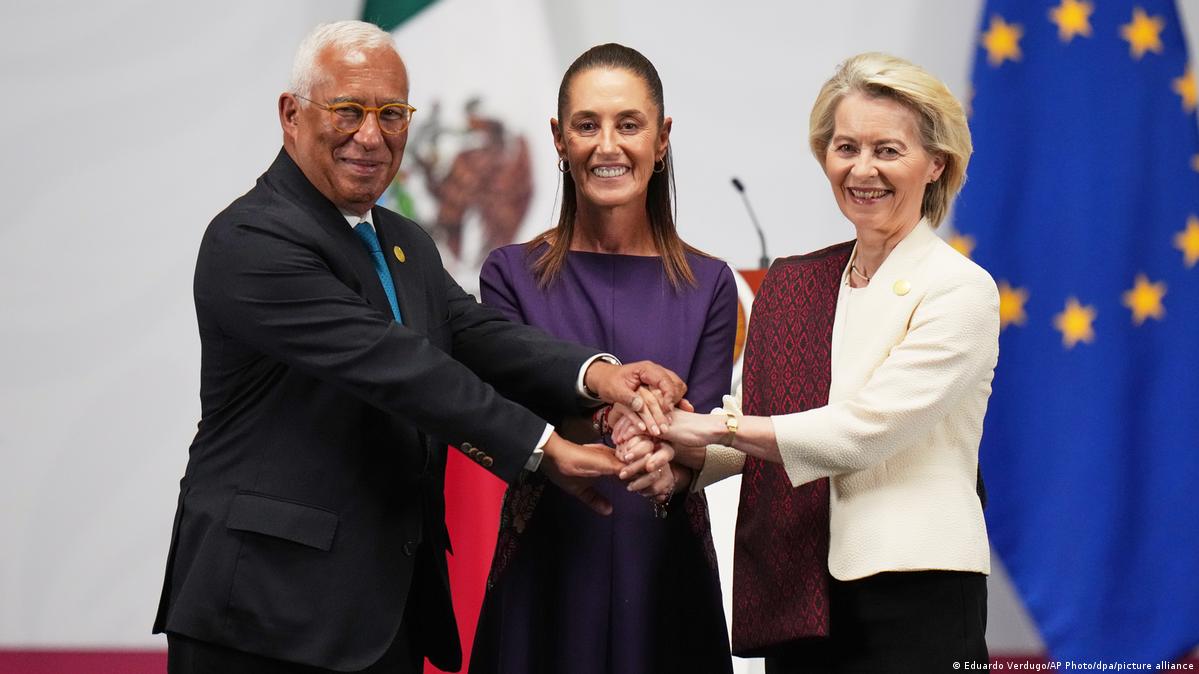
The European Union and Mexico on Friday signed a long-stalled free trade agreement as they seek to decrease their dependence on the United States.
"The goal is simple: We want to create more jobs and generate more value on both sides of the Atlantic," said European Commission President Ursula von der Leyen during the eighth EU-Mexico Summit in Mexico City.
"This agreement gives us great wings to fly very high," she added.
The deal, which expands on the 2000 trade accord, provides duty-free access for almost all goods, including farm products. The old pact covered only industrial goods.
The accord comes amid ongoing negotiations between Mexico, the United States and Canada on their three-way free trade agreement.
EU, Mexico tighten trade ties
Mexico's President Claudia Sheinbaum emphasized the need for "opening other horizons."
"We are living through complex times on the international stage, but it is precisely at moments like these that we must act with greater cooperation, dialogue, and humanist vision. Future prosperity must be shared, or it will not be lasting," Sheinbaum said during the press conference.
According to Mexico's Economy Ministry, the new deal could boost Mexican exports to the EU from around $24 billion (€21 billion) annually to $36 billion by 2030. The EU, meanwhile, exports roughly $65 billion in goods to Mexico each year.
Shortly after signing the accord, European Council President Antonio Costa called the agreement "a true geopolitical statement."
"With the modernized global agreement, we are better prepared to face the challenges of our time," he said.
Trade Reset: How Europe is replacing China and the US
To view this video please enable JavaScript, and consider upgrading to a web browser that supports HTML5 video
Both EU, Mexico hit by Trump's tariff offensive
In April 2025, the EU was hit with sweeping new duties under US President Donald Trump's so-called "Liberation Day" tariffs and prepared countermeasures, though they were later suspended to allow room for negotiations.
Earlier this week, the EU agreed to implement a deal signed in July last year with Washington, which sets levies on most European goods at 15%.
Mexico has also been hit with US tariffs on automotive, steel and aluminum exports.
Around 80% of Mexican exports go to the US, whose economy has become more protected during Trump's second term.
How Latin America tries to cope with Trump's tariffs
To view this video please enable JavaScript, and consider upgrading to a web browser that supports HTML5 video
Edited by: Dmytro Hubenko
Advertisement