EU enlargement: Is the bloc ready to welcome new members?
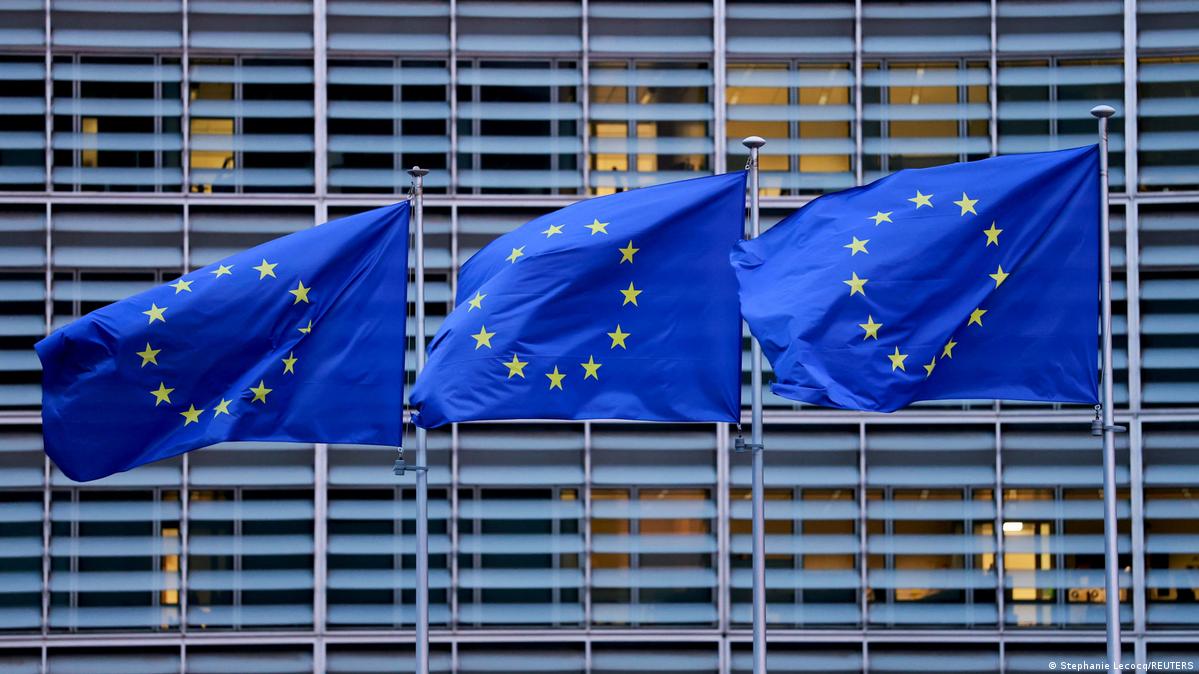
"Enlargement is the priority for the European Union, and if our candidates deliver, then we have to deliver, too," Enlargement Commissioner Marta Kos said ahead of a meeting of EU foreign ministers in Brussels earlier this month.
As proof that the EU is moving beyond rhetoric, Kos pointed to the fact that for the first time in 17 years, the bloc in April established a working group to draft the accession treaty for a candidate country: Montenegro.
"There is no clearer signal that the EU sees Montenegro as its next member state," Strahinja Subotic, program manager and senior researcher at the European Policy Centre (CEP) in Belgrade, told DW.
Enlargement: a geopolitical and security issue
Russia's invasion of Ukraine in 2022 put the subject of enlargement back at the center of European politics, turning what had long been a technical process into a geopolitical and security issue.
"The geopolitical need for enlargement is recognized by all member states," said Steven Blockmans of the Centre for European Policy Studies (CEPS).
"But it is always coupled with two things: On the one hand, a merits-based approach, whereby candidate countries are assessed on their reforms and where no shortcuts are being offered, and secondly, the need for the European Union to change its policy and governance methods," he told DW.
Is the existing accession model fit for purpose?
The debate in Brussels is, therefore, increasingly focused not only on enlargement itself, but also on whether the bloc's traditional accession model is still fit for purpose.
Commissioner Marta Kos acknowledged that the EU is still using a methodology developed four decades ago.
"What we are now discussing with the member states is whether gradual integration principles, which we are mainly using in the single market, could also be moved to other areas, especially security," she said.
New models on the table
In a recent proposal on EU enlargement, German Chancellor Friedrich Merz called for all negotiation clusters with Ukraine to be launched and proposed a form of "associate membership" that would tie Kyiv more closely to the EU even before full accession, including greater participation in EU institutions and in foreign and security policy.
At the same time, Merz suggested giving Western Balkan countries and Moldova privileged access to the EU single market, observer status in EU bodies and gradual integration into decision-making processes in order to accelerate their path toward membership.
Ideas like these have been circulating in Brussels and European capitals for years.
The model of staged accession
Steven Blockmans, one of the authors of the "staged accession" model, told DW that elements of that approach have gradually entered mainstream EU thinking through the EU's Growth Plan for the Western Balkans and proposals circulated by countries including France, Germany and Lithuania.
"And you see elements of a more staged approach, whereby benefits for reforms are being offered in earlier pre-accession phases of the process," Blockmans said.
Resistance to some proposals for Ukraine
At the same time, Blockmans pointed out that some of the more ambitious proposals for Ukraine have already faced resistance.
Among them was the idea of so-called "reverse enlargement," backed by Ukrainian President Volodymyr Zelenskyy and parts of the European Commission, under which countries such as Ukraine would formally enter the EU first and complete reforms afterward.
The idea was quickly rejected by member states.
A taboo idea no longer entirely taboo
Merz's proposal has also revived one of the most sensitive questions surrounding future enlargement: How much decision-making power new member states should have from the start, particularly in areas where EU decisions still require unanimity.
That debate has brought renewed attention to one of the more controversial ideas circulating in Brussels, namely the possibility of temporarily limiting veto rights for new member states after accession.
The proposal was developed as part of the staged accession model by researchers from the CEPS, including Steven Blockmans and CEP analyst Strahinja Subotic.
'Not second-class membership'
According to Subotic, the goal was not to create "second-class membership," as some critics say, but to reassure skeptical member states that enlargement would not paralyze the union. He argues that the restrictions could be limited both in time and scope.
"It could apply only to one or two policy areas and not necessarily in the same way or for the same duration for every candidate country," Subotic said.
Legally, Blockmans says, such a mechanism could be included in accession treaties. Politically, however, the issue remains highly sensitive because it touches on sovereignty and equal rights among member states.
Nevertheless, several Western Balkan countries have already signaled openness to the idea.
Albania, Bosnia and Herzegovina and Serbia have all suggested they would accept temporary veto limitations if that helped unlock accession.
Montenegro as a test case
Montenegro, however, does not want delays or transitional arrangements.
Analysts say it is likely to be the last country to enter the EU under the bloc's current rules before any deeper institutional reform takes place.
At the same time, both Blockmans and Subotic believe Montenegro's accession could serve as a testing ground for some of the new enlargement mechanisms currently being debated in Brussels.
Subotic expects the EU to use Montenegro's accession treaty to introduce stronger post-accession monitoring tools than in previous enlargement rounds, particularly in areas such as the rule of law and democratic backsliding.
"One might expect Montenegro to become the guinea pig to explore the limits of transitional arrangements and safeguard clauses," Blockmans told DW, noting that the accession treaty currently being drafted could become a template for future enlargements of the union.
Edited by: Aingeal Flanagan
AdvertisementСхожі новини

Indian-origin MMA fighter Hrishikesh Koloth killed in bear attack in Canada
Musk’s ex-girlfriend claims she was offered 'GDP of a small nation' to not expose MAGA
Peter H. Raven obituary: visionary botanist who transformed our understanding of plant diversity