EU Commission reveals details of 20th sanctions package against Russia
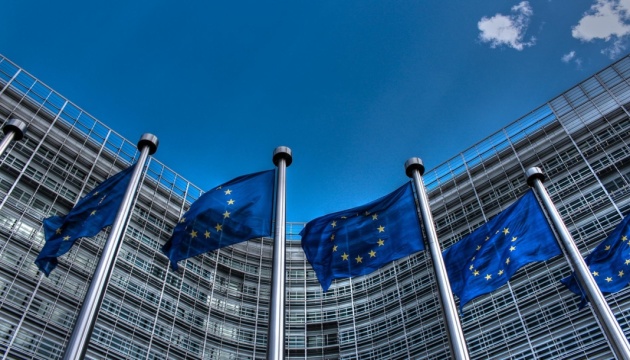
According to Ukrinform, the European Commission stated this on its website.
The new sanctions include "robust energy measures, as well as the activation for the first time of the "anti‑circumvention" tool."
"Today's package also targets financial services (including crypto), trade and media propaganda, and includes further measures for the protection of EU operators," the report said.
Read also: Zelensky approves new “long-range sanctions” against RussiaIn the Russian energy sector, 36 new entities involved in oil exploration, extraction, refining, and transportation have been added to the sanctions list.
Revenues from Russian oil exports will be further reduced through the inclusion of additional shadow fleet entities, including those operating in third countries, as well as a major maritime insurance company and 46 additional vessels.
"These additions, a total of 632 vessels in Russia's shadow fleet are now listed by the EU," the report states. These vessels are subject to a ban on port access and a ban on receiving services.
Alongside these additions, the EU continues working with states to ensure their registries do not allow such vessels to sail under their flags. 46 vessels were added to the sanctions list, while 11 were removed, showing that delisting is possible for vessels that return to compliance.
Safeguards were introduced regarding the sale of EU tankers to prevent their end-use by Russia.
"Dedicated due diligence by EU sellers, as well as a mandatory 'no Russia' clause to be passed on into sales contracts is to prevent usage deployment within the shadow fleet," the report says. The new clause will help decommission vessels and support their exit from the shadow fleet.
Sanctions were also imposed on two Russian ports (Murmansk and Tuapse) and, for the first time, on a port in a third country (the Karimun oil terminal in Indonesia) due to links with Russia's shadow fleet and circumvention of oil price caps.
The 20th sanctions package includes "the basis for a future prohibition to transport Russian oil and petroleum products, in full coordination and discussion with the G7 and the price cap coalition (G7 members and other participating countries)."
It is reported that the EU Council still has to decide when the ban on maritime transport services will enter into force.
Meanwhile, a new ban has been introduced on the servicing of Russian LNG tankers, as well as icebreakers, prohibiting key EU operators from supporting Russian LNG exports.
The ban on LNG terminal services will allow EU operators to terminate any long-term contracts with Russian operators.
The European Commission also detailed the financial measures included in the package.
The new measures expand the prohibition on EU operators conducting any transactions with 20 additional Russian banks, with limited exceptions such as humanitarian operations, bringing the total number of Russian banks cut off from the EU internal market to 70.
The EU is also expanding transaction bans to four banks in Kyrgyzstan, Laos, and Azerbaijan that facilitate Russian military efforts, significantly hindering sanctions circumvention or linking to Russia's banking messaging network.
The 20th package also includes a full sectoral ban on transactions with any Russian crypto-asset service provider, as well as decentralized platforms enabling cryptocurrency trading, due to their use in sanctions evasion.
Regarding cryptocurrencies and central bank digital currencies (CBDCs), the new measures prohibit the use (and support) of RUBx, a ruble-backed stablecoin, as well as the digital ruble, a currency developed by the Central Bank of Russia designed to bypass sanctions.
The package also bans transactions with agents in Russia and other third countries that facilitate international transactions from Russia in order to circumvent EU sanctions.
Read also: Baltic states say Europe cannot return to pre-war relations with Russia — BloombergAt the same time, the EU Council decided today to remove five financial organizations from third countries from the list after receiving commitments that they would no longer engage in activities that led to their inclusion in the sanctions list.
In trade, the package introduces new restrictions and bans on exports and imports to further weaken Russia's military-industrial complex. These include:
- New export bans to Russia on goods – from rubber to tractors, worth over EUR 365 million
- New export restrictions on items and technologies used for Russia's military effort, such as explosives, laboratory glassware and high‑performance lubricants and additives for lubricants
- New restriction on provision of cybersecurity services to Russia
- New import bans on metals, chemicals and minerals, not yet under sanctions, worth over EUR 530 million
- A quota on ammonia to cap existing imports
The 20th package, targeting Russia's military industry, further restricts it by imposing sanctions on 58 companies and associated individuals involved in the development and production of military goods such as drones.
In addition, the package covers suppliers of critical high-tech goods from third countries, such as entities based in China, the United Arab Emirates, Uzbekistan, Kazakhstan, and Belarus, which supplied dual-use goods or weapons systems to Russia's military-industrial complex.
For the first time, the "anti‑circumvention tool" is activated due to increasing cases of systematic sanctions evasion by exporters from third countries re-exporting EU-sanctioned goods to Russia.
"Today, the EU activated its anti‑circumvention tool due to systematic and persistent failure by the Kyrgyz Republic to prevent the sale, supply, transfer, or export to Russia of certain machine tools and certain telecommunication equipment imported from the EU and used for the manufacturing of drones and missiles in Russia. These high‑risk items allow Russia to pursue its illegal military aggression against Ukraine and sustain its ability to wage war," the report states.
This package adds 60 entities to the list of those providing direct or indirect support to Russia's military-industrial complex or engaging in sanctions evasion. This includes 32 entities registered in Russia and 28 in third countries (China, including Hong Kong, Turkey, the United Arab Emirates, and Thailand).
The package also includes 120 additional listings, including 33 individuals and 83 entities, resulting in asset freezes and bans on providing them with funds and economic resources, as well as travel bans for individuals.
In addition to the listed Russian energy and military companies and their supply chains in third countries, the EU is also imposing sanctions on oligarchs, individuals involved in the abduction of children from Ukraine, propagandists, and those responsible for the looting of cultural heritage.
The EU has also focused on strengthening legal protection for EU operators against retaliatory actions by the Russian government, allowing courts in member states to impose fines on Russians who file wrongful claims in Russian courts.
In addition, the package allows EU companies to claim damages if judgments from third countries (other than Russia) are enforced. It also allows the EU Council to impose transaction bans on companies and individuals from third countries that cooperate in enforcing such actions.
The 20th package also introduces a transaction ban against Russian competitors benefiting from the Russian government's illegal expropriation of EU operators. Furthermore, measures impose a transaction ban on those Russians who steal and use EU intellectual property rights in Russia without consent.
As part of efforts to counter propaganda, the new measures target mirror media outlets that bypass broadcasting bans by spreading the same content online as listed propaganda media (such as Russia Today, Sputnik, etc.).
"The content of these mirror sites and domains will also be banned from distribution in the EU. This will facilitate the faster takedown or blocking of online sites that act as proxies or clones of official media outlets' channels," the report states.
Read also: Zelensky on sanctions against Russia: It is not about number of packages, but their qualityTo protect EU research efforts, the new measures prohibit the receipt of funding, including donations or grants, from the Russian government in the field of research and innovation. This applies to research institutes, higher education institutions, and other bodies in the EU, as well as individuals associated with these organizations.
Among other things, the package mirrors certain provisions applied to Russia in Belarus sanctions related to trade, finance, services, and legal protection for EU operators.
As Ukrinform reported, the EU has unblocked a loan to support Ukraine for 2026–2027 and adopted the 20th sanctions package against Russia.
Photo: eumetsat.int
Схожі новини
Кличко: Київ потребує значних коштів і держпідтримки для підготовки до нового опалювального сезону
MoE Shmyhal: Ukraine restores 1 GW of TPP capacity out of planned 3.8 GW
Зеленський: Україна готова спрямувати перший транш із пакету ЄС у EUR90 млрд на армію, ППО та підготовку до зими