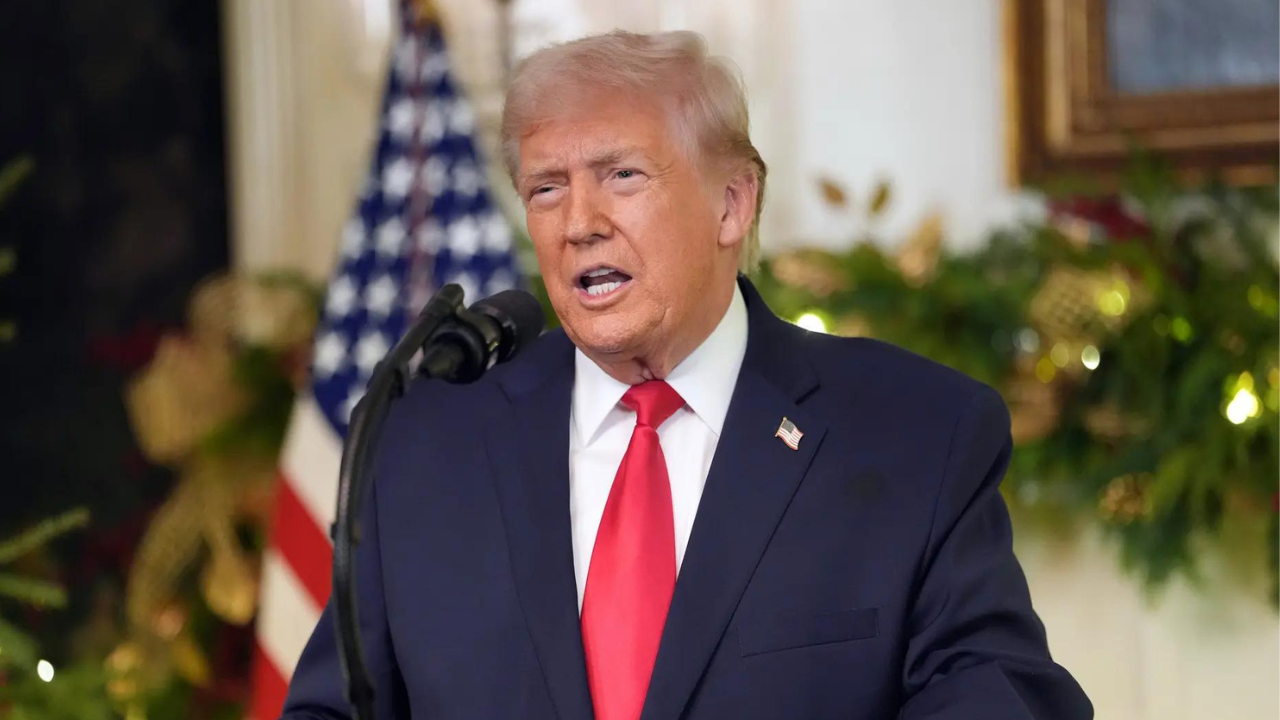
EPC summit: Europe has 'gotten the message' from Trump
What you need to know
- The European Political Community (EPC) is meeting in Armenia for high-level talks on global conflicts, energy security, and strengthening democracy.
- NATO Secretary-General Mark Rutte has said that Europe must step up in terms of defense.
- Canadian Prime Minister Mark Carney is the first non-European leader to attend to the summit.
Here are the latest updates and reports from the EPC summit on Monday, May 4:
Skip next section UK's Starmer admits 'tension' with US over Iran05/04/2026May 4, 2026UK's Starmer admits 'tension' with US over Iran
Alex Berry EditorSpeaking at an EPC plenary session, UK Prime Minister Keir Starmer acknowledged the heightened "tension" between the gathered leaders and Washington over Europe's reluctance to participate in the war with Iran.
"We cannot deny that some of the alliances that we have come to rely on are not in the place we would want them to be," the prime minister said, adding that "there is more tension in the alliances than there should be and it's very important that we therefore face up to this as a group of countries together."
While the relationship between Starmer and President Trump started off on a positive note, it has soured in recent weeks over Starmer's initial refusal to let the US military use British bases for its strikes on Iran.
Separately, Starmer said he was committed to taking part in the European Union's planned €90 billion ($105 billion) loan to Ukraine, recently approved after the election defeat of Moscow-friendly Prime Minister Viktor Orban in Hungary.
"The leaders discussed the European Union’s £78 billion loan to Ukraine, and the prime minister underlined the opportunity the UK’s involvement would bring for both Ukraine and European security," a spokesperson for the prime minister said.
https://p.dw.com/p/5DFFYSkip next section Turkey sends top politician to Armenia for the first time in over a decade05/04/2026May 4, 2026Turkey sends top politician to Armenia for the first time in over a decade
Turkish Vice President Cevdet Yilmaz is the first high-ranking official from Ankara to visit Armenia since 2013.
"It is quite significant to have a Turkish representative at an international meeting taking place in Armenia," an EU official told German news agency dpa.
The last two visits to Yerevan from top leaders came when then-President Abdullah Gül attended a soccer game in 2008 and when former Foreign Minister Ahmet Davutoglu took part in a meeting of Black Sea-bordering nations in 2013.
The two neighbors have long been at odds over Turkey's refusal to recognize the Armenian genocide carried out by the Ottoman Empire during World War I. Ankara has also routinely sided with Azerbaijan in the Nagorno-Karabakh conflict, and closed its land border with Armenia entirely in 1993.
There have been signs since 2021, however, that the relationship is thawing as some diplomatic relations were restored. Some Armenian officials have hinted that their border may be reopened, but there has been no confirmation of this from the Turkish side.
https://p.dw.com/p/5DF3JSkip next section Mark Carney becomes first non-European leader to attend EPC05/04/2026May 4, 2026Mark Carney becomes first non-European leader to attend EPC
"We don't think that we're destined to submit to a more transactional insular and brutal world and gatherings such as these point to a better way forward," said Canadian Prime Minister Mark Carney, in what was perceived as a thinly veiled comment about the US.
Carney is the first non-European leader to attend the EPC, and the move is seen as Ottawa's latest attempt to diversify both diplomatic ties and trade away from dependency on its southern neighbor.
Canada also become the first non-European country to join the EU's defense financing scheme.
"We're the most European of non-European countries, so there's many ways that we can work together," Carney told reporters in Yerevan.
https://p.dw.com/p/5DELYSkip next section Zelenskyy calls for 'common European voice' on Iran05/04/2026May 4, 2026Zelenskyy calls for 'common European voice' on Iran
Addressing the EPC, Ukrainian President Volodymyr Zelenskyy said that gathered members should "develop one common European voice" in response to the US-led war with Iran, even if they "understand" Washington's position and remain in close contact with leaders there.
He also used his speech to call for assurances from allies that Ukraine would continue to get support for much-needed anti-missile defense systems.
At the same time, he announced that Kyiv and the European Union had advanced on a major drone deal after he spoke with European Commission chief Ursula von der Leyen.
https://p.dw.com/p/5DDQjSkip next section Rutte, Macron, and von der Leyen react to US troop withdrawal from EuropePublished 05/04/2026Published May 4, 2026last updated 05/04/2026last updated May 4, 2026Rutte, Macron, and von der Leyen react to US troop withdrawal from Europe
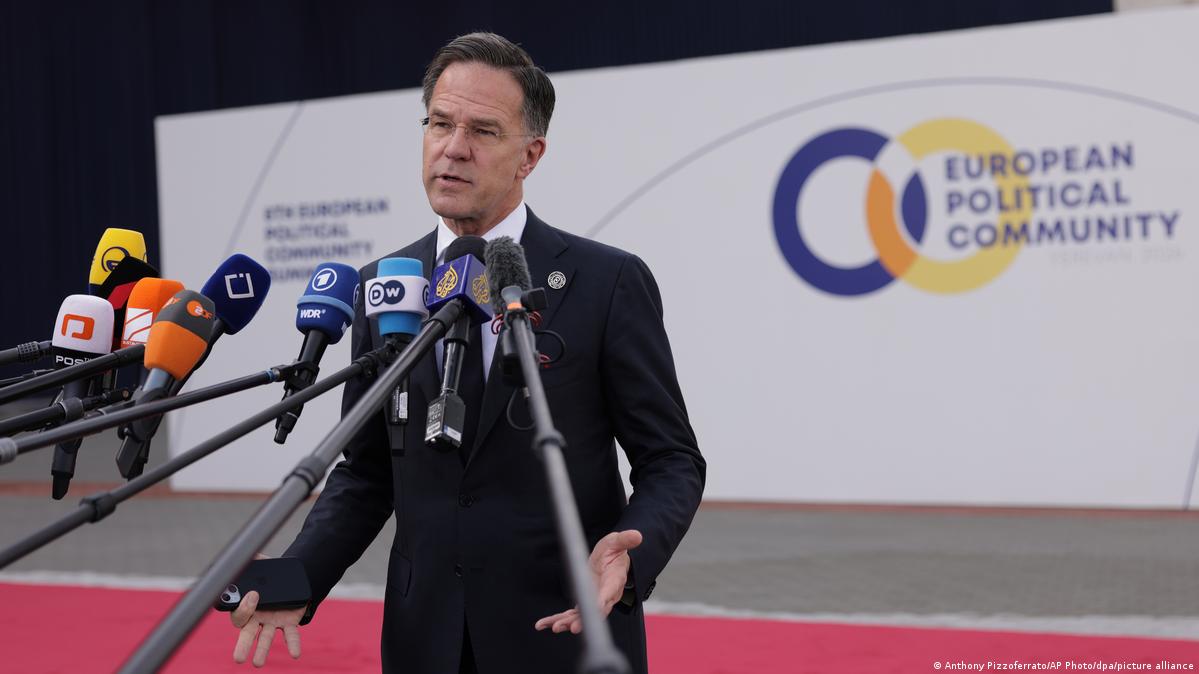
NATO Secretary-General Mark Rutte said at the opening of the EPC summit that Europe has "heard" Washington's frustration over its conflict with Iran and are "stepping up."
"European leaders have gotten the message. They heard the message loud and clear," Rutte said, acknowledging "disappointment on the US side" on European nations' resistance to joining the war.
His comments came shortly after President Donald Trump announced a major withdrawal of US troops from Germany — which was itself seemingly prompted by German Chancellor Friedrich Merz saying the US was being "humilitated" by Iran.
"Europeans are stepping up, a bigger role for Europe and a stronger NATO," Rutte added.
French President Emmanuel Macron also addressed the troop drawback, saying that Europe needed to learn to live without depending on the US for defense.
"Europeans are taking their destiny into their own hands, increasing their defence and security spending, and building their own common solutions," the French leader said.
European Commission President Ursula von der Leyen echoed Macron's sentiments, saying "we have to step up our military capabilities to be able to defend and protect ourselves."
The EU's top diplomat Kaja Kallas called Trump's move a "surprise", but said there had been talk of a wind-down for US troops for some time.
https://p.dw.com/p/5DDJSSkip next section What is the EPC and why are they meeting?Published 05/04/2026Published May 4, 2026last updated 05/04/2026last updated May 4, 2026What is the EPC and why are they meeting?
The European Politicial Community (EPC) is compromised of 44 member states, including all EU member countries as well as non-EU nations in Europe, Turkey, and some countries in the Caucasus.
Several other world leaders, including Canadian Prime Minister Mark Carney, are attending as guests.
It was founded in 2022 in reaction the Russian invasion of Ukraine.It's format is for high-level talks and debate, not to make binding agreements.
This most recent meeting is expected to focus on defense amidst the ongoing wars in Ukraine and Iran, as well as the threat of energy insecurity these global conflicts pose.
As the group meets in Armenia, shoring up democracy in that country and supporting its peace process with Azerbaijan is also on the agenda.
https://p.dw.com/p/5DDJHSkip next section Welcome to our coverage05/04/2026May 4, 2026Welcome to our coverage
Roshni Majumdar EditorLeaders from 48 countries are gathering in Yerevan, Armenia, for the latest European Political Community summit under the shadow of wars in Iran and Ukraine.
These high-level talks will be followed by the first-ever summit between the European Union and Armenia.
Check back here for the latest from the EPC.
https://p.dw.com/p/5DDEsShow more postsСхожі новини
Cooler, Variable Week Ahead: Met Office says northerly winds will cut UK warmth; frosts and showers follow

'Can a neighbor hear a gunshot?': Chilling forensic details emerge in murders of two Bangladeshi students in US

Meto Komori and Yuhi Chito suspension shocks fans as VSPO! hides details behind contract violation claims