Enhanced Games: Worse than the risk of 'crippling injuries' is the threat of gene editing in sports altering our fundamental human biology
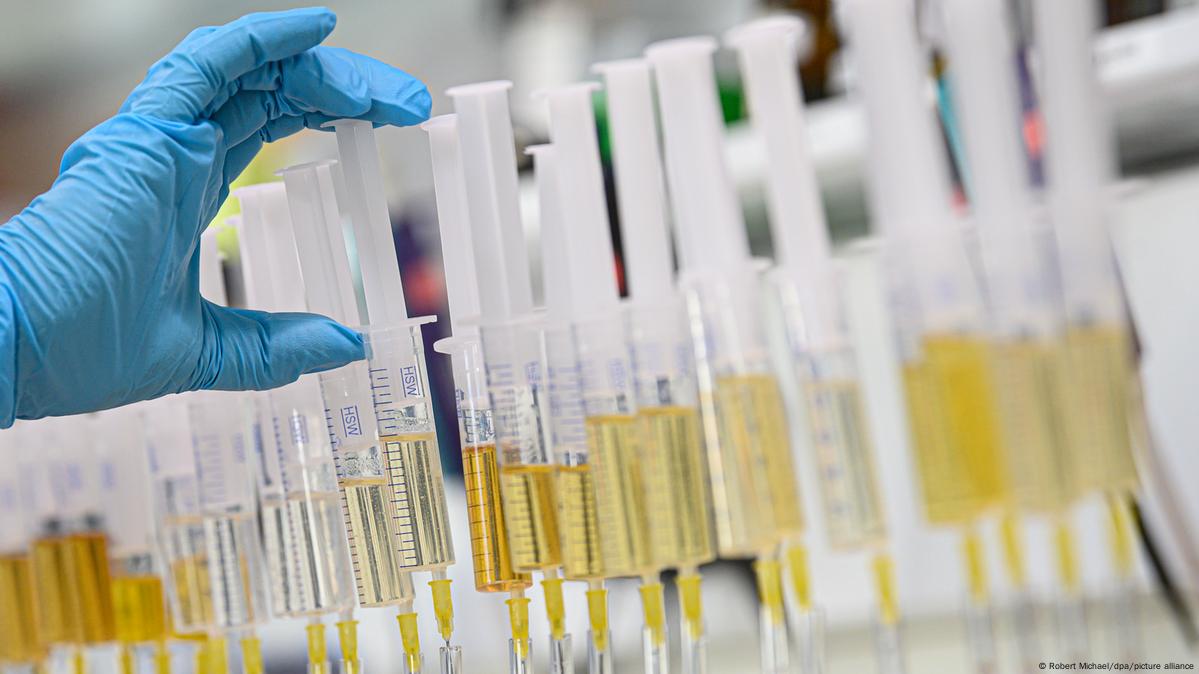
Athletes limbering up to compete openly with performance-enhancing substances for the first time at the Enhanced Games in — where else? — Las Vegas!
While supporters say the event signposts a new future for elite sport, the traditional sporting world has slammed it as a dangerous biological experiment.
What does 'enhanced' mean in modern sports?
Founded by Australian businessman Aron D'Souza, the competition allows athletes to perform without conventional anti-doping rules.
Substances must be approved by the US Food and Drug Administration and taken under medical supervision. But otherwise, it's up to the athletes.
The idea of enhancement is nothing new, said Andy Miah, a bioethicist at the UK's University of Salford.
"Back in the ancient Olympics, this included putting olive oil on the body to control body temperature," Miah told DW. "When modern sports began, it was common for the athletes to have a shot of alcohol, which was believed, mistakenly, to have an enhancing impact."
Many of the substances associated with the most infamous form of enhancement — sports doping — are scientifically well understood.
Michael Joyner, a physiologist at the Mayo Clinic in the US, told DW that modern enhancement strategies generally fall into three broad categories:
- Anabolic steroids that increase muscle mass and recovery
- Blood doping and EPO that improve oxygen delivery
- Stimulants that reduce fatigue
In addition, peptides may encourage the body to produce greater amounts of beneficial hormones such as testosterone and EPO.
"There is clear evidence that steroids, blood doping/EPO, and amphetamines work," said Joyner. "Less so for the peptides and other substances."
Enhancement science: Doping methods aren't new
While the showcase of the Enhanced Games is new, much of the science is old, said Arthur Caplan, head of Medical Ethics at NYU Grossman School of Medicine.
"Despite all the attention, many of the things that people are using have been around for a long time: Steroids, growth hormones, even some of these drugs, like Ritalin, that help you focus your attention more, or pain medicine that would allow you to continue to try and compete or do something despite body signals of pain," said Caplan.
These drugs pose a range of risks.
So-called primary risks can lead to major health conditions. Growth hormones, for example, can increase the risk of cancer. Anabolic steroids, meanwhile, have long been associated with cardiovascular problems.
But scientists and physicians also warn of secondary risks through sports doping. Artificially enhancing one part of the body can place stress on others, said Caplan.
"If you use creatine [supplements] or other drugs that build muscle, that can be risky, because you can overburden the rest of your body by having huge muscles," Caplan said. "You don't get stronger tendons, you don't get stronger joints, and you can have all kinds of terrible, even crippling injuries."
How safe are the Enhanced Games for athletes?
The Enhanced Games could be very unsafe, with damage ranging from spinal injuries to paralysis.
"Safety is one of the considerations that anybody who's weighing the admissibility of a technological intervention has to take into account," said Caplan. "I will say that in the Enhanced Games, the safety of the athlete is sadly being put in the rearview mirror."
Addressing the motives of the organizers and their backers, who include tech billionaire Peter Thiel and Donald Trump Jr., Caplan alluded to the idea of gladiatorial combat in ancient Rome.
"It's almost fantastical. It's like the rich investors in these games come from a culture — somewhat Silicon Valley, somewhat billionaire — where they say: I want to see what the most extraordinary performance could be, and I don't care about the athletes. I don't care about the individuals. I want to be thrilled."
While the organizers might frame the event as a celebration of bodily autonomy, Miah said this would be "a tough argument to make."
"A lot of the athletes seem to be choosing their involvement from a position of vulnerability, either because they are at the end of their careers and face financial challenges or because they are reconciled to the idea that they are not going to become champions in conventional sport and are exploring this new format," said Miah.
The future of enhanced sports: Altered fundamental biology
Despite the risks, scientists and athletes seeking to push the limits are increasingly drawn to other, more experimental approaches.
There are a number of newer strategies that target muscle mass, including inhibiting myostatin, a protein that regulates muscle growth.
"Animals that lack myostatin are very muscular, so if you block that in humans, the theory is that you will get bigger muscles," said Joyner.
Researchers are also exploring gene editing technologies such as CRISPR, which could theoretically alter genes linked to endurance, metabolism, or muscle development. Unlike conventional doping, altering genes would cause long-term biological changes in the body — which would also be passed onto future generations.
"What I'm worried about is not just what we're going to see at [the Enhanced Games], but also what's really in store as we get better at altering our fundamental biology," said Caplan.
"I think we're on the edge of interventions, molecular, genetic, that are very different from — I'm going to call them crude pharmacological interventions — that we've got now."
As to whether enhancement could become safer in the future and more medically controlled than today's doping culture, Miah has his doubts.
"A new system could emerge with a different way of thinking about the ethics of enhancement, but we'd first have to allow experimentation on healthy subjects, and that's highly unlikely to happen," said Miah. "They don't want to do those studies. Ethically, they are hard to justify when there's no medical need."
Edited by: Zulfikar Abbany
AdvertisementСхожі новини
Enhanced Games: Worse than the risk of 'crippling injuries' is the threat of gene editing in sports altering our fundamental human biology
У НАТО припускають, що РФ може розмістити ядерні ракети на дні океану, — Tagesschau

"Покаже під час бою": менеджер назвав головну перевагу Верховена над Усиком