Earth.org Debunks Clean Energy Myths
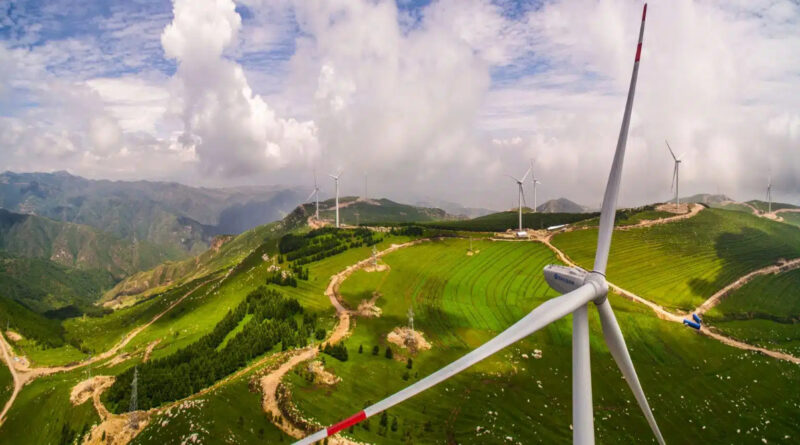 A wind farm in Guangling County, Shanxi, China. Credit: Wikimedia Commons.
May 23, 20262 hours
Steve Hanley
0 Comments
Support CleanTechnica's work through a Substack subscription or on Stripe.
A wind farm in Guangling County, Shanxi, China. Credit: Wikimedia Commons.
May 23, 20262 hours
Steve Hanley
0 Comments
Support CleanTechnica's work through a Substack subscription or on Stripe.
Mark Twain liked to say, “What you don’t know won’t hurt you near as much as what you do know that ain’t true.” Unfortunately, large corporations take advantage of our innate ability to believe false information for their private gain. The tobacco companies perfected the art of the lie, but lots of others have learned from its lessons in perfidy to create attacks on renewable energy, electric vehicles, and political candidates who encourage progressive values.
The current head of the US government had made a career out of attacking renewable energy, because he is paid handsomely for doing so. He loves to tell rapturous admirers that the wind doesn’t always blow and the sun doesn’t always shine, and therefore renewables are useless. Only good old-fashioned thermal generation powered by burning fossil fuels will do. Because he is paid to remain ignorant, he is unaware that the truth is quite a different story.
Myth 1: Renewable energy is too costly
In a blog post on May 11, 2026, Earth.org said, “One of the most persistent debates in energy policy has been the assertion that renewable energy cannot pass the commercial test without hefty state subsidies. However, a 2024 International Renewable Energy Agency report found that 91% of new renewable power projects commissioned globally were less expensive than the cheapest new fossil fuel option available.”
Every good lie rests on a kernel of truth. That’s what makes them so powerful. For instance, in 2010 the cost of solar was fives times more expensive than thermal generation. That’s what the lying liars want you to hear. What they don’t want you to hear is that today, solar is 41 percent cheaper and onshore wind is 53 percent cheaper. In 2024, the shift to renewables saved an estimated US$467 billion in global fuel expenditures, Earth.org said. Is that close to half a trillion dollars? Yes, it is, but still people — operating on 15-year-old data — continue to believe renewables are too expensive.
Today, thanks to the toady in the White House, the cost of fossil fuels is soaring, which illustrates that interruptions in the supply of fossil fuels can happen at any time. But the sun has been shining in the sky for billions of years and will likely do so for billions more. The cost of the “fuel” for solar and wind is zero and will be for all eternity. Why would we pay for something we can get for nothing? It makes no sense.
Myth 2: Renewable energy is not reliable
Only a fool would suggest that the sun always shines or that the wind always blows. But what the detractors of renewable energy refuse to recognize is that while solar and wind have been getting cheaper, energy storage systems have as well. New technologies are arriving every day that are orders of magnitude less expensive than they were a decade or more ago. In the news this month alone, CATL and Gotion have announced new sodium-ion batteries that will move the economics of energy storage even further forward.
According to IRENA, the cost of fully installed battery storage plummeted by 93% between 2010 and 2024. These grid-scale batteries act as a high-speed buffer that reacts to supply shifts in milliseconds, soaking up midday solar surges and discharging that power during the evening peak, Earth.org said.
“This technological shift has sparked a massive wave of industrial confidence. The US Energy Information Administration projects that 24 gigawatts of new utility scale storage will come online in the US in 2026 — shattering the record of 15 GW set just last year. Most tellingly, renewables combined with storage now account for 93 percent of all new utility scale capacity in the US, leaving natural gas with a meager 6.3 GW share.” It adds that wind and solar “cannot be targeted by export embargoes or commodity price shocks.”
Myth 3: Renewable energy infrastructure has a large environmental footprint
The extraction of the raw materials and production of all industrial products have environmental costs. “These are valid spheres of constant examination and enhancement,” Earth.org said. But the environmental footprint of renewables is far less than what critics say it is. Research from the National Renewable Energy Laboratory shows that wind turbines emit just 13 grams of carbon dioxide per kilowatt-hour. Solar comes in at 43 grams.
By contrast, natural gas produces 486 grams and coal generates a massive 1,001 grams. In other words, coal is nearly 80 times more carbon intensive than a wind turbine. “An average wind turbine or solar panel will pay back the carbon cost of its production in a few months of operation and operate with almost zero emissions over 25 to 30 years,” Earth.org said. Who wouldn’t want that?
Myth 4: Clean energy kills jobs
“The disruption the energy transition brings to workers in coal mining communities or oil and gas regions is real, and the policy response to that disruption has frequently been inadequate. What the employment data does not support is the broader claim that clean energy is a net destroyer of jobs across the energy economy,” Earth.org said.
In 2023, there were 35 million clean energy workers globally — up from 30 million in 2019 and surpassing fossil fuel employment for the first time. Under current policies, clean energy is projected to add 10 million more jobs by 2030, while fossil fuels are expected to shed roughly 3 million.
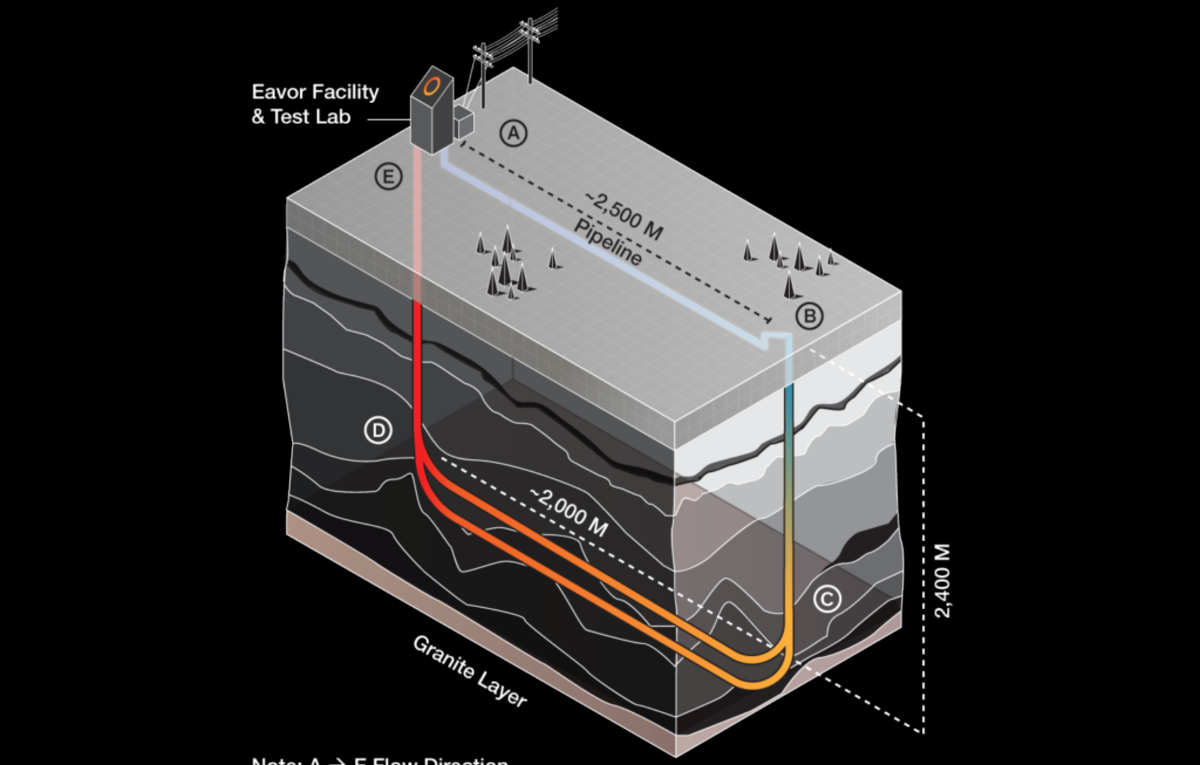
In the United States, clean energy jobs grew three times faster than the overall workforce in 2024, according to the Clean Jobs America 2024 report, which compares job growth during calendar year 2024 with growth in total US employment over the same period. The IEA estimates that about half of the fossil fuel employees who will be facing layoffs in the next decade have skills that can be directly applied to clean energy jobs. For instance, Canadian company Eavor is using techniques developed for the oil and gas industry for a new closed loop geothermal installation in Germany.
Myth 5: The transition is happening too slowly
Installation figures from recent years suggest that the technology rollout is proceeding faster than most forecasts anticipated, Earth.org said. In May 2025, China added 93 gigawatts of solar capacity in a single month, a rate equivalent to roughly 100 solar panels per second. Combined wind and solar capacity in the country surpassed total thermal power capacity for the first time in early 2025, and China hit its 2030 wind and solar target in 2024, six years ahead of schedule.
On a global level, the IEA projects that renewables will surpass coal as the world’s largest electricity source by mid-2026. Electricity output from renewables is forecast to reach 16,200 TWh in 2030, up 60 percent from 2024. “While global efforts still fall short of the Paris Agreement climate goals, the argument that renewable energy is too slow to reshape the world’s power systems has been overtaken by a massive surge in industrial momentum,” it said.
Countering Disinformation
The clean energy revolution is moving forward despite the naysayers. The recent grand carambalage in the Strait of Hormuz has brought home to more people how Ill advised it is to base the entire global economy on fossil fuels. But “Jane, you ignorant slut” is not an effective way to change people’s minds. A calm, rational presentation of the facts in non-judgmental language is far more likely to succeed.
The same techniques that are effective at debunking anti-EV myths work just as well at debunking anti-renewable energy myths. Information is power. If you are a CleanTechnica reader, you have all the information you need to counter such blithering, but you must use it wisely.
People are actually capable of changing their minds based on new information. Some people are afraid of airplanes, even though statistically they are safer than driving to the grocery store. People were leery of microwave ovens and cell phones at one point. Even radio had its detractors. We can change people’s minds with information — assuming they are willing to listen. In the end, economics will carry the day. Free fuel — no other source of energy can match that!
Sign up for CleanTechnica's Weekly Substack for Zach and Scott's in-depth analyses and high level summaries, sign up for our daily newsletter, and follow us on Google News! Advertisement Have a tip for CleanTechnica? Want to advertise? Want to suggest a guest for our CleanTech Talk podcast? Contact us here. Sign up for our daily newsletter for 15 new cleantech stories a day. Or sign up for our weekly one on top stories of the week if daily is too frequent. CleanTechnica uses affiliate links. See our policy here.CleanTechnica's Comment Policy