Earth Day In The Philippines Overshadowed By Toxic Smoke From A Burning Dumpsite
 The city mayor of Navotas John Rey Tiangco inspecting the landfill fire. (Photo from John Rey Tiangco Facebook page)
April 22, 20263 hours ago
Raymond Tribdino
0 Comments
Support CleanTechnica's work through a Substack subscription or on Stripe.
The city mayor of Navotas John Rey Tiangco inspecting the landfill fire. (Photo from John Rey Tiangco Facebook page)
April 22, 20263 hours ago
Raymond Tribdino
0 Comments
Support CleanTechnica's work through a Substack subscription or on Stripe.
Earth Day is supposed to be a moment to take stock of environmental progress. To celebrate the wins and track the distance still to go.
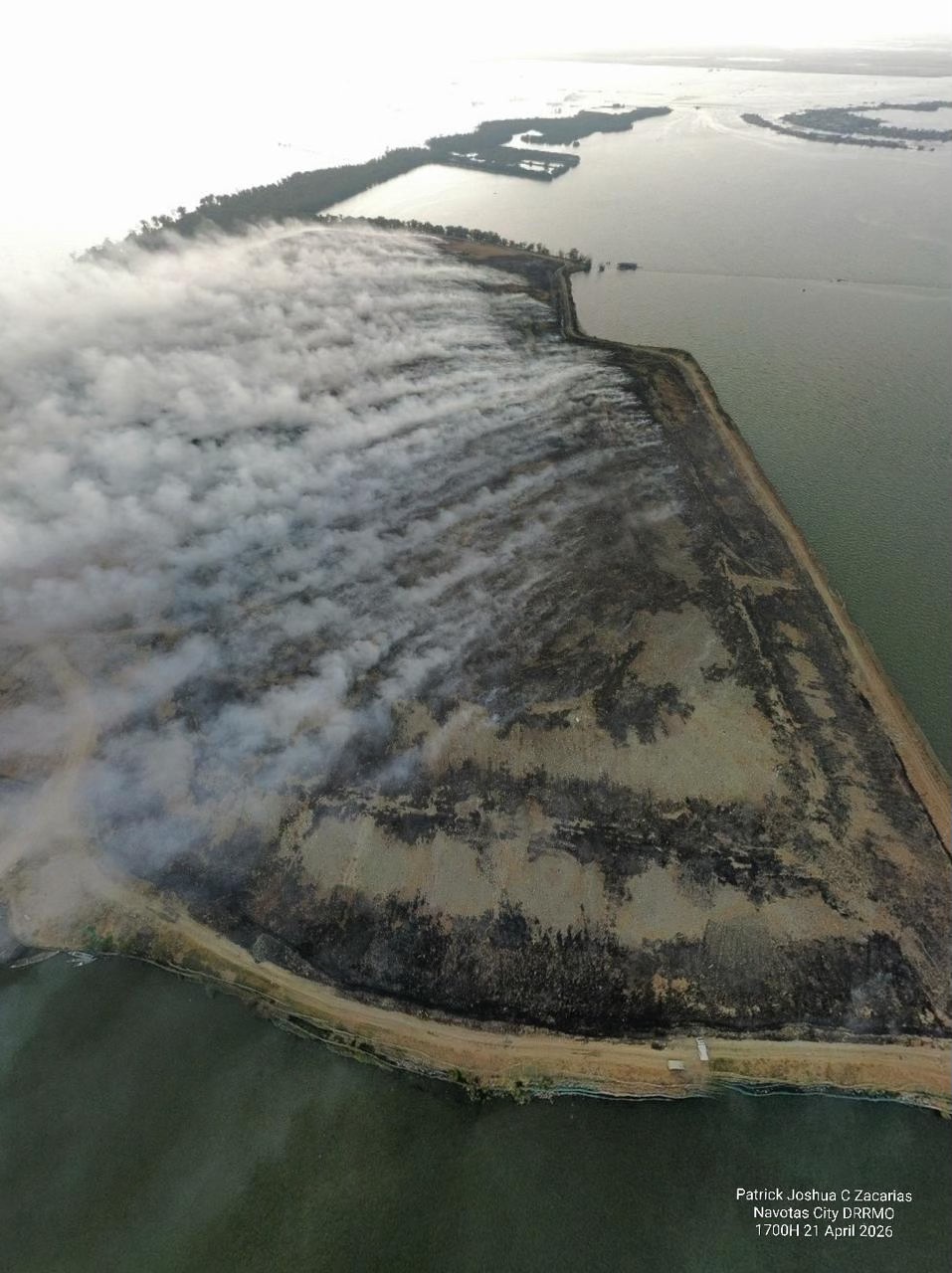
This year in the Philippines, that reckoning has taken on a far more literal shape. As official Earth Day activities unfold across the country, a large fire burning inside the closed Navotas sanitary landfill continues to release polluted air over densely populated coastal communities north of Manila.
The fire began on April 10 at the former landfill site in Barangay Tanza II, Navotas City, north of Manila. Nearly two weeks later, the incident remains unresolved. While visible flames have at times diminished, combustion has persisted beneath the surface of the waste mound, driven by trapped landfill gases and dry conditions. The result has been a prolonged release of smoke containing fine particulate matter and other hazardous byproducts, affecting air quality across wide portions of Metro Manila and neighboring provinces.
This is not an ordinary fire, and it is not an isolated problem.
A Burning System Failure
Landfill fires are notoriously difficult to suppress, particularly when sites are no longer operating but were never fully sealed. In Navotas, the landfill stopped accepting waste in 2025, but key closure steps — such as complete capping, stabilization, and gas management — were left unfinished. That created ideal conditions for methane accumulation, a highly flammable gas produced as organic waste decomposes.
Once ignited, landfill fires often migrate below ground, where oxygen pockets and heat allow combustion to smolder for weeks or even months. This helps explain why heavy earthmoving equipment, rather than hoses alone, has become central to the response. Bulldozers, backhoes, and dredgers are now being used to isolate and suffocate burning sections by covering them with soil — a method that aims to starve the fire rather than drown it.
From a climate and clean‑technology standpoint, the incident highlights a persistent contradiction: waste systems that are publicly treated as “closed” or “decommissioned” can remain environmentally dangerous long after operations stop.
What Satellites Revealed
Ground‑level haze tells only part of the story. To understand the real scale of the Navotas dump fire, authorities turned to space‑based monitoring.
The Philippine Space Agency (PhilSA) analyzed satellite imagery collected days after the fire began. That data showed that more than 28 hectares of land within the landfill complex had already been affected. Thermal indicators detected from orbit also confirmed that heat sources remained active beneath the surface — clear evidence that the fire was ongoing, even during periods when smoke appeared lighter from the ground.
Equally important was PhilSA’s confirmation that emissions from the site were not staying local. Satellite analysis and atmospheric tracking indicated that smoke plumes traveled well beyond the city, crossing Manila Bay and reaching other parts of Central Luzon depending on wind conditions. These findings were passed to national disaster authorities to inform firefighting tactics, air‑quality warnings, and health advisories.
This episode is a reminder of how modern Earth‑observation tools are increasingly essential for environmental governance, especially when problems do not respect administrative borders.

Toxic Air
Air‑quality monitoring conducted after the fire began showed pollution levels that pose health risks, particularly to children, older adults, and people with respiratory or cardiovascular conditions. Fine particulates associated with burning mixed waste can penetrate deep into the lungs and bloodstream. While exact exposure levels vary by location and weather, many residents in affected areas were advised to limit outdoor activity and use protective masks.
In coastal towns across the bay, some families were temporarily relocated after prolonged exposure to thick haze. The need for evacuations, even limited ones, underscores how events at a single waste facility can cascade across communities that had no role in creating the problem.
The broader public‑health implication is difficult to ignore: in megaregions like Metro Manila, environmental risk is shared, but environmental responsibility is rarely distributed so evenly.
Earth Day?
The timing of the Navotas fire makes its symbolism hard to miss. Landfills are among the largest human‑related sources of methane, a greenhouse gas far more potent than carbon dioxide in the short term. Properly managed, that gas can be captured, flared, or even used to generate energy. Poorly managed, it becomes both a climate liability, and as Navotas demonstrates, an immediate safety hazard.
Earth Day discussions often emphasize renewable energy, electric transport, and plastic reduction. Less attention is given to the unglamorous infrastructure that sits at the end of the consumption chain. Yet here, in the middle of a major urban corridor, an aging dumpsite has reminded the country that environmental neglect does not quietly fade away. It accumulates — chemically, physically, and climatically.
As of this writing, authorities have not declared the Navotas landfill fire fully extinguished. Efforts to cool and seal underground sections continue, alongside air‑quality surveillance and health advisories. What happens after the smoke clears may matter even more: accountability for incomplete landfill closure, reassessment of methane management policies, and renewed scrutiny of how cities plan for waste they no longer want to see.
Earth Day is often about hope. This year, for communities downwind of Navotas, it is also about consequence — and a stark reminder that transition is not only about building cleaner systems, but responsibly retiring the dirty ones we leave behind.
Sign up for CleanTechnica's Weekly Substack for Zach and Scott's in-depth analyses and high level summaries, sign up for our daily newsletter, and follow us on Google News! Advertisement Have a tip for CleanTechnica? Want to advertise? Want to suggest a guest for our CleanTech Talk podcast? Contact us here. Sign up for our daily newsletter for 15 new cleantech stories a day. Or sign up for our weekly one on top stories of the week if daily is too frequent. CleanTechnica uses affiliate links. See our policy here.CleanTechnica's Comment Policy