Dublin gangland figure brings extremist views to Irish mainstream on campaign trail
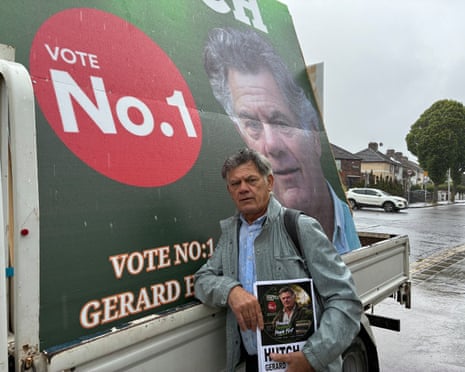
Gerry ‘the monk’ Hutch has won fans in north Dublin byelection campaign with anti-immigrant rhetoric
Elaine Roe, 61, a cafe worker, has no doubt what is the most important issue in this week’s byelection for Dublin’s north inner city. “The government is wrecking our country, they’re bringing in rapists and murderers and kidnappers. It’s a shame. I might vote Hutch, he seems a normal person.”
That would be Gerry “the monk” Hutch, a prominent gangland figure who is running as an independent in an election that is far from normal. The 63-year-old – who was jailed for robbery convictions in his youth – is a celebrity candidate in a contest for a parliamentary seat that has been dominated by xenophobia and immigration.
Voters in the Dublin Central constituency will cast ballots on Friday, with results on Saturday, but one outcome is already clear: hostility to newcomers, especially Black immigrants and Muslims, has entered Ireland’s political mainstream.
Hutch has called for “illegal immigrants” to be detained in camps. “They should be all interned,” he said, and singled out east Africans. “The ones that are Somalians and them type of people, no way. Interned.”
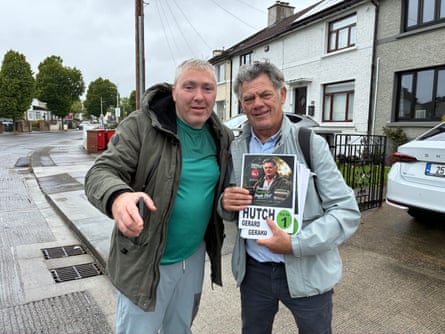
When the Guardian accompanied Hutch on a recent canvas, soundtracked by a flatbed truck blasting pop songs, he said 99% of Irish people wanted stronger rules on immigration. “But you’re not allowed to say that. Even when people have nowhere to live, because of the housing disaster, you can’t say that,” he said.
In fact, what was once a fringe view – that immigrants are to blame for crime and a housing shortage – has in some areas become a refrain. Residents in Dublin Central, which spans working-class neighbourhoods, hostels, asylum shelters and wealthy districts, had urged him to run, Hutch said. “I’m gonna use the platform to help the people who voted me in and they’ll tell me what to do.”
People in the street and on doorsteps requested selfies with Hutch. “You’re my number one, pal. I love everything you’ve done,” said one man. Hutch handed him a flyer that promised “leadership” and “honesty” to shake up the status quo. “We need change and I’m your man,” it said.
Hutch has been a notorious figure for decades. A court named him as the leader of an organised crime group and he has admitted to committing crimes. “Some of them I got away with,” he told RTÉ in 2008.
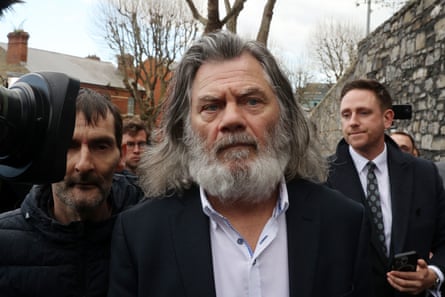
He shocked the political establishment by almost winning a seat in the 2024 general election and is now running to fill the vacancy left by Paschal Donohoe, a finance minister with the ruling Fine Gael party, who quit the Dáil for a World Bank job.
An opinion poll ranked Hutch third, with 14% of first preference votes, which gives him a slender chance of prevailing against 13 other candidates in an election that will be decided on transfers from eliminated candidates.
Opinion polls also say the most important issue for voters is the cost of living (33%), followed by house prices (24%) and immigration (12%). Yet for many voters the issues are linked.
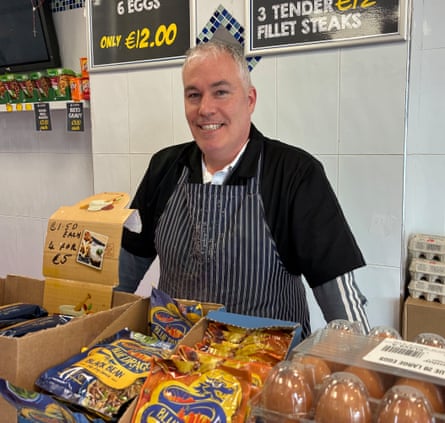
“I’m not racist but we should be looking after our own instead of bringing people in,” said John Clarke, 45, a butcher. “I have two kids – both had to go to Sydney because they couldn’t afford to buy homes here. I’m especially against Muslims coming in, they want to take over.”
Mainstream parties all disavow racism but have toughened rhetoric on immigration and asylum.
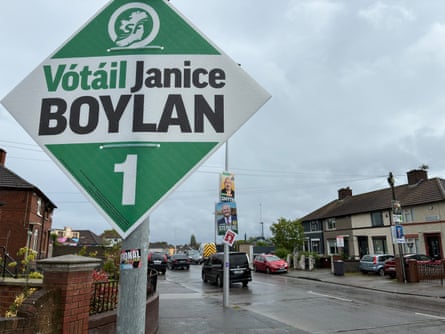
Mary Lou McDonald, the leader of Sinn Féin, a progressive opposition party, sidestepped responding to Hutch’s call for internment. “We can’t comment on other people’s comments,” she said. Sinn Féin’s candidate, Janice Boylan, leads the field but analysts say she will need transfers, including from Hutch voters, to fend off Daniel Ennis of the Social Democrats.
Bertie Ahern, a former taoiseach and leader of the ruling Fianna Fáil party, was secretly recorded telling a voter: “The ones I worry about are the Africans. We can’t be taking in people from the Congo and all these places.” He also expressed concern about the next generation of Muslims.
The current taoiseach, Micheál Martin, said the comments were “not appropriate” and did not reflect the views of Fianna Fáil. Ahern later said he had no problem with people entering through visa and asylum systems.
The death of a Congolese man in the city centre on 15 May has put added scrutiny on race relations. Yves Sakila, 35, died after being restrained by security guards who suspected him of shoplifting. Police are investigating.
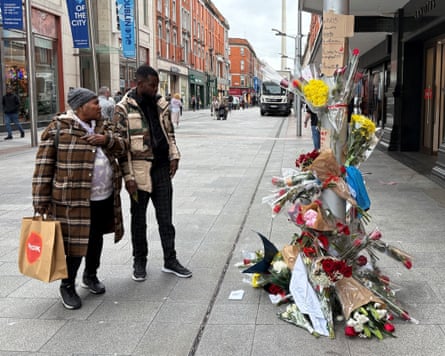
With coffers swelled by corporate tax revenues, the centrist Fianna Fáil and Fine Gael coalition has ramped up public spending, but rising prices and a housing shortage have created a sour mood.
“The country is falling to bits. There’s no jobs, no housing. If you do have a job the wages are crap. My son is 36 and still living at home,” said a charity shop worker, who withheld her name.
Jimmy McDaid, 77, said he would vote for Hutch to clean up drug dealing. Asked about Hutch’s criminal record, McDaid said that was in the past. “Everyone is entitled to a second chance. Look at the government – they’re the gangsters, saying one thing and doing another.”
However, in a byelection in Galway – to fill a Dáil seat vacated by the president, Catherine Connolly – the Fine Gael candidate, Seán Kyne, narrowly leads opinion polls. His main rivals are Noel Thomas, an independent who has condemned Ireland’s “reckless open border policies”, and Labour’s Helen Ogbu, who was born in Nigeria and in 2024 became the first person of colour to be elected to Galway city council.
Contact us about this story
The best public interest journalism relies on first-hand accounts from people in the know. If you have something to share on this subject, you can contact us confidentially using the following methods:
Secure Messaging in the Guardian app
The Guardian app has a tool to send tips about stories. Messages are end to end encrypted and concealed within the routine activity that every Guardian mobile app performs. This prevents an observer from knowing that you are communicating with us at all, let alone what is being said.
If you don’t already have the Guardian app, download it (iOS/Android) and go to the menu. Select ‘Secure Messaging’.
SecureDrop
If you can safely use the tor network without being observed or monitored you can send messages and documents to the Guardian via our SecureDrop platform.Our guide at theguardian.com/tips lists several ways to contact us securely, and discusses the pros and cons of each.
Show moreСхожі новини

Russia Restricts Armenian Flower Imports Amid Strained Relations
India news: Cockroaches overtake Modi's BJP on Instagram

Ці знаки Зодіаку ось-ось увійдуть у "чорну смугу": кого випробує доля