Don't sleep on Battlestar Galactica: Scattered Hopes—it's tricky, tactical and the best FTL-like since, well, FTL
Battlestar Galactica's resurgence in 2003 was a landmark moment in science fiction, taking a weirdly Mormon '70s sci-fi romp and turning it into a gloomy space thriller full of political and military drama. "Yes," it said, "sci-fi will have its prestige drama moment as well." We'd had DS9 and Babylon 5 years before, but Battlestar clawed its way out of its niche and became a mainstream phenomenon.
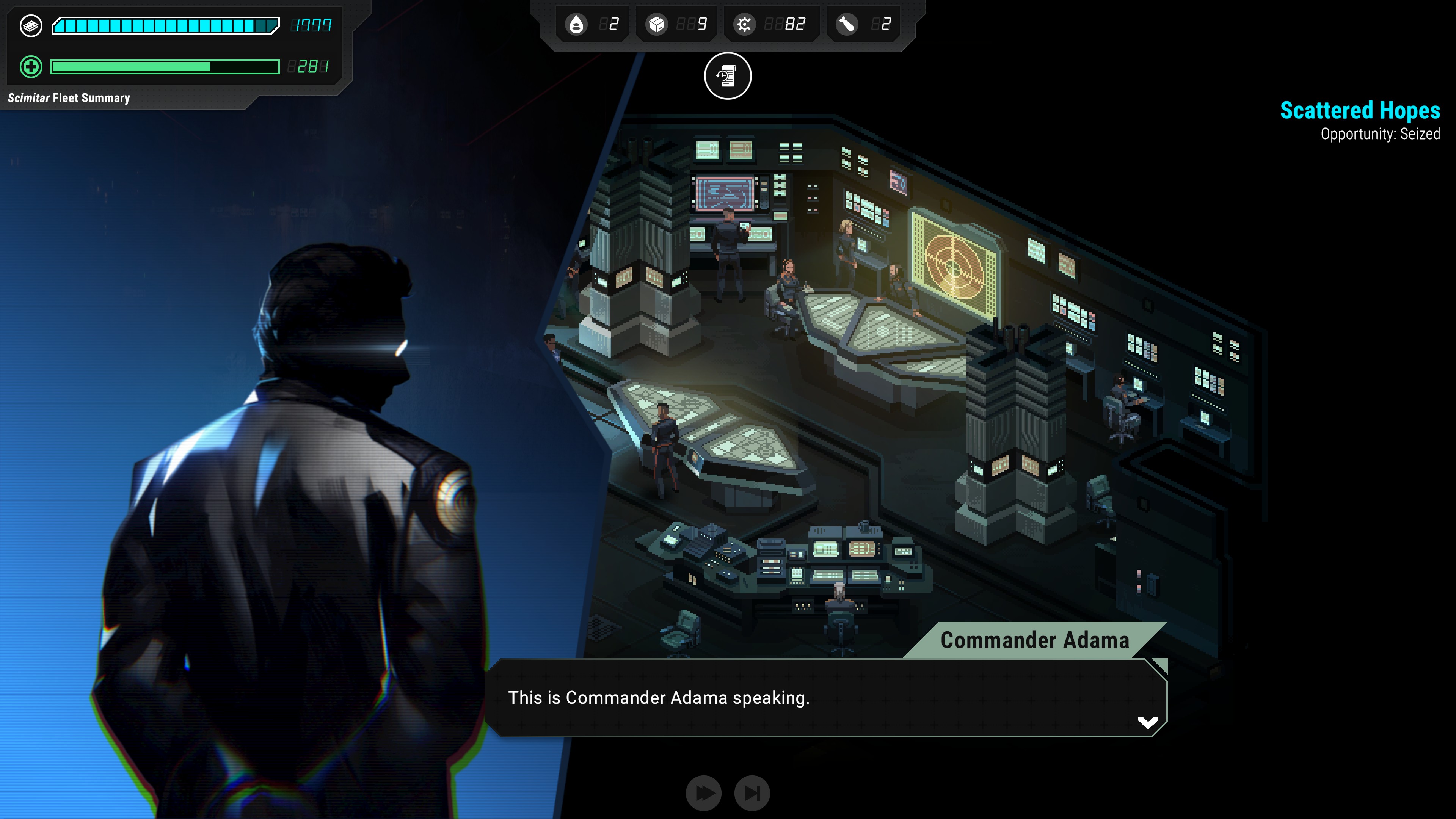
In comparison, Battlestar Galactica: Scattered Hopes is a lot more understated. The static character art, pixelated bridge and cute polygonal ships do not scream "space opera", but beneath its slightly muddled presentation sits a game that elegantly captures the tension and chilling proximity of extinction that made for such an exceptional show.
The short pitch: It's FTL in a convincing Battlestar Galactica suit. It's probably the best sci-fi property to go down this route, too. Sure, Voyager is also a comfy fit, which is why we got Star Trek: Voyager – Across the Unknown, but I bounced off that quickly. It had the structure down, but it really dropped the ball when it came to space battles. In Scattered Hopes, like FTL, the space battles are the meat.
In your first run, you'll start with a small fleet of mostly civilian ships led by an outdated gunstar (smaller but faster than a battlestar), and you must jump across space to meet up with the titular vessel, managing constantly dwindling resources, ship armaments, squadrons and the humans onboard—both your crew, who can be assigned various roles and level up, and the factions that represent the last of humanity.
There's a fair amount to juggle, and plenty of pressure, but a relatively simple structure holds it all together and gives you room to focus.
Scattered Hopes is divided into two distinct phases: fleet management and combat. When you're safely inside a new system, you have a few turns to do a spot of management. Assigning squads, levelling up characters and picking their next ability, putting out fires—often literally. There are crises and opportunities, sometimes with multiple steps, and while the rewards can be tempting, there's always a cost: time, resources, health.
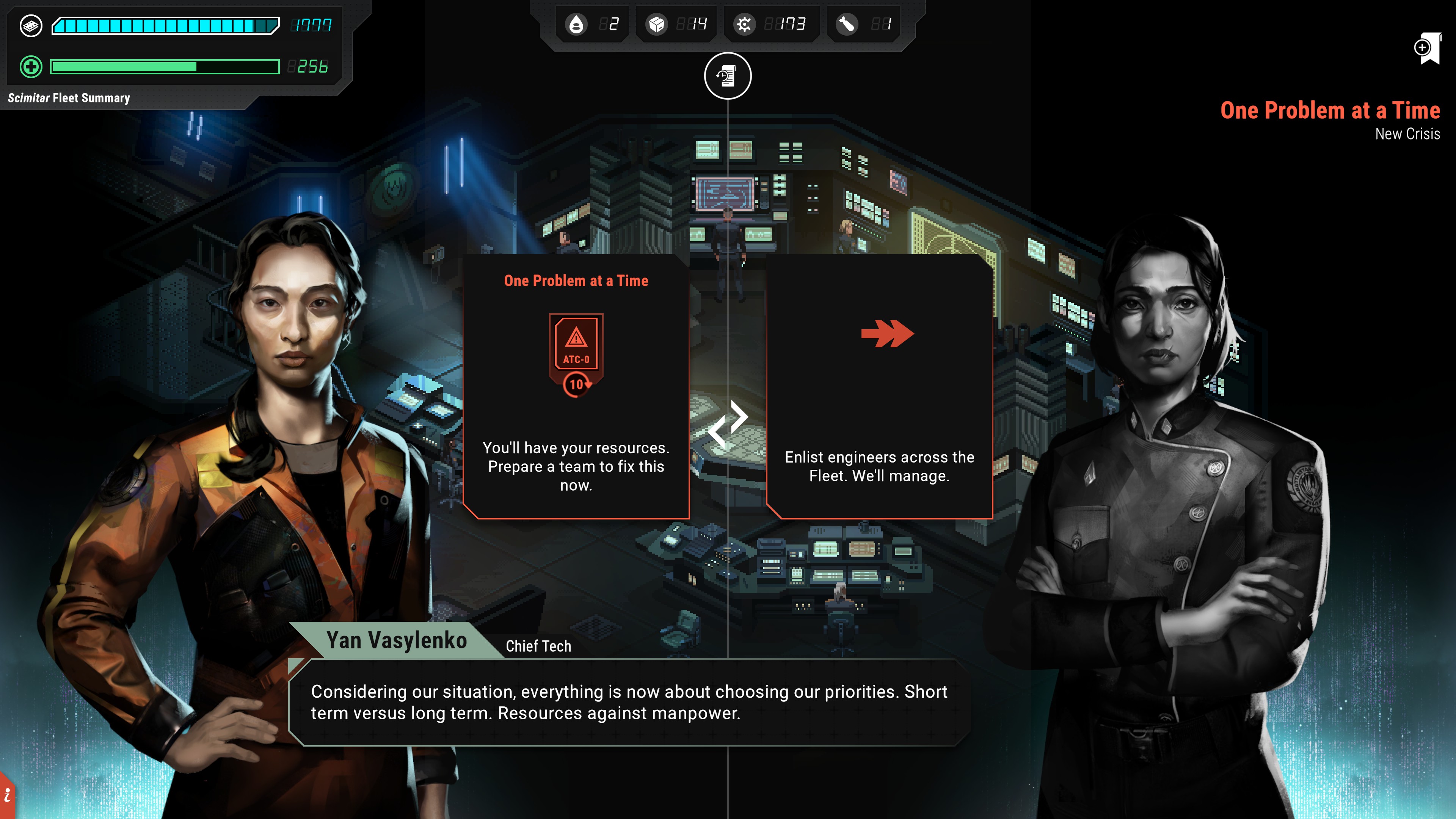
Systems have points of interest that you can spend resources to explore, or you can send one of your crew to investigate for greater rewards—if they have the energy. Maybe you'll send your pilot to explore a planet and pick up valuable resources, or ask your XO to bring a drifting civilian vessel into your fleet.
Unfortunately, Scattered Hopes really wants to blow them up.
These civilian vessels can't fight, but they serve as support ships. By training their crew, you'll net bonuses that help the entire fleet, turning them into handy resource factories. Let's hope you don't get them blown up.
Unfortunately, Scattered Hopes really wants to blow them up.
After you've used up all your turns—sometimes leaving some problems unresolved, prioritising the most important problems—the Cylons will appear and battle commences, with the tattered remnants of the Twelve Colonies fighting simply to survive another day.
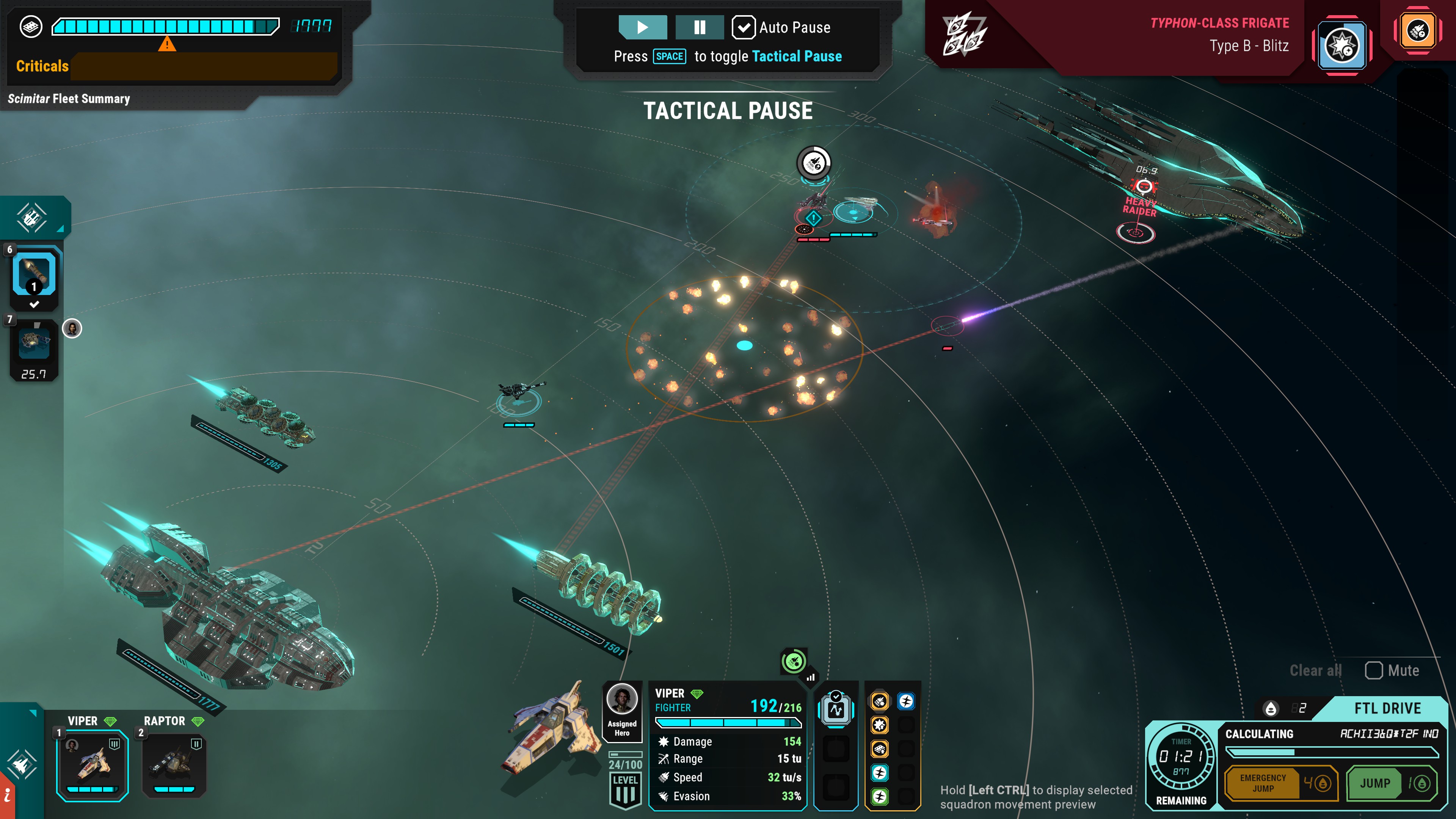
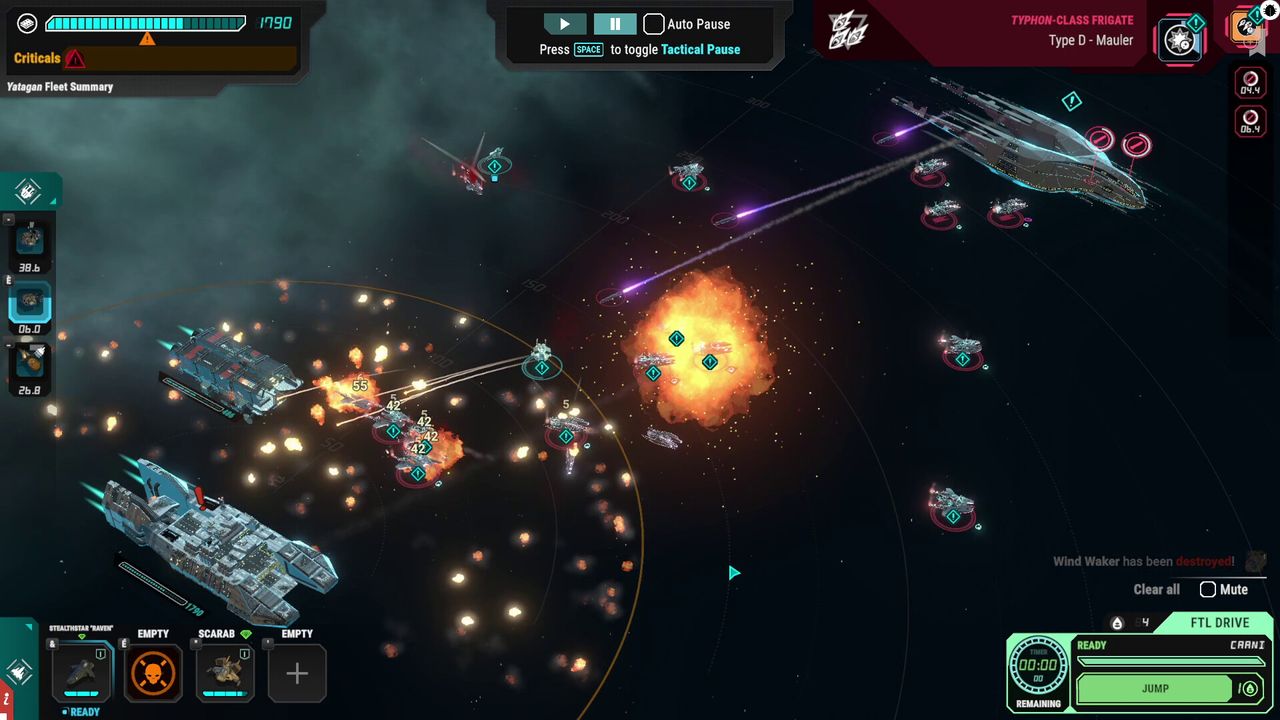
Survive is the key word here. You won't be blowing up massive Cylon capital ships. Your goal is just to stay alive until you can jump out of the system and into (fleeting) safety. Combat plays out in real time, but you're expected to make liberal use of the tactical pause feature, giving you breathing space to adjust your tactics and plan for the next assault wave.
The friction you'll experience in the fleet planning phase is echoed here in the combat phase, where you'll be dealing with mounting crises with limited resources. But this time the crises are nuclear warheads and Cylon ships, and the limited resources are your squadrons. The good news is that, for the most part, your wee ships (and the weapons attached to your flagship) are pretty bloody powerful. Unfortunately, that isn't quite the safety net it might seem, given the superior numbers fielded by your robotic foe.
While it is common for battles in tactics games to feel like discrete puzzles, it is so much more overt in Scattered Hopes. Each enemy fleet is its own conundrum, spitting out various complications—different enemy squadron classes, missiles, nukes and exotic guns, along with weird modifiers that will force you to make tactical adjustments, taking into account your own vessels' speed, manoeuvrability and damage potential.
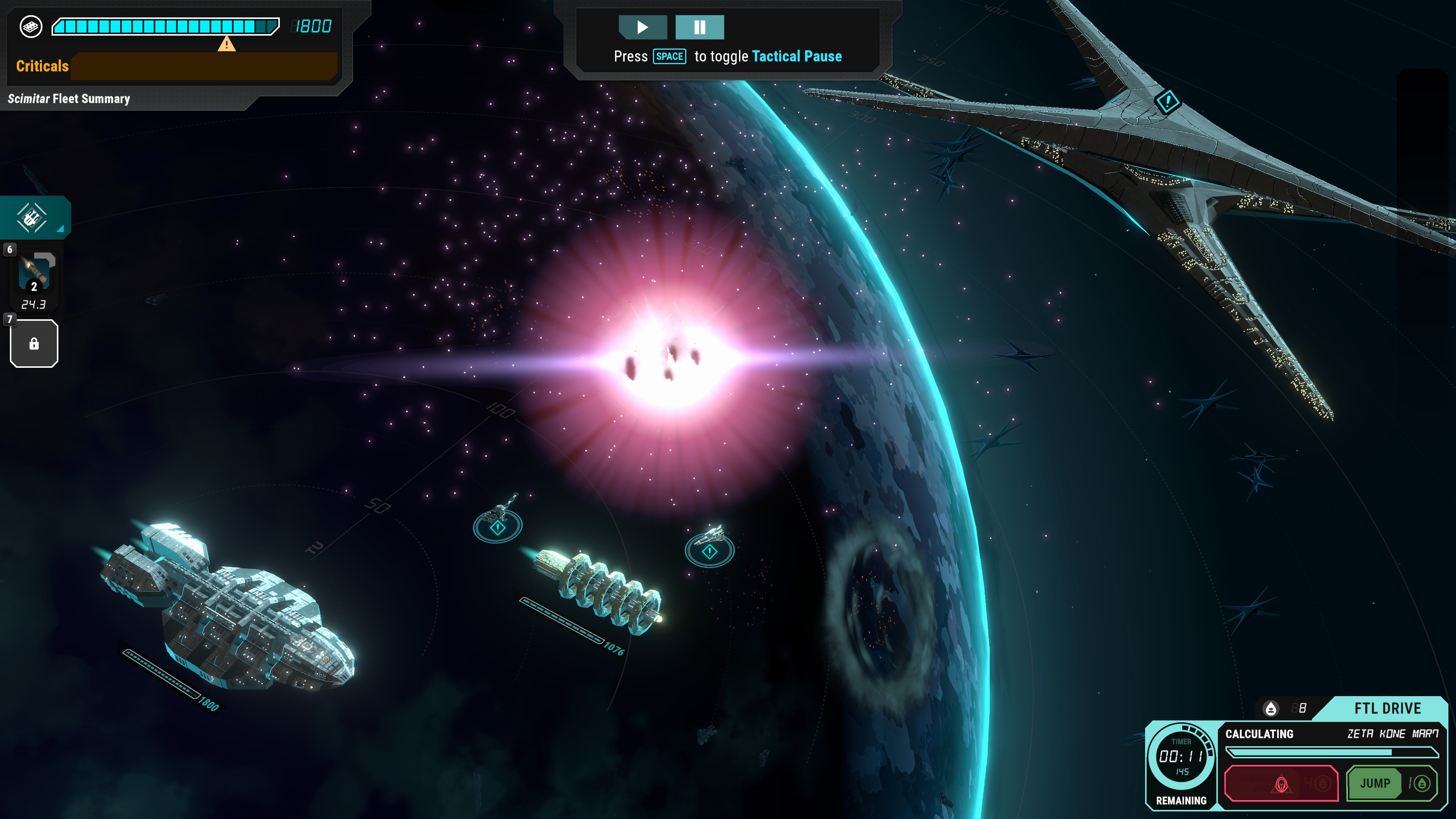
And you've only got a small box of tricks to deal with this whole mess—which you naturally must use as efficiently as possible.
Bring out the nukes!
It's simple at first. Send your speedy Viper towards an area where you know a lot of lightly-armoured vessels are jumping in (you always get to see where enemies will appear) and it'll sit there waiting to strike. Using one of its abilities, you can make sure it hunts down and kills every last one of them. Meanwhile, you keep your Raptor closer to the fleet, where it can use its impressive range to take out enemies and missiles hurtling towards your vulnerable ships. It's slow and can't fire when moving, so it works best as a turret.
Should a bunch of new enemies appear while your squadrons are engaged, you can use your flagship's flak cannon to take out a large group, if they're lightly armoured. If they're not? Bring out the nukes!
The nuclear option is a risk, mind you. Specifically when it comes to friendly fire. But sometimes you need to make hard calls. If you've got enemies bearing down on you and there's no chance your nearby Viper will be able to take them out, it might be worth the cost to just annihilate everything, Viper included, if it saves the fleet.
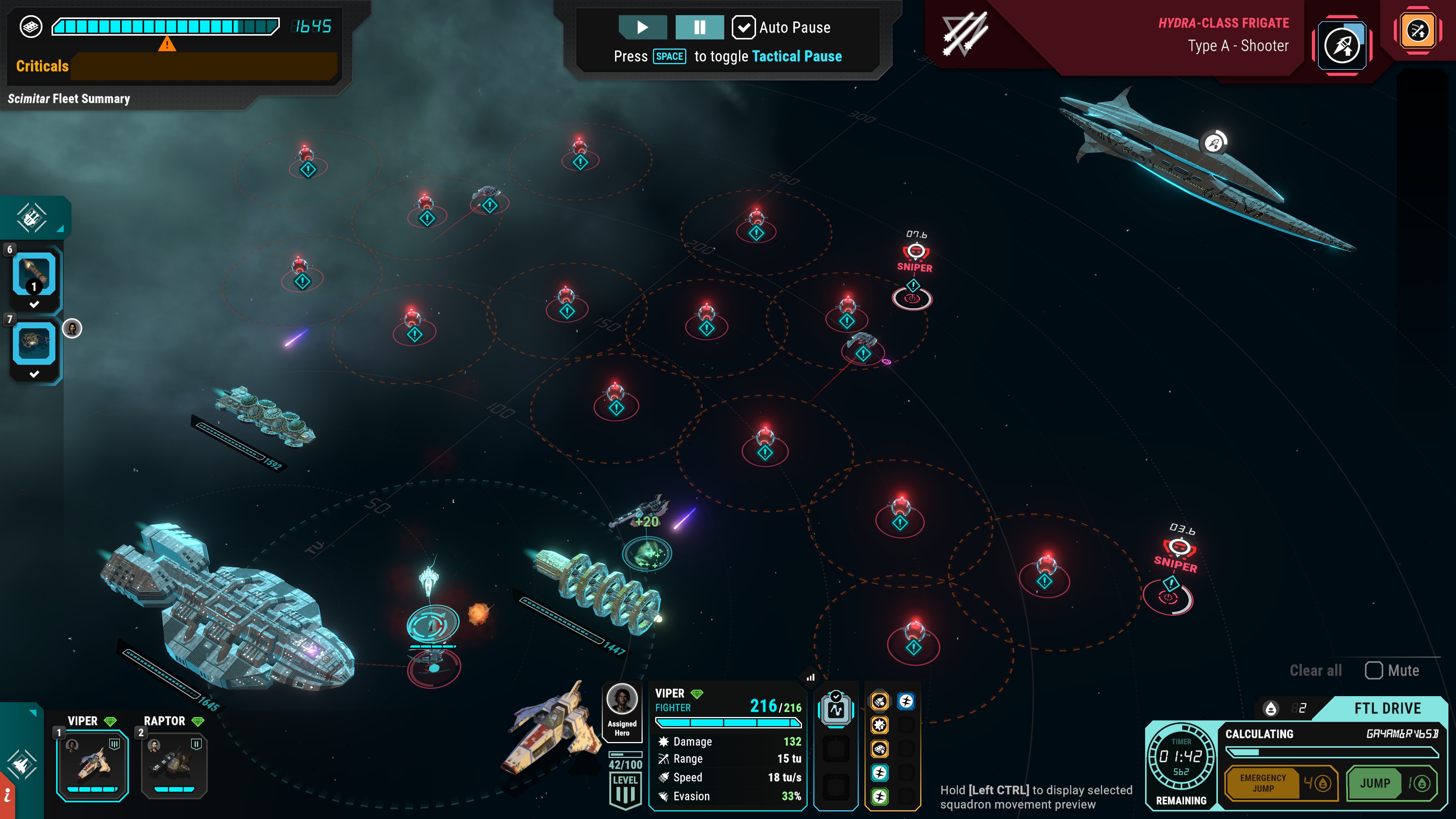
Hard calls like this become increasingly common as the Cylons amp up the pressure, or when you encounter enemies with traits that are tricky to manage. Maybe you'll be fighting Cylons with the Tactical Jump mutation, which gives them an immediate speed boost when they jump in, potentially making it tough for your Viper to hunt them down and kill them. Or you might be unfortunate enough to jump into a system that's full of mines just waiting to blow up any squadrons that get near, necessitating a significant change in strategy.
You'll be able to unlock the ability to field more squadrons, and there are all sorts of enhancements you can choose for your ships, squadrons and characters, but the Cylon threat just keeps on escalating—you might be getting stronger, but it never gets easier.
While the main goal is simply surviving until you can jump, you still need to consider what you'll be left with when you get to that point. Scattered Hopes emphasises this in a variety of ways, but perhaps the most effective is the ship health system.
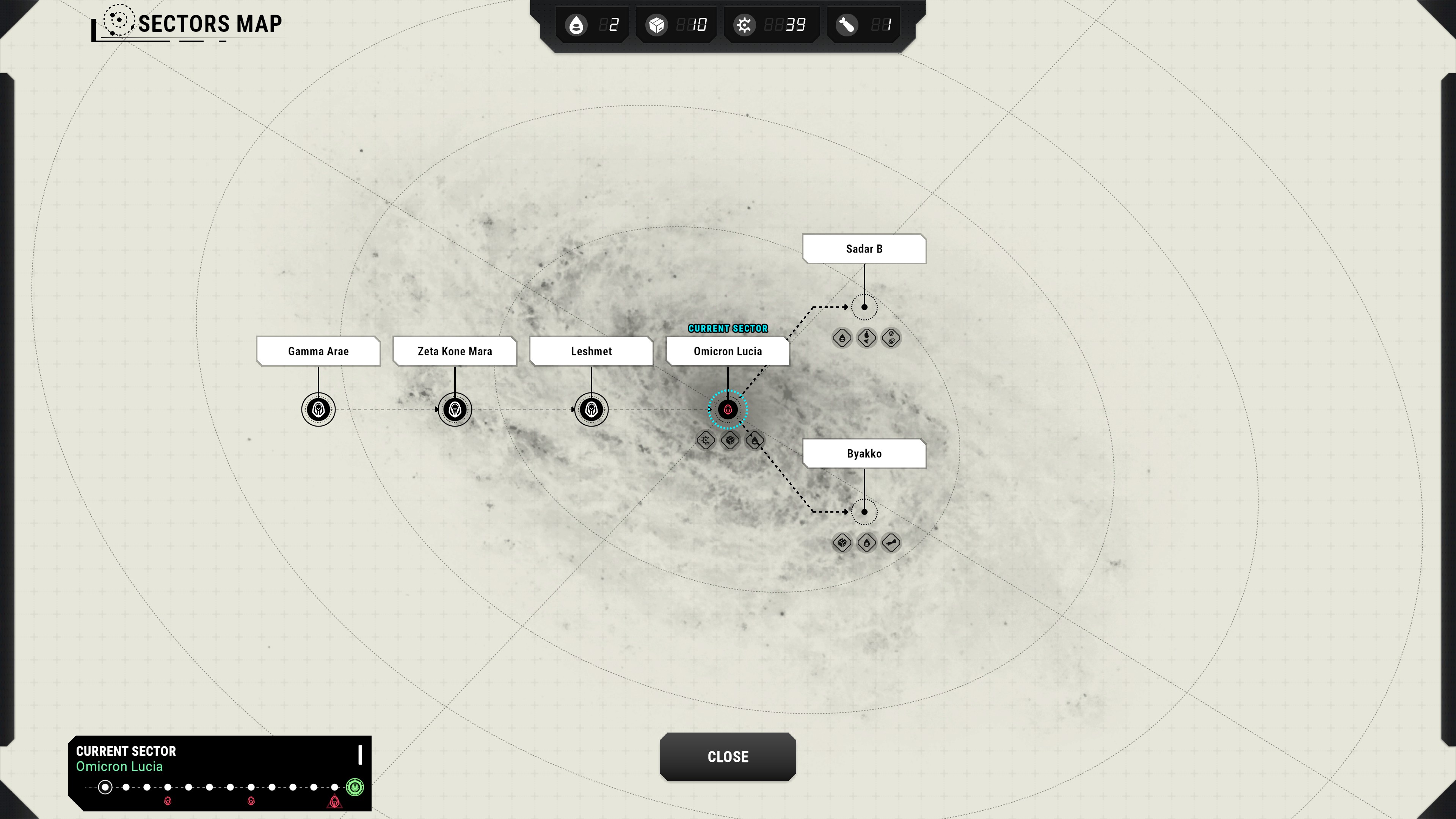
Your flagship and civilian ships can take a real beating, but you can't just wait until they're on the cusp of destruction to act. See, each ship has three thresholds, and once their health gets below them, you'll have to deal with a negative situation, from moderate to major, depending on which threshold you've passed. So the health of your ships matters long before it gets to zero.
The human element is what makes it a Battlestar Galactica game.
I'm a big fan of how developer Alt Shift has handled the combat portion of Scattered Hopes, but the human element is what makes it a Battlestar Galactica game. Between brawls you'll have to deal with the opposing needs of the fleet's various factions, all the while realising that you can't please everyone. When factions are happy with you, you'll get opportunities that benefit the fleet, but when their respect for you drops, they'll only generate crises, costing you valuable time and resources.
You'll also need to manage the morale of your crew, and the health of the whole fleet. When people die, get injured, or become too sick to work, the fleet's health goes down, and when it drops to zero that's you done.
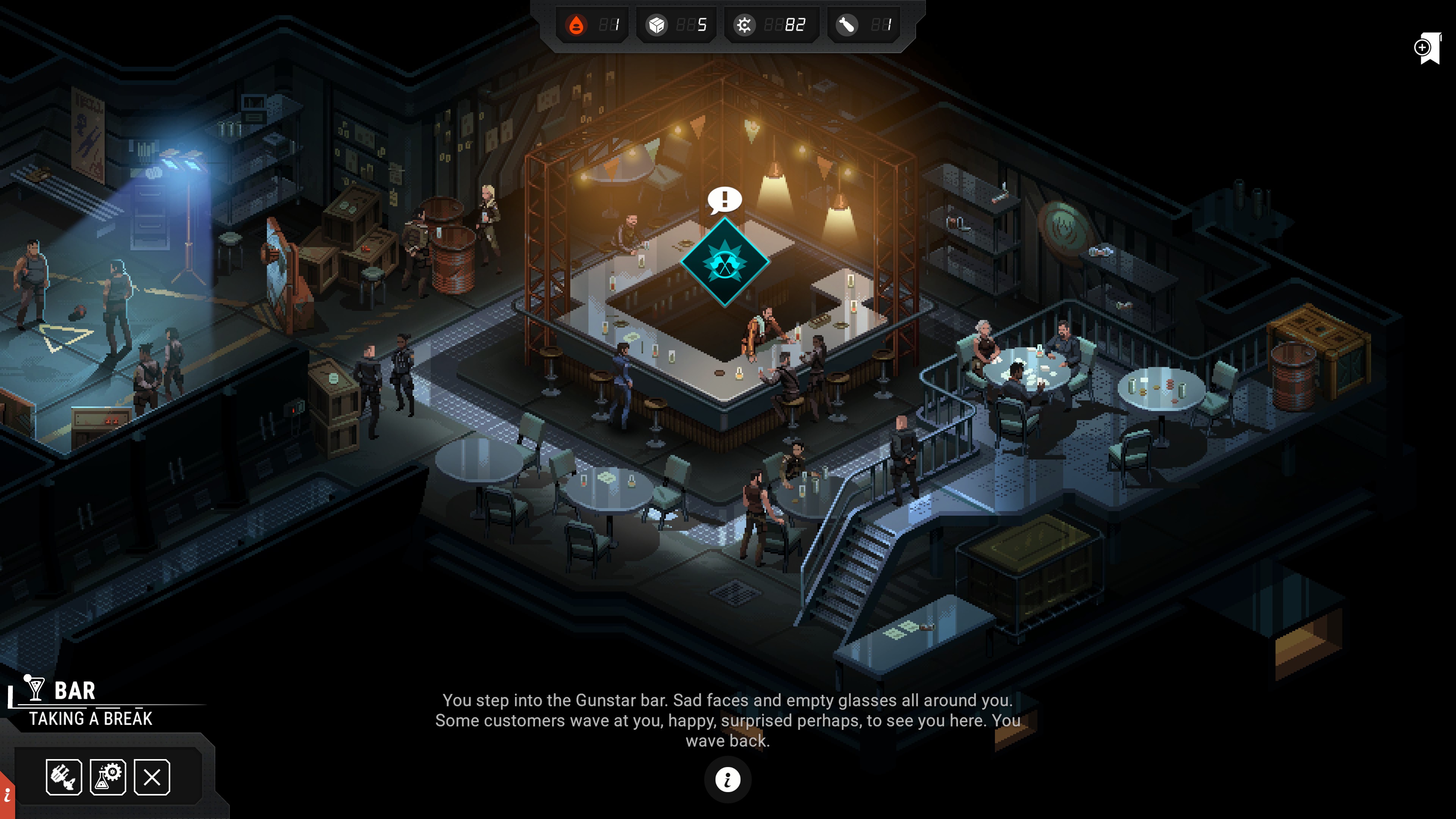
So you'll need to make deals, piss people off, go out for drinks with colleagues and do your best to hold everything together by whatever means you have available. Which will be a lot harder if a human-looking Cylon infiltrates the fleet. Paranoia, witch-hunts, all that tension from the show is present here too.
It's stressful! And great! It's got so much of what I love about FTL, but it's still charting its own course. The fleet management and scale of the combat phase change things up dramatically, making the FTL-like structure feel new again. So it's weird that it's not made much of a splash. Maybe BSG doesn't have the cultural cachet it once did (it definitely doesn't), but even if you never watched it, or simply have no fondness for the misadventurers of Adama and Starbuck, Scattered Hopes still has plenty going for it.
2026 games: All the upcoming games
Best PC games: Our all-time favorites
Free PC games: Freebie fest
Best FPS games: Finest gunplay
Best RPGs: Grand adventures
Best co-op games: Better together
Схожі новини

Коли й де відбудеться Дитяче Євробачення-2026
Москва недорахується мільярдів: Україна вдвічі збільшила удари по НПЗ

Гроші на заставу для Єрмака продовжують збирати: хто вже вніс кошти та які суми