Do-Over! Republicans Cry Uncle On Federal Tax Incentives
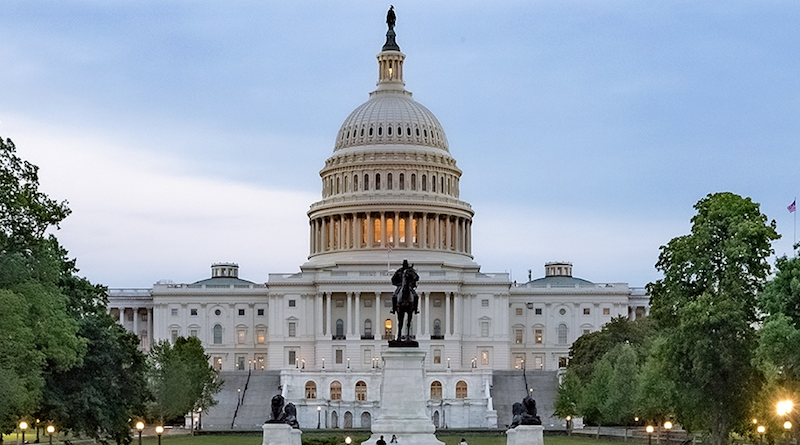 Too little, too late. Four Republican members of the US House of Representatives propose preserving and extending key tax incentives for energy efficiency and clean energy, which are doomed to expire prematurely under the President's pet tax bill (cropped, courtesy of US Congress Visitors Center).
April 25, 2026April 25, 20262 hours ago
Tina Casey
0 Comments
Support CleanTechnica's work through a Substack subscription or on Stripe.
Too little, too late. Four Republican members of the US House of Representatives propose preserving and extending key tax incentives for energy efficiency and clean energy, which are doomed to expire prematurely under the President's pet tax bill (cropped, courtesy of US Congress Visitors Center).
April 25, 2026April 25, 20262 hours ago
Tina Casey
0 Comments
Support CleanTechnica's work through a Substack subscription or on Stripe.
Now that the bloom is off the rose of US President Donald Trump, some Republicans in Congress are scrambling for the off-ramp. Exhibit A is a new, Republican-sponsored bill extending several tax incentives that will expire prematurely under Trump’s beloved “One Big Beautiful Bill Act.” Wait, the OBBA is the president’s signature accomplishment. It’s like a child to him. He runs to it constantly for affirmation. And now you want to tear it apart, limb from limb? Are you saying the OBBA is less than beautiful…?
No EV Tax Credit For You! But, There Are Others
The OBBA passed into law last summer on the votes of the Republican majority in the US House and Senate, with exactly zero support from Democratic members. Among other provisions, the OBBA prematurely killed the $7,500 federal tax credit for electric vehicles. That’s not coming back anytime soon. However, some Republicans have spotted opportunities for a do-over elsewhere in the bill, including the sections covering tax incentives related to energy use in buildings.
To be clear, the sponsors have nothing to lose, considering the president’s circling-the-drain approval ratings. Congressman Brian Fitzpatrick (PA-1) introduced the new legislation on April 23 under the non-ironic title “American Energy Dominance Act.” Neither he nor his supporters Mike Lawler (NY-17), Max Miller (OH-7), and Mike Carey (OH-15) represent safe Republican districts. The midterm elections are coming up this November and all four are staring down the barrel of defeat, now that Trump has thoroughly poisoned the well against his own party.
The American Energy Dominance Act has no chance of passing into law before Election Day 2026, but at least it gives the sponsors something to talk about during the midyear cycle aside from the price of gasoline and whatnot.
“Under current law, key incentives such as 179D and 45L are scheduled to expire on June 30, 2026,” Rep. Fitzpatrick explained in a press statement last week, referring to tax incentives for commercial energy efficiency upgrades (179D) and new energy-efficient homes (45L). He does make a passionate case (breaks added for readability):
“For capital-intensive sectors, a shortened policy horizon does more than disrupt planning—it raises the risk that critical projects are delayed, scaled back, or never built at all.
“When that happens, it is American workers, American employers, and American families who pay the price through slower growth, tighter energy supply, and continued cost pressure.
“At a moment when the country needs more capacity, more affordability, and more domestic strength, we cannot afford to make it harder to build.”
Desperately Seeking The Union Vote
So, who made it harder to build? Why Trump, of course, when he aggressively advocated for the OBBA and signed it into law.
And, here’s where it gets interesting. Trump supporters among the trade unions helped sweep the President back into office last year, and now they trying to glue back together the pieces of their smashed hopes and dreams. That includes NABTU, the 14-unions organized under North America’s Building Trades Unions. Fitzpatrick credits NABTU as a “direct” partner in crafting the American Energy Dominance bill.
“We thank Congressman Fitzpatrick for his continued dedication to providing America with the power it desperately needs,” said NABTU President Sean McGarvey in a statement of support for the legislation, with “desperately” being a backhand way of reminding everyone that Trump fell down on the job, bigly.
You can say that again. Back on Inauguration Day 2025, NABTU was full of hope for the future. “President Trump, many of our members voted for you and are counting on you to prioritize critical issues that affect their lives—job growth, fair wages, health and safety, and the strengthening of our nation’s infrastructure and economic security,” reads a congratulatory note from NABTU to the incoming President on January 20 last year (emphasis added).
Barely two months later, the honeymoon was over. On March 27, 2025, Trump issued a new Executive Order that stripped collective bargaining rights from wide swaths of the federal workforce. Reacting to the gut punch on March 28, McGarvey excoriated the EO as “an unprecedented assault on worker freedom.”
“Americans know that patriotic blue-collar workers built this country, not billionaires. They also know that one of the last best chances to make it to the middle class is collective bargaining. NABTU and our affiliated unions will stand shoulder to shoulder with the entire labor movement to fight this head-on — and we will not back down,” McGarvey added.
The Return Of The Energy Efficiency Tax Credits, Maybe
The full text of the new bill is here. If all goes according to plan, the legislation will accomplish all this:
“Restores the 179D Energy Efficient Commercial Buildings Deduction without a scheduled expiration.
“Extends the 45L New Energy Efficient Home Credit through December 31, 2032.
“Extends the 45V Clean Hydrogen Production Credit construction deadline from January 1, 2028, to January 1, 2033.
“Preserves long-term certainty for the 45Y Clean Electricity Production Credit and 48E Clean Electricity Investment Credit to help bring more affordable power online, support job creation, and strengthen domestic energy supply.”
That’s quite a lot of doings-over for one small bill, the entire text of which takes up only four pages. As previously noted, the likelihood of the American Energy Dominance Act passing into law is already on a downward trajectory starting at zero, but Fitzpatrick makes the most of the opportunity to toot his own horn.
“By restoring the certainty needed to plan, finance, and build major projects, this legislation helps expand domestic energy capacity, strengthen supply chains, support skilled workers, and make costs more manageable over time,” the Congressman enthuses. “That is how America builds a stronger economy, a more secure energy future, and lasting opportunity here at home.”
And Then There’s Green Hydrogen, Of Course
The synopsis offered by Fitzpatrick is self-explanatory, but let’s take a closer look at that provision for the clean hydrogen tax incentives. By “clean” they include hydrogen produced from natural gas with carbon capture, a definition that applied to the $7 billion Regional Clean Hydrogen Hubs program launched during the Biden administration. Funding from the 2021 Bipartisan Infrastructure Law requires the natural gas carve-out, though the primary focus was on green hydrogen produced from water electrolysis systems powered by renewable energy, alongside biomass and other renewable resources, with the aim of expanding and diversifying the domestic hydrogen supply chain.
Trump, of course, shredded the new hydrogen program shortly after taking office, but what a difference a day makes. On February 28, Trump launched a war against Iran that sparked joy in the hearts of green hydrogen advocates around the world as policy makers scramble to drop fossil fuels in favor of locally sourced, renewable hydrogen gas and the liquid e-fuels it supports.
If you have any thoughts about that, drop a note in the comment thread. Before you do, take a look at that 2033 timeline extension, five years past the OBBA deadline of 2028. Water electrolysis is a maturing, scaling technology and a lot can happen over the next seven years or so.
Photo: Four Republican members of the US House of Representatives propose preserving and extending key tax incentives for energy efficiency and clean energy. (cropped, courtesy of US Congress Visitors Center).
Sign up for CleanTechnica's Weekly Substack for Zach and Scott's in-depth analyses and high level summaries, sign up for our daily newsletter, and follow us on Google News! Advertisement Have a tip for CleanTechnica? Want to advertise? Want to suggest a guest for our CleanTech Talk podcast? Contact us here. Sign up for our daily newsletter for 15 new cleantech stories a day. Or sign up for our weekly one on top stories of the week if daily is too frequent. CleanTechnica uses affiliate links. See our policy here.CleanTechnica's Comment Policy
Share this story!
Схожі новини
Fed Set to Lead Uneasy G-7 With Rates Kept on Hold This Week
Latest news bulletin | April 25th, 2026 – Evening