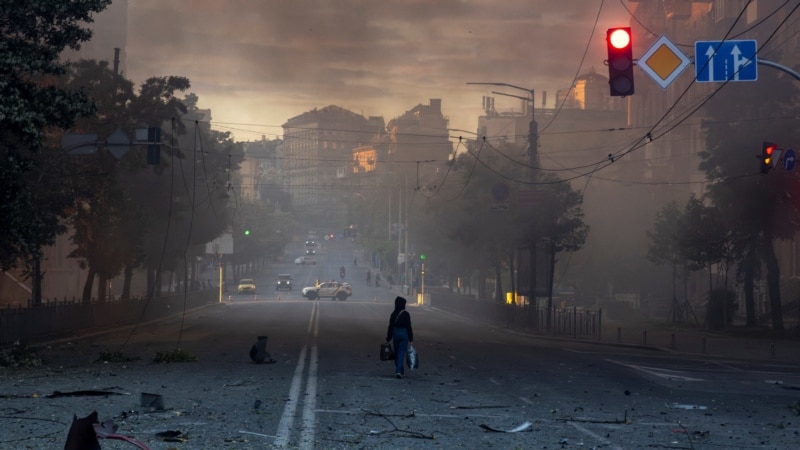
Displaced Ukrainians risk home seizure under Russian law

Russian authorities have granted owners of land and real estate in the Russian-occupied territories of Ukraine until July 1, 2026 to claim ownership of any property originally registered under Ukrainian law.
But to re-register their property in the Russian land registry, owners have to appear in person and present a Russian passport as proof of their identity — an impossibility for many Ukrainians.
"It breaks my heart," said Lyudmila (name changed.) "I built my whole life there. My business was bombed. I had to leave behind everything I held dear. I had hoped they would at least let me keep my apartment."
In 2022, she fled the Zaporizhzhia region to the Ukrainian capital, Kyiv, to escape the Russian occupation. But she continued to pay the utility bills for her home. "At first, a neighbor kept an eye on the apartment, and after that my ex-husband did. Then I decided that starting with New Year's Day, I would stop paying the bills. I don't know if I was even right to pay them in the first place," Lyudmyla told DW. "I am waiting for my city to be liberated."
Until then, she doesn't intend to go home to re-register her apartment with the occupying authorities. "First of all, I don't want to see the occupiers because I was there and I know what these people are like. And I don't want to lose years of my life and get stressed. Second, I don't even know if they would let me in."
Vacant buildings declared 'ownerless'
Russian occupiers started seizing the homes of Ukrainians in occupied territories in 2014. Seven years, in 2021, the authorities of the self-proclaimed Donetsk People's Republic began classifying abandoned residential properties as "ownerless." These can now be sold or seized by "courts."
In 2024, the occupying authorities went a step further and defined as "ownerless" apartments or buildings that have been vacant for more than a year, for which no utility bills have been paid, and whose owners do not appear in Russian land registries. They justified the decision by saying that the security of the property itself was at risk. At the end of 2025, this approach was legalized at the federal level in Russia. "Ownerless" apartments can now be transferred to Russian citizens.
It's almost impossible to determine how many apartments Russian authorities have already taken in the occupied Ukrainian territories. Last August, the head of Russia's Federal Service for State Registration, Oleg Skufinskiy, announced that there were around 550,000 "ownerless" properties in the occupied Ukrainian territories; 13,000 residential units in the occupied Ukrainian city of Mariupol alone. The lists of these properties are available online.
Property owners need Russian passports
An "ownerless" property can only be removed from these lists if it is re-registered in the Russian land registry. Though Russian law does not require property owners to have Russian citizenship to re-register property, DW was told by a source with contacts in Donetsk that it was practically impossible to do this without a Russian passport.
As well as announcing that real estate registered under Ukrainian law will be considered invalid after July 1, 2026, Russian authorities have made the procedure for re-registering more difficult. Whereas before it was possible to appoint another person to re-register a property via power of attorney at Russian consulates abroad, owners now have to appear in person to transfer property to somebody else.
But Ukrainian human rights activists have warned Ukrainians against traveling to the Russian-occupied territories. "There are significant risks involved," said Onysiia Syniuk from the Kyiv-based ZMINA Human Rights Center. "With a Ukrainian passport, you can only enter via the border checkpoint at Moscow's Sheremetyevo airport. Russian officials carry out so-called 'filtration' there. They can take issue with anything, someone's answers or something on a smartphone. It's unpredictable."
Syniuk said in the best-case scenario, somebody might be banned from entering but in the worst case, a person could be arrested. "With unknown consequences," she added.
She also explained that Ukrainians who were allowed into the country would then have to apply for a Russian passport so they could re-register their property. "That too carries risks," she said — for example, "military service in the Russian army."
Violation of Ukrainian and international law
Anatoly Kolesnikov is a lawyer with the Ukrainian relief foundation East SOS, which provides aid primarily to the civilian population in eastern Ukraine. He said the Ukrainian government did not view it as collaboration if Ukrainians applied for a Russian passport to protect their lives and their property, as well as those of their families.
But for him, Russia is trying to turn Ukrainians into Russian citizens. Moreover, he thinks the goal is to identify individuals who are not loyal to Russia in order to confiscate their property. This constitutes a clear violation of Ukrainian and international law, he said.
Other experts told DW that their advice for property owners in the occupied Ukrainian territories was to register with the international Register of Damage for Ukraine established by the Council of Europe in May 2023. This would be a "first step toward a mechanism that will ensure justice and compensation for Ukraine and its people," even if so far it remains unclear what the compensation might be and when it will be paid.
Ukrainian teen who stood up to Russia's invasion
To view this video please enable JavaScript, and consider upgrading to a web browser that supports HTML5 video
Several other compensation programs have now been set up in Ukraine for owners of real estate in the occupied territories. eVidnovlennya is a state program that provides financial compensation to citizens whose homes have been damaged or destroyed, and also to internally displaced persons. Those who were involved in combat operations or disabled in the war are eligible for separate extra payments.
"I never expected any help from the government," said Lyudmyla from the Zaporizhzhia region, though she did say she planned to report her losses to the Register of Damage for Ukraine. "I just work and rely on my own strength, as well as on my daughter, who always helps me."
This article was originally written in Ukrainian.
AdvertisementСхожі новини
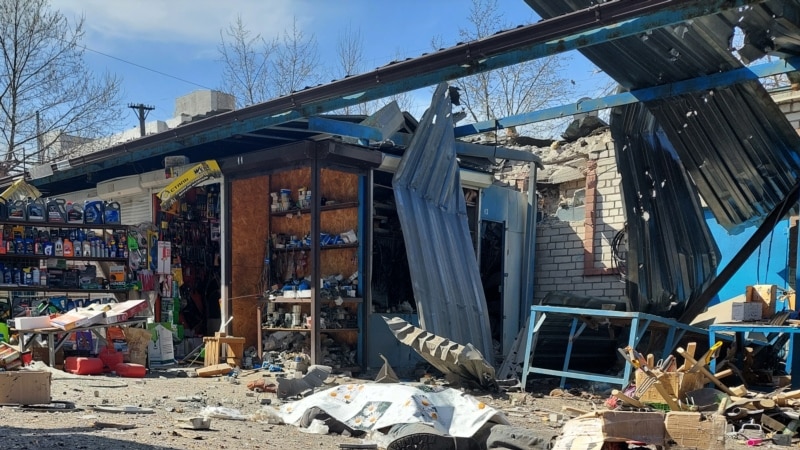
Війська РФ вдарили по ринку у Херсоні, є загиблі та поранені – прокуратура
Командувач КВІР попередив США щодо «повторної агресії»
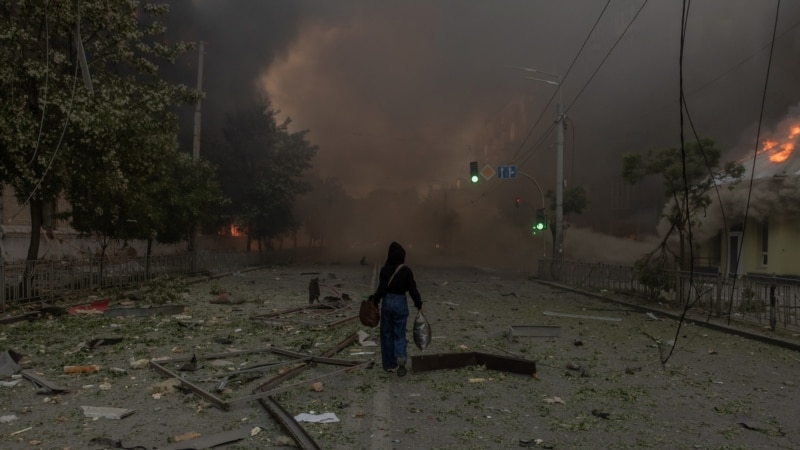
Мінкультури: через атаку РФ у Києві пошкоджений Національний художній музей