AdvertisementScienceChinaScienceDid Chinese scientists simulate what could be the ‘end of the universe’?
Tsinghua University team’s tackles one of most unsettling ideas in theoretical physics to possibly open a new pathway in quantum computing
2-MIN READ2-MIN ListenChao Kongin BeijingPublished: 8:00pm, 17 May 2026
If a certain tiny bubble suddenly appeared somewhere in the cosmos, physicists say, it could expand and erase everything in its path.
Known as “false vacuum decay”, the scenario has been one of the most unsettling ideas in theoretical physics for nearly half a century.
Now, researchers at Tsinghua University say they have recreated the core mechanism behind the phenomenon using a programmable quantum simulator.AdvertisementThe results of the experiment were published in the journal Physical Review Letters on March 27 and could open up a new pathway in quantum computing.
The experiment simulated how a metastable “false vacuum” could tunnel into a lower-energy “true vacuum” through purely quantum effects, triggering the formation and expansion of destructive vacuum bubbles.
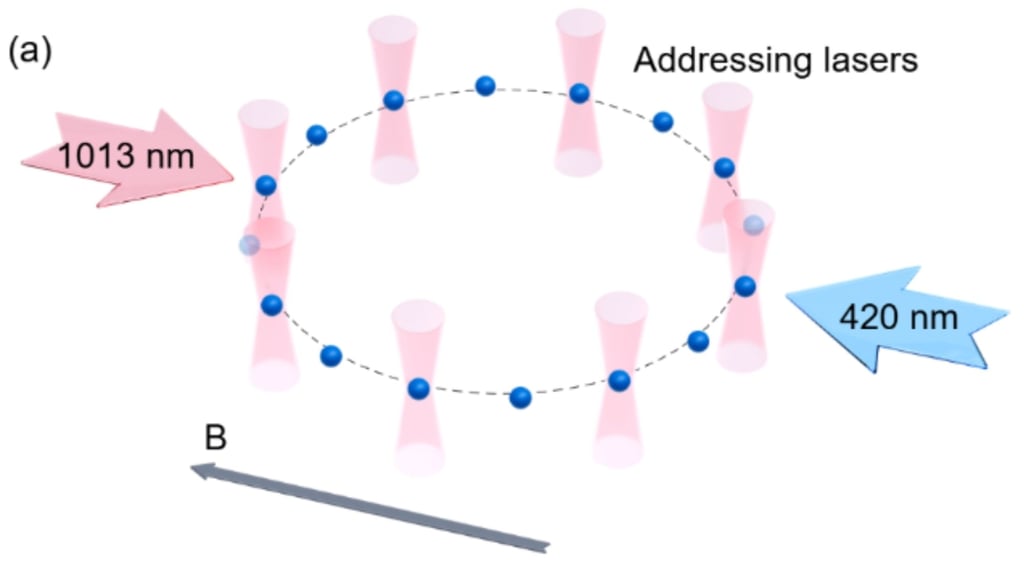
Schematic diagram of the experimental platform for simulating pseudo-vacuum decay in the circular Rydberg atomic array, where the blue dots represent 87Rb atoms. Illustration: Tsinghua University physics department
The research does not suggest the universe is about to collapse.


 Наука
Наука
 Наука
Наука
 Наука
Наука