Diagnostic dilemma: A woman turned black and blue weeks after starting a new medication
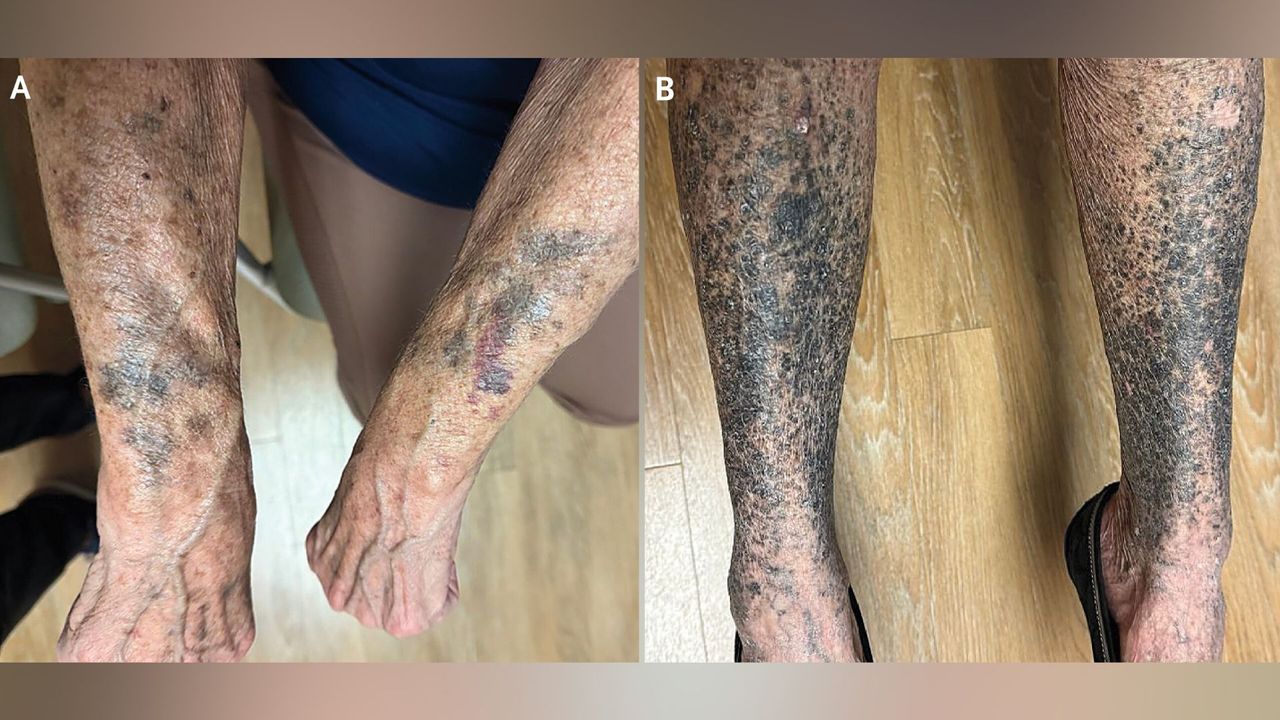
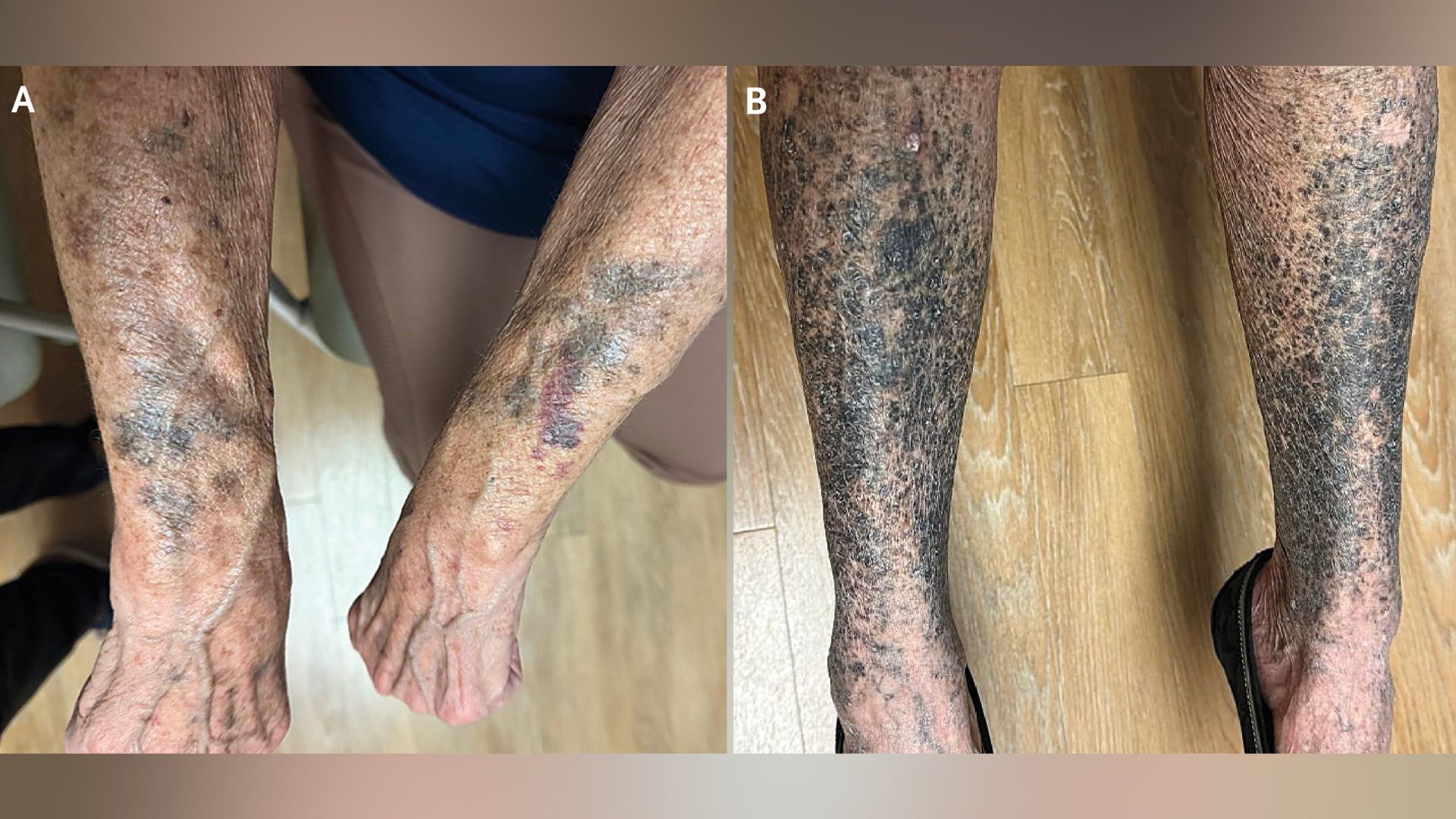
The patient: A 68-year-old woman in the U.S.
The symptoms: Over the course of six weeks, dark patches appeared on the woman's arms and legs. The splotches ranged from a bruise-like dark blue and purple to jet-black.
She also told doctors that, two weeks before the patches appeared, she'd started a course of minocycline, an oral antibiotic.
She had been prescribed a daily 100-milligram dose of the drug to treat symptoms of rosacea, which causes chronic inflammation and redness of the face. This inflammation can drive the formation of small, red bumps and pus-filled pimples on the skin, and evidence suggests that antibiotics like minocycline can help eliminate those bumps. In addition to killing bacteria, the drug is known to have anti-inflammatory effects, the latter of which may best explain how it treats rosacea.
The diagnosis: A well-established side effect of minocycline is hyperpigmentation, in which patches of skin become darker than the skin surrounding them. In this case, the woman was diagnosed with type II minocycline-induced hyperpigmentation, which is "defined by blue-gray discoloration of normal skin on the extensor surfaces of the arms and legs," according to a report of the case.
The antibiotic can also trigger two other types of hyperpigmentation. Type I shows up as blue-black discoloration on scarred or inflamed skin on the face, rather than on healthy skin on the limbs, and type III appears as muddy-brown pigmentation on sun-exposed areas of the body.
Sign up for the Live Science daily newsletter now
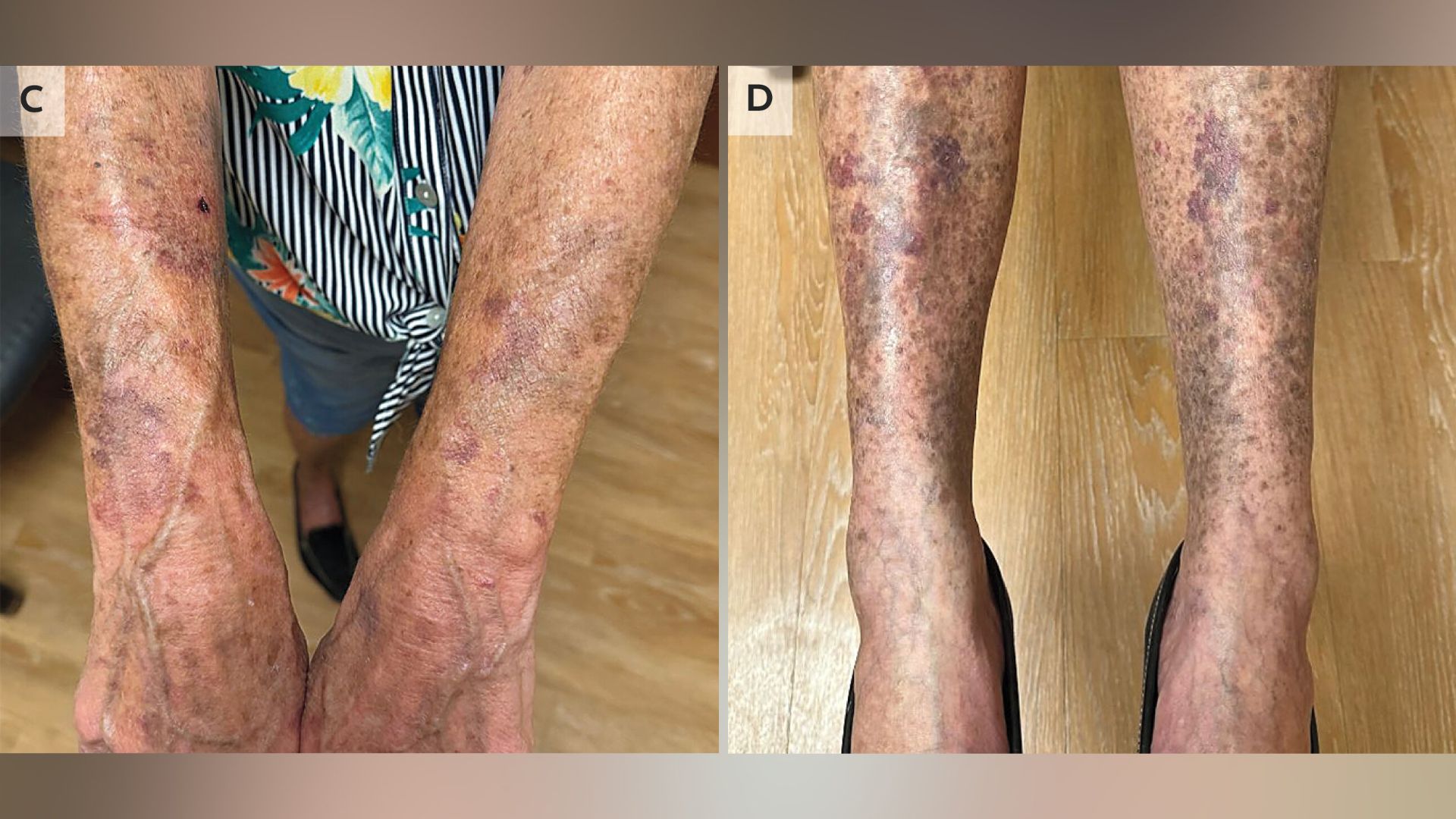
At a six-month follow-up appointment, the woman's hyperpigmentation had faded a bit but was still visible.
The treatment: Doctors advised the patient to stop taking minocycline and to avoid sun exposure, as ultraviolet light is thought to worsen hyperpigmentation in these cases. Six months later, the hyperpigmentation in her limbs had "abated somewhat" but was still visible.
What makes the case unique: Hyperpigmentation is not necessarily uncommon for minocycline users with rosacea; one frequently cited study estimates that the side effect shows up in about 28% of people in this population, although that research included only a small number of patients. The true incidence of the side effect is unclear.
This woman's case was notable, in part, because of how quickly the discoloration developed — within two weeks of starting minocycline. While type I minocycline-induced hyperpigmentation can show up soon after a person starts taking the drug, type II and type III usually take longer to appear.
"It typically develops after months of treatment but may rarely occur with shorter courses," the case report authors noted. Type II and type III are thought to be dose-dependent, in that a certain amount of the drug needs to build up in the body before the dark patches show up.
Other dilemmas
- A toddler accidently ate gonorrhea bacteria from a lab dish
- Man caught rabies from organ transplant after donor was scratched by skunk
- Rare semen allergy may have caused woman's infertility
The cause of minocycline-induced hyperpigmentation isn't fully understood, but it's thought to result from how the antibiotic gets broken down in the body. The metabolites, or byproducts, created in this process bind to iron and are then picked up by immune cells called macrophages, in which they accumulate. Additionally, the drug may drive up the activity of cells that make melanin — the pigment that gives skin its color — while also binding to melanin, thereby creating complexes of dark pigment that linger in the skin.
Once a person stops taking minocycline, the pigmentation can take months to years to dissipate, reports suggest. In type III cases, it sometimes never goes away.
For more intriguing medical cases, check out our Diagnostic Dilemma archives.
DisclaimerThis article is for informational purposes only and is not meant to offer medical advice.
Article SourcesMaharaj, A., & Omar, M. (2026). Minocycline-induced hyperpigmentation. New England Journal of Medicine, 394(13). https://doi.org/10.1056/nejmicm2513782
Can you guess the diagnosis in these strange medical cases? Find out with our diagnostic dilemma quiz!
TOPICS
Nicoletta Lanese is the health channel editor at Live Science and was previously a news editor and staff writer at the site. She is a recipient of the 2026 AHCJ International Health Study Fellowship, with a project focused on antibiotic stewardship practices in Japan and the U.S. They hold a graduate certificate in science communication from UC Santa Cruz and degrees in neuroscience and dance from the University of Florida. Beyond Live Science, Lanese's work has appeared in The Scientist, Science News, the Mercury News, Mongabay and Stanford Medicine Magazine, among other outlets. Based in NYC, she also remains involved in dance and performs in local choreographers' work.
View MoreYou must confirm your public display name before commenting
Please logout and then login again, you will then be prompted to enter your display name.
LogoutСхожі новини
‘Alternative COP’ must drive real, cooperative change in climate action
Are attention spans really shrinking? What the science says
25 years of chemistry that simply clicks