Data centers: Tech boom with downsides
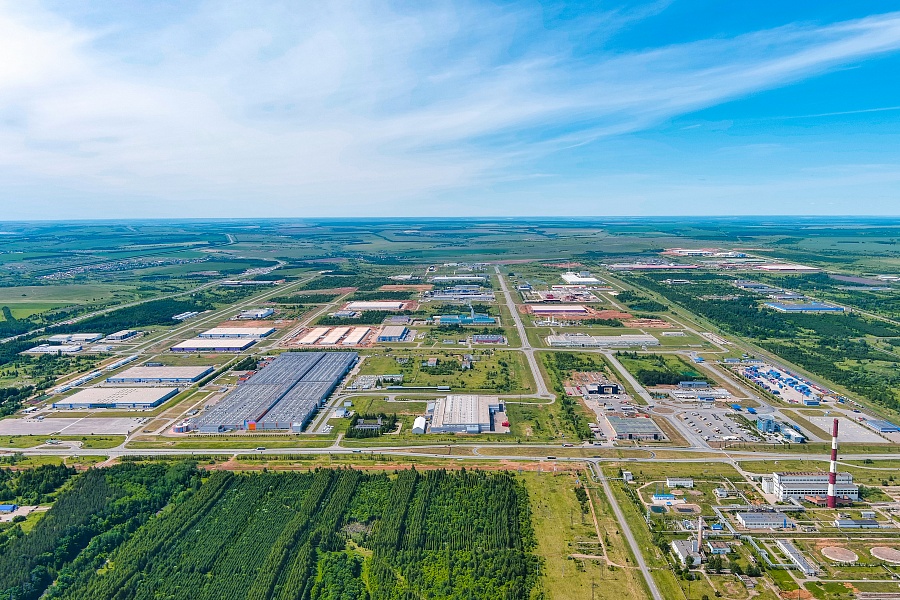
Dietzenbach is a small German town with a population of around 35,000. Locally it is best known for its open-air forest swimming pool and an architecturally unusual observation tower from which, on a clear day, you can see Frankfurt, some 12 kilometers away.
Its location is probably one of the main reasons why the US tech giant Google chose to invest several billion dollars in a new, high-performance data center. The greater Frankfurt area is one of the most important data center regions in Europe.
DE-CIX Frankfurt is the world's leading internet exchange. At peak times, it handles more than 17 terabits of data traffic. This equates to the amount of data processed if almost 3.5 million people streamed a high-definition film simultaneously. Seventy-six such data centers are already operating in the greater Frankfurt region. Worldwide, there are about 12,000 of these complexes and many more are being built.
Growing importance of data centers
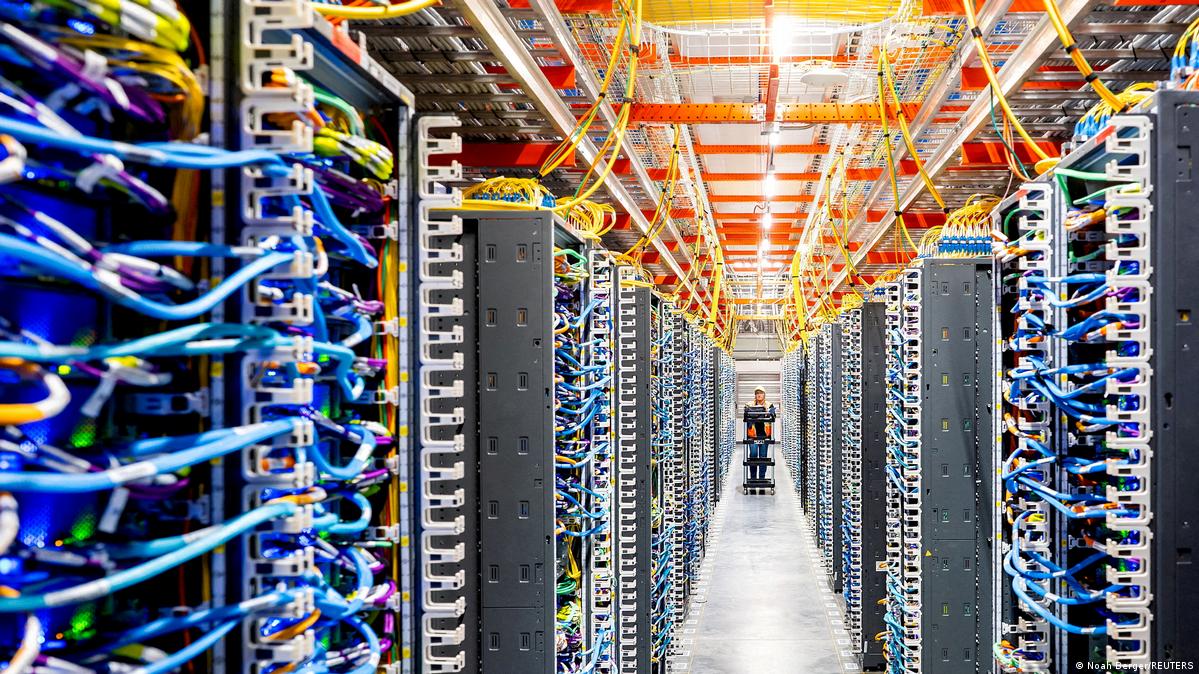
The internet is now an indispensable part of modern global society, and becoming ever more so. The rapid expansion of artificial intelligence, in particular, demands greater volumes of data. Massive server capacity is required to process and store this data and enable the smooth operation of cloud services and internet applications. Consequently data centers are the backbone of the modern internet.
They are also fundamentally significant for the national security of modern industrialized countries, whose economies and societies could barely function without them. Essential procedures for the provision of power and health systems, financial management, transport logistics and many other services are processed through these internet exchanges.
This is why data centers in Germany are classified as part of the country's critical infrastructure and afforded special protection. In March 2026, the federal government published a new national Data Center Strategy, illustrating how significant they are. It plans to double Germany's data center capacity by 2030 and will also aim to reduce its dependence on non-European providers.
AI Bubble incoming?
To view this video please enable JavaScript, and consider upgrading to a web browser that supports HTML5 video
Vulnerable hubs
The fact that almost everything online now passes through data centers also makes these complexes a prime target. There has been a sharp increase in cyberattacks in recent years. In January 2026, the German Federal Bank reported that it records more than 5,000 cyberattacks every minute on its own IT systems alone. Data centers are usually well protected against attacks like these and also against possible saboteurs.
Data center building complexes are generally secured with video cameras, fences and barbed wire. And with good reason: In Strasbourg in March 2021, a major fire in one of Europe's largest data centers demonstrated that physical damage to the hubs can also have far-reaching consequences. More than 3.6 million websites went down and many customers lost their data forever because their backups had been stored in the same building.
Strategic targets for attack?
Data centers have also become strategic targets in military conflicts. In the war in Ukraine, for example, IT infrastructure has been specifically targeted with the aim of blocking military operations and massively disrupting civilian supply lines.
Data centers in the Persian Gulf have also come under attack. In the US-Israeli war with Iran, Tehran has fired drones and rockets at three complexes in Bahrain and the United Arab Emirates. These belonged to the American cloud service provider Amazon Web Services (AWS) and the attacks caused huge disruption to banking, payment platforms and other systems.
Shortly afterward, the Iranian leadership published a list on Telegram with up to 30 other potential targets that are part of America's IT technology infrastructure in the Gulf. They included data centers, research facilities and the offices of various tech giants such as IBM, Google, Palantir and Oracle. There has been considerable discussion since then about how data centers can be better protected by air defense.
Big investment, big concerns
That's why it is becoming increasingly important to find suitable locations where new data centers can be constructed and reliably secured. However, the people living near these projects are often not at all happy about them.
They are critical of the vast amounts of energy and water data centers require to operate their servers and cool the facilities. Their hardware also wears out very quickly, producing large quantities of electronic waste. Researchers around the world are under pressure to find ways of making the centers more efficient, utilizing the waste heat and powering them with renewable energy.
It is also regarded as problematic that, although investors are often pumping billions of dollars into the construction of the centers, hardly any jobs are created in the region. Data centers often cover tens of thousands of square meters but usually have fewer than 100 people actually working in them. The economic benefit they provide is more likely to be indirect: for example, if other companies that depend on this IT infrastructure decide to locate close by.
There have already been protests in various parts of the world. In Chile in 2024, an environmental group successfully demonstrated against the construction of a data center for AI applications. And in April 2026, the legislature in the US state of Maine voted in favor of a moratorium on data centers with a capacity of more than 20 megawatts, citing concerns about the effects on the economy and environment. Janet Mills, the state governor, had to exercise her veto to stop the bill being signed into law.
Germany doesn't always give the go-ahead for new data centers either.
Construction has begun in Dietzenbach but plans for a similar project in Gross-Gerau, around 30 kilometers away, have fallen through. The US investor Vantage Data Centers wanted to spend €2.5 billion ($2.9 billion) building another data center here but a majority of the town council voted against. They argued that the project was too big and the effects on environment and society too unclear.
This article was translated from German.
AdvertisementСхожі новини
Japan Parade cultural promotion event held in N.Y.
Was Japan’s recent ‘Golden Week’ diplomatic offensive effective, let alone ‘strategic’?